Constructionreview

Blog

  • Chinese-based Firm Signs Grand Mubarak Port Early Contractor Involvement

    Chinese-based Firm Signs Grand Mubarak Port Early Contractor Involvement

    The Grand Mubarak Port has taken a giant step with a new agreement between China and Kuwait. Beijing’s China Harbour Engineering Company, the subsidiary of China Communications Construction Company (CCCC), signed an early contractor involvement (ECI) deal with Kuwait. The move is to speed up the subsequent phases of construction of Grand Mubarak Port. The agreement entails various technical aspects, including surveying, hydrological monitoring, and geophysical investigation.

    It also includes the process simulation, initial design, and site management. Its start was in April, with representatives from both countries’ high levels in attendance. In particular, Vice-Minister Fu Xuyin and Ambassador Zhang Jianwei were in attendance on behalf of China. Kuwait’s Minister of Public Works, Nora Mohammad Al-Mashaan, was also present. The agreement is a product of years of cooperation. In January last year, CCCC’s bid to oversee each stage of the port was endorsed by Kuwait’s cabinet. Moreover, a 2023 memorandum of understanding further consolidated bilateral commitment to the Grand Mubarak Port project.

    Also read:

    Kuwait Aims to Tender $973M Kuwait National Rail Road Project This Year

    Project Factsheet

    Significance:

    • Major component of Kuwait’s long-term development under the Fourth Kuwait Master Plan 2040.
    • Enhances economic cooperation between China and Kuwait through strategic coordination of infrastructure.
    • Represents opening up the port for operation, enhancing trade and logistics capacity.
    • Decreases China’s stake in Kuwait’s national development plans for 2024–2028.

    Infrastructure:

    • Development of quay walls, container terminals, and port-related buildings in phase two.
    • Infrastructure schemes involve reclamation, loading and unloading platforms, and container yards.
    • Installation of security and safety systems as part of operation readiness planned.
    • First phase, completed in 2014 for $1.2 billion, lacked operational equipment like cranes.

    Developer:

    • Led by China Harbour Engineering Company, subsidiary of China Communications Construction Company (CCCC).
    • Contract includes early contractor involvement (ECI) for technical and design works.
    • Project supported by Kuwaiti authorities like Ministry of Public Works.
    • Cooperation strengthened by high-level bilateral contacts and agreements since 2023.

    Financing:

    • Financial data on future phases were not officially announced.
    • Phase one was funded for $1.2 billion expense.
    • Future funding may come in the forms of approvals like the cabinet approval in January 2025.
    • Expected to involve entangled cooperation of the public sector in both nations.

    Scope of Implementation on Kuwait’s Grand Mubarak Port

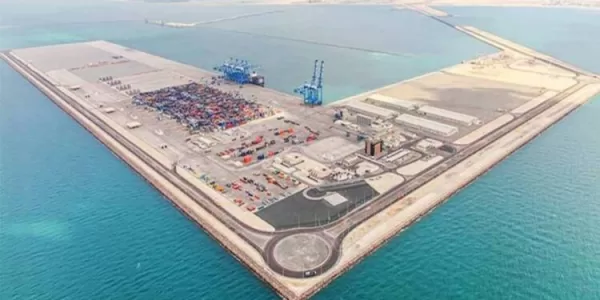
    The scope of phase two of Grand Mubarak Port is extensive. It consists of new loading and unloading facilities, quay wall construction, and land reclamation. Furthermore, a container yard, terminal buildings, and associated infrastructure will be built. Basic security and safety systems will also be fitted. These are required to start port operations because phase one did not cover key equipment.
    Grand Mubarak Port
    The Grand Mubarak Port has taken a giant step with a new agreement between China and Kuwait.

    Completed in 2014 at a cost of $1.2 billion, phase one only included marina works, berths, and administrative buildings. Now, the completion of phase two will witness the port coming to life. A third phase is also in the pipeline, which will further boost capacity. All this is part of Kuwait’s broader national plans. It was in September 2023 that the country signed multiple strategic development agreements through 2028. As a result, Chinese businesses are strongly positioned to play a leading role in the Kuwait Master Plan 2040. Grand Mubarak Port now features prominently in this long-term plan.

    Also read:

    Mubarak Al Kabeer Port in Kuwait.

    3rd phase of Kuwait international airport revamp and upgrade project 76% completion
  • Statkraft’s 4 Billion NOK Plan for Nore Hydropower Plant Upgrade in Norway

    Statkraft’s 4 Billion NOK Plan for Nore Hydropower Plant Upgrade in Norway

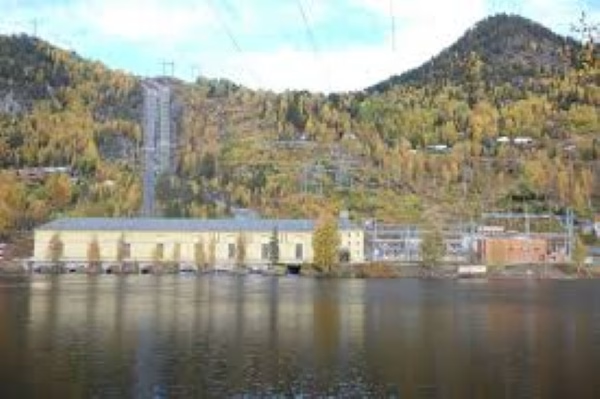
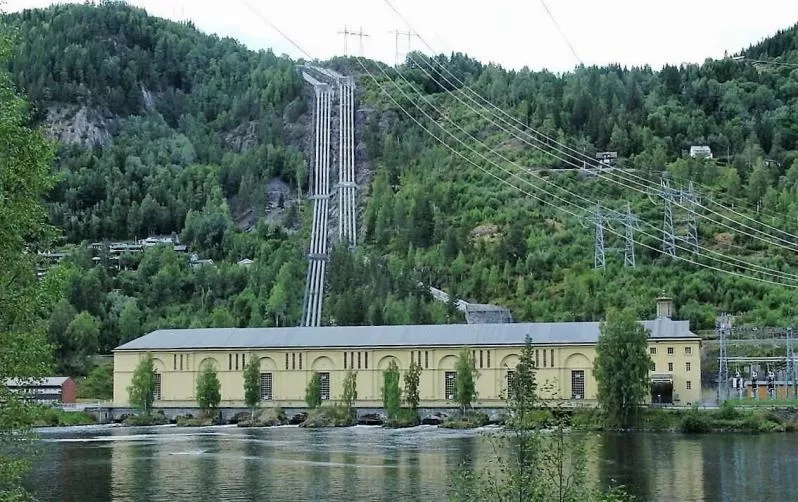
    The Nore hydropower plant complex in Buskerud County, Norway is one of the country’s longstanding large-scale hydroelectric developments, comprising of Nore I and Nore II power stations supplied by a reservoir system in the Numedal region. Statkraft plans to upgrade Nore for NOK 4 billion. The plan is to modernize the existing Nore I (1928) and Nore II (1946) plants, significantly increasing capacity and production while retaining their utility as key grid stabilizing nodes in Norway. Other than stabilizing the grid, hydropower plants are also being leveraged by industrialists for their zero carbon goals. For instance, Norsk Hydro’s aluminium smelting operations in Norway will be using Illvatn pumped storage plant as a power source from 2030 after its commissioning. The country’s carbon neutral goals are also being advanced by the Northern Lights carbon storage facility that expects first deliveries of new subsea CO2 injection systems in 2026.

    Statkraft Submits Plan to Upgrade Nore Hydropower Plant In Norway for 4 Billion NOK

    Reported May 2, 2025 – Statkraft has submitted plans seeking approval for the upgrade of Norway’s Nore hydropower plants for 4 billion NOK (USD 385 million). The upgrade license application will be reviewed by Norwegian Water Resources and Energy Directorate (NVE). The Ministry of Energy will then make a decision on the license application, also stipulating conditions for the made decision. If given a greenlight, Statkraft will then decide on whether the project can be executed after finalizing on an investment decision.

    Reasons warranting the upgrade include the deliver of more electricity on demand and a consequential stabilization of electricity prices. Also sought is the rehabilitation of the close to 100 years old hydropower plants. Statkraft also notes that the upgrade of Norway’s Nore hydropower plants is important “from a nature and environmental perspective”.

    The Nore Hydropower Plant Project Factsheet

    Developer: NVE Statskraftverkene

    Owner: Statkraft

    Operator: Statkraft Energi

    Nore 1 Power Plant

    Location: Numedalslågen river, Norway

    Installed capacity: 212 MW

    Average annual production: 1,150 GW

    Tidal range: 361 meters (1,184 ft)

    Completion date: 1928

    Status: Operational

    Nore 2 Power Plant

    Location: Numedalslågen river, Norway

    Installed capacity: 60 MW

    Average annual production: 314 GWh

    Completion date: 1946

    Status: Operational

    Milestones Timeline

    1928: Nore I begins production.

    1946-1947: Nore II comes online.

    May 2025: Statkraft submits licence application to modernize and expand the Nore plants with a NOK 4 billion upgrade plan.

    2025 Onward: Statkraft expects to carry out  major upgrades  to Nore I and II.

    Statkraft's 4 Billion NOK Plan for Nore Hydropower Plant Upgrade in Norway
    Nore 1 hydropower plant

    The Nore Hydropower Plant

    Nore power plant consists of two hydropower plants: Nore 1 and Nore 2. They are located in the Numedal watercourse in Nore og Uvdal municipality in Buskerud, Norway. The Nore hydropower plants use two reservoirs that rise to heights of between 727 meters to 750 meters. Additionally, after construction 97 years ago, the Nore 1 Power Plant also has the status of a cultural heritage site in Norwegian power production.

    The Planned 4 Billion NOK Upgrade

    Statkraft’s plans for the upgrade of Norway’s Nore hydropower plants for 4 billion NOK (USD 385 million) has been presented in two alternatives.

    Alternative 1 – the preferred alternative

    Combine the two hydropower plants into one plant inside the mountain area. The new plant gets a new intake in Tunhovd fjord, new waters ways, and a new outlet to Norefjorden. This will double the current operational capacity from 274 MW to 500 MW. The merger will also increase electricity production by approximately 200 GWh to about 1,700 GWh.

    Alternative 2

    Statkraft’s second alternative for the 4 billion NOK upgrade of the Nore hydropower plants is to have them each moved into the mountain from where they are currently located.

    The new Nore 1 will have a new intake in Tunhovd fjord, new water ways, and a new outlet. This alternative will increase Nore 1 power plant’s capacity to 268 MW, and consequentially increase production to around 1,300 GWh. Nore 2 hydropower plant will retain its current intakes and inlet channels, but get a new outlet to Norefjorden. The upgrade will increase Nore 2’s capacity to 69 MW, and see to an annual production of over 300 GWh.

    Also read: The World’s Largest Hydropower Dam in DR Congo: The Grand Inga Dam

    Outlook on the Planned Nore Hydropower Plant Upgrade

    According to the project manager at Statkraft, Hanne Kristin Ommedal, the upgrade to Nore the hydropower plants will be important “for both the region and Norway”. This will be especially so from the expected increase in capacity and renewable energy production. A move that will not only help guarantee sustainable energy supply, but also reduce price peaks.

    However, the final upgrade decision on the planned 4 billion NOK Nore hydropower plants upgrade still depends on whether the submitted application license in granted, or not. Factors determining the granting of upgrade licenses such as this one, and actual project execution include the economic feasibility of the project, environmental impact, etc.

    Statkraft also has plans to upgrade the capacities of other power production plants in the coming years. The goal is to have a 20% increase which translates to between 1,500 MW to 2,500 MW increase in installed capacity.

    Also read: Statkraft to invest $6bn in hydro and wind power in Norway

  • DFW International Airport Expansion

    DFW International Airport Expansion

    Dallas Fort Worth International Airport (DFW Airport) is undergoing one of the largest airport expansions in the U.S. At a recent press conference at Terminal C’s newly completed Gate 39, DFW CEO Sean Donohue shared details of the accelerated Terminal F plan. The airport has one of the longest runways in the USA

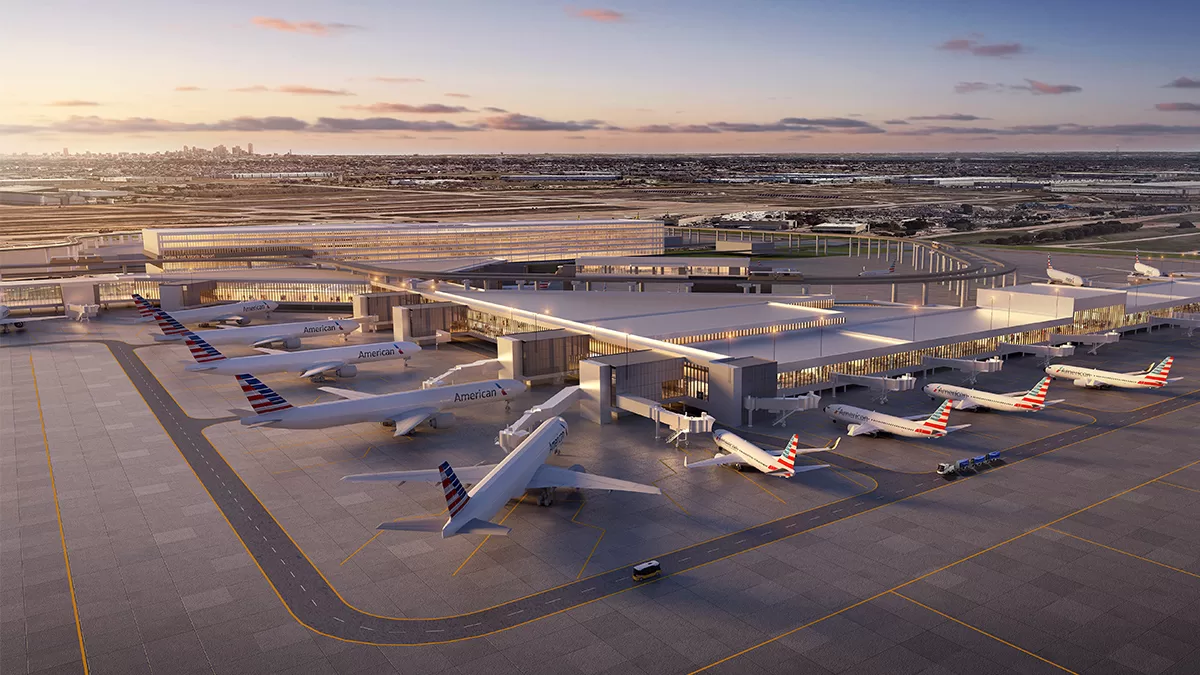
    The updated Dallas Fort Worth International Airport Expansion will double the terminal’s gates from 15 to 31, improve international flight processing, and enhance customer experiences with new shops, art, and a centralized Skylink station.

    “We continue to project significant long-term growth in passenger traffic,” said Donohue.

    American Airlines Leads the Investment

    Forth Worth–based American Airlines is investing $4 billion into Terminal F, confirming it as the airline’s primary hub.

    “Terminal F will elevate our customer experience in a big way,” said American Airlines CEO Robert Isom.

    The revised deal extends American’s use and lease agreement with DFW through 2043 and ensures that all 31 new gates in Terminal F will be operated by the airline. With 60% of DFW passengers making flight connections, this move significantly improves flow and service levels.

    Part of the $12 Billion DFW Forward Plan

    Terminal F is a flagship project within DFW’s $12 billion “DFW Forward” capital plan, which also includes a $3 billion transformation of Terminal C and improvements to Terminal A.

    “The Dallas Fort Worth International Airport Expansion ensures sustainability and continued economic opportunity for North Texas,” said DeMetris Sampson, Chair of DFW’s Board of Directors.

    DFW recently achieved a major milestone by transporting six massive modules — some weighing 1,200 tons — across closed runways using self-propelled modular transporters, a feat featured in Engineering News-Record (nofollow).

    Sean Donohue, who retires in May, will pass leadership to incoming CEO Chris McLaughlin, who will now manage this next phase of the airport’s growth.


    Summary (Bullet Points)

    • Dallas Fort Worth International Airport Expansion receives $4 billion investment from American Airlines.

    • Terminal F will grow from 15 to 31 gates, improving international connectivity and amenities.

    • Terminal F’s first phase opens in 2027; phased construction continues through the next decade.

    • Part of DFW’s $12 billion capital plan, which includes Terminal A and C upgrades.

    • American Airlines will operate all 31 gates, reinforcing DFW as its global hub.

  • 800 MW Double Black Diamond Solar Officially Powered on, Illinois

    800 MW Double Black Diamond Solar Officially Powered on, Illinois

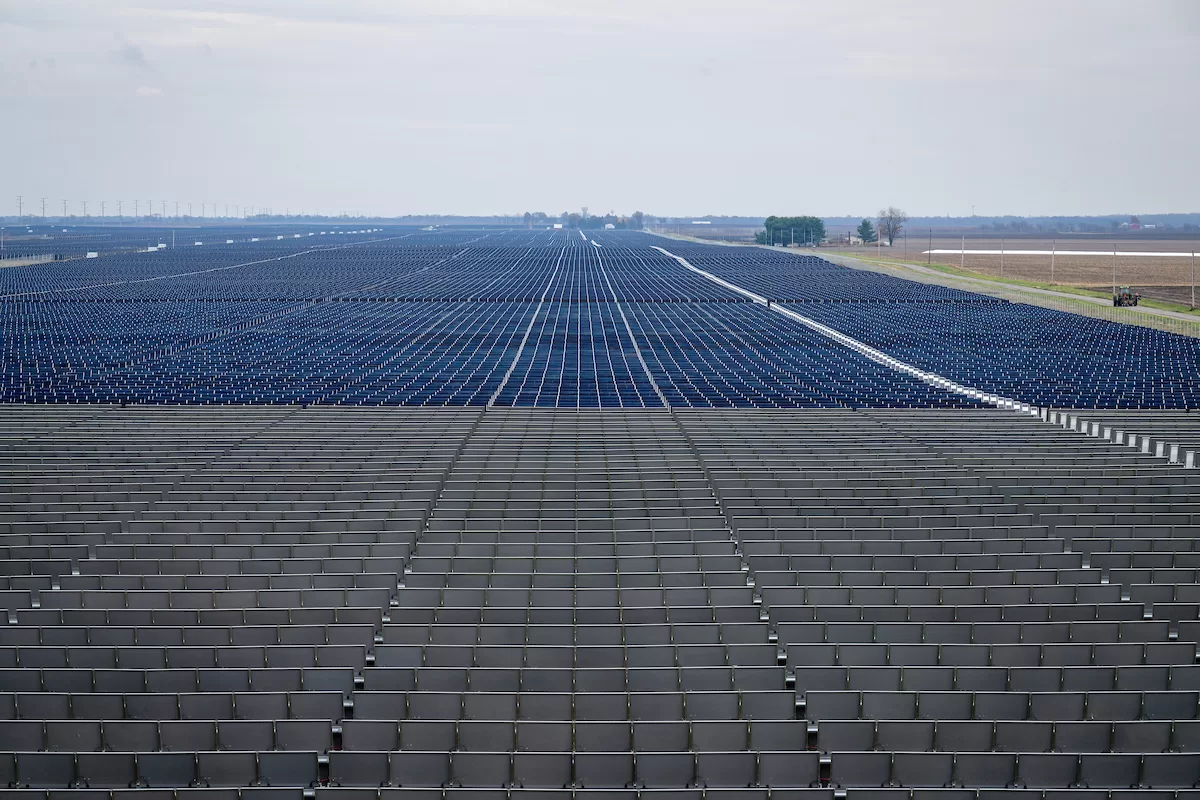
    Swift Current Energy has flipped the switch on its 800 MWdc (593 MWac) Double Black Diamond Solar project near Springfield, Illinois, now the largest operating solar farm east of the Mississippi River. The ribbon-cutting, attended by Chicago Mayor Brandon Johnson and state and local leaders, marks the facility’s transition from development to powering over 100,000 homes annually. Major offtakers include the City of Chicago (100% renewable power), Cook County, CVS Health, Loyola University Chicago, PPG, State Farm, and TransUnion via Constellation NewEnergy. Moreover, the plant was built with 1.6 million U.S.-made panels, U.S. steel racking, and domestic labor, the project generated 500 construction jobs and surpassed one million safe work hours. Google led tax-equity financing; MUFG, Société Générale, Truist, and eight others funded construction.

    Also Read Elisabeth Solar Project in Yuma County, Arizona receives approval

    Double Black Diamond Solar spans Morgan and Sangamon counties, covering roughly 800 MWdc of solar capacity and delivering 593 MWac to the grid. What’s more, commercial operation began in 2024, with the official inauguration held in spring 2025 at the site 30 miles west of Springfield. As the largest solar facility east of the Mississippi, it represents a key milestone for renewable growth in the U.S. heartland.

    Community & Economic Impact

    Construction of Double Black Diamond Solar created approximately 500 jobs, focusing on local and diverse hires in line with Illinois’s Clean and Equitable Jobs Act (CEJA). Moreover, the project achieved over one million safe man-hours on site and injected capital into Morgan and Sangamon counties through property taxes and community benefit funds. Additionally, Swift Current Energy has pledged $10 million in community investments, supporting the Sangamon Growth Alliance, Auburn School District, the City of Chicago, and Cook County. Sangamon County Board Chair Andy Van Meter noted the anticipated $100 million in tax revenue over the facility’s lifetime, with 60% earmarked for public schools.

    Also Read 380 MW Aldoga Solar Farm in Australia Completed 7 Months Ahead of Schedule

    Project Overview

    Location: Springfield, Illinois

    Project cost: US$779 million

    Start date: 2018

    Completion date: 2024

    Developers: Swift Current Energy

    Project capacity: 800 MW

    Environmental & Technical Highlights

    Further, the project uses 1.6 million solar modules, most produced by First Solar in Ohio, mounted on Nextracker racking systems made with 100% U.S. steel. Its expected annual generation displaces fossil-fuel electricity equivalent to powering over 100,000 homes, cutting greenhouse-gas emissions by roughly 200,000 metric tons annually. Furthermore, advanced grid-interconnection equipment ensures stable dispatch into the MISO market, contributing to regional reliability and peak-load management.

    Double Black Diamond Solar Illinois Key Partnerships & Customers

    The City of Chicago now sources 100% of its facility power, including for O’Hare and Midway airports, from the Double Black Diamond Solar output. Constellation NewEnergy aggregates offtake for Cook County, CVS Health, Loyola University Chicago, PPG, State Farm, and TransUnion under long-term power-purchase agreements. Further, Google provided critical tax-equity financing, while construction financing was led by Mitsubishi UFJ Financial Group, Société Générale, Truist, and eight other financial institutions.

    Also Read China, Saudi, Oman Partner for 2 GW Sadawi Solar Project and Wind Project

    What’s Next

    Swift Current Energy remains the long-term owner and operator, monitoring performance to optimize yield and reliability. The firm is already exploring adjacent sites for future expansions, leveraging the skilled workforce and strong supply-chain ecosystem fostered by this project. As renewable demand grows with new manufacturing and tech loads, Double Black Diamond Solar stands as a blueprint for large-scale, American-made clean energy developments across the U.S.

  • TotalEnergies and OQEP Begin Construction on US$1.6 billion Marsa LNG Sohar Plant, Oman

    TotalEnergies and OQEP Begin Construction on US$1.6 billion Marsa LNG Sohar Plant, Oman

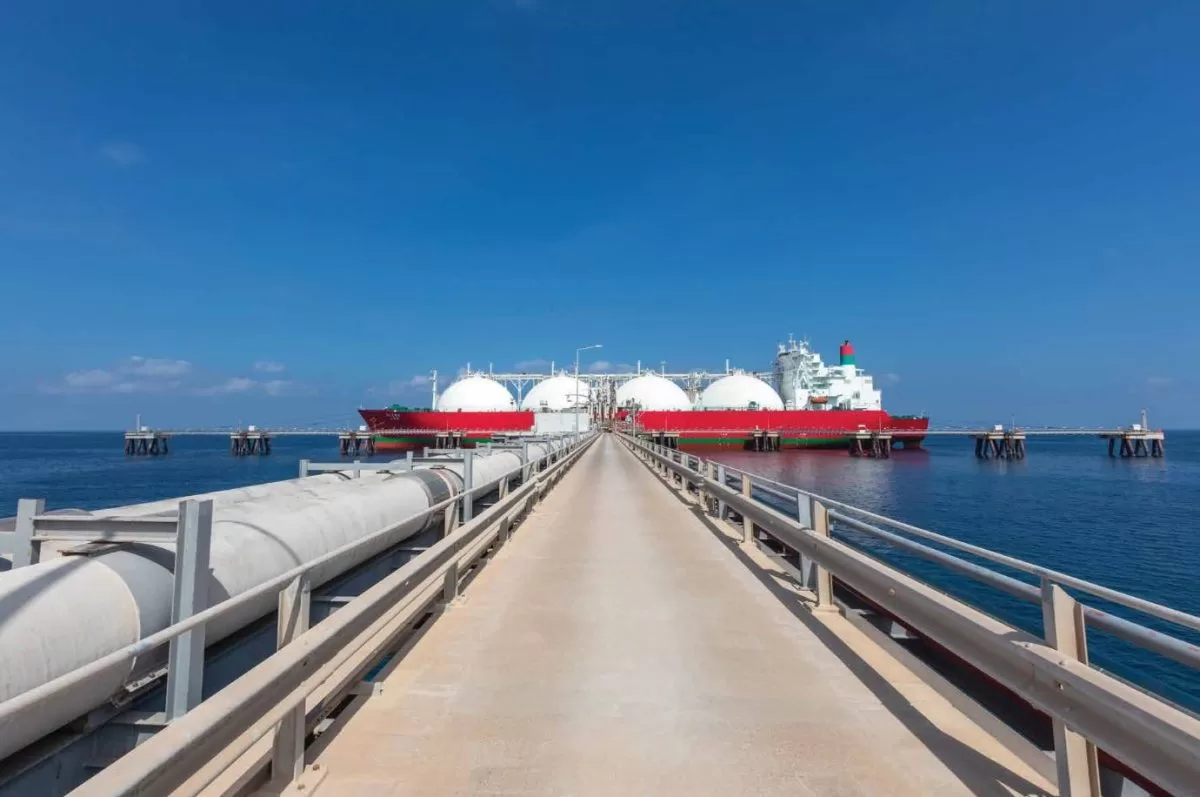
    Under the patronage of Oman’s Minister of Energy & Minerals, TotalEnergies and OQEP have broken ground at the 1 Mt/y Marsa LNG plant in Sohar, set to start production in Q1 2028. This fully electrified facility, paired with a 300 MWp solar farm, will be one of the lowest-carbon-intensity LNG plants worldwide. As the Middle East’s first marine LNG bunkering hub, it will supply vessels via the chartered bunkering vessel Monte Shams and support shipping’s transition to cleaner fuel. Further, the project reflects over $12 billion in recent U.S. investments and aligns with Oman Vision 2040’s sustainability goals

    A Landmark Groundbreaking in Sohar

    On May 1, 2025, His Excellency Eng. Salim bin Nasser Al Aufi joined TotalEnergies Chairman and CEO Patrick Pouyanné and OQEP CEO Ahmed Al Azkawi to celebrate the Marsa LNG groundbreaking in the Port of Sohar, one year after the Final Investment Decision Marsa LNG LLC, a joint venture of TotalEnergies (80%) and OQEP (20%), will build the 470,000 sq ft liquefaction plant for marine fuel in the Gulf. Set against the rugged backdrop of northern Oman, the ceremony underscored strong government backing and the strategic importance of local energy infrastructure.

    Also Read TotalEnergies announces commissioning of BioNorrois in Normandy, France

    Marsa LNG plant Sohar Oman Carbon-Reduction Design

    Marsa LNG is designed as a fully electrified plant, powered by an adjacent 300 MWp photovoltaic solar farm that covers its annual energy requirements. In addition, this approach yields scope 1 and 2 emissions under 3 kg CO₂e/boe, 90% below the global LNG plant average of 35 kg CO₂e/boe. By pioneering such a low-carbon footprint, TotalEnergies and OQEP aim to set a new industry benchmark and demonstrate that large-scale gas projects can align with global decarbonization targets.

    Project Overview

    Location: Sohar, Oman

    Project Capacity: 300 MW, 1 million ton per year (Mt/y) liquefaction plant

    Developers: TotalEnergies & OQEP

    Completion Year: 2028

    Project Cost: US$1.6 billion

    The First LNG Bunkering Hub in the Middle East

    Strategically placed at the Gulf’s entrance, Marsa LNG will serve as the region’s inaugural marine bunkering hub. Additionally, a charter contract is in place for the Monte Shams LNG bunker vessel, named after Oman’s “Mountain of the Sun”, to dock in Sohar from 2028, ready to refuel container ships, tankers, and cruise liners. By offering local bunkering, shipowners can cut supply-chain emissions further by avoiding long transits to distant ports.

    Economic and Strategic Impact of the Marsa LNG plant Sohar Oman

    Marsa LNG will generate hundreds of high-skilled jobs and substantial construction employment, while reinforcing Oman’s status as a clean-fuel hub. Furthermore, the project dovetails with Oman Vision 2040 by promoting downstream energy investment, economic integration across industrial and port sectors, and the transfer of expertise to local talent. Over $12 billion has already been committed to U.S. manufacturing since 2017; similarly, this plant underscores Oman’s ambition to attract global investment and foster sustainable growth.

    Also Read BioMADE Announces Plans for $132M Flagship Biomanufacturing Facility in Maple Grove

    Voices of Leadership

    “I’m proud to see Marsa LNG break ground alongside OQEP and Oman’s authorities,” said Patrick Pouyanné, highlighting the project’s low-carbon technical design and its role in shipping’s energy transition. His Excellency Al Aufi noted that the plant exemplifies downstream projects as pillars of economic integration, sustainability, and national expertise development. OQEP CEO Ahmed Al Azkawi emphasized Merck’s commitment to innovation and affordability, underscoring Marsa LNG’s pivotal role in reinforcing Oman’s global energy leadership while reducing maritime emissions. This landmark facility promises to redefine LNG production’s environmental footprint and cement Sohar’s place at the forefront of clean-fuel maritime logistics.

  • 700-Kilometer Lagos-Calabar Highway Completion Set for January 2026

    700-Kilometer Lagos-Calabar Highway Completion Set for January 2026

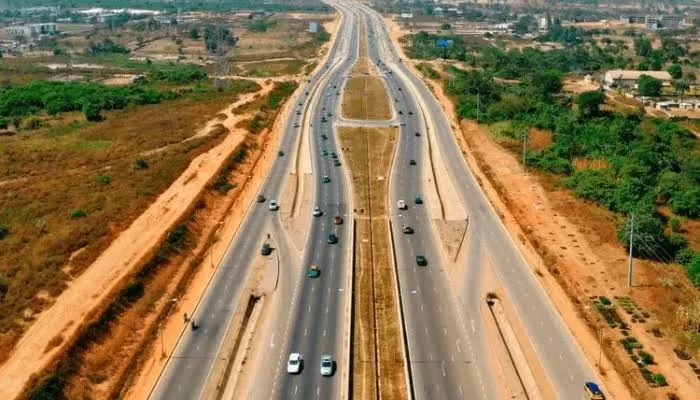
    The Lagos-Calabar Highway construction is expected to be completed in January 2026. This information was revealed by the Minister of Works Sen. Dave Umahi. Umahi disclosed this information during an inspection tour he made at the project’s site on Wednesday.

    “We are here to inspect the project with the financial promoters – Dutch Bank and Development Bank of Southern Africa,” he stated.

    Lagos-Calabar Highway Project Factsheet

    Length: The Lagos-Calabar Coastal Highway is a 700-kilometer (approximately 435 miles).

    Location: aims to connect Victoria Island in Lagos State to Calabar in Cross River State, traversing through nine coastal states: Lagos, Ogun, Ondo, Delta, Bayelsa, Rivers, Akwa Ibom, and Cross River.

    Current Status and timeline:

    • Construction commenced in March 2024 under the administration of President Bola Tinubu.
    • The first phase, a 47.47-kilometer stretch starting from Ahmadu Bello Way in Victoria Island, Lagos, is reportedly nearing completion and is expected to be completed by May 29, 2025.

    Cost and funding:

    • The total estimated cost of the Lagos-Calabar Coastal Highway is between $11 billion and $12.5 billion
    • The cost per kilometer is estimated at ₦4 billion.
    • The project follows an Engineering, Procurement, Construction, and Financing (EPC+) funding structure.

    Also read: Lagos-Calabar Coastal Highway to cost the taxpayer US$3.2m per kilometre

    Contractor:

    Key features:

    • Dual carriageway with five lanes on each side.
    • Central train infrastructure.
    • Elevated pavement level designed to withstand floods for up to 50 years.
    • Installation of cable ducts for utility companies.
    • Closed-circuit television (CCTV) system for enhanced safety and operational efficiency.
    • Evacuation corridors to improve traffic flow during emergencies.
    • Relief centers along the route with amenities like snack stops, petrol stations, supermarkets, and medical facilities.
    • Construction materials chosen for longevity and potential carbon credit earnings.
    • Also, a 60-meter flyover under construction at the Dangote Refinery to facilitate truck movement.

    Additionally, Umahi said that it was projected that 20km of the road that runs from Ahmadu Bello Way in Lagos would have been finished by May.

    Also read: 750-Kilometer Lagos-Calabar Coastal Highway Foreign Funding Secured

    Current Status of the Project

    Additionally, Umahi stated that over 70 per cent of the entire project had been done so far.

    “Let me say that the Lagos-Calabar Coastal Highway project is more than 70 per cent done, and the contractor has not got funds up to 70 per cent.”

    “Also, that is why I call them people that have set their minds towards nation-building instead of making money.

    Also read: 1,068-Kilometer Sokoto-Badagry Superhighway Construction Project in Nigeria: Breaking the 48-year Delay

    Other Projects Along the Corridor

    Furthermore, according to Umahi, along the road corridor, there are some tracts of land that have been acquired for purposes of tourism, industries, factories and housing estates.

    “These are the road architecture that you are going to receive on this highway.”

    “I promise you that by January next year, God willing, we will have completed this Lagos-Calabar Coastal Highway project,” the minister said.

    Also read: 700Km Lagos-Calabar Coastal Highway Construction Commences