Constructionreview

Blog

  • Tinubu sets 2026 deadline for completion of Kano–Maradi railway project

    Tinubu sets 2026 deadline for completion of Kano–Maradi railway project

    President Bola Ahmed Tinubu has reaffirmed the Nigerian government’s commitment to completing the 284-kilometre Kano–Jigawa–Katsina–Maradi railway project by 2026. He said:

    The Federal Government plans to complete the 284 kilometre Kano-Jigawa-Katsina-Maradi rail project by 2026.

    The railway line, a flagship cross-border transport initiative, is expected to significantly enhance trade and mobility between Nigeria and Niger Republic.

    Project factsheet: Kano–Maradi railway

    • Total length: 284 kilometres

    • Route: Kano (Nigeria) – Jigawa – Katsina – Maradi (Niger Republic)

    • Gauge: Standard gauge railway

    • Contractor: Mota-Engil (Portuguese construction firm)

    • Initial approval: September 2020 under President Muhammadu Buhari

    • Project cost: $1.96 billion

    • Major financiers: Nigerian Government, African Development Bank (AfDB), China Exim Bank, IFC

    • Counterpart funding: Over ₦530 billion allocated in 2024 supplementary budget

    • Target completion date: 2026

    • Current milestone: Kano–Daura section scheduled for completion by 2025

    Kano–Maradi Railway is a strategic regional connector

    The rail corridor runs through Kano, Jigawa, and Katsina before reaching Maradi in Niger, positioning it as a vital artery for regional integration and economic development. Once operational, it will provide a safer, faster, and more efficient mode of transporting goods and passengers across West Africa.

    Originally initiated during the Buhari administration in 2020, the Kano–Maradi standard gauge line was approved at a cost of $1.96 billion. In January 2021, the federal government signed a deal with Mota-Engil to design, construct, and equip the line.

    Transport Minister Saidu Alkali earlier confirmed that the Kano–Daura section is on track for completion in 2025, with other segments advancing under the current administration. Additional financial support includes a $350 million facility from the African Development Bank (AfDB), as well as significant budget allocations.

    Portugal’s Ambassador to Nigeria, Jorge Adao Martins Dos Santos, also reaffirmed in July 2024 that Portuguese firms were committed to completing the entire project by the 2026 deadline.

    READ ALSO: Nigeria Launches 125-Kilometer Benin-Asaba Superhighway Construction

    Road projects to complement the Kano–Maradi railway

    President Tinubu also announced the award of contracts for the rehabilitation of several key roads in the region to complement the railway. These include:

    • Martabar Kankara–Dutsinma–Katsina road

    • Zaria–Hunkuyi–Dabai road

    • Kafur–Malumfashi–Dayi–Gidan Mutum Daya roads

    Furthermore, the second phase of the Katsina–Kano road project is underway after earlier technical and bureaucratic delays were resolved. Addressing Katsina residents, Tinubu assured continued federal investment:

    The Federal Government is committed to numerous projects that will benefit Katsina and other states. Your support and prayers are appreciated.
  • Red Rock Wind Energy Farm in Iowa: What to Know

    Red Rock Wind Energy Farm in Iowa: What to Know

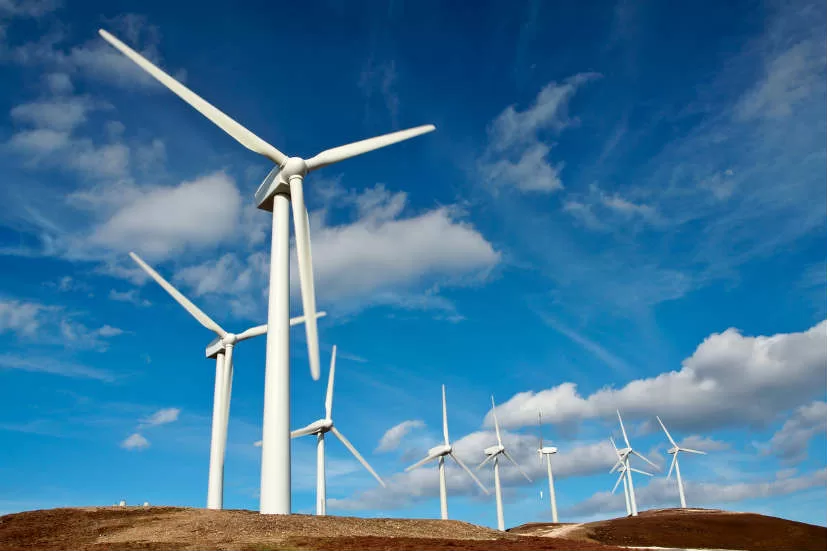
    The Red Rock Wind Energy Center is a proposed 300 megawatt wind farm spanning Emmet, Dickinson and Clay Counties in northwest Iowa. The project by Invenergy aims to supply clean, locally produced electricity. It will also create construction and more long term jobs alongside local economic benefits. After revisions to reduce the number of turbines and a full public hearing process, the project secured approval from the relevant county board in early 2025, moving the development forward from planning into the permitting and pre-construction stage.

    Latest Update on Red Rock Wind Energy Farm in Iowa

    Reported August 12, 2025 – The Dickinson County Board of Adjustment has given the green light to a revised version of the Red Rock Wind Energy Farm, a proposed 300-megawatt wind power generation facility in Dickinson and Clay Counties, Iowa. After initially rejecting permits in 2023, the board voted unanimously this week in favor of the updated plan following three days of public testimony.

    Fewer Turbines, Same Environmental Benefits

    The revised project for the Red Rock Wind Energy Farm will feature 67 wind turbines, down from the original proposal of 79. The decision marks a significant step forward for renewable energy development in Iowa, a state that is already a national leader in wind energy generation. With wind making up more than 60% of the state’s electricity, Iowa ranks second in the nation for installed wind capacity. This abundance of wind power has helped keep electricity bills in the state well below the national average. The state is also a turbine manufacturing hub, with the latest heartbeat being the restart of Nordex’s Iowa facility ahead of adding up to 1 GW of wind capacity in the region.

    Also read: 150MW wind power farm to be constructed in Northern Iowa, US

    Red Rock Wind Energy Farm

    A Cleaner, Greener Future with Wind Power

    Wind energy, one of the oldest and cleanest renewable power sources, plays a key role in reducing carbon emissions and supporting sustainable energy initiatives. The Red Rock Wind Energy Farm is being developed by Invenergy, a global leader in renewable energy solutions and one of the largest developers of renewable energy in the USA. Invenergy has already successfully developed over 20,000 megawatts of energy across the Americas, Europe, and Asia.

    In Wisconsin Invenergy this year completed the Darien Solar Project bringing online 250MW of solar power to the grid.

    Economic and Environmental Impact

    This new wind turbine project in the Iowa Great Lakes area is expected to contribute significantly to the region’s renewable energy capacity. The Red Rock Wind Energy Farm will help further solidify Iowa’s role as a major player in the transition to clean, renewable energy. With construction now approved, the project is poised to move forward, bringing both economic and environmental benefits to the state.

    Red Rock Wind Energy Project Factsheet

    Developer:  Invenergy

    Location: Emmet, Dickinson & Clay Counties, Iowa

    Capacity: 300 MW

    Homes Powered: 117,000 annually

    Emission Offset: Equivalent to 305 million trees planted

    Construction Jobs: 300 at peak

    Full-Time Jobs: 8 in operations

    Economic Benefit: $241 million in local revenue/payments

    Development Status: Ongoing permitting and pre-construction

  • Construction of the $20 Billion Mozambique LNG Project to Resume by Mid-Year

    Construction of the $20 Billion Mozambique LNG Project to Resume by Mid-Year

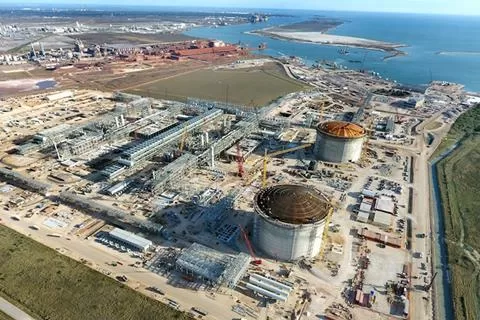
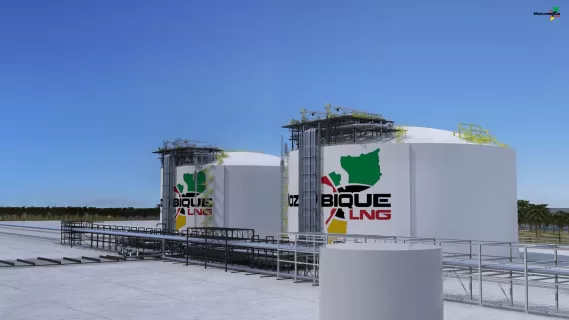
    TotalEnergies and Bharat Petroleum Corporation Limited (BPCL) have noted that the long-awaited Mozambique LNG project is expected to commence implementation in July 2025. The project was halted in March 2021 after militant attacks in Cabo Delgado province, when operator TotalEnergies SE invoked force majeure. The project is now progressing, however, with security becoming better and the U.S. Export-Import Bank reaffirming its $4.7 billion funding pledge.

    This move is set to revive one of Africa’s most ambitious energy ventures. The Mozambique LNG project has been the recipient of significant foreign investment, with BPCL owning a 10% interest in the project via its subsidiary BPRL Ventures Mozambique BV. While the project is important to many countries, its most significant impact will be experienced by Mozambique itself. With a scheduled end date of July 2028, the development could prove a game-changer for Mozambique’s economy and energy infrastructure, unlocking new avenues to an once-troubled region.

    Also read:

    US Exim Bank Approves $4.7 Billion for Mozambique LNG Project

    Project Factsheet

    Project Name: Mozambique LNG Project

    Location: Cabo Delgado Province, Mozambique

    Operator: TotalEnergies SE (France)

    Indian Stakeholders: BPCL (10%), ONGC Videsh, Oil India (Combined 30%)

    Status: Force majeure declared in 2021; restart expected by July 2025

    Completion Target: July 2028

    Key Financier: U.S. Export-Import Bank ($4.7 billion committed)

    Economic Impact: Estimated billions in government revenue, job creation, local business development

    Social Benefits: Potential improvements in electricity access, healthcare funding, and education infrastructure

    Security Progress: Project suspended due to violence attributed to the Islamic State; security situation now improving

    Long-term Significance: Expected to transform Mozambique into a major global LNG exporter and strengthen regional economy

    Significance of the Mozambique LNG Project

    Once complete, the Mozambique LNG is expected to be more than an energy investment as a potential economic game-changer for Mozambique. Once it starts operating, it is expected to provide revenue to the Mozambique government. These funds can be used to improve infrastructure, health, and education in Mozambique. Additionally, the project will create thousands of construction and operating jobs.

    Mozambique LNG Project
    TotalEnergies and BPCL have noted that the long-awaited Mozambique LNG project is expected to commence implementation in July 2025.

    In particular, it will also enhance local capacity through the training of employees and cooperation with Mozambican companies. The project also has the ability to improve access to electricity in rural areas through enhanced natural gas supply. Further, increased international attention on Mozambique’s energy sector can promote additional foreign direct investment. As soon as the security situation improves, the Mozambique LNG project can restore investor confidence and create long-term development. With prudent management, it can help Mozambique achieve poverty reduction and economic independence, turning a once vulnerable region into a regional energy giant.

    Also read:

    Mozambique LNG, the first onshore LNG facility in the southern African country

    US Exim Bank Approves $4.7 Billion for Mozambique LNG Project

  • The $5 Billion Batoka Gorge Hydropower Project, a Bi-National Scheme  Between Zambia and Zimbabwe

    The $5 Billion Batoka Gorge Hydropower Project, a Bi-National Scheme Between Zambia and Zimbabwe

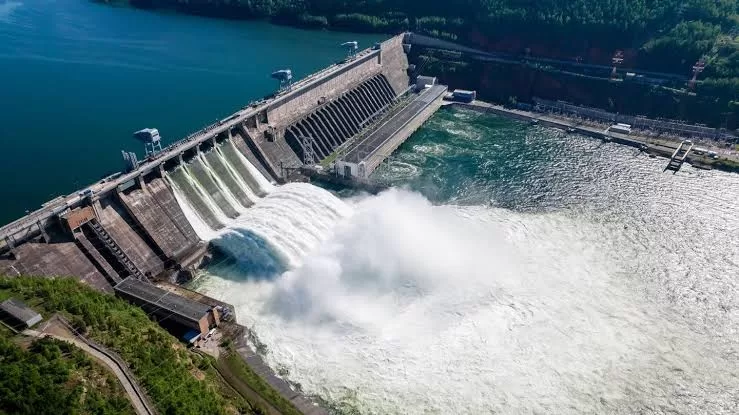
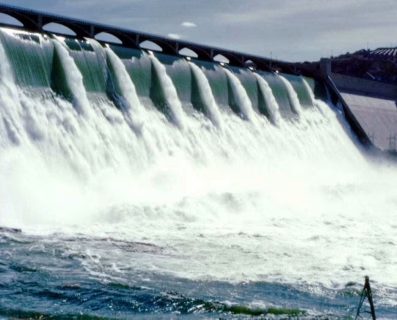
    Updated October 14, 2025- The Batoka Gorge Hydropower Project is a major proposed bi-national scheme between Zambia and Zimbabwe. This hydropower project is planned for construction on the Zambezi River which is located approximately 54 kilometers downstream of Victoria Falls.

    Additionally, the project, overseen by the Zambezi River Authority, aims to construct a 181-meter high arch-gravity dam and two surface power plants, one on each side of the river. These will boast a combined total installed capacity of 2,400 megawatts (MW). The Batoka Gorge Hydropower Project is intended to significantly boost electricity supply for both Zambia and Zimbabwe. Also, it is expected to significantly strengthen the Southern African Power Pool.

    However, the $5 billion project has faced delays and challenges. These challenges include environmental concerns over the impact on the unique Batoka Gorge ecosystem and the lucrative white-water rafting industry, as well as procurement irregularities that led to the project being retendered.

    The Batoka Gorge Hydropower Project has faced challenges which has led to its delay
    The Batoka Gorge Hydropower Project has faced challenges which has led to its delay

    With such ambitious hydropower projects being planned for development in Africa, their development will ensure energy securities for African countries. Other hydropower development projects in Africa such as the Cahora Bassa in Mozambique which is currently undergoing rehabilitation represent a bold step in which African states are taking to boost hydropower development and energy security in the continent.

    Reported on May 4, 2025

    Zambia and Zimbabwe are currently ramping up their efforts to secure an investment for the long-delayed $5 billion Batoka Gorge Hydropower Project. Additionally, the duo are reviving a controversial plan to potentially source water from Democratic Republic of Congo.

    “The Zambezi River Authority, which is a joint venture between the southern African nations that are responsible for maintaining the Kariba Dam complex, has formed a team that will court investors in the proposed 2,400-megawatt facility. This facility will be located near World Heritage site Victoria Falls,” Chief Executive Officer Munyaradzi Munodawafa said.

    Batoka Gorge Hydropower Project Factsheet

    Location: Zambezi River, between Zambia and Zimbabwe, Southern Africa.

    Capacity: 2400 MW

    Dam type: Roller Compacted Concrete (RCC) gravity arch dam.

    Dam height: Approximately 175-181 meters.

    Dam crest length: Approximately 720 meters.

    Power transmission:

    To Zambia: Two 330kV overhead transmission lines (one double-circuit, 55 km long to Mukuni substation; one single-circuit, 170 km long to Muzuma substation).

    To Zimbabwe: Two 400kV overhead transmission lines (one single-circuit, 70 km long to Hwange substation; one double-circuit, 400 km long to Chakari substation).

    Estimated investment: Approximately $5 – $6 billion USD.

    Expected annual energy production: Approximately 10,215 GWh.

    Implementing authority: Zambezi River Authority (ZRA).

    Expected start of construction: Originally anticipated around 2019-2020, but has faced delays. The project team is retendering the contract and expects to receive bids by April 2025.

    Expected completion: Originally projected around 2024-2026, subject to new timelines after retendering.

    Project model: Build-Operate-Transfer (BOT), with ownership eventually reverting to Zambia and Zimbabwe.

    Also read: The Mega US$4.5 Billion Batoka Hydro-power Project Commencement Set for 2025

    “The resource mobilization effort is targeting a time-frame of 12 to 18 months. Additionally the effort is subject to investor confidence, market conditions, and ongoing bilateral support from the Governments of Zambia and Zimbabwe,” he mentioned in an emailed response to questions.

    Work on the Batoka Gorge project had been scheduled to start in 2020. However, it was delayed by the onset of the coronavirus pandemic and difficulties encountered in securing of funds. Last year, Zambia made an announcement of its withdrawal from a 2019 contract previously awarded to General Electric Co. And Power Construction Corp. Of China, citing irregular procurement methods.

    Bidding Deadline on the Project

    Also, Zambia and Zimbabwe set a deadline of selecting new bidders by September this year. Efforts to raise funding face further obstacles. Among the obstacles entail both Zambia and Zimbabwe being currently in debt distress, with Zimbabwe owing $21 billion to creditors and Zambia still finalizing a restructuring after defaulting on its loans five years ago.

    “It may be very expensive to mobilize for both countries,” said Prosper Chitambara, a Harare-based economist. “The costs will be on the high side given the debt distress both Zambia and Zimbabwe are facing.”

    Also read: The Mega US$5 Billion Batoka Hydropower Construction Contract to be Retendered

    To improve the general capacity of Kariba and counter effectively the effects of erratic rainfall caused by climate change, the two nations are also weighing a plan to divert as much as 16 billion cubic meters (4.3 trillion gallons) of water annually from the Congo River. Even though that might stabilize inflows into Kariba, challenges still remain. These include the high energy demands of pumping water uphill and topographical constraints.

    “Lastly, detailed feasibility studies, which include technical, environmental, and economic assessments, will further guide the determination of implementation time-lines and cost estimates,” Munodawafa also stated. Furthermore, planners are considering passive gravity-fed or canal systems as alternatives to energy-intensive pumping.

    Also read: The UN Grants Approval for $5 Billion Batoka Gorge Project Construction

  • Mozambique railway investment pushes forward with Ressano Garcia Line upgrade

    Mozambique railway investment pushes forward with Ressano Garcia Line upgrade

    Mozambique’s government says it will complete the Ressano Garcia Line upgrade with a fresh €193.3 million railway investment. The plan includes doubling the last 25km of track from Movene to Ressano and buying new trains to support growing demand.

    Project factsheet

    • Project: Ressano Garcia Line Track Doubling

    • Location: Southern Mozambique, between Movene and Ressano

    • Investment: €193.3 million

    • Lead agency: Mozambique Ports and Railways (CFM)

    • First phase: Completed in September 2024 (Maputo to Secongene)

    • New capacity: From 13M to 24M tonnes of freight annually

    • Additional purchases:

      • 30+ passenger coaches

      • 15 locomotives

      • 250 freight wagons

    • Technology partner: CRRC Ziyang (China)

    Ressano Garcia Line enters final stretch

    Transport Minister João Matlombe said the Ressano Garcia Line is key to linking Mozambique with South Africa. The remaining 25km will now be doubled to complete the route.

    The first phase was done last year. It included doubling the track from Maputo to Secongene and expanding Maputo Central Station. This has already raised freight capacity from 13 to 24 million tonnes per year.

    New trains to support growing demand

    Matlombe added that the government will buy over 30 passenger coaches, 15 locomotives, and 250 wagons. These will meet rising demand, especially for moving minerals.

    CFM recently received the first three SDD1 diesel-electric locomotives from CRRC Ziyang. Each locomotive delivers 1.62MW of power, and CRRC Ziyang designed it to withstand African conditions.

    The 1067mm-gauge trains include smart cooling systems, modular air intakes, and real-time monitoring to improve performance.

    “These three are the first of 15,” said Matlombe. “They will help us move more people and goods across southern and central Mozambique.”

    READ ALSO: China to Provide $1.4 Billion for Tanzania-Zambia Railway Rehabilitation

    Investment aims to boost trade with South Africa

    This Mozambique railway investment is not just about new trains. It will also strengthen trade with South Africa and improve the country’s rail logistics.

    By finishing the Ressano Garcia Line, Mozambique will improve cross-border travel and cargo flow. The upgrades also show Mozambique’s goal to modernise its transport network and support long-term economic growth.

  • Morocco Launches Construction Tender of $320 Million Hassan II Stadium, World’s Largest Stadium

    Morocco Launches Construction Tender of $320 Million Hassan II Stadium, World’s Largest Stadium

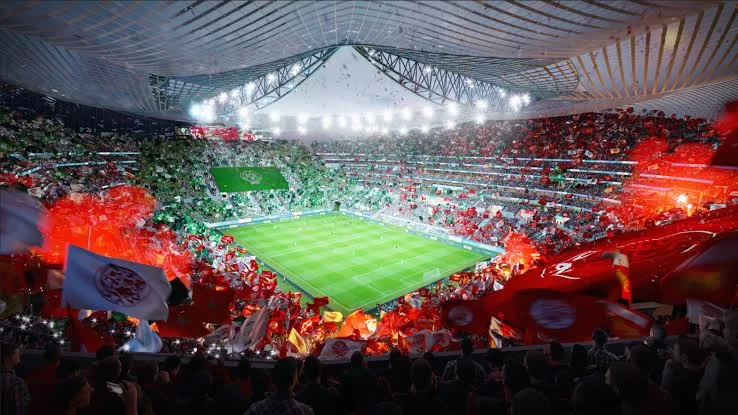
    Morocco has just officially launched the construction tender for the Grand Stade Hassan II Stadium in Benslimane province. Also, the country has the ambitious plans of making it the largest stadium in the world. The second phase of this ambitious stadium project, with an estimated cost of MAD 3.2 billion ($320 million), follows the nearly completed earthworks phase.

    Furthermore, as revealed by converging reports, this new stage will entail major structural elements. These elements are masonry, waterproofing, metal framework, coverings, false ceilings, carpentry, and even painting.

    Hassan II Stadium Factsheet

    Name: Hassan II Stadium also known as Grand Stade de Casablanca.

    Location: Benslimane, near Casablanca, Morocco (approximately 38 km north-east of Casablanca in the Beni Amer forest area of El Mansouria).

    Status: Under Construction; Earthworks are nearing completion , with tenders for construction works to be launched soon.

    Planned opening: 2028.

    Owner: Royal Moroccan Football Federation.

    Operator: SONARGES.

    Planned capacity: 115,000 spectators, making it the largest football stadium in the world upon completion, surpassing the Rungrado 1st of May Stadium in Pyongyang, North Korea (114,000).

    Architects: Consortium led by Oualalou + Choi (local firm Tarik Oualalou Architecte) and Populous.

    Construction cost: Estimated at MAD 5 billion (approximately US$500 million). The second phase of construction is budgeted at MAD 3.2 billion (US$320 million).

    Key design features:

    • Inspired by traditional Moroccan cultural festivals known as “moussem” and the form of traditional tents.
    • Covered by a large, translucent tent-like roof made from a unique aluminum lattice.
    • The roof is supported by a ring of 32 stairways. This will create monumental entrances with botanical gardens on raised platforms (28 meters high).
    • Features three tiers of seating in the main stands and two large single-tier stands at each end.
    • Includes five levels of hospitality suites along the main stands, including a royal box.
    • Incorporates extensive greenery, including botanical gardens at ground level and raised gardens at the entrances, aiming to create an “oasis of greenery.”
    • The designers have ensured full compliance with FIFA standards, enabling the stadium to host the final of the 2030 FIFA World Cup.
    • Lastly, part of a larger 100-hectare sports and entertainment complex that will include training fields, a hotel, a conference center, an athletics stadium, a sports hall, a gymnasium, a swimming pool, a play area, two shopping centers, and four parking lots


    Also read: Morocco Unveils Designs for the Grand Stade Hassan II, Set to Be the World’s Largest Football Stadium

    The National Agency for Public Equipment (ANEP) is the one supervising the stadium project as the delegated project manager for the National Company for the Implementation and Management of Sports Equipment (SONARGES).

    Also, the authorities have set the tender submission deadline for June 10 at exactly 10:00 a.m. The contractor must complete the stadium project within 30 months from the date specified in the service order, which the authorities must issue within 30 days after they approve the contract.

    Timelines

    This timeline of the stadium project aligns with statements from Fouzi Lekjaa, president of the Royal Moroccan Football Federation. Additionally, he projected completion of the stadium by December 2027. This is in preparation for the 2030 World Cup, which Morocco will co-host with Spain and Portugal.

    Also read: $500M Hassan II Stadium Construction Underway Ahead of 2030 World Cup, Morocco