Constructionreview

Blog

  • Ostrea Solar Project in Washington milestones, contractors and suppliers

    Ostrea Solar Project in Washington milestones, contractors and suppliers

    The latest on the Ostrea Solar Project is that in early May the developers Cypress Creek Renewables secured $150 million in construction financing for the Ostrea Solar development. MUFG Bank served as the coordinating lead arranger, alongside BNP Paribas, DNB Bank ASA, and Santander. U.S. Bank is participating as the project’s tax equity investor.

    “This transaction reinforces MUFG’s commitment to funding high-quality, sustainable infrastructure,” said Takaki Sakai, Managing Director at MUFG Bank. “We are proud to support Cypress Creek’s continued growth and the development of renewable assets like Ostrea Solar.”

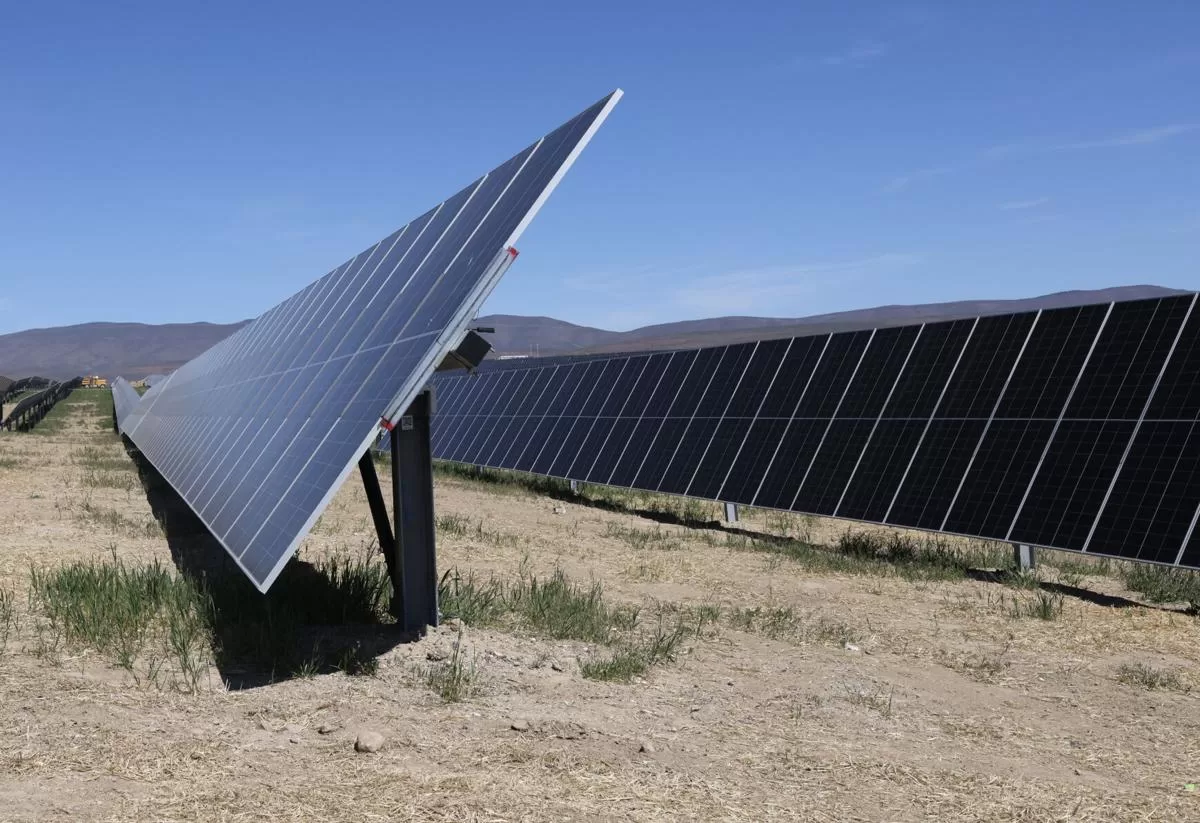
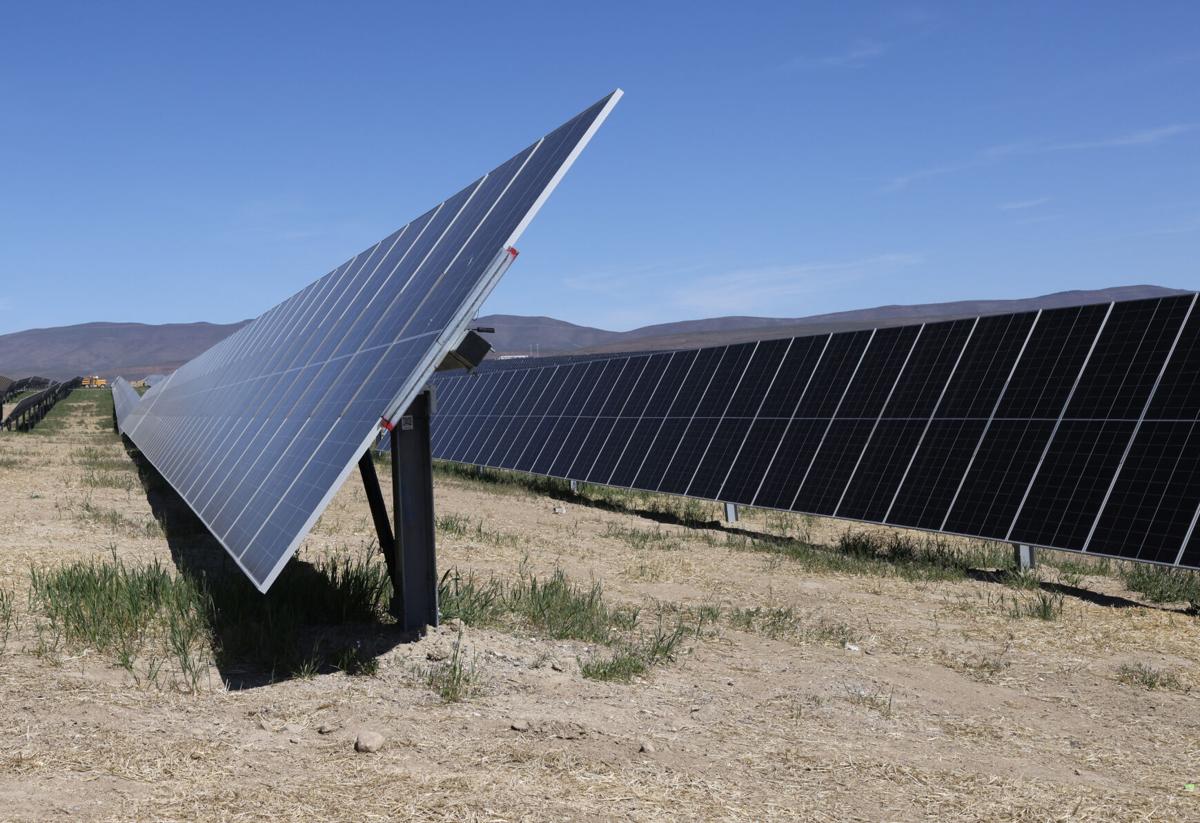
    The Ostrea Solar project, developed by Cypress Creek Renewables, is a 104-megawatt direct current (MWdc) utility-scale solar installation underway in Yakima County, Washington. Located approximately 30 miles east of Yakima, the facility spans 500 acres and will supply clean electricity to between 15,000 and 16,000 homes annually. Once completed, the project will provide 80MW alternating current (MWac) to the grid via a new 115 kV substation tied into the Bonneville Power Administration network.

    Ostrea Solar features 194,000 photovoltaic panels mounted on Nextracker NX Horizon solar trackers, 34,000 steel posts, and Sungrow inverters. The project represents a major investment in Washington’s renewable energy infrastructure, with long-term benefits for both the local economy and the environment.

    Groundbreaking Ushers in New Era for Solar in Washington

    Construction began in February 2025 with PCL Construction’s Solar Division (PCL Solar) as the EPC (Engineer, Procure, Construct) contractor. This marks Cypress Creek’s first solar project in Washington to reach both financial close and groundbreaking.

    “We’re thrilled to have broken ground on Ostrea,” said Sarah Slusser, CEO of Cypress Creek. “This project reflects our commitment to helping Washington meet its clean energy goals and delivering value to the communities we work in.”
    Thumbnail

    Cypress Creek Renewables to Build 80 MW Solar Plant in Yakima County

    Job Creation and Local Economic Impact

    The Ostrea Solar project is expected to generate approximately 250 construction jobs and contribute an estimated $15 million in tax revenue to Yakima County over its operational lifetime.

    Fact Sheet: Ostrea Solar Project

    We managed to put together a factsheet from various sources for your perusal.

    • Developer: Cypress Creek Renewables
    • Location: Yakima County, WA
    • Capacity: 104MWdc / 80MWac
    • Construction Start: February 2025
    • Planned Operation: Mid-2026
    • EPC Contractor: PCL Solar
    • Modules: 194,000
    • Support Posts: 34,000
    • Site Size: 500 acres
    • Estimated Value: $86 million
    • Jobs Created: ~250
    • Lifetime Tax Revenue: $15 million
    • Financing: MUFG, BNP Paribas, DNB Bank ASA, Santander
    • Tax Equity: U.S. Bank

    Suppliers

    • Solar Inverters: Sungrow
    • Solar Trackers: Nextracker

    Project Milestones

    • Planning and Permitting – Completed in 2024
    • Financial Close Secured – January 2025
    • Construction Groundbreaking – February 2025
    • Major Equipment Installation Begins – Q4 2025
    • Grid Connection and Testing – Early 2026
    • Target Commercial Operation Date – Mid-2026
  • Vestas Secures 65 MW Order for Kloddram Wind Project, Advancing Germany’s Onshore Wind Expansion

    Vestas Secures 65 MW Order for Kloddram Wind Project, Advancing Germany’s Onshore Wind Expansion

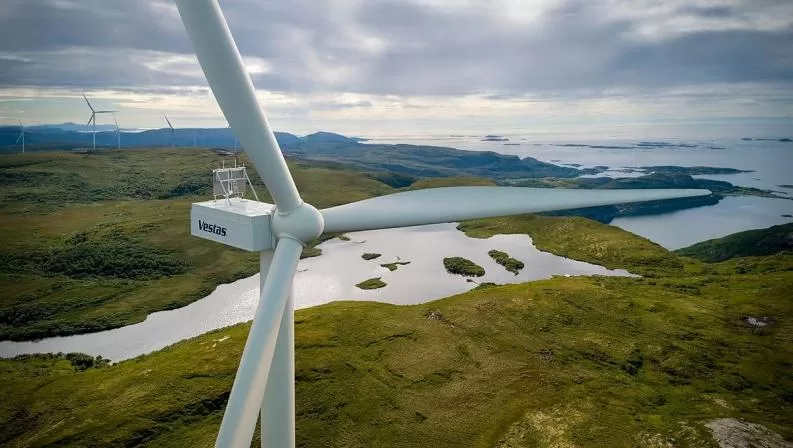
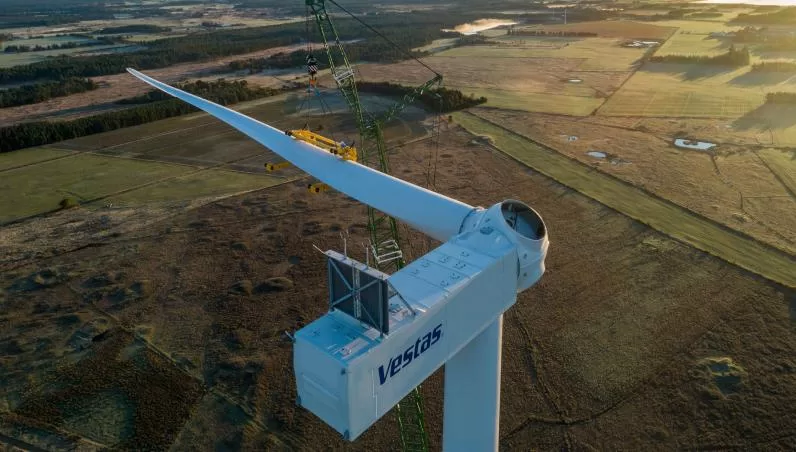
    Vestas has secured an order for its V162-7.2 MW turbine variant for the 65 MW Kloddram wind project in Germany. The wind turbine manufacturer will deliver the order as soon as Q4 2026. This leaves close to a one year window period before the Kloddram wind project in Germany gets commissioned in Q2 2027. The order, placed by Lindenhof GmbH, also includes a 20-year service agreement with the Danish-based global energy industry player.

    Kloddram Wind Project Factsheet

    Location: Germany

    Type: Onshore

    Developer: Lindenhof GmbH

    Capacity: 65 MW

    Wind turbine contractor: Vestas

    Turbine units: 9 V162-7.2 MW from the EnVentus platform

    Turbine rotor diameter: 162 meters

    Project inception date: 2015

    Kloddram Windpark Project shareholder agreement date: 2023

    Project commissioning date: Q2 2027

    Vestas’ Turbines Order for Germany’s Kloddram Wind Project

    The V162-7.2 MW turbines of Vestas’ EnVentus platform will deliver a cumulative of 65 MW to the Kloddram wind project in Germany once commissioned by end of 2027.

    They are designed for high energy production in low to medium wind conditions. This proves vital even with the specific windfarm location still undisclosed. With the specific location in the EMEA business region still in the dark, the turbines also come with a modular design for adaptability. This allows them to function efficiently across various regions and project requirements.

    Vestas Secures 65 MW Order for Kloddram Wind Project, Advancing Germany’s Onshore Wind Expansion
    Vestas also has one of the largest wind turbine variants in the world, the V236-15.0 MW

    Also read: The World’s Most Powerful Onshore Wind Turbine: Breaks Two World Records

    More On The Project

    The 20-year service contract will include optimization of turbine performance, alongside ensuring their long-term reliability.

    The project is testament to Germany’s ongoing commitment to expanding its renewable energy portfolio. Once completed by end of 2027, the Kloddram Windpark Project will mark another step towards the transition from fossil fuels. Especially so, as Germany’s efforts only come concerted with other European countries.

    Also read: First Turbine Installed at, “EnBW He Dreiht”, Germany’s Largest Offshore Wind Farm Under Construction

    Vestas’ Play

    Currently, Vestas has a portfolio of over 189 GW in both onshore and offshore wind energy projects globally. This capacity spans 88 countries. According to the wind turbines manufacturer and installer, “we [Vestas] have installed more wind power than anyone else”. The company also boasts one of the largest wind turbine variants in the world, the Vestas V236-15.0 MW.

    Also read: Trianel breaks ground on 67 MW wind project in Germany

    Also read: Progress at Germany’s Waterkant Wind Project with one of World’s Most Powerful Offshore Turbines

  • Completion of Italy’s Strait of Messina Bridge, World’s Longest Suspension Bridge, Set for 2032

    Completion of Italy’s Strait of Messina Bridge, World’s Longest Suspension Bridge, Set for 2032

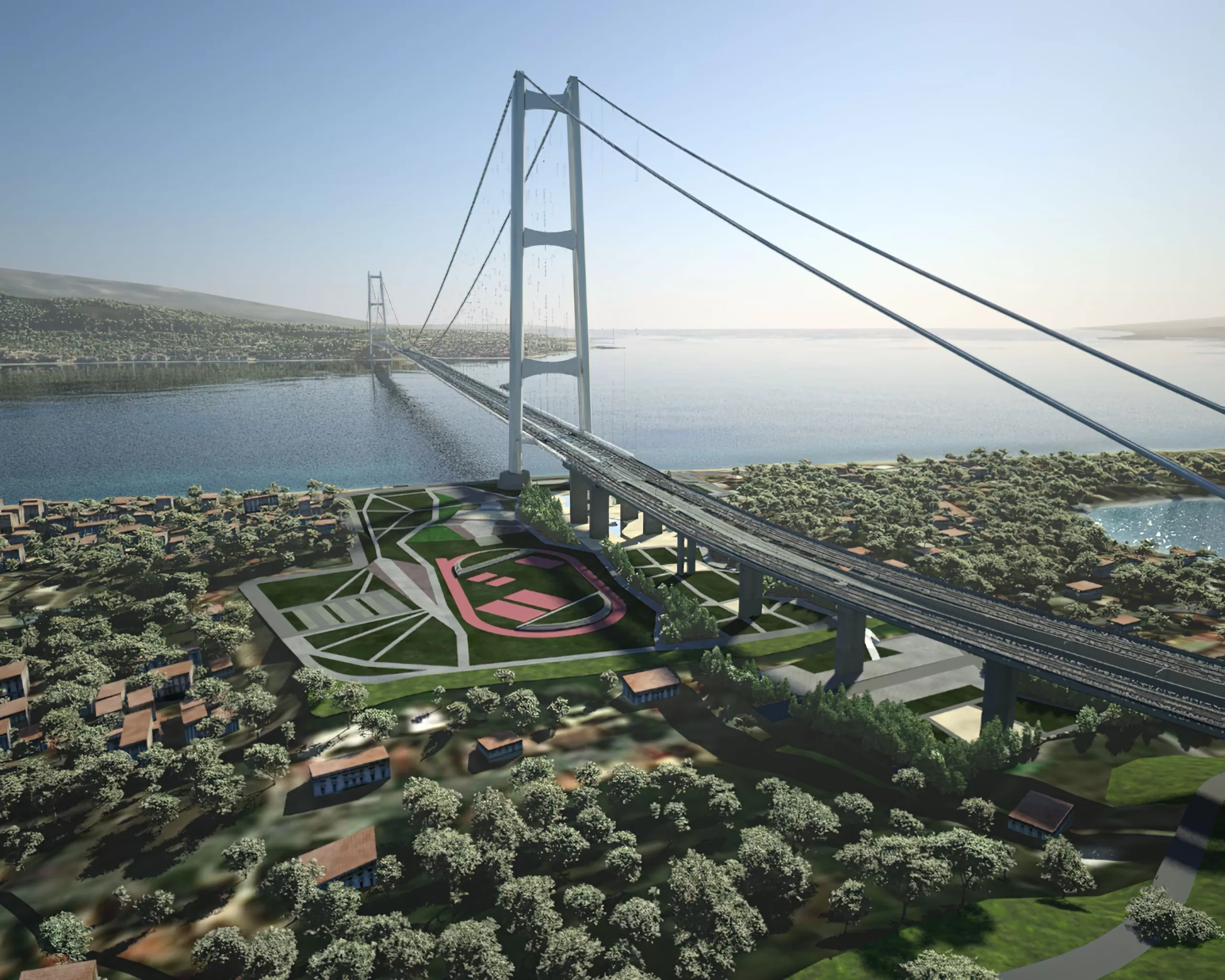
    Italy is preparing to undertake the construction of the world’s longest suspension bridge, the Strait of Messina Bridge. The megastructure will connect Sicily to the Italian mainland, stretching a whopping 3,300 meters across the strait. The new government, under the leadership of Prime Minister Giorgia Meloni, has restarted efforts to make the long-dreamed-of dream a reality. Her Infrastructure Minister, Matteo Salvini, is driving the renewed push, with a vision to begin construction within the year. The promise of increased mobility and economic revitalization is tempting, yet the location does pose some obstacles that may prove insurmountable. The Strait of Messina sits above a seismically active zone, bringing into question the safety and longevity of the endeavor. Nevertheless, political and business leaders are forging ahead undeterred, seeing this bridge as not only an engineering marvel but a cause of national pride and regional development.

    Significance of the Strait of Messina Bridge Once Completed

    The Strait of Messina Bridge is expected to facilitate transport of cars and trains. Furthermore, it would connect Villa San Giovanni on mainland Italy and Torre Faro town in Sicily. The dual-carrier bridge will also cater for commercial, cargo, as well as passenger needs. Once completed, it would surpass Turkey’s Canakkale Bridge to be known as the longest suspensions bridge in the world. However, its geographical location presents arduous engineering challenges. Sicily and the region are prone to heavy seismic activity, which would impede construction and disrupt long-term structural stability. Despite these problems, the suspension bridge configuration is perfectly adapted to the tectonic instability of the region. Princeton University professor of structural engineering Guy Nordenson pointed out the flexibility of such bridges, saying that their flexibility allows them to more readily accommodate ground movement and tower displacement than conventional buildings.

    Strait of Messina Bridge
    The Strait of Messina Bridge is expected to facilitate transport of cars and trains. Furthermore, it would connect Villa San Giovanni on mainland Italy and Torre Faro town in Sicily.

    Contractors Involved in the Project

    Leading the construction works is Italian company Webuild. CEO Pietro Salini has been resolute in his confidence in the viability and significance of the project. Three kilometers of the bridge will be suspended over the strait—a section he described lyrically as “a magical place” full of history, Salini said. He also framed the project as a national declaration of technological aspiration. Making a comparison with Japan’s Akashi Kaikyo Bridge, which also spans a seismically active zone, Nordenson reaffirmed that with the right design, the bridge can overcome the region’s geophysical hazards. Analogies with successful precursors enhance the technical case of the project, even as they highlight the complexity involved.

    Also read:

    Messina Strait bridge world’s longest suspension bridge in Italy

    Financing of the Project

    Estimates for the cost of the bridge currently sit at €13.5 billion, or roughly $15.3 billion. While the European Union is contributing €25 million, this is only financing a portion of the design process. As a result, the vast majority of the cost burden falls to Italy. The hefty price tag highlights the project’s enormous scale and technical challenge but also raises questions about the feasibility of long-term funding. Project success depends on a delicate balance of public funding, private industrial commitment, and political stability. As with most megaprojects, there is a risk of cost overruns, especially given the geological challenges and Italy’s famously sluggish bureaucracy.

    Implementation Timeline for the Strait of Messina Bridge

    The implementation timeline for the Strait of Messina Bridge remains unknown. According to Webuild, construction might start as soon as this year’s end. Moreover, they hope to finish the bridge by 2032. However, Nordenson warned against optimism mentioning that big infrastructure projects in Italy tend to have major delays. He mentioned the MOSE barrier in Venice, a government-priority project, took decades to finish because of bureaucratic obstacles. Other factors such as wavering political will also played a role. The bridge’s success, he argued, would not hinge solely on sound engineering but on openness, efficient scheduling, and a deep regard for the work and craft that goes into it. Added to these is round-the-clock monitoring that will finally determine whether Italy’s lofty vision can be translated into an actual reality.

    Also read:

    Three design concepts for two new rail bridges over Fort Lauderdale’s New River

    Plans for construction of Strait of Messina Bridge in Italy revived

  • New Highmark Stadium Project a heavy burden on taxpayers that keeps rising

    New Highmark Stadium Project a heavy burden on taxpayers that keeps rising

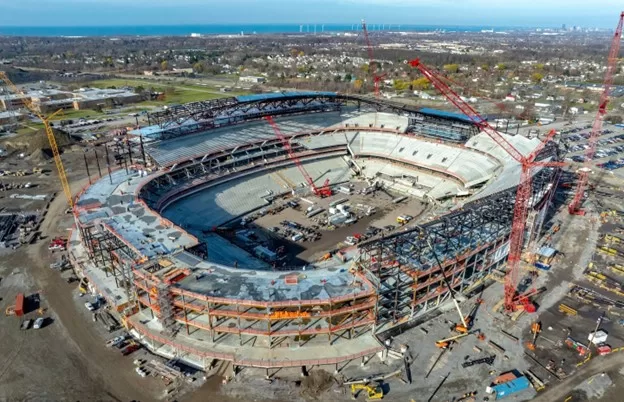
    The construction of the new Highmark Stadium in Orchard Park, New York, is not only one of the most significant infrastructure projects in Buffalo’s recent history but also one of the most financially scrutinized. Originally estimated at $1.4 billion, the cost of the stadium has escalated to $2.2 billion due to rising labor and material costs having first reported a $300 million overrun way back in August 2023. The final bill is likely to increase by the time of completion and will be covered by the Buffalo Bills’ ownership, as stipulated in the funding agreement.

    Timeline of Cost Revisions for New Highmark Stadium

    • March 2022: The initial construction cost was estimated at $1.4 billion. Under the agreement, taxpayers committed $850 million ($600 million from New York State and $250 million from Erie County), while the Bills were responsible for the remaining $550 million.

    • March 2023: The estimated cost increased to $1.54 billion. This adjustment was made as the Erie County Stadium Corp. allocated the first $300 million of the state’s commitment toward construction.

    • August 2023: Three months into construction, projections indicated costs approaching $1.7 billion, with overruns nearing $300 million. Factors contributing to this increase included rising labor and material costs.

    • November 2024: The Bills announced that the stadium’s projected cost had escalated to over $2.1 billion, exceeding the initial estimate by $560 million. The team’s owners, Terry and Kim Pegula, committed to covering these overruns, maintaining their vision for a state-of-the-art facility without cutting corners.

    • March 2025: Reports indicated that the total cost had risen to $2.2 billion, marking an $800 million increase from the original estimate. To address this, the Bills sought to borrow an additional $650 million, requiring an exception to the NFL’s debt limit.

    Lets take a look at the milestones so far covered by this project.


    10 Key Milestones of the New Highmark Stadium

    1. 2014 – Formation of a state, county, and team working group to assess stadium feasibility.

    2. 2015–2018 – Pegulas explore long-term stadium plans, hire consultants, and begin focus groups.

    3. June 2021 – Legends Global Planning hired to oversee stadium design and premium sales strategy.

    4. August 2021 – Bills propose a $1.4B publicly funded stadium; relocation threats surface.

    5. March 28, 2022 – Funding deal finalized; a $1.4B, 63,000-seat stadium agreed upon with 30-year lease.

    6. June 5, 2023 – Groundbreaking ceremony held; excavation and foundation work begin.

    7. March 2024 – Structural work advances; steel framing and concrete pouring underway.

    8. August 2024 – Stadium structure visibly rises above ground level.

    9. April 4, 2025 – Topping out ceremony held as final steel beam is installed.

    10. 2026 Season – Scheduled opening as the new home of the Buffalo Bills.

    Related Post: Morocco Launches Construction Tender of $320 Million Hassan II Stadium, World’s Largest Stadium
    Post Title


    New Highmark Stadium Factsheet

    Did you now that the stadium is modeled after the Tottenham Hotspar Stadium on London? Here are a number of other facts you may not have know about

    Feature Details
    Location Orchard Park, New York
    Capacity 62,000 seated + 5,000 standing room
    Estimated Cost $1.7 billion (initially $1.4 billion)
    Public Funding $850 million (NY State: $600M, Erie County: $250M)
    Private Contribution $550 million (Bills: $350M, NFL G-4 Loan: $200M)
    Owner State of New York
    Designer Populous
    Groundbreaking Date June 5, 2023
    Expected Completion Prior to 2026 NFL season
    Roof Open-air; 65% of seats covered from weather
    Notable Design Reference Modeled after Tottenham Hotspur Stadium, London
    Naming Rights Highmark Blue Cross Blue Shield
    Colloquial Name “The Pit”


    Despite the financial burden and public debate over the high taxpayer contribution—the largest ever for an NFL facility—the project to its credit remains on schedule to open in 2026, promising a modernized home for the Buffalo Bills and a transformative presence in Western New York.

  • International Geotechnical Innovation Conference (IGIC 2025)

    International Geotechnical Innovation Conference (IGIC 2025)

    Following a highly successful launch edition, the International Geotechnical Innovation Conference (IGIC 2025) in its second year, will continue to serve as a key facilitator of the Middle East’s and primarily Saudi Arabia’s ambitious giga projects, by enabling successful construction in the region’s highly challenging desert soil. From the region’s biggest construction projects, recent metro projects, bridges, tunnels and city development works, this premier gathering will address the myriad of underlying construction challenges via keynote presentations and latest case studies by world-leading gurus in geotechnical engineering.

    Led by a core committee of geotechnical experts from MENA, IGIC is an exclusive, one of its kind geotechnical conference for the industry, by the industry. The platform offers unparalleled opportunities to build strategic partnerships and collaborations with project owners, governments and municipalities leading projects, contractors, consultants, academia as well as geotechnical machinery providers.

    Please use the following link to complete your media registration:
    https://app.micetribe.com/public/workspaces/gmevents/events/igicksa/forms/media

  • Egypt Signs $120 Million Deal for the Construction of KIZAD East Port Said Industrial and Logistics Zone

    Egypt Signs $120 Million Deal for the Construction of KIZAD East Port Said Industrial and Logistics Zone

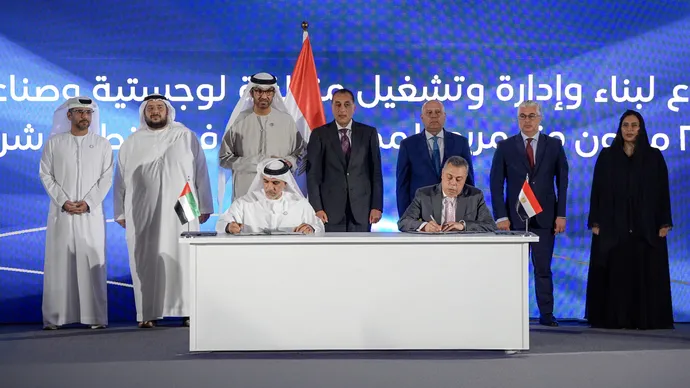
    Egypt has signed a $120 million agreement with Abu Dhabi’s AD Ports Group to build KIZAD East Port Said project. This will be a 20-square-kilometre industrial and logistics zone in East Port Said. A Cabinet statement revealed that the government designed the ambitious move to bolster trade and investment at the northern entrance of the Suez Canal.

    The agreement was signed in the presence of Egyptian Prime Minister Moustafa Madbouly, grants Abu Dhabi Ports 50-year usufruct rights—renewable—to finance, build, operate and manage the new zone, known as “KIZAD East Port Said.” Construction of the first 2.8-square-kilometre phase of the project is expected to commence by the end of 2025.

    KIZAD East Port Said Project Factsheet

    Developer and operator: AD Ports Group will be responsible for developing and operating this new industrial and logistics park.

    Size: The zone will span across a 20-square-kilometer area.

    Significance:

    • Attracting investments: The development aims to attract significant foreign and domestic investments.
    • Industrial and logistics growth: The focus is on establishing a world-class hub for industrial and logistics activities.

    Also read: $1.65 Billion Egypt’s Xinfeng Integrated Metallurgical Complex Agreement Signed

    Significance of the Project

    The developers positioned the project to become a regional trade and logistics hub. This will leverage Egypt’s strategic location at the crossroads of three continents and make it a key point along global shipping routes. Furthermore, it integrates directly with East Port Said port, one of the most advanced Mediterranean ports. This will further boost its appeal to international investors.

    “This is a strategic milestone that showcases the deepening partnership between Egypt and the UAE,” said Waleid Gamal El-Dien, Chairman of the Suez Canal Economic Zone (SCZone).

    Additionally, the project includes plans for a 1.5-kilometre quay and another potential multipurpose cargo terminal. Abu Dhabi Ports has currently committed up to $120 million to early development and technical studies over the next three years.

    Also read: Egypt and France Advance Cooperation on Cairo Metro and Alstom Complex Projects

    Ahmed Al Mutawa, Regional CEO of AD Ports, said the East Port Said development would be a significant driver of investment and economic growth.

    “By leveraging the natural assets of the Suez Canal region, the project will bolster Abu Dhabi Ports’ growing presence in Egypt. It will also support Egypt’s positioning as a strategic global trade gateway.” Al Mutawa added.

    Lastly, the deal also follows a memorandum of understanding between Abu Dhabi Ports and Egypt’s Hassan Allam Holding to explore further logistics and industrial opportunities in East Port Said and beyond. Additionally, in the year 2024, the government tasked Hassan Allam Construction with setting up infrastructure for the $200 million Safaga multipurpose terminal on the Red Sea.

    Also read: IRSC Signs agreement with ACO, Sungrow, and Tongwei for Egypt’s 75 MW Solar Projects