Constructionreview

Blog

  • First Turbine Installed at, “EnBW He Dreiht”, Germany’s Largest Offshore Wind Farm Under Construction

    First Turbine Installed at, “EnBW He Dreiht”, Germany’s Largest Offshore Wind Farm Under Construction

    Vestas has installed the first wind turbine at Germany’s largest offshore wind farm under construction, the “EnBW He Dreiht”. This progresses the 960 MW project’s construction phase as 63 more turbines await installation. Cumulatively, the 64 wind turbines will supply 3.6 billion kWh of wind energy annually once commissioned. This will be able to power around 1.1 million homes through the same period of time.

    EnBW He Dreiht Project Factsheet

    Location: Germany’s North Sea

    Owners: EnBW, and Allianz Capital Partners, AIP, Norges Bank Investment consortium

    Developer: EnBW

    Cost: € 2.4 billion

    Wind farm area: 63 km2

    Installation capacity: 960 MW

    Annual production capacity: 3.6 billion kWh

    Turbine supplier: Vestas

    Turbine units: 64

    Hub height: 142 meters

    Rotor diameter: 236 meters

    Sweep area: 43,742 square meters

    Foundations: Monopiles

    Final monopiles installation date: August 27 2024

    Start of construction: 2024

    Vestas’ latest milestone at the “EnBW He Dreiht”

    Germany’s largest offshore wind farm, the “EnBW He Dreiht”, otherwise referred to simply as He Dreiht has not only marked a milestone in its construction progress, but also one for Vestas.

    Vestas’ 15 MW turbine installed at the wind farm site is currently the largest 15 MW turbine in the market. It is also the first time Vestas has installed it. To put the impressive technicality of the largest 15 MW wind turbines currently in the market, a single rotor rotation is said to generate enough power to supply four homes with electricity for a day. Quite impressive!

    When assessed from a different angle, the first turbine installation at the EnBW He Dreiht also marks the start of culmination of the development of a 15-year old project.

    “EnBW He Dreiht” project cost

    The € 2.4 billion He Dreiht is also being build without financial support from the German government. This means no renumeration from the Renewable Energy Act. To help pool the project funds, EnBW focuses on Power Purchase Agreements (PPAs) from major industry players like Evonik, the operator of Frankfurt Airport, Fraport, and Germany’s national railway operator Deutsche Bahn.
    Also read: Deutsche Bahn Seeks €150 Billion to Modernize Germany’s Aging Rail System

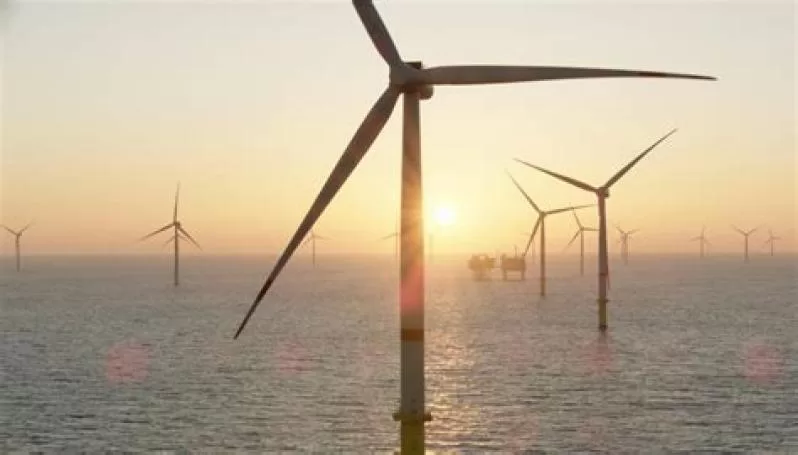
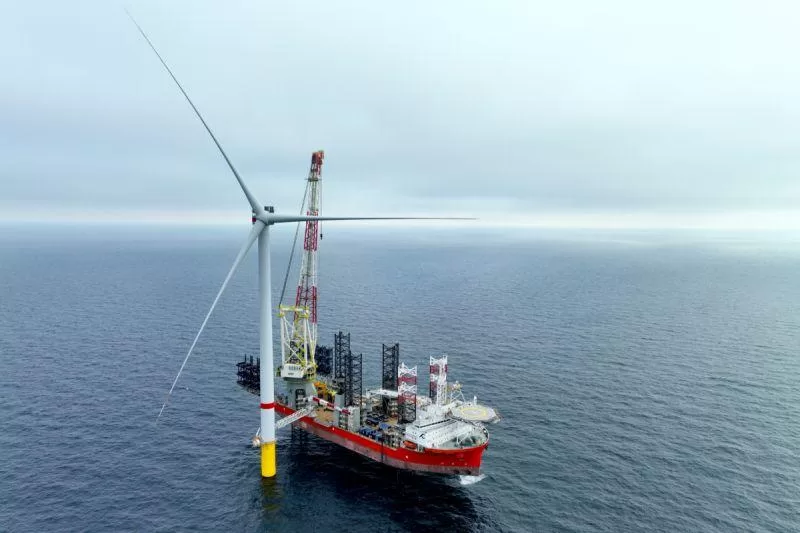
    Vestas Installs First Turbine at Germany’s largest offshore wind farm “EnBW He Dreiht”
    The turbines’ hub stand at 142 meters, while the massive 236 meters wide rotors sweep an area of 43,742 square meters

    The Vestas V236-15 MW turbines in Germany’s largest offshore wind farm under construction

    Vestas’ installation marks the first of 64 at the North Sea site for Germany’s largest offshore wind farm under construction, the “EnBW He Dreiht”. Together, the 64 V236-15.0 MW turbines from Vestas will work at an installation capacity of 960 MW. This capacity will be enough to power 1.1. million German homes once the offshore wind project is commissioned.

    The turbines’ hub stand at 142 meters, while the massive 236 meters wide rotors sweep Germany’s North Sea through an area of 43,742 square meters with each revolution.

    Also implicated in the project is TenneT. The Dutch-German grid operator will connect the wind farm to the electricity grid. This will involve the use of an offshore converter station, and two high-voltage DC (HVDC) cables. The HVDC cables will stretch over 120 kilometers in the sea, and 110 kilometers on land.

    Also read: Profen 2 wind farm project in Germany progress with Vestas 62 MW turbine supply

    More on the project

    The “EnBW He Dreiht” wind project sits in Germany’s North Sea. The wind farm area is about 85 kilometers northwest of Borkum and approximately 110 kilometers west of Helgoland.

    The baseline turbine foundations were installed last year, while internal wind farm cabling are being done concurrently with the turbine installations.
    First Turbine Installed at Germany’s largest offshore wind farm EnBW He Dreiht
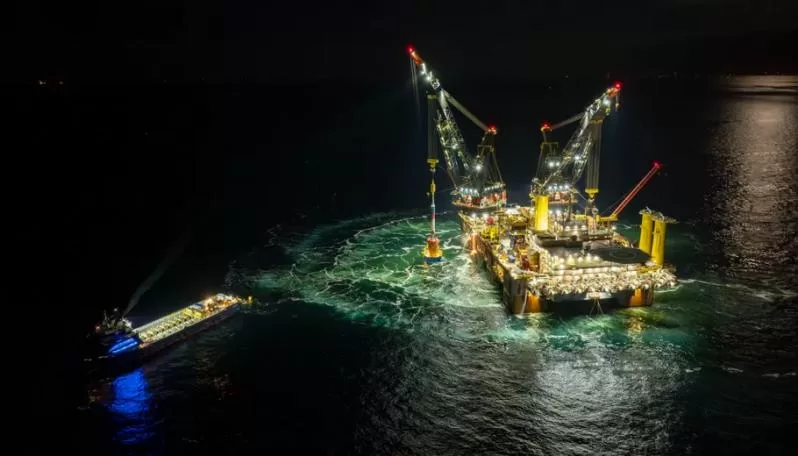
    The first monopile is driven into the seabed at Germany’s largest offshore wind farm under construction, the “EnBW He Dreiht”. Noise mitigation system was also used during the process

    Other than the promise to supply the country with affordable renewable energy, the offshore wind project has also delivered on creating jobs and boosting the local and regional economy. More than 500 construction jobs and over 60 marine vessels have so far been involved in the project.

    Interestingly, as a wind turbine stands in the ‘EnBW He Dreiht” wind farm, around 10 countries have a piece to it. For instance, the turbine towers are made in Denmark, the blades in Italy, and the transition piece joining the monopiles and towers are made by 5 countries including the UK.

    Also read: Progress at Germany’s Waterkant Wind Project with one of World’s Most Powerful Offshore Turbines

    Other offshore wind projects by EnBW

    Additionally, according to the developer, EnBW, this offshore wind project will help the company achieve its goal of more than 10 GW of installed capacity by 2030.

    EnBW also operates the 336 MW Baltic 1 and 2 offshore wind farms in the Baltic Sea. The company has also ventured in other offshore wind farm projects close by in the North Sea. These are the, Hohe See and Albatros. There are also other farms in the UK, like the Mona, and Morgan.
    Also read: Trianel Sundern Wind Power Project Breaks Ground in Western Germany

  • Napster Plans to Build a 60-Acre Flagship Campus in Fort Lauderdale

    Napster Plans to Build a 60-Acre Flagship Campus in Fort Lauderdale

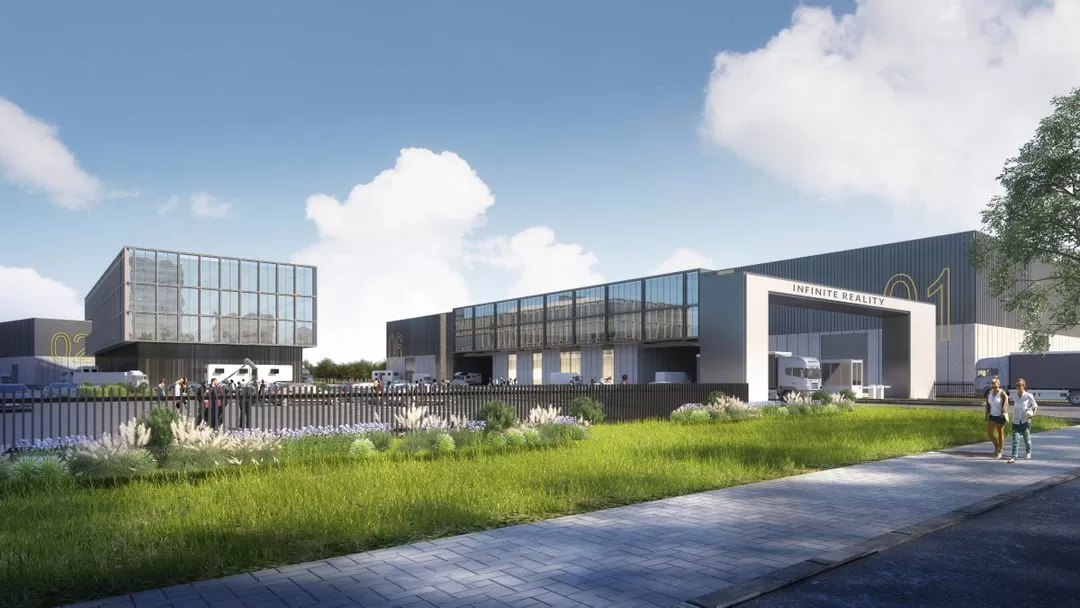
    Infinite Reality, now rebranding as Napster Corporation plans to construct a 60-acre flagship campus in Fort Lauderdale, which will be a cutting-edge center for immersive technology and entertainment. Working with award-winning real estate development firm Sterling Bay, the project will serve as the company’s new global headquarters, the first phase of an aggressive real estate strategy centered on innovation and growth. The ambitious project is set to be completed by 2026.

    Located at 1400 NW 31st Avenue, the 60-acre development will feature more than 100,000 square feet of Class A office space that will be tailored to media, tech, and enterprise tenants. Ground breaking will take place in early 2026 once the design and permitting are complete.

    “We are excited for this project and feel it says a lot more than just being a corporate headquarters,” Infinite Reality co-founder and CEO John Acunto said. “This campus is the soul of Napster’s future. As a proud South Florida resident, it’s extremely personal to me. We’re not merely creating a new space; we’re reshaping a community I love into a global hub for immersive technology and creativity. This campus will drive innovation, generate new opportunities, and leave a lasting legacy. Working with Sterling Bay ensures that we’ll bring this vision to life at the highest level.”

    Read also: Developer Proposes Fort Lauderdale’s Tallest Building (Renderings)

    1,000+ New Jobs Coming to Fort Lauderdale

    The public-private project, to be built on a cleansed Superfund site, will be one of the largest investments in the creative economy in South Florida. With projections of generating over 1,000 new six-figure-paying jobs, the campus will further establish Fort Lauderdale as a premier destination for next-generation technologies and digital innovation.

    Andy Gloor, CEO of Sterling Bay, highlighted the long-term impact of the project: “With over 30 years of experience developing spaces that foster collaboration and creativity, we’re excited to work with Infinite Reality to create more than just a real estate development. Together, we’re shaping the future of immersive media and technological innovation.”

    When first announced, Fort Lauderdale Mayor Dean Trantalis said the project as a game-changer for the city. “This land has remained vacant for decades, and now it presents an opportunity for development. This investment will generate jobs and businesses in the community, creating a ripple effect of opportunities for all of Fort Lauderdale.”

    In addition to office space, the campus will include flexible space for retail, manufacturing, digital broadcasting, and entertainment companies. The development will also include educational programs in collaboration with local institutions for training and hiring the next generation of talent in STEM, immersive technology, and creative production. More companies are securing their future in the U.S. as the tariff war grows. Amgen is investing over $600 million to build a new science and innovation center at its global HQs in Thousand Oaks, California.

    Read also: Three design concepts for two new rail bridges over Fort Lauderdale’s New River

    Napster Fort Lauderdale Campus: Project Factsheet

    Overview

    Project: 60-acre flagship campus and global headquarters

    Location: 1400 NW 31st Avenue, Fort Lauderdale, Florida

    Developer: Infinite Reality in partnership with Sterling Bay

    Timeline: Construction to begin early 2026; completion expected by late 2026

    Investment Type: Public-private initiative

    Napster‘s New Fort Lauderdale Campus: Economic Impact

    Creation of 1,000+ new jobs with six-figure salaries

    One of the largest investments in South Florida’s creative economy

    Redevelopment of a remediated Superfund site vacant for decades

    Campus Features

    100,000+ square feet of Class A office space

    Flexible areas for retail, production, and digital broadcasting

    Entertainment venues and collaborative spaces

    Educational facilities for STEM and immersive technology training

    Read also: Construction Progresses at Marina Landings, Fort Lauderdale’s Newest Single-Family Home Community

  • Skilled Labour Shortage Threatens Africa’s Construction Future

    Skilled Labour Shortage Threatens Africa’s Construction Future

    While semigration and ageing workforces put pressure on South Africa’s building sector, industry-led training interventions in the Western Cape offer a glimmer of hope.

    Industry Faces Severe Skilled Labour Shortage

    A severe shortage of skilled labour is undermining construction across Africa, with South Africa among the hardest hit. In a 2024 report, the International Labour Organization (ILO) identified the skills gap as a major contributor to substandard construction work and escalating project costs.

    Construction Delays and Rising Costs

    This shortage impacts the entire construction value chain—from design and build to maintenance. Contractors are increasingly forced to redo subpar work, driving up costs and delaying project completion.

    Western Cape’s Labour Crisis

    In South Africa, the problem is especially acute in the Western Cape, where rapid urban growth and semigration have increased the demand for housing and infrastructure. This has pushed up property prices and strained regional resources, including the pool of skilled workers.

    An Ageing Workforce and Skills Drain

    John Matthews, CEO of Garden Cities and a key member (past president and current EXCO) of the Master Builders Association Western Cape (MBAWC), says the region’s skilled labour shortage is critical. “The average age of skilled artisans in the Western Cape is 57, with few new entrants and limited skills transfer from those exiting the industry,” he explains. “As a result, newly qualified artisans are often placed in supervisory roles before they’re ready – simply because no one else has the required experience. This lack of skilled labour also forces some employers to rely on semi-skilled workers, which brings further challenges in terms of quality and safety.”

    Systemic Issues Undermine Workforce Development

    Several systemic issues compound the problem:

    • There is a lack of vocational training institutions and ineffective agencies, such as CETA, that fail to support industry needs.
    • A short-term focus among businesses that prioritise immediate needs over the long-term development of their workforce.
    • The industry lacks structured succession planning and workforce development strategies.

    Wages, Education Costs, and Youth Perception

    According to Chandré Abrahams, Chairperson of the MBAWC Marketing Committee, the sector faces low wages, high education costs, and poor perceptions among youth. “Despite high demand, construction wages remain low, leading skilled workers to seek better-paying jobs elsewhere,” he says.

    Misplaced Focus on University Degrees

    He adds that the overemphasis on university degrees – often at the expense of vocational qualifications – has created a workforce rich in theory but lacking practical expertise. This knowledge gap contributes to poor workmanship, cost overruns, and project delays.

    Urgent Need for Long-Term Commitment

    These challenges demand long-term commitment from all stakeholders. “Industry leaders must invest in training, improve wages, create better pathways into the sector, and change the narrative around construction careers,” says Abrahams.

    A Continent-Wide Challenge

    While the Western Cape offers a case study in crisis and innovation, the skilled labour shortage is not confined to South Africa. In Kenya, for instance, a youthful population has not translated into a skilled construction workforce, with many relying on informal and unstructured apprenticeships. Rapid urbanisation has outpaced training efforts in Nigeria, and security concerns continue to disrupt workforce stability. Across many countries, labour rigidity – often linked to outdated policies or strong union influence – prevents timely adaptation to changing market needs.

    Proposed Solutions and Public-Private Collaboration

    Proposed solutions include greater collaboration between the government and the private sector to expand Technical and Vocational Education and Training (TVET) programmes and create community-based, on-site training opportunities. Providing financial support to students and apprentices – through bursaries and incentives – can also help build a stronger talent pipeline. Public-private partnerships remain key to modernising and scaling up training institutions.

    Action Steps to Address the Skills Gap

    Some actions to be implemented:

    • Provide funding and incentives for colleges to upgrade facilities and train instructors in the latest construction technologies.
    • Launch apprenticeship and internship programs with guaranteed job placements.
    • Run awareness campaigns in schools and communities to change perceptions of construction work as low-skill or undesirable.
    • Highlight success stories of local professionals and entrepreneurs in the industry.
    • Work with career guidance counsellors to present construction careers as valuable and dynamic.

    Innovation and Automation: A Double-Edged Sword

    New technologies such as automation, Building Information Modelling (BIM), and modular construction have the potential to reduce manual labour demands. However, uptake remains limited due to cost concerns and clients’ reluctance to invest in innovation.

    South Africa’s high unemployment rate further complicates the issue, as reducing labour through automation clashes with national job creation goals. “The solution isn’t to replace people – it’s to upskill them,” says Abrahams. “Workers must be trained to operate and manage new technologies, improving productivity without sacrificing jobs.”

    MBAWC’s Proactive Training Initiatives

    The MBAWC has taken a proactive approach. Its initiatives include free short courses, a part-time ‘Site Foreman and Supervisor’ programme, and an ‘Entrepreneurship for Contractors Development Programme’. The MBAWC also offers the ‘Master Builders Association Development Trust Bursary’, which supports students in civil engineering, construction, and quantity surveying disciplines.

    A Replicable Model for Other Regions

    This model is proving effective – and replicable. “Kenya, Nigeria, and other provinces in South Africa could benefit from similar training-driven approaches, provided there is adequate funding, policy support, and industry participation,” says Abrahams.

    The Need for Regulatory Reform and Long-Term Vision

    However, one of the biggest obstacles remains the lengthy regulatory approval process for construction projects. “Streamlining these approvals would allow hiring to begin sooner, accelerating economic activity and workforce absorption,” adds Matthews. “Success in overcoming the labour shortage will depend on a long-term vision, sustained investment, and alignment between employers, financiers, and training institutions. With that commitment, Africa’s construction sector can rebuild its labour pipeline and future.”

  • All You Need To Know About The US$10 Billion MGM Osaka Integrated Resort

    All You Need To Know About The US$10 Billion MGM Osaka Integrated Resort

    The MGM Osaka Integrated Resort is a landmark US$10 billion hospitality and entertainment complex being developed in Osaka, Japan. Located on the artificial island of Yumeshima, this massive project—unfolding alongside other major developments such as IHG breaking ground on a massive triple-branded hotel complex near Universal Studios Japan—is a joint venture between MGM Resorts International and ORIX Corporation. Set to become Japan’s first legal casino, the development will feature three luxury hotels comprising 2,500 rooms, a 3,500-seat theater, and extensive convention space.

    The project’s budget has surged from an initial $8.9 billion to over $10 billion, driven by soaring global construction material costs and Japan’s acute labor shortages. Additionally, complex groundworks on the reclaimed island—specifically essential soil stabilization to prevent liquefaction—have significantly added to the expense. While construction officially began in April 2025, heavy structural work is temporarily restricted to minimize disruption to the adjacent World Expo 2025, further pressuring the timeline toward its Autumn 2030 opening.

    ​Published 25 April 2025: On April 24, 2025, a ceremonial groundbreaking marked the beginning of construction for MGM Osaka, Japan’s first integrated resort casino, situated on the man-made island of Yumeshima in Osaka Bay. The event, attended by officials from MGM Resorts International and Orix Corporation, featured traditional sake barrel-breaking to signify a new beginning. This ¥1.27 trillion (approximately $8.9 billion) project is anticipated to be completed by 2030. It will position itself as a significant player in Asia’s gaming and tourism industry.

    Also Read Japan loans US$900 million for MRT East-West system, Jakarta

    Features at the MGM Osaka

    MGM Osaka is envisioned as a comprehensive entertainment hub. It will feature 2,500 hotel rooms across three brands: MGM Osaka, MGM Villas, and MUSUBI Hotel. The resort will also include a 3,500-seat theater, 400,000 square feet of meeting and exhibition space, a spa and fitness center. Additionally, there will be numerous restaurants and bars, a shopping mall, and a public park. Furthermore, a dedicated facility promoting tourism throughout Japan. The casino, occupying no more than 3% of the resort’s total indoor area as per Japanese regulations. As such, it is expected to offer around 2,000 slot machines and 200 table games.

    Project Overview

    Location: Osaka, Japan

    Project Cost: US$ 8.9 Billion

    Completion year: 2030

    Number of hotel rooms: 2,500

    Project Architects: Nikken Sekkei, Mitsubishi Jisho Sekkei Inc., and NTT Facilities, Inc.

    Developers: MGM Resorts International and Orix Corp

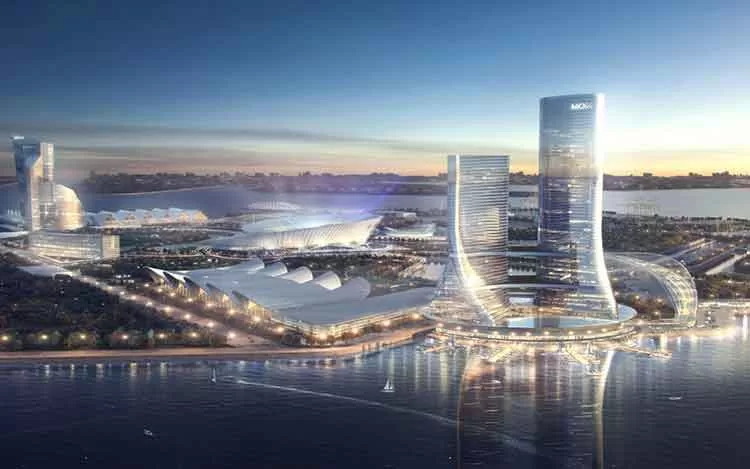
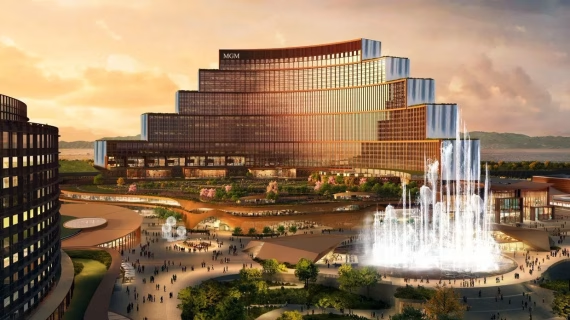
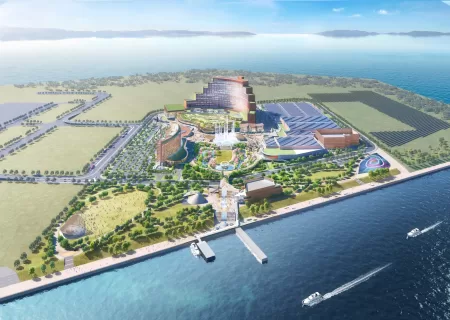
    The $8.9 billion MGM Osaka Resort
    The $8.9 billion MGM Osaka Resort

    Japan’s Gambling Problem

    To address concerns about gambling addiction, Japanese nationals will be required to pay a ¥3,000 (approximately $21) entrance fee to access the casino. Osaka residents paying an additional municipal fee, doubling the cost to ¥6,000 (approximately $42). These measures aim to mitigate potential negative social impacts while allowing the country to benefit from increased tourism and economic activity.

    Also Read First Phase of the largest data center in Japan completed

    An interesting aspect of the MGM Osaka project is its location on Yumeshima Island, which is also the site of Expo 2025. This strategic positioning is expected to enhance the island’s appeal as a tourist destination. In addition, it will leverage the global attention from the Expo to boost the resort’s profile. Additionally, plans are underway to extend the Osaka Metro Chūō Line to Yumeshima. This will improve accessibility to the island and integrating the resort more seamlessly into the city’s transportation network.

  • Construction Starts On Antares BESS Project in the Netherlands As Vattenfall Partners With Return

    Construction Starts On Antares BESS Project in the Netherlands As Vattenfall Partners With Return

    Construction has started on Return’s 100 MW / 200 MWh Antares battery energy storage system (BESS) planned to connect to the Netherlands’ TenneT high-voltage grid in 2026. Vattenfall has also signed an agreement to operate Return’s Antares BESS being developed in the Waddinxveen region in southern Netherlands.

    Antares BESS Project Factsheet

    Location: Waddinxveen, Southern Netherlands

    Developer: Return

    Cost: €85 million

    Capacity: 100 MW / 200 MWh

    Technical and project delivery contractors: Alfen and SPIE Nederland

    Project financiers: ING, Meewind and Nationaal Groenfonds

    Capacity off-taker(s): Vattenfall

    Start of construction: April 2025

    Project commissioning date: Mid-2026

    Also read: 25 MW Brecht BESS in Belgium Selects SPIE for Installation work

    More on the Netherlands Antares BESS Construction

    Construction of the 100 MW / 200 MWh Antares BESS project in the Netherlands will play an important role in the stabilization of the electricity grid. Additionally, with a capacity of 200 MWh, the large-scale BESS project can power half of the city of Hague.

    Once commissioned in mid-2026, Antares will join one of Europe’s largest BESS project, the 364 MW / 1457 MW Mufasa project also developed by Return. Together, they will accelerate Netherlands transition to renewable energy. The Antares BESS project will also be the second largest in Netherlands after the Mufasa.

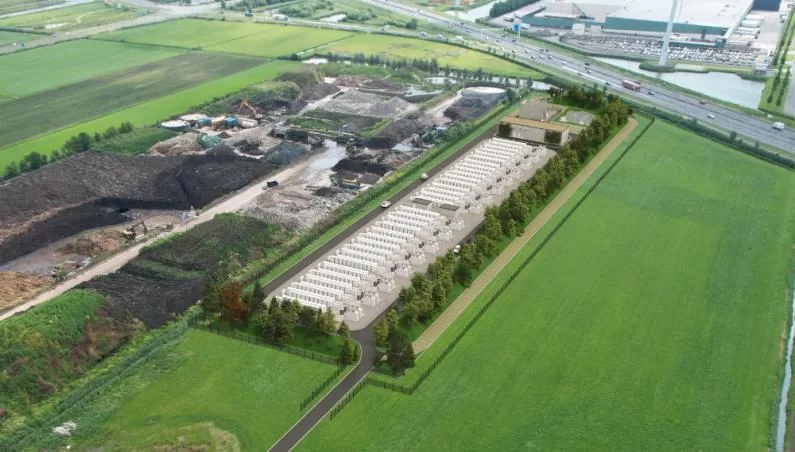
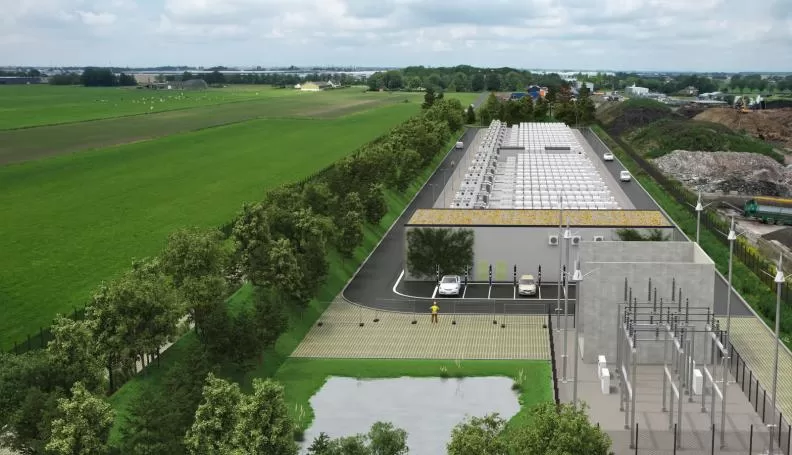
    Construction Starts On Return's Antares BESS Project in the Netherlands As Vattenfall Joins
    Return has also partnered with Vattenfall for a 50 MW / 100 MWh share of the Antares BESS project once operational

    Also read: Matrix’s Eccles and Kilmarnock BESS projects in Scotland, England to foster UK energy transition

    The Netherlands Antares BESS Construction Cost

    Of the financiers, Netherlands-based ING is providing the largest sum of the €85 million. Meewind and Nationaal Groenfonds also provided additional funds to the project. This, according to Return, underscores their commitment to “making energy storage a central pillar of Europe’s energy future”.

    Vattenfall as a capacity off-taker

    Being developed at a cost of €85 million, the Antares BESS project will serve both locals and other bigger industry players. A bigger industry player joining the project is Vattenfall.

    The energy company has partnered with Return for a 50 MW / 100 MWh share of the Antares BESS project once operational. Also, the contract will be carried out over a period of 8 years. A move Vattenfall says is, gaining momentum as it also strives to develop its own battery storage projects. Vattenfall’s ambition is scaled at up to 1.5 GW of external BESS capacity for connection to the Northwest Europe’s electricity market in the coming years.

    Future on Return’s BESS projects

    While making a statement on Antares BESS project’s design that incorporates flexibility that allows for grid optimization, future plans were also brought to light. These radiated in the spectrum of having 7 GW of their BESS portfolio online by 2032, to delivering at least 3 GW of energy storage by 2030.

    Also read: CIP and GCSS to oversee 2.3 GW battery storage (BESS) projects across Northern and Southern Italy

  • Ruto signs China deal to expand highways, extend SGR, and build Nithi Bridge

    Ruto signs China deal to expand highways, extend SGR, and build Nithi Bridge

    President William Ruto signed an infrastructure deal with Chinese Premier Li Qiang during his visit to China. The agreement covers the dualing of three highways, construction of the Nithi Bridge, and extension of the Standard Gauge Railway (SGR) from Naivasha to Kisumu and Malaba.

    The roads set for expansion are Nairobi–Nakuru–Mau Summit–Malaba, Kiambu–Northern Bypass, and Eldoret Bypass. China will also support the Nithi Bridge project along the Embu–Meru highway.

    Ruto’s China infrastructure deal key highlights

    • Roads: Nairobi–Nakuru–Mau Summit–Malaba, Kiambu–Northern Bypass, Eldoret Bypass

    • Bridge: Nithi Bridge along the Embu–Meru highway

    • SGR: Extensions from Naivasha to Kisumu and Malaba

    • Digital: National fibre optic cable network expansion

    • Healthcare: Hospital infrastructure & pharmaceutical manufacturing grants

    • Jobs and investment: KSh137B in deals, 28,000+ new jobs projected

    The agreement, announced by State House spokesperson Hussein Mohamed, outlines plans to dual three major highways and expand critical infrastructure. The highways in question are the Nairobi–Nakuru–Mau Summit–Malaba, the Kiambu–Northern Bypass, and the Eldoret Bypass.

    Ruto’s agreement with China for the dualing of the Nairobi–Nakuru–Mau Summit–Malaba highway comes barely two weeks after Kenya cancelled a KSh190 billion (€1.3 billion) deal with a French firm that had been contracted to construct the road.

    Additionally, the deal includes the construction of the Nithi Bridge, which has long been a source of danger for motorists, especially along the Embu-Meru route. The statement said:

    During the extensive engagement between the leaders, China agreed to work with Kenya on implementing strategic connectivity development projects.

    Expansion of the Standard Gauge Railway

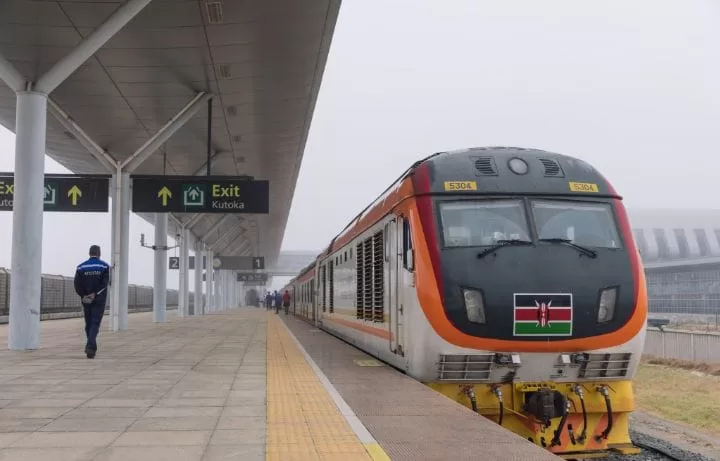
    Another centerpiece of the agreement is the expansion of the Standard Gauge Railway (SGR). The planned extension includes Phase 2B, from Naivasha to Kisumu, estimated at KSh380 billion, and Phase 2C, from Kisumu to Malaba, projected to cost KSh122.9 billion.

    Digital infrastructure investment

    The President Ruto’s China infrastructure deal also addresses the need for enhanced digital infrastructure. Kenya and China agreed to expand Kenya’s fibre optic network as part of the National Digital Superhighway Programme.

    This move is aimed at boosting internet connectivity, which is vital for Kenya’s growing digital economy. The statement highlighted:

    Kenya and China also committed to further collaboration in the rollout of Kenya’s National Digital Superhighway Programme.

    Healthcare, education, and transport solutions

    China also committed to funding healthcare improvements in Kenya through grants for the construction of new hospitals and private-sector investment in the manufacturing of pharmaceutical products. This aligns with Kenya’s goal to provide universal health coverage under its Bottom-Up Economic Transformation Agenda (BETA).

    On the issue of Nairobi’s traffic congestion, both countries agreed to invest in an intelligent transport management system. Furthermore, an instant-fine system will be introduced to more effectively address traffic violations.

    READ ALSO: Kenya signs deal with China to build new Ministry of Foreign Affairs headquarters

    Agricultural investment and job creation

    The deals also included agreements to boost agricultural exports from Kenya to China, including tea, coffee, macadamia, and avocados.

    Furthermore, during the Kenya-China Private Sector Roundtable and Business Forum, Ruto oversaw the signing of investment agreements worth KSh137 billion, expected to create over 28,000 jobs in manufacturing, agriculture, tourism, and infrastructure. Notable projects and job creation include:

    • A Special Economic Zone in Kilifi County (5,000 jobs)

    • Manufacturing expansions in Machakos, Murang’a, and Mombasa

    • Agricultural projects in Kajiado and Baringo, focusing on poultry, aloe vera, and vineyards (10,500 jobs projected)