Constructionreview

Blog

  • Usahihi Expressway Construction to Commence Next Year, Africa’s Largest Toll Road Project

    Usahihi Expressway Construction to Commence Next Year, Africa’s Largest Toll Road Project

    The US-based infrastructure investment firm Everstrong Capital has just made an announcement of planning to commence the construction of Nairobi-Mombasa Usahihi Expressway next year. This announcement was revealed by the company’s Senior Advisor, Kyle McCarter who clarified that the construction works on the 440-kilometer highway would start in the first quarter of 2026.

    Additionally, the update issued, McCarter also revealed that Everstrong Capital was planning to submit a formal feasibility study in May this year. This is expected to be approved by the Kenya National Highways Authority (KeNHA).

    Usahihi Expressway Project Factsheet

    Project name: Usahihi Expressway

    Developer: Usahihi Expressway Limited, backed by US-based Everstrong Capital.

    Route: The expressway will run alongside the existing Nairobi-Mombasa highway.

    Length: Approximately 440 kilometers.

    Lanes: It will be a dual carriageway, with the number of lanes varying (potentially four to six lanes in total).

    Estimated total cost: Approximately $3.5 – $3.6 billion (KES 452 – KES 468 billion).

    Funding:

    • Everstrong Capital aims to raise KES 129 billion ($1 billion) from domestic pension funds and financial institutions.
    • An additional KES 323 billion ($2.5 billion) is targeted from international investors.
    • The project is structured as a Public-Private Partnership (PPP) using a Build-Operate-Transfer (BOT) model over a 30-year concession period.

    Expected timeline:

    • Feasibility study is expected to be completed by May 2025.
    • Construction is expected to commence in early 2026.
    • Also, construction is projected to take approximately four years.

    Key features and benefits:

    • Reduced travel time: Expected to cut travel time between Nairobi and Mombasa from the current 10+ hours to approximately 4.5 hours.
    • Economic growth: Aims to boost economic activity along the corridor by facilitating faster and more efficient movement of goods and people, enhancing trade and tourism.
    • Decongestion: Intended to decongest the existing Nairobi-Mombasa highway.
    • Job creation: Expected to create employment opportunities during the construction and operation phases.
    • Toll revenue: Revenue will be generated through toll fees, primarily from heavy commercial vehicles, which are anticipated to be the primary users (projected to account for 75% of revenue).
    • Sustainability features: Plans include rest stops, wildlife observation points, electric vehicle charging infrastructure powered by renewable energy, and wildlife overpasses.

    Also read: US-Based Everstrong Commences Raising Funds for Usahihi Expressway: Africa’s Largest Toll Road Project

    Feasibility Study

    “Update on delivery: submitting feasibility study in May, looking for on-time approval from Kenha & PPP, financial close by end of year,” the update read.

    Also, the former US Ambassador to Kenya gave the update hours after meeting former Prime Minister Raila Odinga. Additionally, in the meeting the two leaders discussed the need for proper infrastructure in Africa.

    Additionally, during the meeting, the duo also discussed the positive economic impact the Nairobi-Mombasa expressway would bring to Kenyans and the wider region.

    “The announcement comes about two months after Everstrong Capital and CPF Capital & Advisory Limited officially signed a project agreement to raise Ksh129 billion for the construction of the highway and construction beginning Q1 2026,” McCarter announced.

    Significance of the Project

    According to Everstrong Capital, the road project will revolutionise Kenya’s transportation network. Furthermore, the project will position the country as a key player in the East African wealth corridor by enhancing connectivity and boosting economic growth.

    Also read: Kenyan Government and US-Based Everstrong Capital Move Forward with $3.6B Usahihi Nairobi-Mombasa Expressway

    Lastly, the Usahihi Expressway is expected to be the largest toll road in Africa. The project focuses on sustainability, featuring wildlife corridors, electric vehicle charging and renewable energy infrastructure.

    Also read: New Usahihi Expressway to Feature Shortened Travel Times, EV Charging Stations, and Eco-Friendly Construction

  • Saudi Arabia’s Mukaab Advances as Murabba Seeks Firms for Three New Packages

    Saudi Arabia’s Mukaab Advances as Murabba Seeks Firms for Three New Packages

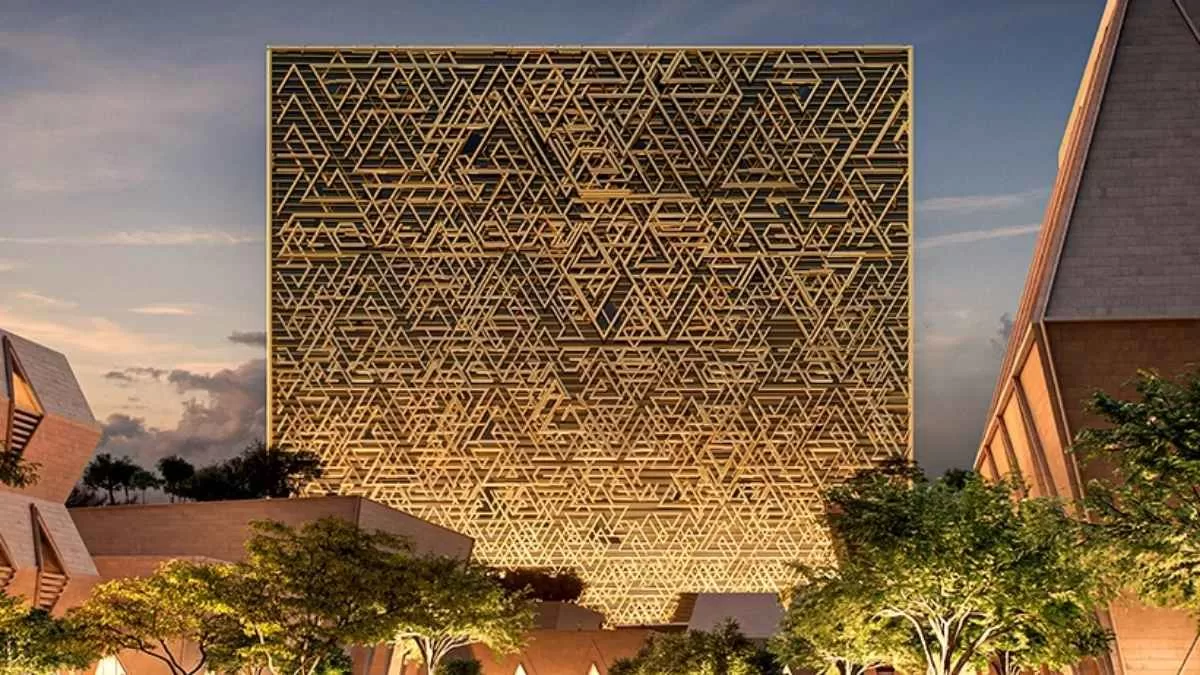
    Saudi Arabia’s Mukaab is moving rapidly as New Murabba Development Company (NMDC) invites prequalification by contractors for three new contracts. Interested contractors are expected to submit their applications for the three construction packages on 30 April. These are the Central Core Tower, Outriggers, and Vertical Ribs. Saudi Arabia’s Mukaab is a futuristic Najdi-inspired structure at the heart of Riyadh’s New Murabba downtown development. Priced at an estimated SR10bn ($2.6bn), the work bears witness to Saudi Arabia’s strong determination regarding its Vision 2030 ambitions. Meanwhile, NMDC is also evaluating bids presented last November for raft concrete work beneath the podiums and Saudi Arabia’s Mukaab itself. Internally, the mega cube-shaped structure will feature a spiraling tower, surrounded by two million square meters of hospitality, residential, retail, and cultural areas. In October last year, the excavation works were 86% finished, with over 10 million cubic meters of soil having been excavated. Evidently, Saudi Arabia’s Mukaab is a step closer to realization.

    Also read:

    Progress on the world’s largest building, The Mukaab in Saudi Arabia

    Project Factsheet

    Significance:

    • Will be one of the largest buildings in the world, measuring 400m in height, width, and length.
    • Forms the centerpiece of Riyadh’s New Murabba downtown development.
    • Supports Saudi Arabia’s Vision 2030 by promoting urban expansion and cultural growth.
    • Showcases innovative, Najdi-inspired architectural design blending tradition with modernity.

    Infrastructure:

    • Cube-shaped structure featuring a spiraling tower inside.
    • Total floor area: 2 million square metres dedicated to hospitality, residential, retail, and cultural spaces.
    • Central Core Tower, Outriggers, and Vertical Ribs form critical structural elements.
    • Integrated within New Murabba’s larger downtown area of 25 million square metres.

    Developer:

    • Project led by New Murabba Development Company (NMDC).
    • Excavation works carried out by China Harbour Engineering Company.
    • Foundation works undertaken by UAE-based HSSG Foundation Contracting.

    Timeline:

    • Significant excavation progress reached by October 2024 (86% complete).
    • Firms invited to prequalify for new contracts by 30 April 2025.
    • Ongoing evaluation of raft concrete works bids submitted in November 2024.

    Context:

    • Located in Riyadh, about 20 minutes from King Khalid International Airport.
    • Part of New Murabba, which will feature green spaces, walking paths, and an internal transport system.
    • Downtown will host over 104,000 residential units, 9,000 hotel rooms, and over 980,000 sq m of retail space

    Scope of Implementation on Saudi Arabia’s Mukaab

    The construction of Saudi Arabia’s Mukaab involves several important phases. First, the Central Core Tower, Outriggers, and Vertical Ribs are expected to be constructed soon. Second, foundation and excavation works are already ongoing with China Harbour Engineering Company and HSSG Foundation Contracting leading the way. Moreover, the adjacent New Murabba downtown will have a total floor area of 25 million square meters.

    Saudi Arabia’s Mukaab
    Saudi Arabia’s Mukaab is moving rapidly as New Murabba Development Company (NMDC) invites prequalification by contractors for three new contracts.

    It will also feature over 104,000 residential units and 9,000 hotel rooms. Additionally, it will boast 980,000 square meters of retail space and large green areas. Cycle and pedestrian paths will promote a sustainable, healthy lifestyle. New Murabba will also have a museum, a university, and an immersive multipurpose theatre. Entertainment and cultural facilities will exceed 80, enriching the life of the community. Notably, all the facilities will be within a 15-minute walking distance. Accordingly, Saudi Arabia’s Mukaab will be an iconic emblem of modern urban living and the world’s largest building.

    Also read:

    The Mukaab Project In Saudi Arabia Announces Development Plans

    Latest in ESG strategies and sustainability at the New Murabba and the Mukaab

  • $9 Billion Tiktok Data Center Project in Brazil Advances as Patria-backed Omnia Comes on Board

    $9 Billion Tiktok Data Center Project in Brazil Advances as Patria-backed Omnia Comes on Board

    Updated November 4, 2025: The construction of a TikTok data center in Ceara, Brazil advances as Patria-backed Omnia comes on board. The center is expected to serve Tiktok as its sole client, according to sources familiar with the project. The facility is being developed with Brazilian renewable energy provider Casa dos Ventos. It is to be constructed in the Pecem port complex. Brazilian officials have publicly linked TikTok to the project, though ByteDance, Patria, and Casa dos Ventos declined to comment.

    The data center is expected to consume 300 megawatts of power, making it Brazil’s largest single-client data center. Moreover, its construction is set to start this year and operations targeted for 2027.  Omnia is expected to invest 12 billion reais in infrastructure, while the client will fund the remainder, focused on IT equipment. Casa dos Ventos plans to invest 3.5 billion reais in new wind farms to supply energy to the center. Brazil’s government has authorized the center to provide data export services. Tiktok’s data center is one of the largest outside the US and Europe other than Google’s planned data center in India. 

    The construction of a Tiktok data center inb Ceara, Brazil advances as Patria-backed Omnia comes on board

    Project Factsheet

    Significance:

    • Set to be Brazil’s largest single-client data center, exclusively serving TikTok.

    • Marks a major step in Latin America’s growing digital infrastructure landscape.

    • Expected to strengthen Brazil’s role as a regional data hub for global tech companies.

    Infrastructure:

    • Located in the Pecém Port Complex in Ceará state.

    • Will consume approximately 300 MW of power once operational.

    • Supported by renewable energy from Casa dos Ventos’ new 3.5 billion reais wind farms.

    Developer/Consortium:

    • Developed by Patria-backed Omnia in partnership with Casa dos Ventos.

    • TikTok (ByteDance) will be the sole client and co-investor in IT systems.

    • Project aligns with Brazil’s authorization for cross-border data export services.

    Funding/Timeline:

    • Total investment estimated at over 12 billion reais.

    • Construction to begin in 2025, with operations targeted for 2027.

    • One of the largest TikTok data centers outside the U.S. and Europe.

    15th September – In a move that is reminiscent to many data center projects under construction, environmental concerns have come to the forefront of the project to build TikTok’s data center. An Indigenous community in Ceará, Brazil, has filed a lawsuit against TikTok over the company’s proposed data center. The Anacé people assert that the land targeted for the TikTok facility—and for Casa dos Ventos, the wind energy firm set to supply power—belongs to them. Community leaders say they were not properly consulted and that their worries about the project’s water usage were disregarded. This comes even as TikTok breaks ground on its third data center in Europe as it scals up its capacity around the globe.

    31st May 2025- Regulatory approval has been received from National Electric System Operator (ONS) the power grid regulatory body responsible in Brazil. The approval paves the way for ByteDance parent company of TIKTOK to move closer to making the project a reality.

    What we know at this time is that the project is expected to cost US$8.7billion and will be a Mw300 project. To mitigate concerns over water use, the project will adopt a closed loop cooling system. Projected date of construction is set for later this year with operations commencing in 2027.

    ByteDance, the Chinese parent company of TikTok, is reportedly exploring a significant investment in a data center in Brazil, potentially solidifying the country’s position as a hub for data storage and renewable energy use. According to Reuters, the company is in discussions to partner with Casa dos Ventos, a renewable energy producer, to develop the facility in the Pecem port complex located in the state of Ceará.

    A Strategic Move to Leverage Brazil’s Renewable Energy Resources

    Brazil’s northeast coast is rich in wind energy, making it an attractive location for data center development. The proposed facility is expected to harness the abundant renewable energy in the region, which aligns with global trends of seeking sustainable, green solutions for data storage.

    The initial discussions point toward a 300-megawatt (MW) data center, with the possibility of expanding the project to 900 MW in a second phase. According to one source, the total demand for the facility could even approach 1 gigawatt. This ambitious venture could position Brazil as a central pillar of ByteDance’s operations in the Western Hemisphere, further enhancing the company’s data infrastructure across global markets.

    Also Read: Microsoft forced to Delay Major US$1 billion Data Center Expansion in Ohio

    Renewable Energy and Brazil’s Role in Data Center Industry

    Brazil has positioned itself as a potential global leader in the data center industry, capitalizing on its vast renewable energy resources. The Pecem region is particularly appealing due to its proximity to submarine cable landing stations, making it a strategic location for data transmission.

    Casa dos Ventos, already a key player in Brazil’s wind energy sector, has applied for grid connections in the Pecem area to support the data center project. While there were initial concerns about grid stability, Brazil’s Mines and Energy Ministry is currently evaluating options to expand the grid capacity for such projects. This underscores the growing importance of Brazil’s energy transition and its move towards technological innovation.

    ByteDance’s Growing Investment in Data Centers Worldwide

    The proposed project in Brazil adds to ByteDance’s expanding data center portfolio. Earlier this year, the company revealed plans to invest $8.8 billion over five years in data centers across Thailand, further demonstrating the company’s commitment to bolstering its global infrastructure.

    In addition to its recent focus on Brazil and Thailand, ByteDance has been steadily increasing its presence in South America. In 2021, TikTok opened its first data center in Argentina, marking a major step in the company’s strategy to strengthen its services in the Latin American market. This data center, located in Buenos Aires, is strategically important for TikTok as it helps improve the app’s performance for users in the region while complying with local data protection regulations.

    Also Read Data center construction boom 

    While ByteDance is making significant moves in the region, the Pecem data center in Brazil would represent a much larger investment, potentially becoming one of the company’s primary hubs for the Americas.

    Despite these developments, TikTok and ByteDance have declined to comment on the negotiations in Brazil. However, sources suggest that the Pecem facility would be a major part of ByteDance’s operations in the Americas, emphasizing the company’s ongoing efforts to establish a stronghold in the region.

  • 220MW Meru Wind and Solar Project Moves Forward

    220MW Meru Wind and Solar Project Moves Forward

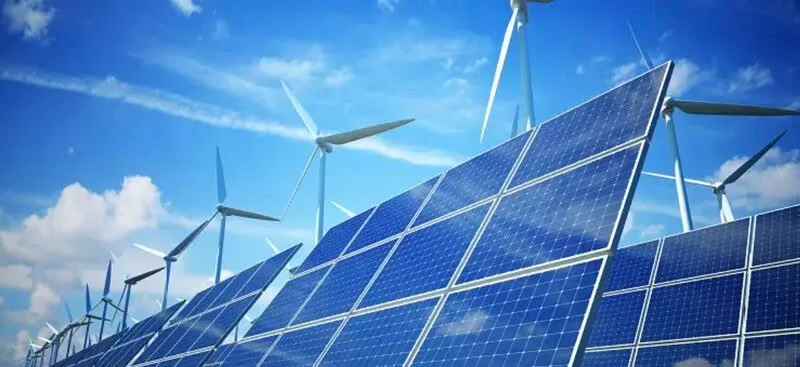
    Plans are currently underway to set up a 220MW Meru Wind and Solar Project in Meru County. This project is crucial in that it will help Kenya boost its general transition towards clean energy.

    Hewani Energy economic development manager, Victor Mutuerandu revealed that 200MW will be tapped from wind power. The other 20MW will be tapped from solar that will be installed on a 100-acre land.

    Project Factsheet

    Capacity: 220 MW

    Technology mix:

    • Wind: 200 MW (approximately 32 wind turbines)
    • Solar PV: 20 MW (installed on about 100 acres, with over 40,000 solar panels)
    • Battery Energy Storage System (BESS): 10 MWh (5,000 kW / 10,000 kWh capacity)

    Location: Kandebene sub-location, Tigania West, Meru County, Kenya (near the Meru County–Isiolo County border). Also, the project site covers approximately 2,000 acres.

    Developer: Hewani Energy, a subsidiary of Seriti Green (South Africa – 75% stake) and Eurus Energy (Japan – 25% stake), in partnership with the Meru County Investment and Development Corporation (MCIDC) which holds a 5% stake with the option to increase to 20%.

    Cost: $250 million (approximately Ksh40 billion).

    Land agreements: Long-term leases (20-30 years) will be established with approximately 2,500 landowners.

    Landowner compensation:

    • Landowners hosting turbines: Minimum of KES 200,000 per year.
    • Other landowners within the project area: KES 10,000 to KES 20,000 per acre per year (depending on the Power Purchase Agreement rates).
    • Landowners will also receive 1.5% of the gross revenue.

    Community benefits: 0.5% of the gross revenue will go to a community trust.

    Significance:

    • Electricity access: Expected to power approximately 400,000 homes.
    • Job creation: Approximately 500 casual and semi-skilled jobs during construction and 50 permanent jobs during operation.
    • Clean energy transition: Will significantly boost Kenya’s transition to clean and renewable energy sources, contributing to the national goal of 100% clean energy by 2030.

    Revenue sharing: The project is a joint venture with the Meru County Government, which is entitled to dividends.

    Also read: KenGen to Construct 40MWp Kamburu Floating Solar Photovoltaic Plant, the First Grid-Level Solar Plant in Kenya

    “We kicked off the project in 2019 and 2020 by entering into a licence and options agreement. The main purpose of this licence was to explore if the area is feasible for the upcoming project,” he stated.

    Project Infrastructure Details

    The project will utilize some 32 wind turbines, 20 megawatts of solar PV and a 10 MWh battery electric storage system.

    “We have just acquired an environmental licence from the National Environment Management Authority and the Kenya Civil Aviation Authority for the heights of our turbines,” he revealed.

    Additionally, Mutuerandu mentioned that they have conducted other studies to assess what can be constructed at the project’s site.

    He also stated that there were 2,000 landowners, and they made about 1,800 licence and option agreements.

    Also read: Kenyan Company Plans to Develop 195MW Kaptagat Solar Power Plant

    Challenges Facing the 220MW Meru Wind and Solar Project

    However, he said that the licence and option agreement provided that land ownership be confirmed by a title deed. This was a challenge because the community did not have land ownership documents.

    Mutuerandu said they helped the community their acquire land ownership documents Eventually, these documents were issued to them about three weeks ago, when President William Ruto toured Mount Kenya.

    He also revealed that with landowners having their ownership documents, the company will enter into a long-term lease with the community for between 20 and 30 years.

    “The option to enter into a long-term lease is based on the power purchase agreement we get. We are wholesalers of electricity,” he said.

    Lastly, the power generated by the new renewable energy project will generate electricity that would power 400,000 homes.

    Also read: KenGen Set to Add 42.5MW Seven Forks Solar Power Plant on Kenya’s Seven Forks Dams


  • Latest Updates on $400 Million Ogun Stellar Steel Plant in Nigeria

    Latest Updates on $400 Million Ogun Stellar Steel Plant in Nigeria

    Updated October 30 2025- The Nigerian Government has signed a deal of $400 million with Stellar Steel Company Limited, a Chinese-backed firm, to establish the Ogun Stellar Steel Plant in Ewekoro.

    The partnership aims to revitalise the country’s comatose steel industry, cut reliance on imported steel products and accelerate industrial growth. This information was revealed by the principal information officer of the Ministry of Steel Development in a statement on Wednesday.

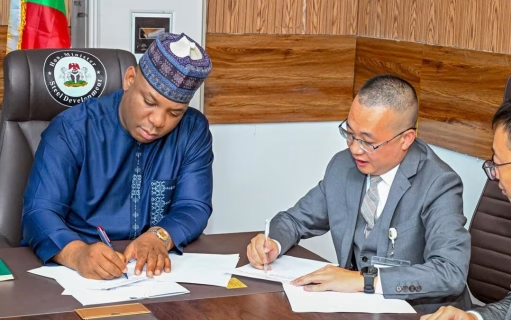
    The minister of steel development, Shuaibu Audu, signed the agreement when he hosted Li Shuang, the president of Inner Galaxy Group, and other members of Stellar Steel Company Limited in the ministry’s headquarters in Abuja.

    The Ogun Stellar Steel Plant project will be developed in three phases. The first stage anticipated to kick off production by the middle of next year.

    Mr Audu said the partnership aligns with the government’s goal of achieving 10 million tonnes of crude steel production annually by 2030.

    “This strategic cooperation marks a new era for Nigeria’s steel industry and demonstrates the government’s commitment to sustainable industrial growth and economic transformation,” he stated.

    The minister said Stellar Steel will prioritise local recruitment and training, and collaborate with Nigerian universities to build technical and managerial expertise in steel production.

    Also, he added that the ministry will provide policy and infrastructure support. This will include inclusion of Stellar Steel’s logistics projects in the National Infrastructure Plan (NIP) and access to fiscal incentives.

    Nigeria is gearing up its industrial sector with development of various industries. These industries once developed will make Nigeria an industrial powerhouse and boost its economy. Such industrial projects that are to be developed in the country include the $3.3 billion brass and methanol complex.

    The Nigerian Government has signed a deal of $400 million with Stellar Steel Company Limited, a Chinese-backed firm, to establish a modern steel plant in Ewekoro, Ogun State.
    The Nigerian Government has signed a deal of $400 million with Stellar Steel Company Limited, a Chinese-backed firm, to establish a modern steel plant in Ewekoro, Ogun State.

    Reported on May 15, 2025

    The Federal Government of Nigeria has taken a crucial step to slash Nigeria’s $4 billion annual steel import bill with the groundbreaking of a $400 Million Ogun Stellar Steel Plant owned by Inner Galaxy Group in Ogun State.

    The Minister of Steel Development, Shuaibu Audu, who performed the official groundbreaking ceremony of the steel plant, said the move is aimed at revitalising the country’s steel sector and reducing dependence on imports.

    Ogun Stellar Steel Plant Project Factsheet

    Project name: Stellar Steel Plant

    Investor: Inner Galaxy Group

    Location: Ogun State, Ewokoro

    Investment value: $400 million

    Expected completion: April 2026

    Products: Hot-rolled coil, a key raw material for industries including:

    • Construction
    • Automotive
    • Manufacturing

    Capacity: The specific production capacity in tonnes per annum is not explicitly stated in the provided sources. However, the plant is expected to significantly reduce Nigeria’s $4 billion annual steel import bill.

    Job creation: Over 3,500 direct and indirect jobs are expected to be generated.

    Industrial growth: The plant is anticipated to bolster industrial development in Nigeria.

    Backward Integration: Production of hot-rolled coil locally supports other manufacturing sectors.

    Also read: Dangote to build Nigeria’s largest seaport in Ogun State, expands cement capacity to 18 million tons

    This information was revealed in a statement that was signed by the Principal Information Officer, Ijomah Opia, on Thursday.

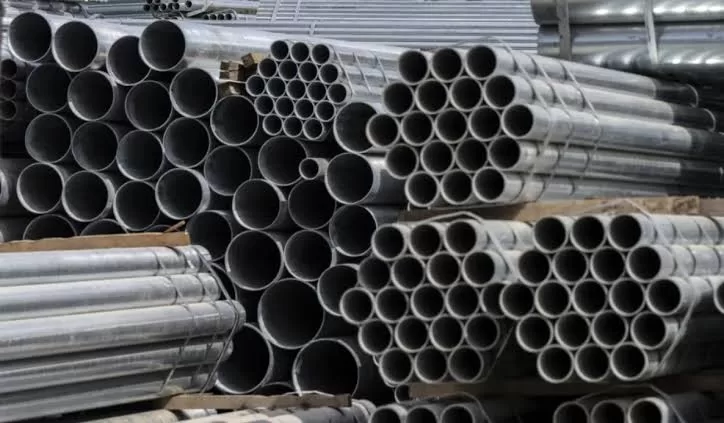
    Located on over 100 hectares of land, the Stellar Steel Plant is expected to produce hot-rolled coil. This is a key raw material for various industries including construction, automotive, and manufacturing.

    The project is anticipated to significantly bolster the nation’s foreign exchange earnings by reducing steel imports while also contributing to economic diversification away from oil and gas.

    Significance of the Project

    According to the minister, the facility will enhance industrial growth. It will also generate more than 3,500 direct and indirect jobs, thereby contributing to the administration’s employment drive and economic development agenda.

    “This groundbreaking ceremony is a crucial milestone in our journey to revive Nigeria’s steel industry. The completion of this steel plant will reduce our reliance on foreign steel, conserve foreign exchange, and position Nigeria as a key player in the regional and global steel market.

    The Stellar Steel plant, which will sit on over 100 hectares of land once completed. Furthermore, it is expected to produce hot-rolled coil thereby reducing Nigeria’s $4 billion annual steel import bill. This will strengthen the nation’s foreign-exchange position, growing, and diversifying the economy away from oil and gas and also creating over 3,500 direct and indirect jobs for Nigerians,” Audu said.

    Also read: Nigeria’s $3.3 Billion Brass Industrial Park and Methanol Complex

    He also reaffirmed Nigeria’s government commitment to supporting investors in the steel secto. This is showcased through policies that encourage local production, ensure ease of doing business, and drive sustainable industrial development.

    The event followed the recent commissioning of the African Industries Group’s Galvanised Steel Plant in Lagos. This is a facility with an estimated annual turnover of $100 million.

    The statement noted that both events were part of the Minister’s one-week working visit to Lagos and Ogun States to engage with key private players in the steel sector.

    Commissioning Date

    The minister also expressed confidence in the capacity of the Inner Galaxy Group to deliver on its plans for the completion of the Stellar Steel Plant. Additionally, he expects to commission the completed plant by next April 2026.

    “As you are all aware, this is one of the most robust cabinet teams that has been put together by any President since the advent of the democratic dispensation in the Fourth Republic in 1999 because President Tinubu is renowned for selecting the best hands and leaders to actualise his vision,” he added.

  • Morocco Commences Construction of Africa’s Longest High-Speed Rail Line, the Kentira-Marrakech Rail Project.

    Morocco Commences Construction of Africa’s Longest High-Speed Rail Line, the Kentira-Marrakech Rail Project.

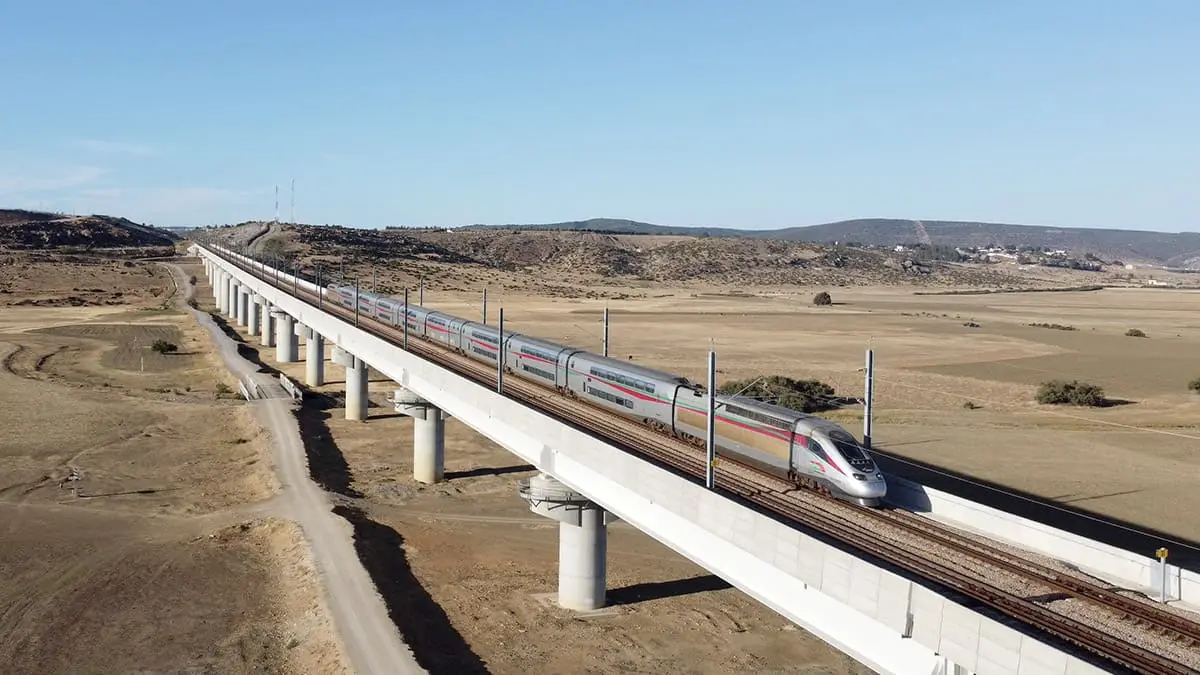
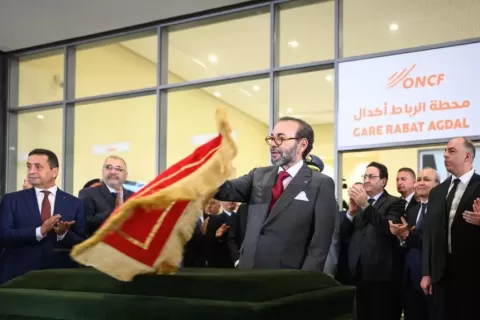
    Morocco’s Kentira-Marrakech rail project received a significant boost on Thursday when King Mohammed VI initialed the $10.3 billion project. The massive investment includes a high-speed connection between Kenitra and Marrakesh, Morocco’s premier tourist hub. The 430-kilometre track will run through the country’s key cities. These include cities such as Rabat and Casablanca. Morocco aims to complete this route by 2030. Once completed, the rail will cut two hours from the trip between Marrakesh and Tangier. At a speed of 350 kilometres an hour, the journey will now only take 2 hours and 40 minutes. The journey between Rabat and Casablanca airport will also be reduced to just 35 minutes. This follows Morocco’s plan to co-host the 2030 World Cup alongside Spain and Portugal. State-owned rail company ONCF has also signed contracts to purchase 168 new trains. These include double-deck high-speed trains by Alstom to carry 640 passengers. Nonetheless, Morocco will significantly expand its domestic railway network.

    Also read:

    Morocco’s 450 Kilometer Kentira-Marrakech High Speed Rail Contract Awarded

    Significance of Morocco’s Kentira-Marrakech Rail project

    Kentira-Marrakech Rail Project
    Morocco’s Kentira-Marrakech rail project received a significant boost on Thursday when King Mohammed VI initialed the $10.3 billion project.

    The Kentira-Marrakech rail project upholds more than improving rail transportation in the country. It is also a symbol of the nation’s ambitions. The new trains will help to double the number of cities reached by 2040, ONCF stated. As a result, 87 percent of Moroccans will be within railway reach. The development will also help to support the country’s growing rail industry. The recent deals with France, Spain, and South Korea also foster international cooperation. This is a turning point for connectivity and economic growth,” said an ONCF official. In addition, the high-speed line will increase tourism since it will facilitate access to Marrakesh. Effective transport is important with the World Cup approaching in the future. Moreover, Morocco sees the Kentira-Marrakech rail project as a sustainable development investment in the long run.

    Also read:

    French-based Colas Inks $445 Million Contract for Morocco’s High-Speed Rail Extension

    Spanish Firm Awarded Contract to Conduct Morocco-Spain Undersea Rail Line Study