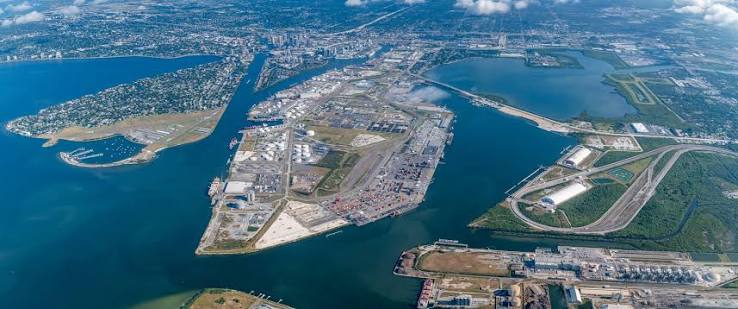
Construction officially began August 3, 2026, on Port Tampa Bay‘s fourth cruise terminal — the port’s first new terminal build in more than a quarter century — with crews now filling in the old Metroport site to prepare the ground for what comes next.
Kimmins Contracting Corporation is handling the site preparation, which involves restoring more than five acres of land on the former Metroport property — once home to the historic Banana Docks — and relocating stormwater infrastructure that currently runs through the site. That phase is expected to run through late 2026, followed by a settlement period before vertical construction begins.
Building on a Former Marine Slip
The terminal will rise on what is currently a former marine slip, while HDR and BEA Architects will design both the terminal building and the adjoining parking garage. The port expects to release renderings of the finished facility in the coming months but has not announced a construction start date beyond the current fill and settlement schedule. That distinction is worth noting because the design and land-preparation phases appear to be moving on separate tracks for now.
The port targets completion in 2029.
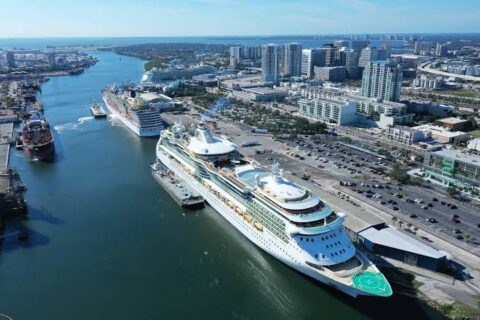
The schedule aligns with a capacity problem the port has been facing. Its three existing terminals already operate at capacity, forcing the port to turn away requests from cruise lines seeking to add ships or itineraries. The fourth terminal aims to meet that demand rather than simply expand capacity.
Why Port Tampa Bay Is Building Now
Port Tampa Bay President and CEO Paul Anderson tied the project to the broader trajectory of cruise demand in the market, saying “this project is about much more than adding another cruise terminal. It’s an investment in the future of Port Tampa Bay and the economy of West Central Florida.”
The math behind that framing: once open, the new terminal is projected to support more than 200 additional annual ship calls, pushing the port’s overall cruise passenger count from roughly 1.6 million to more than 2 million annually and adding an estimated $100 million a year in regional economic impact. For a market that hasn’t added terminal capacity in 25 years, that’s a meaningful jump in throughput rather than an incremental one.
A Port Built on More Than Cruise
The new terminal adds to a port that already moves roughly 33 million tons of cargo a year across 5,000 acres, doing business as a shipyard and ship-repair hub, a major fertilizer export point, and a growing container gateway alongside its cruise operations. That diversified base is part of why Fitch holds Port Tampa Bay at an “A” rating with a stable outlook, and why the port’s economic footprint runs to an estimated $34.6 billion in impact and more than 192,000 jobs across Central Florida — figures that give some sense of scale for why a fourth cruise terminal matters beyond the passenger count alone.
Land-side capital projects like this one are showing up across Gulf Coast ports right now, though for different underlying demand — Argent LNG’s Port Fourchon export terminal in Louisiana is moving through federal waterway review at the same time, a reminder that dredging, channel capacity, and vessel-traffic infrastructure are becoming a shared constraint point across the region’s ports, whether the vessels in question are carrying passengers or LNG.
Project Factsheet: Port Tampa Bay’s Fourth Cruise Terminal
- Project: Port Tampa Bay’s fourth cruise terminal, built on former Metroport/Banana Docks site
- Groundbreaking: August 3, 2026
- Contractor: Kimmins Contracting Corporation (site prep)
- Designers: HDR with BEA Architects
- Current phase: Land filling and stormwater relocation, through late 2026
- Completion target: 2029
- Projected impact: 200+ additional annual ship calls; passenger count rising from ~1.6M to 2M+ annually; ~$100M added annual economic impact
- Port profile: 33M tons of cargo/year, 5,000 acres, Fitch “A” rating, $34.6B total economic impact, 192,000+ jobs supported




Leave a Reply