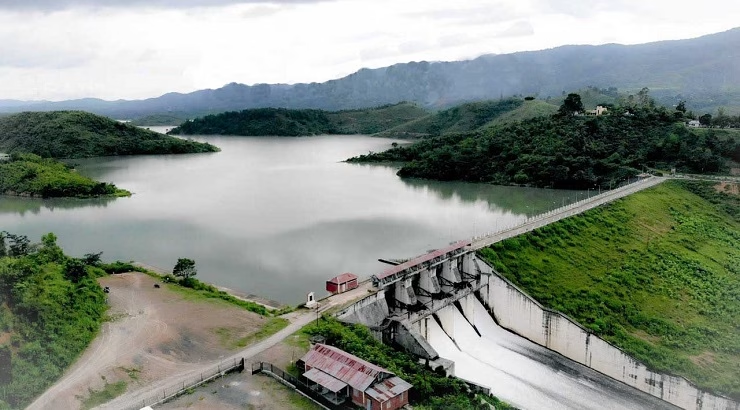
Kenya’s strategy for constructing 50 mega-dams represents a cornerstone of President William Ruto’s agricultural transformation agenda. The policy aims to construct 50 large dams alongside 200 medium-to-small reservoirs and thousands of micro-dams over a five-to-seven-year window. The central objective is to transition Kenya away from its historical reliance on rain-fed farming by bringing an additional 2.5 million acres of land under active irrigation. By harnessing surface run-off and expanding bulk water storage, the government seeks to drastically reduce the nation’s annual KES 500 billion food import bill and convert Arid and Semi-Arid Lands (ASALs), particularly across Northern Kenya, into viable agricultural hubs. Key flagship sites slated for rollout under this blueprint include the High Grand Falls Dam on the Tana River, Bute Dam in Wajir, Soin-Koru Dam in Kisumu, Lowaat Dam in Turkana, and the Ewaso Nyiro basin developments.
Despite the ambitious scale, the plan has encountered structural and financial challenges that have drawn close public scrutiny. The primary bottleneck remains a substantial funding gap running into hundreds of billions of shillings, alongside structural difficulties in attracting private capital through the initially proposed Public-Private Partnership (PPP) framework due to uncompetitive water tariffs. To move past early delays, the administration has pivoted toward a blended financing model, combining state-backed funding mechanisms like the National Infrastructure Fund with concessions, sovereign support from bilateral partners such as Qatar, and concessional backing from institutions like the World Bank.
October 14, 2025
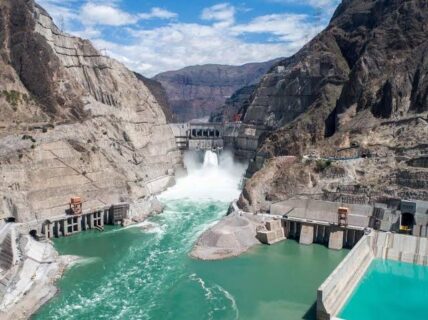
Kenya’s president William Ruto has emphasised the urgent need for the country to build at least 50 Mega Kenyan Dams that will be similar in scale to the Thwake Dam.
The proposed dams will be part of the long-term strategy to combat food insecurity and cut the Kenya’s heavy reliance on food imports.
Factsheet
Number of dams: 50 mega dams
Cost: Approximately Ksh1.5 trillion ($11.6 billion)
Funding mechanism: The government plans to utilize a new National Infrastructure Fund, combining resources from the national budget, private sector, and proceeds from privatization.
Irrigation target: To bring at least 2 million acres of land under irrigation.
Purpose (Multipurpose):
- Water Supply: Provide treated water for domestic use.
- Irrigation: Supply water for agricultural production.
- Hydropower: Potential for electricity generation.
Cost of the 50 Mega Kenyan Dams
Furthermore, Ruto stated that approximately Sh1.5 trillion ($11.6 billion) is needed for the construction of the 50 dams.
Speaking during the launch of Phase 1 Infrastructure at Konza Technopolis on Monday, Ruto stated that the dams are a key factor in transforming Kenya’s agricultural landscape. Also, he outlined that the dams would reduce the country’s yearly food import bill which currently stands at more than Sh500 billion.
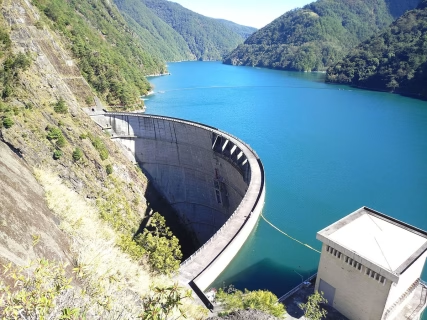
“As a country, we are spending Sh500 billion for importing food into the country. These include edible oil, wheat, rice, sugar, maize sometimes,” Ruto noted.
“It is necessary for us to save that money. We have almost exhausted land under rain-fed agriculture. We must now shift to irrigation.”
Additionally, the president stated that the country has made good progress in stabilising food security. However, Ruto said that there is still more work ahead.
“We have just laid the foundation. To truly make progress, we need to construct a total of 50 mega dams like Thwake to irrigate two million acres of land,” he staed. “This will ensure food security but also enable us to export agricultural products to the global markets we have secured.”
Ruto cited various international trade agreements, including the African Continental Free Trade Area (AfCFTA), which gives Kenya access to a market of 1.4 billion people, and the European Union (EU), whose 420 million citizens have high spending power.
To realise the 50-dam vision, Ruto estimated that Kenya will need to invest approximately Sh1.5 trillion.
About Thwake Dam
The Thwake Dam, which Ruto used as a model example, is a multipurpose water development project located on the Athi River at its confluence with the Thwake River.
Straddling the border of Makueni and Kitui counties, it lies about 180 kilometres southeast of Nairobi and 30 kilometres north of Wote town.
Lastly, once completed, the Thwake Dam will supply 150,000 cubic meters of treated water daily to over 1.3 million people in Kitui, Makueni, and the fast-developing Konza Technopolis.


Leave a Reply