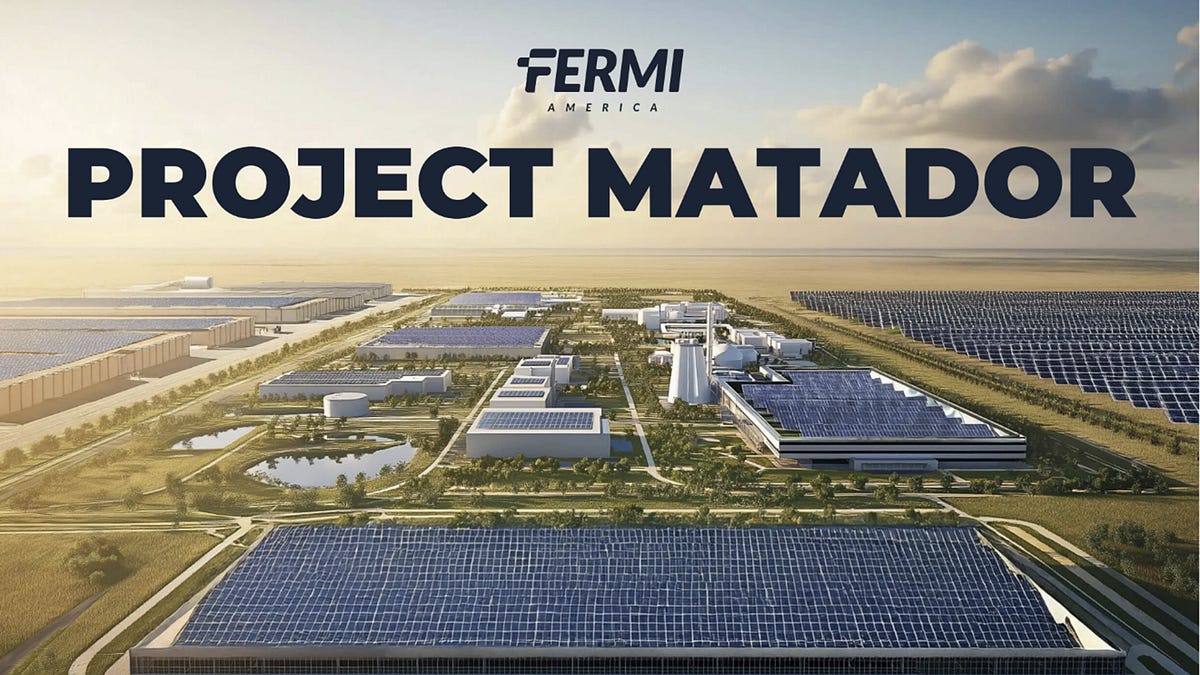
Project Matador power grid has cleared a significant federal environmental review milestone, advancing plans for a 17-gigawatt energy and artificial intelligence campus in the Texas Panhandle. The development aims to combine nuclear reactors, natural gas generation, solar power and battery storage.
Consequently, the project could establish a dedicated electricity network for large-scale computing operations near Amarillo. However, developers still need further federal approvals before nuclear reactor construction can proceed.
The initial two development phases were previously estimated to cost more than $2 billion. That figure does not represent the total cost of the expanded 17GW development. The overall investment requirement remains unconfirmed in the available reporting.
Fermi America is developing the campus to address rising electricity demand from artificial intelligence and high-performance computing. Unlike conventional data centers that depend heavily on external electricity networks, the proposed facility would integrate generation and computing infrastructure within one campus.
Project Matador power grid expands beyond its original 11GW concept. The developer now targets approximately 17GW, subject to commercial agreements and phased investment. Fermi America’s latest regulatory progress strengthens the nuclear component of this ambitious construction program.
Project Matador power grid moves through federal review
The US Nuclear Regulatory Commission (NRC) has published its draft environmental review for four proposed Westinghouse AP1000 nuclear reactors. NRC staff have also recommended preliminary approval of combined licenses, subject to completion of the separate safety assessment.
However, the recommendation does not constitute final authorization to construct and operate the reactors. The NRC must complete its environmental review and safety evaluation before the Commission decides whether to issue the licenses.
The regulator’s published schedule targets the final environmental impact statement for December 2026. Mandatory hearings and the final licensing decision remain without confirmed dates.
This process matters because the four proposed reactors would provide approximately 4GW of carbon-free baseload electricity. Their output would support computing facilities requiring reliable power throughout the day and night.
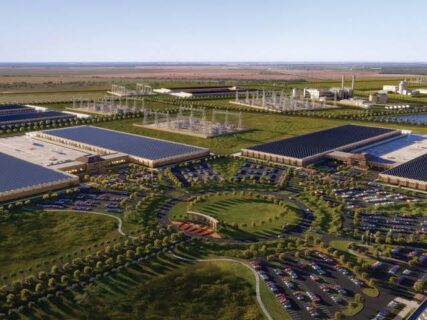
Project Matador power grid integrates multiple energy sources
The campus combines planned natural gas generation with nuclear power, solar installations, battery storage and utility-grid electricity. This diversified approach aims to improve supply resilience while supporting successive computing development phases.
The development has already advanced beyond preliminary planning. Fermi America’s published construction updates report installed gas pipelines, water lines and perimeter fencing. Site preparation also includes clearing and grading for future infrastructure.
Natural gas will provide an important early source of electricity while the nuclear program progresses through regulatory review. The developer is also pursuing turbine equipment and engineering partnerships to accelerate initial power delivery.
However, the campus’s full capacity depends on tenant commitments, financing, equipment procurement and construction sequencing. Fermi America expects capital deployment to follow commercial progress rather than treating the entire 17GW target as one immediate build.
The approach reflects growing pressure on electricity infrastructure from artificial intelligence. In Texas, developers increasingly pursue dedicated power generation because large computing facilities face lengthy grid-connection processes. Nevertheless, private generation must still address reliability, environmental compliance and infrastructure requirements.
Project Matador power grid targets phased delivery
Fermi America plans to develop the campus in stages, with initial power delivery preceding the complete buildout. Earlier project reporting placed the broader construction and commissioning program between the late 2020s and mid-2030s. Actual delivery will depend on permitting, equipment availability and customer requirements.
The nuclear program also requires coordination among reactor designers, engineering contractors and licensing specialists. Westinghouse supplies the proposed AP1000 reactor technology, while Hyundai Engineering & Construction has previously partnered with Fermi America on nuclear development planning. ENERCON and Preferred Licensing Services also feature among the reported technical partners.
If completed at its expanded scale, the development could become a major privately operated energy and computing complex. Its progress will depend on whether the developer converts regulatory milestones into final approvals, construction contracts and dependable power delivery.
Texas is also attracting other major private power developments to support growing AI electricity demand. The Port of Victoria Project combines approximately 1GW of planned natural gas generation with up to 1.5GW from small modular nuclear reactors. The development could reach 2.5GW of total capacity, with Blue Energy pursuing a phased construction strategy to supply a nearby Crusoe data centre. Unlike the 17GW Project Matador campus, the Port of Victoria scheme combines early gas-fired generation with a longer-term nuclear buildout.
Project Fact Sheet
Name: Project Matador, also identified as the Donald J. Trump Advanced Energy and Intelligence Campus.
Type: Integrated private power generation, energy infrastructure and artificial intelligence computing campus.
Location: Carson County, Texas Panhandle, near Amarillo, United States.
Developer: Fermi America.
Planned capacity: Approximately 17GW across the expanded development, subject to commercial agreements and phased delivery.
Original development concept: Approximately 11GW, with later plans expanding capacity.
Nuclear component: Four proposed Westinghouse AP1000 reactors, providing approximately 4GW of baseload power.
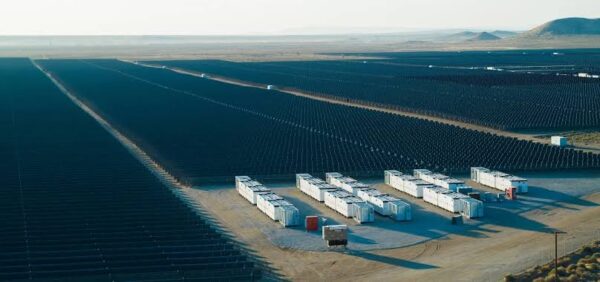
Other planned generation: Natural gas, solar power and battery energy storage, alongside utility-grid electricity.
Estimated cost: Phase 0 and Phase 1 capital expenditure could exceed $3 billion in aggregate. Approximately $2 billion was expected over the 12 months covered by the company’s second-quarter 2026 outlook. This is not the total cost of the 17GW campus.
Site area: More than 5,000 acres under the broader campus development plan, with the company reporting a 99-year ground lease with the Texas Tech University System.
Computing infrastructure: Plans include hyperscale facilities designed to accommodate up to approximately 15 million square feet of AI-ready computing infrastructure.
Regulatory authority: US Nuclear Regulatory Commission for nuclear licensing; Texas Commission on Environmental Quality for applicable state air-quality permits.
Current milestone: NRC draft environmental review and preliminary staff recommendation concerning the four proposed reactor licenses.
Outstanding approvals: Final environmental impact statement, completion of nuclear safety review, hearings and final Commission licensing decision.
Delivery strategy: Phased construction linked to tenant commitments, financing, equipment procurement and power requirements.
Overall project cost: Not established in the available sources.
Project Team
Developer: Fermi America
Nuclear reactor technology provider: Westinghouse Electric Company, supplying the proposed AP1000 reactor design.
Nuclear engineering and construction partner: Hyundai Engineering & Construction
Nuclear engineering support: ENERCON
Federal nuclear regulator: US Nuclear Regulatory Commission
State environmental regulator: Texas Commission on Environmental Quality
Land and institutional partner: Texas Tech University System
Gas turbine technology supplier: Siemens Energy

Leave a Reply