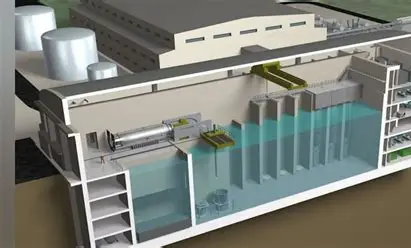
Danish nuclear technology developer Saltfoss is advancing plans for a floating nuclear power plant. This follows the launch of its US regulatory engagement process for the seaMSR-100 advanced small modular reactor. Furthermore, the project combines advanced reactor technology with South Korea’s shipbuilding expertise and the US nuclear engineering supply chain. It marks a step towards commercial maritime nuclear power.
On November 3, 2026, Saltfoss notified the US Nuclear Regulatory Commission (NRC) of its intention to begin pre-application engagement. Following this notification, the company plans to submit its formal Regulatory Engagement Plan in the first quarter of 2027. Meanwhile, it is targeting the NRC’s Part 53 licensing framework, which provides a risk-informed and technology-inclusive pathway for advanced commercial nuclear reactors.
The proposed development centers on floating nuclear power barges equipped with modular molten salt reactors. Rather than relying on a conventional land-based nuclear station, the concept places generating equipment on a floating platform that could supply electricity and industrial heat to coastal facilities, electricity grids and energy-intensive industries. However, construction, deployment and commercial operation remain dependent on regulatory approvals, engineering development and investment decisions.
Floating Nuclear Power Plant Project Fact Sheet
Project: Saltfoss seaMSR-100 maritime advanced small modular reactor and floating power barge
Developer: Saltfoss Energy, formerly Seaborg Technologies
Technology: Advanced molten salt reactor
Proposed location: US manufacturing and integration facilities, with barge production in South Korea; final deployment sites remain subject to development decisions
Individual reactor output: 100 megawatts electric (MWe)
Potential platform capacity: Up to 600 MWe using multiple reactor modules
Thermal output: Up to 250 megawatts thermal per reactor
Fuel: Low-enriched uranium dissolved in molten salt
Operating temperature: Approximately 600–700°C
Refuelling concept: Saltfoss states that each reactor is designed to operate for 24 years without refuelling
Regulatory pathway: Proposed US NRC licensing under 10 CFR Part 53
Next stated milestone: Regulatory Engagement Plan targeted for the first quarter of 2027
Shipbuilding partner: Samsung Heavy Industries

Floating Nuclear Power Plant Reactor Design and Engineering
The seaMSR-100 is designed to generate 100 MWe of electricity and up to 250 MW of thermal power per reactor. Additionally, Saltfoss plans to integrate several modules on one floating platform. This could provide a combined electrical output of 100 MW to 600 MW. Beyond electricity generation, the platform could also supply heat for industrial processes. This aligns with North Dakota’s ongoing assessment of advanced nuclear technologies, including small modular reactor deployment.
Unlike conventional light-water reactors, the seaMSR-100 uses molten salt as both the medium containing the nuclear fuel and a means of transferring heat. Saltfoss says the reactor is designed to operate at approximately 650°C and near-atmospheric pressure. The company expects this configuration to support a compact design suitable for modular manufacturing and integration into floating infrastructure.
Safety is central to the proposed reactor design. According to Saltfoss, abnormal operating conditions trigger a passive safety system. This system drains the molten fuel salt into dedicated tanks, where it cools and solidifies. Furthermore, the process is designed to operate without external power or operator intervention. However, these are developer-stated design features. They must undergo regulatory assessment before the reactor can receive an operating license.
Saltfoss also states that each reactor is designed for a 24-year operating period without refueling. If validated and implemented commercially, this approach could reduce refueling interruptions and simplify some aspects of operating remote or offshore power infrastructure. Nevertheless, long-term material performance, fuel management, maintenance requirements and radioactive waste handling will remain important engineering and regulatory considerations
South Korea–United States Manufacturing Strategy
The proposed manufacturing model combines South Korean shipbuilding expertise with US nuclear assembly capabilities. Under this arrangement, Samsung Heavy Industries will manufacture standardized power barges in South Korea. Meanwhile, reactor assembly, fuel loading and final power plant integration will take place at US facilities as Saltfoss expands its operations in the country.
This approach aims to utilize South Korea’s established shipbuilding infrastructure. At the same time, it will help develop a domestic US supply chain for nuclear components. Furthermore, standardized barge production could support repeat construction if the first platform proves technically, commercially and regulatorily viable.
However, the floating nuclear power plant project remains in the licensing and development stage. Therefore, no commercial barge has been completed, and no construction license has been issued. The deployment location also remains unconfirmed. Meanwhile, the project schedule will depend on regulatory approval, further engineering work and investment decisions.
US Licensing and Maritime Safety Requirements
Saltfoss is pursuing the NRC’s 10 CFR Part 53 licensing framework. This pathway uses risk-informed, performance-based and technology-inclusive methods to regulate advanced nuclear reactors. Furthermore, the company plans to submit its Regulatory Engagement Plan in the first quarter of 2027. It also aims to become the first advanced reactor developer licensed under this framework for a maritime application.
Licensing a maritime nuclear reactor involves more than assessing its core technology. Regulators must also examine the reactor design, containment, radiation protection and fuel security. Additionally, they must assess emergency procedures and operating conditions. Meanwhile, a floating platform introduces further requirements. These include marine operations, vessel safety, port access and emergency response. Therefore, coordination between nuclear and maritime authorities will also be essential.
The NRC has confirmed that existing US licensing frameworks can be applied to maritime nuclear reactors, including floating nuclear power plants and nuclear propulsion systems. It is also coordinating with the US Coast Guard on regulatory responsibilities for civilian maritime nuclear projects. These arrangements provide a framework for review, but they do not constitute approval of Saltfoss’s specific reactor or platform.
Nuclear Regulatory Commission
International coordination will also be important as Saltfoss explores markets beyond the United States. To support this expansion, the company intends to align its licensing process with South Korea’s nuclear regulator. Furthermore, South Korea is being considered as a potential destination for some of the platform’s first commercial deployments outside the US.
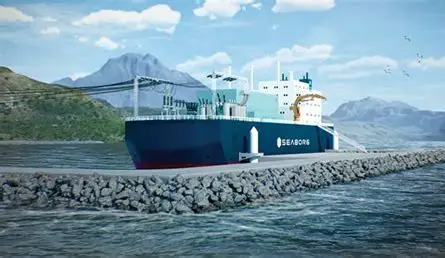
Floating Nuclear Power Plant: Potential Role in Future Energy Infrastructure
If successfully licensed and commercialized, the floating SMR could supply reliable electricity and high-temperature heat to coastal industries, remote areas and electricity grids. Additionally, it could serve energy-intensive facilities with limited land or grid access. In particular, Saltfoss has identified coastal industries, baseload power generation and hyperscale data centers as potential markets.
The concept is emerging amid growing interest in nuclear technology for commercial shipping and marine energy infrastructure. Meanwhile, other industry partnerships have advanced designs for nuclear-powered cargo vessels in 2026. These developments reflect increasing interest in combining compact reactors with maritime engineering. However, they remain separate from Saltfoss’s floating power barge and do not represent equivalent licensing milestones.
Saltfoss’s next milestone is the submission of its Regulatory Engagement Plan in early 2027. Thereafter, progress will depend on regulatory assessment, further design development and supply-chain readiness. The commercial viability of the project will also influence deployment. Ultimately, the floating reactor could become a significant development in advanced nuclear infrastructure. However, becoming the world’s first licensed maritime advanced SMR remains a future goal rather than an achieved milestone.
Floating Nuclear Power Plant Project Team
Saltfoss Energy: Developer of the seaMSR-100 reactor and floating nuclear power platform.
Samsung Heavy Industries: Identified shipbuilding partner for standardized power barge manufacturing in South Korea.
US Nuclear Regulatory Commission: Authority Saltfoss intends to engage for US reactor licensing.
US Coast Guard: Maritime safety authority involved in coordination on civilian maritime nuclear projects.
South Korea’s Nuclear Safety and Security Commission: Regulatory body with which Saltfoss says it intends to align its licensing pathway.

Leave a Reply