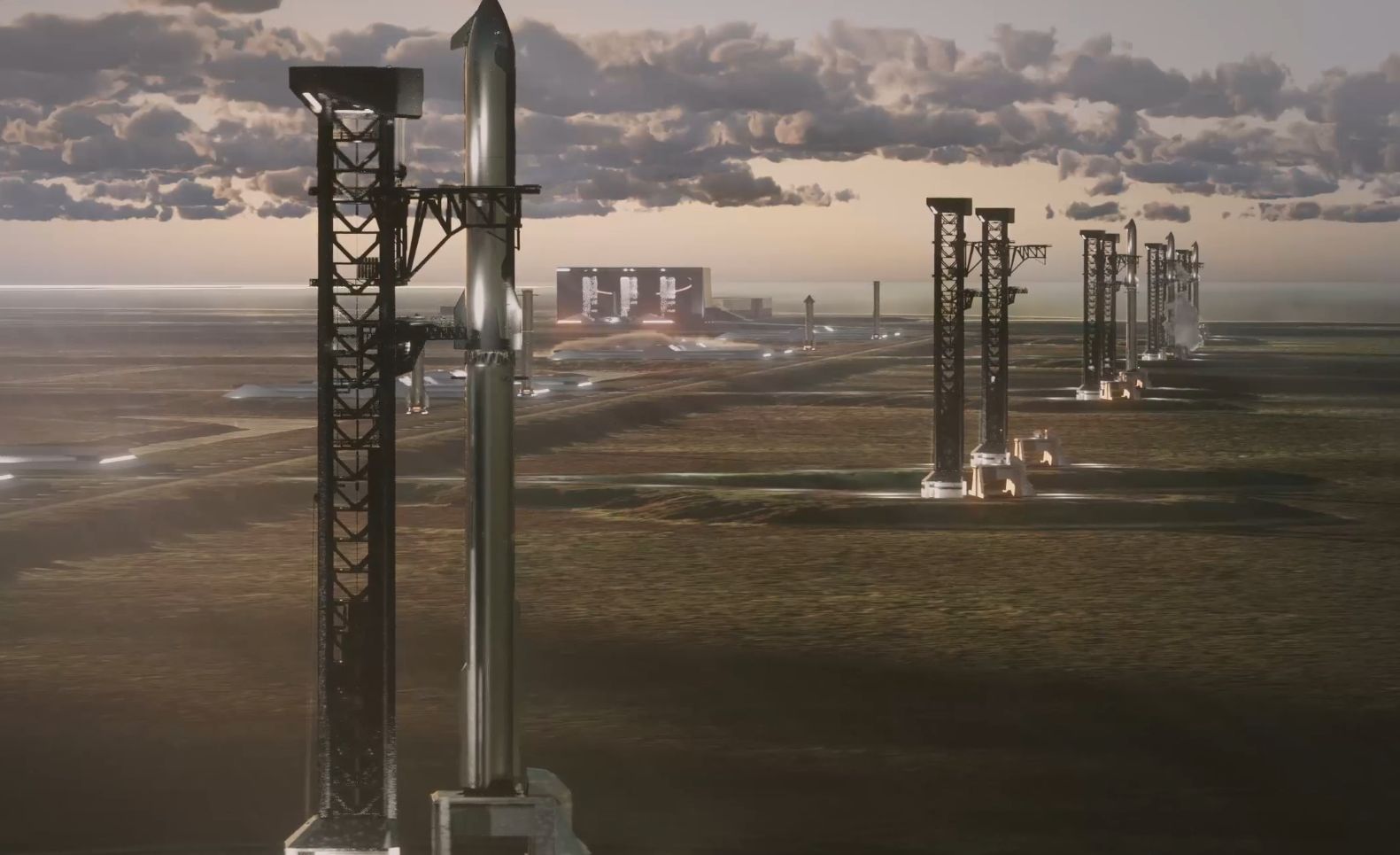
SpaceX has announced plans to develop a $100 billion Starship launch complex on a 125,000-acre site in Vermilion Parish, Louisiana, a facility the company is calling Starbase, Louisiana. Construction is planned to begin in 2027, with the first launch targeted for 2029, potentially adding a fourth U.S. launch site to a Starship program that has so far flown only from Starbase, Texas.
A Self-Sustaining Spaceport Eight Times the Size of Manhattan
The Pecan Island site, a former Exxon property in coastal wetlands along Louisiana’s Gulf Coast, is more than eight times the size of Manhattan. SpaceX President Gwynne Shotwell said the company plans to develop a “self-sustaining” spaceport, including its own methane production for rocket propellant, power generation, deep-water shipping infrastructure to transport Starship hardware from Texas, vehicle processing facilities, and potentially an airport. The company said it selected the location after an approximately seven-year search for a site with the land area and fuel access required to support Starship operations at scale, with Starbase Louisiana designed to eventually handle “thousands of Starship flights a year.”
Unlike SpaceX’s Texas campus, the Louisiana development will not include Starship manufacturing facilities. Hardware produced in Texas would instead be transported to Louisiana by sea for launch. That division of activity mirrors, on a larger scale, the structure SpaceX is already developing in Florida, where Starship vehicles are expected to be integrated and launched without the state serving as the company’s primary manufacturing base.
Louisiana Fits a Pattern of Nations Diversifying Launch Geography
Starbase, Texas remains Starship’s only active launch site as the rocket continues flight testing, with its next major test flight, aimed at reaching orbit for the first time, expected as early as September 2026. SpaceX’s expansion into Louisiana reflects a broader global pattern of space programmes seeking additional launch locations rather than relying on a single home site. Our report on China’s Eastern Aerospace Port, a floating spaceport off Haiyang designed to launch rockets from the Pacific Ocean. China developed the concept in part to reduce the safety and recovery challenges associated with spent rocket stages falling near populated areas around its inland launch facilities.
SpaceX’s proposed Louisiana wetlands site follows a similar logic of increasing launch flexibility and providing greater operational and safety margins, although through a very different model: a large, fixed coastal launch complex rather than a floating offshore platform. The underlying rationale is comparable in both cases. Reliance on a single launch site can constrain flight cadence, operational resilience and the available options for managing launch trajectories, which is why both countries are expanding their launch infrastructure beyond their existing facilities.
Legal Groundwork Laid Before the Announcement
Louisiana’s political and legislative groundwork for the project predates Tuesday’s announcement. Republican Governor Jeff Landry signed legislation earlier this year, effective from May 2026, that exempts certain aerospace developments from standard public review requirements, makes unauthorized entry onto a spaceport a felony, and provides financial incentives for aerospace manufacturers establishing operations in the state. Landry described the SpaceX agreement as an “inflection point” for Louisiana during Tuesday’s announcement event.
SpaceX still faces a significant regulatory process before construction can begin. A project website connected to the announcement confirmed that the development “will go through all applicable environmental, wetlands, natural resource and launch-related reviews.” Comparable environmental and launch approvals for SpaceX’s smaller Texas facilities took years to complete, raising questions about whether the planned 2027 construction start and 2029 first-launch target can be maintained for a site of this scale.
SpaceX’s Texas operations have also faced lawsuits, fines and local opposition related to water use, pollution and impacts on wildlife, including damage to nearby parkland and protected nesting habitat following a 2023 test-flight explosion that destroyed the original Boca Chica launch pad. Louisiana’s coastal wetlands location presents similar environmental considerations, potentially on a substantially larger scale.
Jobs Claims Vary Across SpaceX’s Own Statements
SpaceX and Musk have presented different estimates for the project’s employment impact. A joint statement from Louisiana Economic Development and SpaceX cited job creation as part of the project’s economic case, while Musk said in a video released the same day that the spaceport could bring “probably 10,000 really exciting jobs” to Louisiana. A separate company statement placed the figure at more than 3,000 new jobs, with recruitment expected to draw heavily from nearby communities with experience in major regional infrastructure projects.
Neither SpaceX nor the state has publicly reconciled the difference between the two estimates.
What Happens Next
Starbase Louisiana’s schedule depends on two major developments progressing in parallel: completion of the environmental, wetlands and launch-related reviews required for a project of this size, and continued progress toward operational maturity for Starship through further testing in Texas. With construction not expected to begin until 2027 and Starship’s orbital test flight still pending at the time of the announcement, Louisiana’s role in the programme remains, for now, a planned construction development rather than an active launch site.
Project Fact Sheet
- Project Name: Starbase, Louisiana
- Location: Pecan Island, Vermilion Parish, Louisiana, USA
- Project Value: At least $100 billion
- Client/Owner: SpaceX (Space Exploration Technologies Corp.)
- Site Size: Approximately 125,000 acres (50,585 hectares), on a former Exxon property
- Key Components: Starship launch pads; on-site methane propellant production; power generation; deep-water shipping infrastructure for transporting hardware from Texas; vehicle processing facilities; a potential airport; no on-site Starship production facilities
- Jobs: Reported estimates range from more than 3,000 to approximately 10,000, with differing figures cited across SpaceX-related statements
- Construction Start: Planned for 2027
- Expected First Launch: 2029, subject to environmental, wetlands and launch-related regulatory approvals
Project Team
- Owner/Developer: SpaceX
- State Government Partner: Louisiana Economic Development; Office of Governor Jeff Landry

Leave a Reply