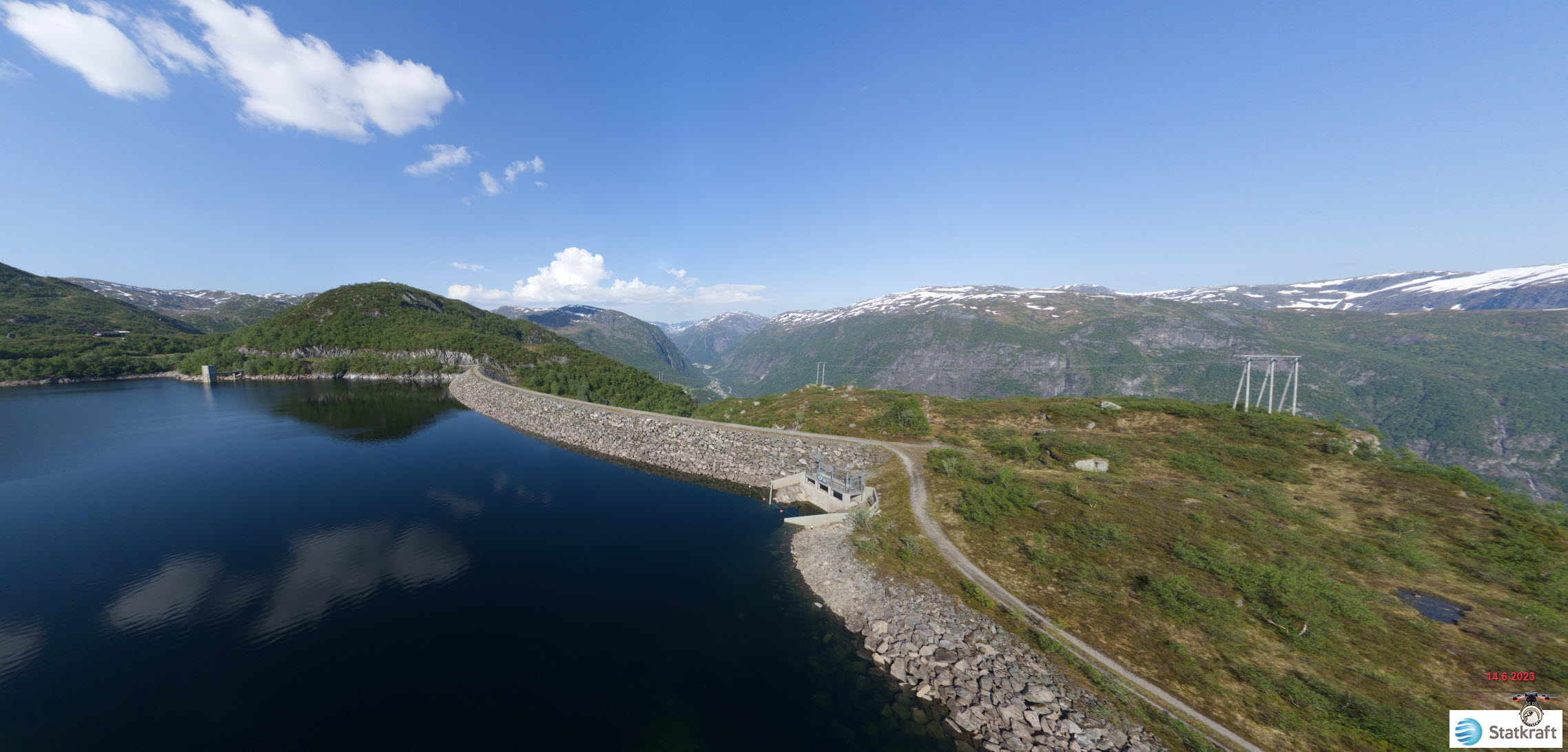
Statkraft has applied to the Norwegian Water Resources and Energy Directorate (NVE) for a licence to build two new hydropower plants — the Høyanger and Breidal plants — in Høyanger municipality, western Norway. The new facilities would replace the existing Høyanger K5A and K5B plants, delivering more renewable power and greater flexible capacity without new reservoirs, additional water resources or changes to existing regulation limits.
The project forms part of Statkraft’s plan, announced in May 2026, to invest NOK 80 billion in Norway over the next ten years to upgrade and further develop the country’s hydropower assets. The investment framework for the Høyanger K5 development is just under NOK 3 billion.
Making better use of a regulated watercourse
Høyanger K5A and K5B were commissioned between 1965 and 1979 and played an important role in the development of Høyanger as an industrial community. The plants remain in good condition, but several key components have limited remaining lifetime. Rather than carry out extensive reinvestments in the existing facilities, Statkraft is applying to build new plants that make more efficient use of the already-regulated water resources while securing production for decades to come.
“This is a project that will deliver more power and greater flexibility from a watercourse that is already regulated,” said Pål Otto Eide, Senior Vice President Development Nordics at Statkraft. “When older hydropower plants are facing major reinvestments, we must assess whether the resources can be utilised more efficiently.”
The application is one of several hydropower upgrades Statkraft is advancing across Norway, alongside its proposed US$890 million new Mår hydropower plant, as the company modernises ageing assets to raise output and flexibility from existing watercourses.
More power and flexibility from existing regulation
The existing plants have a combined installed capacity of around 109 MW and annual production of approximately 700 GWh. The new plants are being applied for with a combined installed capacity of around 257 MW and estimated annual production of approximately 780 GWh — an increase of around 10 per cent in annual renewable output, alongside an improved ability to produce when demand for power is high.
“Increased capacity and flexibility in the Norwegian power system are important for society,” Eide said. “With this project, we can get more out of existing regulations and contribute more production during periods of high demand.”
Licensing, timeline and local impact
If a decision to build is taken, the construction period is estimated at four to five years. The project would generate local and regional ripple effects through the purchase of goods and services, while construction work would also cause local inconvenience, including traffic, noise, dust and temporary rig areas.
“Hydropower projects must be assessed thoroughly. Even though this project builds on existing regulations, it will have impacts on the environment and the local community,” Eide said. “Through the licensing process, the benefits and disadvantages will be weighed against each other, and the Høyanger community will have the opportunity to provide input during the consultation.”
Statkraft has been in dialogue with Høyanger municipality and other stakeholders about the plans for several years. NVE will now process the licence application and, as usual, submit it for public consultation, allowing the municipality, affected parties, sector authorities, organisations and others to provide input. If the project is granted a licence and demonstrates sufficient profitability, an investment decision will be made, and a detailed environmental and landscape plan prepared, before construction can begin.
Project Factsheet: Høyanger K5
Project: New Høyanger and Breidal hydropower plants (replacing Høyanger K5A and K5B)
Location: Høyanger municipality, western Norway
Developer: Statkraft
Regulator: Norwegian Water Resources and Energy Directorate (NVE) — licence application submitted
Investment framework: Just under NOK 3 billion
Existing capacity: ~109 MW combined (Høyanger K5A and K5B, commissioned 1965–1979)
New installed capacity: ~257 MW combined
Existing annual production: ~700 GWh
New annual production: ~780 GWh (an increase of around 10 per cent)
Water resources: No new reservoirs, no additional water, no changes to existing regulation limits
Estimated construction period: Four to five years (if approved)
Status: Licence application under NVE review, ahead of public consultation

Leave a Reply