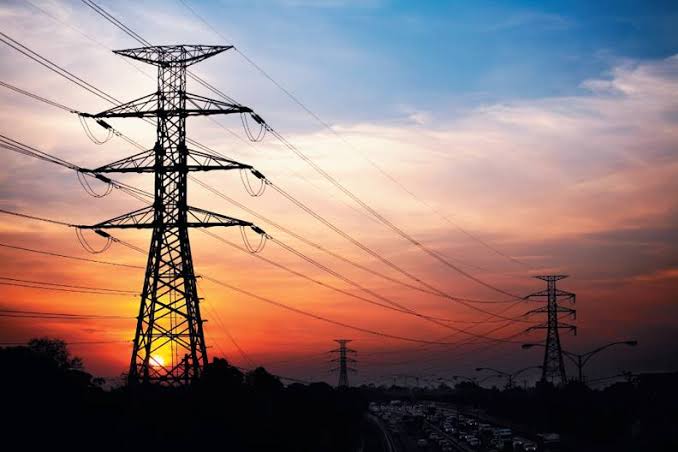
The proposed Three Corners Connector transmission line linking Oklahoma and Colorado has moved closer to federal support after the U.S. Department of Energy selected the project to negotiate an award of up to $250 million under its SPARK grid investment program.
DOE announced the selection Sept. 24 as part of a broader group of 31 grid projects across 26 states. The department plans approximately $1.9 billion in federal funding across the program, combined with about $3.35 billion in recipient cost sharing.
The Three Corners Connector funding is not yet a final award. The Oklahoma Office of Management and Enterprise Services applied for $250 million as the prime applicant, with Three Corners Connector participating as a subrecipient. DOE says selected projects must complete negotiations and finalize formal financial assistance agreements, with awards expected between October 2026 and January 2027.
If finalized, the funding would primarily support engineering and materials for transmission towers along the proposed line, according to the project developer.
The federal selection adds momentum to a much larger transmission development designed to create a new high-capacity connection between two of the country’s major electric grids.
Project costs carry different estimates as development continues
DOE’s selection document currently lists the Three Corners Connector SPARK project at approximately $832.2 million, including the requested $250 million federal contribution. The department cautions that project details summarized from the applications remain subject to change as financial assistance agreements are finalized.
Separate project and regulatory materials have placed the broader Three Corners Connector development at a higher cost.
The developer’s current project website describes Three Corners Connector as an approximately $2 billion investment across Oklahoma and Colorado, while reporting based on the project’s Oklahoma regulatory filing put the estimated full project cost at about $2.13 billion.
Those figures should not necessarily be read as estimates of identical scopes. DOE’s $832.2 million figure comes from the SPARK application, while the roughly $2 billion to $2.13 billion figures describe the broader transmission development. Project costs can also change as engineering, procurement, permitting and federal funding negotiations progress.
The Oklahoma portion alone was estimated at about $862.3 million in the state filing, including transmission lines, a converter station, network upgrades, interconnection facilities, development expenses and land-related costs.
A 300-mile connection between the eastern and western grids
Three Corners Connector is planned as an approximately 300-mile, up-to-525-kilovolt high-voltage direct current transmission line extending between Pueblo, Colorado, and Guymon, Oklahoma.
Converter stations near the endpoints would allow electricity to move between the alternating-current networks and the HVDC line, while the connection would be capable of transporting power in either direction depending on grid conditions.
The project would connect the Southwest Power Pool in Oklahoma with the Western Electricity Coordinating Council system in Colorado, creating another pathway for electricity to move between the Eastern and Western Interconnections. DOE’s SPARK project description identifies increasing transfer capability between those two interconnections as a central purpose of the investment.
A reliability study prepared for Grid United modeled Three Corners Connector as a 1,800-megawatt bidirectional tie between Public Service Company of Colorado and SPP Zone 5.
The project developer says the connection would more than double the existing 1,320 MW of transfer capability between the eastern and western grids in the area.
Oklahoma approval marks a significant regulatory step
Three Corners Connector began its Oklahoma certificate proceeding in January 2026.
The Oklahoma Corporation Commission’s records show that Three Corners Connector LLC sought a Certificate of Authority for the transmission facility under case PUD2026-000004. The commission issued Final Order No. 759344 on July 29, 2026.
Earlier in the proceeding, the commission considered matters including public notice requirements and the procedural schedule for the application.
The Oklahoma segment would include both HVDC and AC infrastructure. Information reported from the regulatory filing describes about 66 miles of HVDC line and roughly 9 miles of AC transmission in the state, together with a converter station and associated interconnection facilities.
Approval in Oklahoma does not mean the entire interstate project is ready for construction.
Three Corners Connector says multiple local, state and federal permits and approvals are required before work can begin. Those can include land-use authorizations, highway crossing permits and construction stormwater permits in addition to transmission-related approvals.
Land acquisition and permitting remain part of the path to construction
The developer describes the project as still being in the planning and development phase and says construction will begin after it secures remaining land rights and obtains the required regulatory approvals.
Most of the proposed corridor crosses private land. The project’s current FAQ says less than 9% of the planned route is on public land and that the project has acquired 200-foot rights-of-way from landowners along portions of the proposed route.
Land use has also emerged as an issue in Colorado.
Bent County approved a special-use permit for the transmission line in 2026, but the proposal drew objections from the Southern Plains Land Trust over the planned crossing of Heartland Ranch.
During the county process, opponents said the line would cross about 5.8 miles of the ranch and affect roughly 492 acres within a conservation easement. Grid United disputed aspects of the land trust’s account of project outreach and said it had communicated with representatives associated with the property.
The dispute highlights one of the practical challenges facing major interstate transmission projects: assembling a continuous corridor across hundreds of miles while satisfying land-use, environmental and regulatory requirements in multiple jurisdictions.
Study finds reliability value beyond the line’s physical capacity
The developer is also using reliability modeling to make the case for the interregional connection.
A December 2024 study prepared by Astrapé Consulting, now part of PowerGEM, modeled Three Corners Connector as an 1,800-MW bidirectional tie between the Colorado and SPP systems.
The analysis calculated 715 MW of effective load carrying capability for the Public Service Company of Colorado area and 1,362 MW for SPP Zone 5, for a combined 2,077 MW.
That combined reliability value can exceed the physical 1,800-MW capacity of the line because the two regions do not necessarily experience their highest system stresses at the same time. A connection between them can allow available capacity in one region to support the other during periods of greater need.
The result illustrates one of the principal arguments for stronger interregional transmission: its value depends not only on how much electricity a line can carry, but also on differences in weather, demand and generation conditions across the systems it connects.
The modeling was commissioned for the developer and represents an analytical estimate rather than an operating record from the proposed line.
A larger federal push for transmission capacity
Three Corners Connector is one part of DOE’s broader SPARK program, which is targeting transmission bottlenecks as electricity demand increases.
DOE says the 31 selected projects are expected to rebuild or reconductor more than 1,500 miles of transmission lines and deploy grid-enhancing technologies across nearly 21,000 miles. Collectively, the department estimates the investments could make more than 23 GW of additional electricity capacity available.
The Three Corners Connector falls under the program’s Grid Innovation category, which includes large, multi-jurisdictional projects intended to expand transfer capability between transmission planning regions.
For Three Corners Connector, the immediate federal milestone is completing negotiations over the proposed $250 million award.
Beyond that, the project must continue securing the remaining land rights and approvals necessary to move from development into construction.
Three Corners Connector currently says the line could enter operation as early as 2031, although that schedule remains dependent on permitting, land acquisition, engineering and construction progress.
The Three Corners Connector represents one approach to expanding interregional transmission capacity through a new 300-mile HVDC connection between Oklahoma and Colorado. NorthWestern Energy and Smart Wires are taking a different approach in Montana and Wyoming, using advanced technologies to increase the capability of existing transmission infrastructure without building a new transmission line.
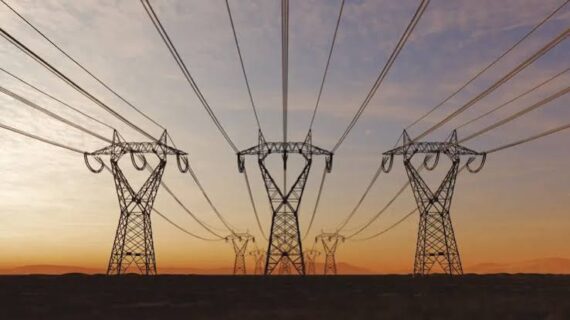
Three Corners Connector Fact Sheet
Project: Three Corners Connector
Developer: Grid United, through Three Corners Connector LLC.
Project type: High-voltage direct current interregional transmission line
Planned voltage: Up to 525 kV.
Length: Approximately 300 miles.
Endpoints: Pueblo, Colorado, and Guymon, Oklahoma.
Grid connection: Southwest Power Pool/Eastern Interconnection to the Western Electricity Coordinating Council/Western Interconnection.
Modeled transfer capacity: 1,800 MW bidirectional.
Current broad project investment estimate: Approximately $2 billion according to the developer’s project website; an Oklahoma regulatory filing has been reported as estimating the full development at approximately $2.13 billion. Those estimates may change as development advances.
DOE SPARK project value: $832,174,719, based on the current federal application summary and subject to change during final award negotiations.
Federal funding requested: Up to $250 million.
Funding status: Selected by DOE to proceed toward negotiations; a final financial assistance agreement has not yet been completed.
Federal applicant: Oklahoma Office of Management and Enterprise Services
Federal subrecipient: Three Corners Connector
Proposed use of SPARK funding: Primarily engineering and materials for transmission towers, according to the developer.
Oklahoma regulatory case: PUD2026-000004
Oklahoma final order: Order No. 759344, issued July 29, 2026.
Land: Most of the proposed route crosses private land; the developer says less than 9% is on public land.
Current stage: Planning, development, permitting and land-rights acquisition.
Construction: Expected after remaining land rights and required regulatory approvals are secured.
Target operation: As early as 2031, subject to project development and approvals.

Leave a Reply