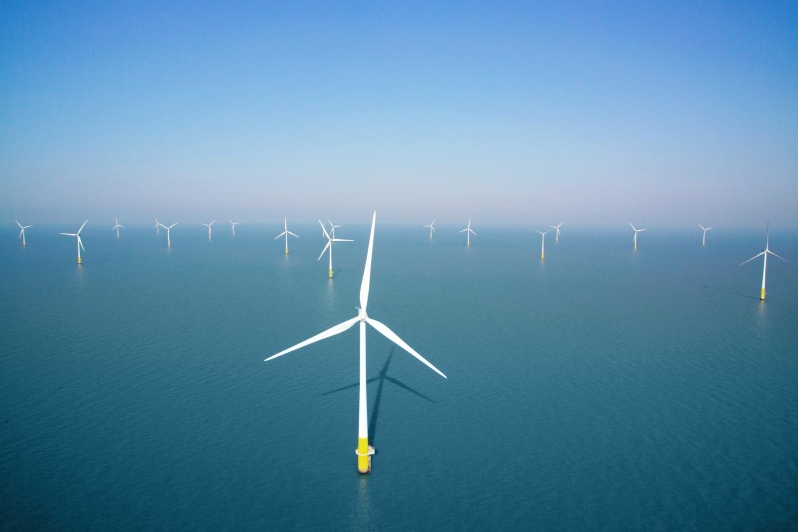
The United Kingdom has announced a £12 billion (US$16 billion) investment in two major offshore wind farm projects off the coast of Norfolk, marking a significant step towards expanding the country’s renewable energy capacity. The investment, involving German energy company RWE and US investment firm KKR, will support the development of the Vanguard West and Vanguard East offshore wind projects.
The announcement was made on November 11, 2026, as Prime Minister Andy Burnham prepared to attend the COP31 climate summit in Turkey. The government described the investment as one of the largest commitments to renewable energy infrastructure in UK history. Burnham also highlighted the role of offshore wind in strengthening domestic electricity generation and supporting industrial development. This is while aiming to improve energy security.
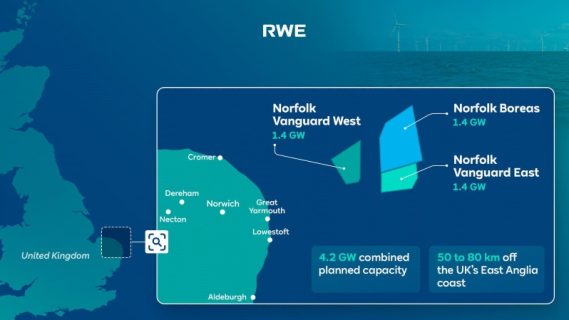
The two projects will have a combined installed capacity of approximately 2.8GW, with each offshore wind farm contributing around 1.4GW. Once fully operational, they are expected to generate enough electricity to supply approximately three million UK homes.
The investment also includes £1 billion in financing from the publicly owned National Wealth Fund. Here, the government’s intention to use public capital to attract private-sector investment into major clean energy infrastructure is made clear.
According to the government, the developments are expected to support more than 2,400 jobs during construction and operation. This includes opportunities across engineering, manufacturing, construction and the wider offshore wind supply chain.
What Are the Vanguard West and Vanguard East Offshore Wind Projects?
The Vanguard West and Vanguard East projects form part of RWE’s major offshore wind development program in the southern North Sea.
Located approximately 50 to 80 kilometers off the Norfolk coast in East Anglia, the projects will introduce substantial additional renewable electricity generation capacity into the UK’s national electricity system.
Each development is designed to have an installed generation capacity of approximately 1.4GW. Together, they will provide 2.8GW of offshore wind capacity. This ranks them among the largest offshore wind projects currently under developed in the UK.
The projects will also require associated transmission infrastructure to connect electricity generated offshore to the national grid. This includes offshore and onshore electrical infrastructure, export cables and substations.
RWE says preparatory works on the onshore infrastructure are already well advanced, with offshore construction scheduled to begin in early 2027. Both wind farms are expected to be fully commissioned in 2030.
RWE and KKR Lead the £12 Billion Norfolk Offshore Wind Projects Investment
The investment is being undertaken through a joint venture between RWE and KKR. Both companies also hold equal ownership stakes in the two developments.
RWE brings its experience in developing, constructing and operating offshore wind farms, while KKR provides long-term investment capital and infrastructure financing expertise.
Under the partnership, RWE will lead project delivery on behalf of the joint venture. The companies will jointly develop, construct and operate the wind farms.
The investment package is also supported by equity contributions from the two partners and substantial non-recourse project financing from international lenders.
The National Wealth Fund is also contributing £1 billion. This makes it its largest offshore wind investment to date.
The two projects also secured 20-year Contracts for Difference under the UK’s Allocation Round 7 in January 2026. This was at an inflation-indexed strike price of £91.20 per megawatt-hour in 2024 prices.
This provides a long-term revenue framework intended to support the financing and delivery of the developments.
Construction Timeline and Expected Benefits from the Norfolk Offshore Wind Projects
Construction of the offshore components is expected to begin in early 2027. This will follow extensive preparatory work on the associated onshore infrastructure.
The first foundation installation for Vanguard West is planned for the first half of 2027. Foundation installation activities at Vanguard East wind farm will then follow.
Additionally, both projects are targeting full commissioning in 2030.
Beyond electricity generation, the developments are also expected to deliver considerable economic benefits through their supply chains. RWE estimates that construction will support approximately 2,300 jobs annually. The project is also expected to add another 100 permanent positions once the wind farms enter operation.
The projects are also expected to strengthen the UK’s energy security by increasing domestic electricity generation and reducing exposure to fluctuations in international fossil fuel markets.
UK Offshore Wind Investment Faces a Political and Environmental Test
The Norfolk offshore wind projects announcement also comes at a politically significant time for the UK government, which has faced criticism over its environmental commitments following its approval of the Jackdaw gasfield in the North Sea.
The government’s decision to approve the gas development also attracted criticism from environmental campaigners and Labour politicians. The opposers questioned how continued investment in new fossil fuel infrastructure aligns with the country’s climate ambitions.
The controversy was also compounded by the rejection of the proposed £800 million Botley West solar farm near the Blenheim Palace estate. The development would have covered almost 3,500 acres and, according to its developers. It would have also generated enough electricity to supply approximately 330,000 homes.
Energy Secretary Miatta Fahnbulleh also rejected the project. Miatta cites the potential harm to the green belt and the Blenheim Estate. The estate is a UNESCO World Heritage Site.
Against this backdrop, the £12 billion offshore wind announcement provides the government with a major renewable energy investment to highlight ahead of COP31.
However, the challenge will be translating these investment commitments into completed infrastructure. This is while maintaining a consistent approach to renewable energy development, grid expansion and the country’s wider energy transition.
For the UK offshore wind industry, the Vanguard West and Vanguard East developments represent another major pipeline of construction opportunities, particularly in offshore engineering, foundations, electrical infrastructure, cable installation and turbine manufacturing. These opportunities will also be compounded by other renewable energy projects in the UK, including the 1.4GW Berwick Bank B offshore wind project off the east coast of Scotland.
Project Fact Sheet for the Norfolk Offshore Wind Projects
Name: Vanguard West and Vanguard East Offshore Wind Farms
Location: North Sea, approximately 50-80km off Norfolk, East Anglia, UK
Developer: RWE
Investment partner: KKR
Total investment: £12 billion
Combined installed capacity: 2.8GW
Capacity per project: 1.4GW
Expected electricity supply: Equivalent to approximately 3 million UK homes
Public financing: £1 billion from the National Wealth Fund
Financing structure: Equity investment and non-recourse project financing
Construction commencement: Early 2027
Expected commissioning: 2030
Construction employment: 2,300 jobs annually
Permanent operational employment: 100 jobs
Offshore location: British North Sea
Companies, Stakeholders and Developers Involved
RWE: Project developer and joint venture partner. Also the lead project delivery company.
KKR: 50% equity partner and joint venture investor.
National Wealth Fund: Public financing partner.
Euler Hermes: Credit cover provider.
Export and Investment Fund of Denmark (EIFO): Credit cover provider.
35 international banks: Project financing consortium.



Leave a Reply