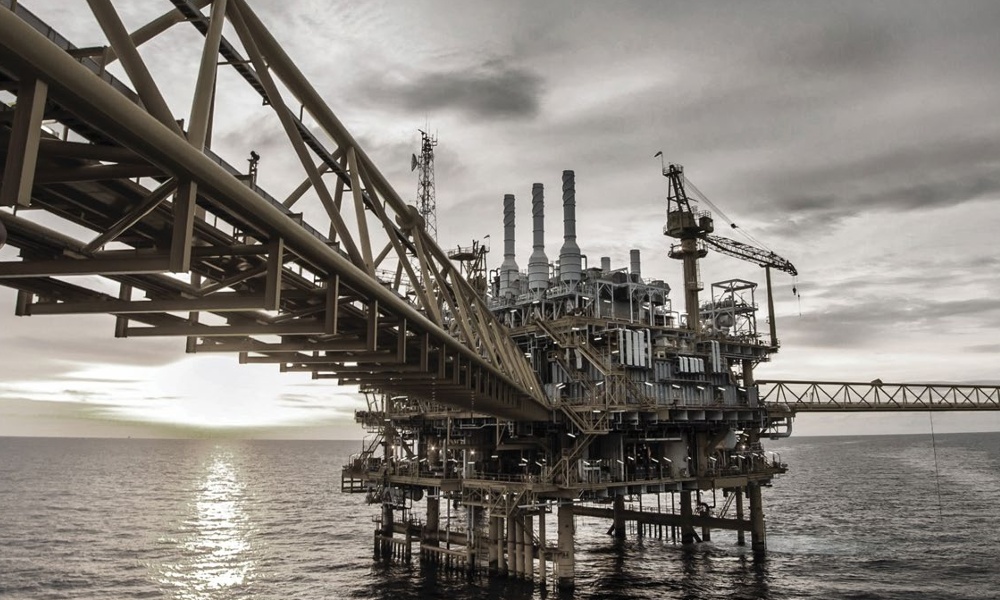
Oil and gas player Orcadian has revealed a concept to develop the Earlham and Orwell gas fields using an offshore power station with integrated carbon capture. This development will generate low-carbon power for a co-located offshore data centre as the first phase of an islanded offshore grid.
The high carbon dioxide content of Earlham gas makes conventional pipeline export unattractive. Generating power at the field, capturing the carbon dioxide, and reinjecting it into the reservoir is, in the company’s opinion, the optimal route to monetise its resources.
Furthermore, if developed, the Orcadian perceives this could be among the first large-scale offshore data centres in the UK.
Also, the demand for computational power, driven by AI, has increased electricity demand forecasts worldwide. Moreover, the company claims that offshore power stations, coupled with offshore data centres, could help satisfy part of that demand. Additionally, this project highlights how carbon capture infrastructure in the UK contribute to the development of computing infrastructure.
Benefits of Locating Data Centers Offshore
Moreover, the benefits of locating data centres offshore are threefold. They are far from anyone’s backyard and cooling systems benefit from being located next to an immense heat sink. Lastly, co-location of the data centres with a dedicated gas field and low-carbon power station, unconnected to the grid, eases the pressure to provide costly transmission and distribution services.
Additionally, Orcadian stated that this approach requires no government subsidy and places no hidden burdens on bill payers, while potentially contributing to the UK’s position in the AI sector.
Planned Capacity
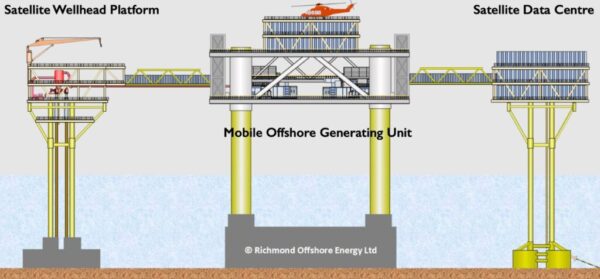
Orcadian and its consultants have come up with an approach to designing a platform complex capable of supporting a 200MW offshore data centre hall and supplying the energy for that facility.
Furthermore, the complex, with a wellhead platform supporting two production wells and one carbon dioxide injection well, a bridge linked to a power station platform, and the power station linked to a data centre platform, will likely be favoured in the concept selection process.
Also, the company believes that there is the possibility of pursuing a follow-on strategy of installing multiple power stations and data centre halls that could provide over a gigawatt of dispatchable low-carbon power, without adding any stress to the national grid.
Earlham has a P50 methane resource of 114bn cubic feet, while Orwell redevelopment could deliver a further 31bn cubic feet. Under the proposed concept, this gas would be monetised during the data centre’s operational phase.
In line with UK’S Clean Energy Goals
Lastly, this project is one which we believe supports the government’s vision of a clean UK power system in 2030. Also, it will deliver on the government’s energy security goals and crucially enabling the construction of a gigascale data centre, said Steve Brown, Orcadian CEO.
UK’s First Offshore Data Center: Project Factsheet
Facility Name: Earlham Gigagrid Data Center (Phase 1)
Project Developer: Earlham Gigagrid Ltd (a dedicated subsidiary of Orcadian Energy plc)
Target Customers: Hyperscalers (e.g., Google, Amazon, Meta, Microsoft) and AI-focused “Neo-scalers” (e.g., CoreWeave, Nebius)
Primary Workload: High-density Artificial Intelligence (AI) training and inference
Projected Footprint: Dedicated offshore platform jacket
Power and Capacity
- IT Load Capacity: 200 MW for the Phase 1 data center hall.
- Power Source: Co-located, dedicated offshore gas-to-wire power station utilizing pre- and post-combustion Carbon Capture and Storage (CCS).
- Grid Infrastructure: Fully islanded grid. It operates entirely unconnected to the UK onshore transmission network, eliminating the standard 5-to-10-year grid connection waiting times.
- Expansion Potential: Built with modular scaling in mind, the long-term roadmap (Phase 2+) targets expanding the offshore complex to over 1 GW (1,000 MW) of computing capacity.
Environmental and Sustainability Credentials
- Scope 1 and 2 Emissions: Virtually zero, as the dedicated power supply is fully abated via integrated CCS.
- Scope 3 (Downstream) Emissions: Projected to be less than 10% (and potentially under 5%) of standard grid-tethered data centers powered by unabated fossil fuels.
- Grid Impact: Zero. It places no strain on the UK’s domestic power grid, avoiding the standard onshore conflict between expanding consumer power needs and massive industrial AI compute demands.
Project Team
Key Leadership and Developer:
- Orcadian Energy plc (AIM: ORCA): The 100% owner of Licence P2680 (housing the Earlham and Orwell fields).
Consortium and Joint Venture Partners:
- The Marine Low Carbon Power Company Ltd (MLCP): Orcadian’s principal developer partner. MLCP is a joint venture between IPCNWE and Richmond Offshore Energy Ltd. MLCP is responsible for designing and deploying the offshore power generation infrastructure (specifically their Mobile Offshore Generating Units, or MOGUs).
- The Independent Power Corporation plc (IPC) / IPC New World Energy (IPCNWE): A major UK developer of battery projects and the parent group behind MLCP. IPC is providing critical financing, having converted existing debt into development funding to secure MLCP’s 50% farm-in stake in the sub-licence area.
Engineering and Technology Partners:
- GE Vernova: Collaborating on the design of the offshore power facility and gas turbine generation systems.
- Capsol Technologies (Norway): Providing the specialized carbon dioxide capture technology required to process the high CO2 gas and prepare it for reinjection into the Earlham reservoir.


Leave a Reply