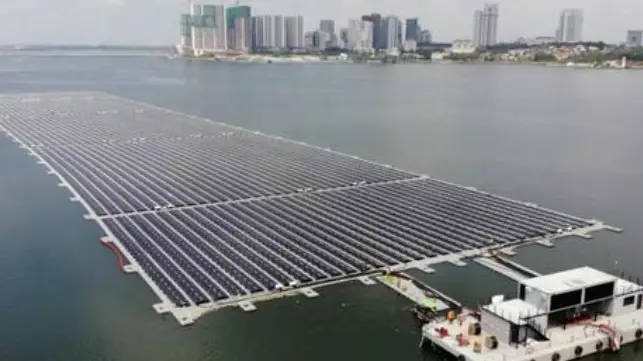
The 2.2GW Duriangkang floating solar farm in Indonesia remains a major renewable energy development in Batam. However, its original construction schedule has not materialized. Sunseap initially planned construction from 2022 to 2024. Current project tracking now lists the development as shelved.
The project emerged in 2021 as a proposed $2 billion floating photovoltaic development. It would occupy about 1,600 hectares on Duriangkang Reservoir. Sunseap signed an agreement with BP Batam to advance the development.
Sunseap later became part of EDP Renewables, which inherited its renewable energy pipeline. Industry sources subsequently continued to identify the Duriangkang development as an EDP Renewables project.
Duriangkang floating solar farm targets large-scale generation
The Duriangkang floating solar farm was designed to combine photovoltaic generation with large-scale battery storage. Initial plans called for more than 4,000 MWh of storage capacity. Later EDP information referenced storage capacity exceeding 6,300 MWh.
The original project plan projected more than 2,600 GWh of annual electricity generation. It also targeted significant reductions in carbon emissions from conventional power generation.
Duriangkang Reservoir offers a strategic location because Batam faces land constraints. The reservoir also supplies more than half of Batam Island’s freshwater needs. Therefore, floating solar could avoid competing directly for scarce land resources.
The proposed floating panels could also reduce water evaporation. Furthermore, the reservoir could help cool the photovoltaic modules and support generation efficiency.
The project also envisioned exporting surplus electricity to Singapore. The two locations sit approximately 50 kilometers apart. Developers proposed a subsea cable to support potential cross-border electricity transfers.
Indonesia’s 100 GW solar project creates new context for the Duriangkang floating solar farm
The Duriangkang floating solar farm now sits within a much broader Indonesian renewable energy push. President Prabowo Subianto officially launched the country’s 100 GWp solar program on August 25, 2026.
The national program targets 100 GW of solar capacity within three years. The initial phase includes 14 solar plants across six provinces with 5.3 GWp of combined capacity.
The government expects the full program to require about $73 billion. It also projects annual subsidy savings of Rp73.9 trillion and more than 5.5 million jobs.
The program includes ground-mounted, floating and distributed solar installations. It also incorporates battery energy storage to improve reliability and replace diesel generation.
This expansion gives floating solar a stronger strategic role within Indonesia’s power infrastructure plans. However, Duriangkang’s status requires careful distinction from projects now entering construction.
The government has already launched several projects in Batam under the wider 100 GW program. These include the Pulau Sembur solar project, which provides almost 1 MWp with about 1 MWh of battery storage.
Consequently, Indonesia’s solar construction pipeline continues expanding despite uncertainty surrounding Duriangkang. The proposed 2.2GW development remains important because of its scale and floating-solar design.
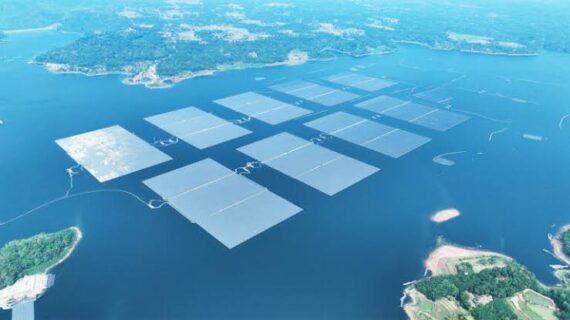
Also Read: UN launches US$18m solar project in remote Indonesia areas.
Project Fact Sheet
Name: Duriangkang Floating Solar Project.
Location: Duriangkang Reservoir, Batam, Riau Islands, Indonesia.
Technology: Floating photovoltaic solar.
Planned capacity: 2.2 GWp.
Planned battery storage: More than 4,000 MWh initially.
Later storage proposal: More than 6,300 MWh.
Estimated investment: $2 billion.
Planned site area: Approximately 1,600 hectares.
Expected annual generation: More than 2,600 GWh.
Reservoir capacity: Approximately 101.2 million cubic metres.
Original construction schedule: 2022–2024.
Current status: Shelved according to Global Energy Monitor.
Proposed electricity market: Batam and potentially Singapore.
Proposed export infrastructure: Subsea electricity cable.
Strategic objective: Expand renewable generation while limiting land requirements.
Project Team
Developer: Sunseap Group.
Current Developer Association: EDP Renewables.
Local Development Authority: Badan Pengusahaan Batam (BP Batam).
Former Project Executive: Frank Phuan, Sunseap Co-founder and CEO.
Energy Storage Partners: ESS Inc and Durapower Group.
Strategic Partners: Sumitomo Corporation and Samsung C&T Corporation
Investment Partner: Oriens Asset Management.
Local Government Partner: Riau Islands Provincial Government.

Leave a Reply