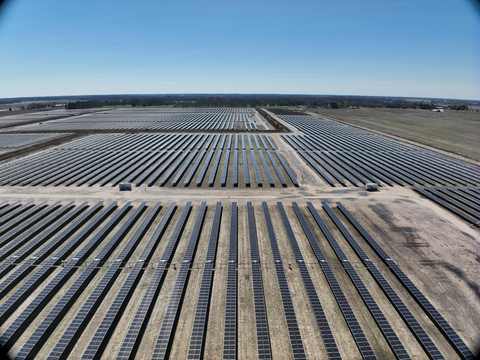
A 203 MW solar plant rising on reclaimed coal-mining land in Gibson County, Indiana, has secured $350 million in green credit facilities from CIBC, BBVA and Société Générale, locking in Meta as its anchor customer and setting the Reclamation Solar project for commercial operation by the end of 2027.
From coal to solar: a site with symbolic weight
Reclamation is named for the land it occupies: a former coal mining site in a region long associated with fossil fuel extraction. The project is already under construction and is expected to support around 200 jobs at peak build, with commercial operation targeted for the end of 2027.
The shift from coal to solar on the same footprint is emblematic of broader energy transition dynamics in the U.S. Midwest, where aging thermal assets are giving way to renewables backed by long-term corporate power deals.
Meta anchor customer in a growing portfolio
The project’s revenue comes from a long-term power purchase agreement (PPA) with Meta, strengthening the tech giant’s growing relationship with the Spanish developer. Zelestra and Meta now have PPAs covering roughly 1.2 GW across seven solar projects expected to come online by 2028, including the 176 MW Skull Creek plant in Texas, which the companies financed earlier this year.
For hyperscalers like Meta, such deals serve two purposes: locking in large volumes of clean power to match data centre load growth, and securing fixed-price electricity over long horizons to hedge against volatile wholesale markets.
Financing signals lender appetite for large-scale renewables
The structure of the Reclamation financing—syndicated green credit facilities with CIBC as left-lead arranger—signals continued appetite among international banks for utility-scale U.S. solar backed by investment-grade offtakers.
Ines Serrao, head of U.S. project finance and infrastructure at CIBC, described the transaction as evidence of lenders’ ability to “deliver financing solutions for large-scale renewable energy projects and support growing power demand across the US.”
For Zelestra’s U.S. team, the milestone shows scale and speed. Sybil Milo Cioffi, Zelestra’s U.S. CFO, said the $1 billion in U.S. project financing this year marks a “milestone we are pleased to share with our lenders and our customers,” adding that partnerships like these help the company “keep building at the pace this market needs.”
A 16 GW pipeline aimed at hyperscalers and corporates
Headquartered in Arlington, Virginia, Zelestra is developing a pipeline of about 16 GW of renewable projects across key U.S. markets, with a focus on multi-technology solutions tailored to hyperscalers and large corporate buyers.
The Reclamation deal fits that strategy: a large, bankable solar asset tied to a single anchor customer, located in a region with strong transmission access and a policy environment supportive of renewables.
Local benefits and environmental framing
Beyond the balance sheet, Zelestra is framing Reclamation as a regeneration project. The developer says the plant will include soil restoration, native vegetation planting and biodiversity enhancements tied to the conversion of the former mine site.
In a county historically dependent on coal, the “from coal to solar” narrative carries political and economic weight, even though the project will create only around 200 construction jobs at peak—modest compared with the lifetime workforce of a mine or thermal plant.
What to watch next
How quickly Zelestra can move the rest of its 16 GW U.S. pipeline from paper to construction, given interconnection queues and transmission constraints. Whether more hyperscalers will follow Meta’s lead in signing large, project-specific PPAs in the Midwest and South. How lenders price risk on similar deals if interest rates, equipment costs or policy settings shift over the next few years.
For now, Reclamation Solar stands as a concrete example of how corporate demand, bank financing and brownfield sites are converging to accelerate utility-scale solar in America’s traditional energy heartland.
While Zelestra is scaling up utility-scale solar to meet hyperscaler demand in the U.S., other developers are betting on flexible thermal and hybrid assets to keep the grid stable as renewables grow. In California, Middle River Power has just acquired the 427 MW Panoche Energy Center, a fast-ramping gas plant it plans to pair with battery storage to serve utilities, data centers and industrial customers.
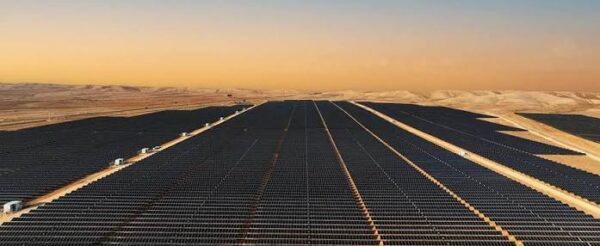
Factsheet: Reclamation Solar Plant in Gibson County and Zelestra’s U.S. push
Project: Reclamation Solar
- Location: Gibson County, southwest Indiana, USA
- Capacity: 203 MW solar plant
- Technology: Approximately 325,000 bifacial solar modules
- Site background: Built on land reclaimed from former coal mining operations
- Status: Under construction
- Expected commercial operation: End of 2027
- Offtaker: Meta, under a long-term power purchase agreement (PPA)
- Estimated jobs: Around 200 at peak construction
- Environmental features: Soil restoration, native vegetation planting, biodiversity enhancements as part of mine-site regeneration
Financing
- Amount: $350 million in green credit facilities
- Lenders: CIBC (Canadian Imperial Bank of Commerce), BBVA, Société Générale
- Role: CIBC acted as Left-Lead Arranger
- Significance: Helps push Zelestra’s U.S. project financing in 2026 past $1 billion ($1.14 billion total), with more than 800 MW of new solar now in construction for its customers
Zelestra in the United States
- U.S. headquarters: Arlington, Virginia
- Development pipeline: About 16 GW of renewable projects across key U.S. markets
- Strategy focus: Multi-technology solutions for hyperscalers and large corporate customers
- Recent comparable deal: $181 million green financing for the 176 MW Skull Creek solar project in Texas, also backed by a Meta PPA
- Meta relationship: PPAs covering roughly 1.2 GW across seven solar projects expected by 2028

Leave a Reply