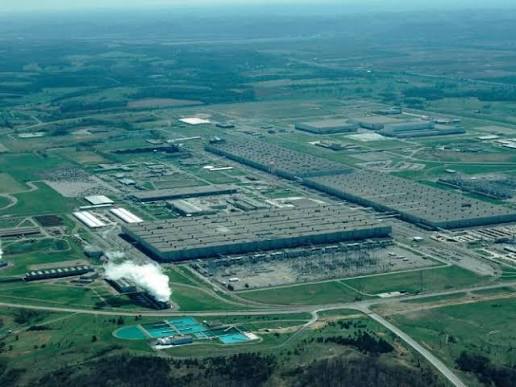
PORTS-Pike technology campus is advancing toward a major electricity infrastructure assessment as PJM Interconnection prepares to study transmission and generation requirements for SoftBank Group’s planned artificial intelligence campus in Pike County, Ohio. The proposed development combines approximately 10 gigawatts (GW) of data centre power demand with new gas-fired generation and extensive transmission upgrades.
PJM’s assessment will examine whether the proposed electricity infrastructure can reliably serve the campus while protecting other electricity customers from project-related costs. The study agreement, filed with the Federal Energy Regulatory Commission (FERC) on October 13, 2026, follows Ohio’s request to use the state agreement approach for evaluating the development. The project’s associated gas-generation investment stands at approximately $33 billion, making power delivery and regulatory coordination central to its construction outlook.
PORTS-Pike Technology Campus advances into grid planning
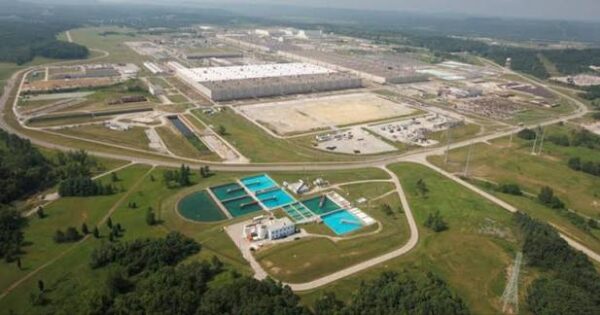
The proposed campus, also known as the Flagship Ohio AI project, will occupy federal land at the former Portsmouth Gaseous Diffusion Plant in Pike County. SB Energy, a SoftBank Group company, plans to develop the data center complex alongside dedicated electricity generation and supporting infrastructure.
The project’s wider energy plan includes approximately 9.2 GW of natural gas-fired generation and roughly 10 GW of total new generation capacity. SB Energy plans to develop the facilities in phases, with the additional load and generation covered by PJM’s study agreement extending through 2032.
Meanwhile, AEP Ohio plans to construct three 765-kilovolt transmission lines and associated infrastructure to support electricity delivery. These high-voltage connections will form a critical part of the wider construction program, linking new generation resources with the campus and regional electricity network.
An initial 800-megawatt phase will use AEP Ohio’s data center tariff. However, PJM’s study agreement addresses an additional 9.6 GW of demand and approximately 10.2 GW of new gas-fired generation.
The power demands of large-scale AI infrastructure are also shaping data center construction in other US states. Amazon’s planned $3 billion data centre investment in Warren County, Mississippi, highlights the growing competition to expand cloud computing and AI capacity. Unlike the Ohio Flagship project, which requires extensive dedicated generation and high-voltage transmission planning, the Mississippi development forms part of Amazon Web Services’ wider regional expansion.
PORTS-Pike Technology Campus faces cost-allocation scrutiny
PJM will assess whether AEP Ohio’s proposed transmission facilities can accommodate the campus’s electricity requirements. The grid operator will also determine whether the development requires additional network infrastructure to maintain reliability.
The state agreement approach allows Ohio or participating states to request studies for projects supporting state policy objectives. Under this framework, consumers in the requesting state generally fund projects built through the arrangement. However, SB Energy has committed to paying for generation, power-delivery infrastructure and network upgrades required for the Flagship development.
The company’s commitments also include infrastructure payment obligations that remain applicable regardless of the campus’s actual electricity consumption. Furthermore, SB Energy intends to make excess generation and transmission capacity available to the wider electricity grid.
These commitments aim to reduce the risk of transferring project-related costs to residential and commercial customers. Nevertheless, regulators must still determine the final cost-allocation and recovery mechanisms through future proceedings involving the Public Utilities Commission of Ohio and FERC.
PJM emphasized that its assessment will inform Ohio’s decision-making rather than automatically approve construction. The study will not independently select transmission projects, designate developers, establish final cost allocations or grant electricity interconnection rights.
PJM has requested FERC’s acceptance of the study agreement, with retroactive effectiveness from September 25, 2026. The assessment will proceed alongside discussions on a formal methodology for allocating costs associated with state-sponsored public-policy infrastructure projects.
Project fact sheet
Name: PORTS-Pike Technology Campus, also known as the Flagship project.
Type: Large-scale artificial intelligence data center campus integrated with dedicated power generation and high-voltage transmission infrastructure.
Location: Portsmouth Site, Pike County, Ohio, United States, on former federal uranium-enrichment industrial land.
Estimated investment: Approximately $33 billion for the planned gas-fired generation program. The wider project also includes substantial data center and grid infrastructure investments.
Data center demand: Approximately 10 GW of planned power load.
Generation capacity: Approximately 10 GW of new generation, including 9.2 GW of natural gas-fired capacity.
Transmission infrastructure: Three planned 765-kilovolt transmission lines and associated network upgrades.
Initial electricity supply: An 800-megawatt phase under AEP Ohio’s data center tariff.
Study scope: Assessment of an additional 9.6 GW of load and approximately 10.2 GW of gas-fired generation under PJM’s study agreement.
Development schedule: Generation and associated infrastructure planned in phases through 2032.
Regulatory authority: Federal Energy Regulatory Commission and Public Utilities Commission of Ohio, alongside PJM’s regional grid-planning processes.
Current status: PJM study agreement filed with FERC on October 13, 2026; final infrastructure decisions and cost-allocation arrangements remain subject to further review.
Funding commitments: SB Energy has committed to funding required generation and power-delivery infrastructure, subject to the applicable arrangements and regulatory proceedings.
Grid benefits: The project commitments include making excess generation and transmission capacity available to the wider electricity network.
Project team
Sponsor: SoftBank Group
Data center developer: SB Energy
Electricity transmission developer: AEP Ohio
Regional grid operator: PJM Interconnection
Federal land and site stakeholder: U.S. Department of Energy
Federal regulatory authority: Federal Energy Regulatory Commission
State regulatory authority: Public Utilities Commission of Ohio
Technology infrastructure partner: NVIDIA
Planned AI customer: OpenAI

Leave a Reply