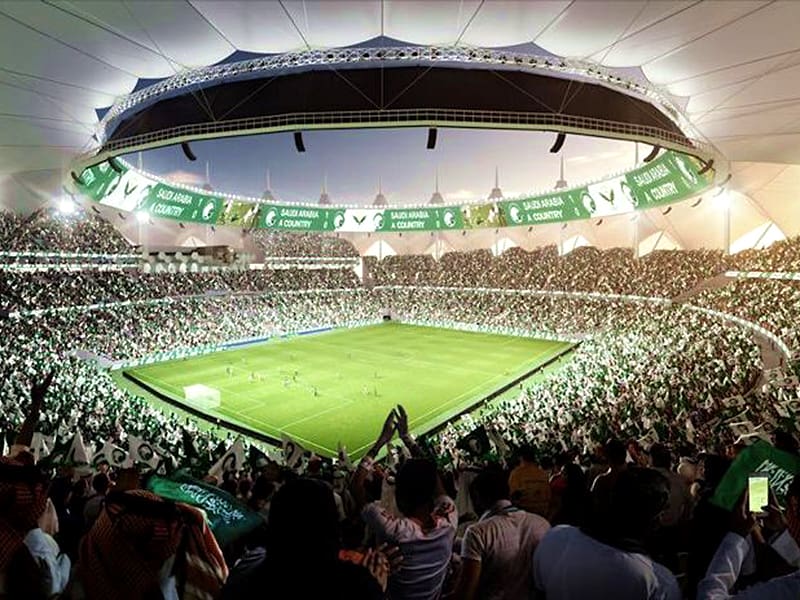
King Fahd City Stadium upgrade continues to reshape one of Saudi Arabia’s most iconic sporting landmarks as preparations accelerate for the 2034 FIFA World Cup. The project introduces a new vision for the Riyadh venue while preserving its historic identity. Moreover, the redevelopment combines stadium modernization, sustainability measures, and community-focused facilities. Consequently, the upgraded venue will strengthen Saudi Arabia’s tournament infrastructure while extending the life of a stadium that has served as a national sporting symbol since 1987.
The renovation forms part of Saudi Arabia’s wider World Cup delivery program. The kingdom plans to host the tournament across 15 stadiums in five cities. Therefore, King Fahd Sports City Stadium plays a crucial role in Riyadh’s hosting strategy. The project aims to meet modern FIFA standards while retaining the venue’s distinctive character.
King Fahd City Stadium Upgrade prioritizes sustainability and heritage
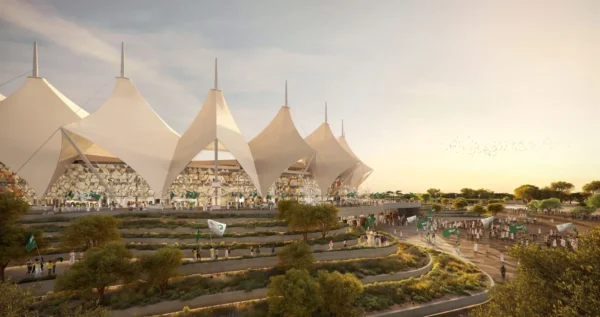
The redevelopment focuses on adapting existing infrastructure instead of replacing it entirely. As a result, the project reduces environmental impacts while protecting a nationally significant venue. Designers have retained key architectural elements, including the East Stand and the landmark Hive structure. Furthermore, the project preserves the stadium’s recognizable silhouette while introducing new technology and facilities.
A major feature involves replacing the original tent-like roof canopy. The existing canopy has reached the end of its operational life and cannot support modern event requirements. Therefore, the project introduces a new 36,000-square-meter cable-net canopy supported by structural masts. The new roof will provide greater shade coverage and improve spectator comfort throughout the year.
Additionally, the project incorporates extensive reuse strategies. Existing structural cables and masts will support new photovoltaic shading structures above parking areas. These solar installations will generate sufficient energy for non-event operations and electric vehicle charging infrastructure. Meanwhile, designers plan to reuse cladding materials, seating components, lighting systems, and sanitary fittings elsewhere across the kingdom.
King Fahd City Stadium Upgrade expands capacity and fan experience
The redevelopment will increase stadium capacity to approximately 70,200 seats. To achieve this goal, engineers are creating a new lower seating tier through excavation below ground level. Consequently, spectators will sit closer to the pitch, creating a more immersive football atmosphere.
Rather than removing excavated material from the site, the project team will reuse it within a new landscape masterplan. Therefore, the surrounding area will evolve into a mixed-use destination that supports year-round activity. The wider development includes a football academy, sports center, amphitheater, fan zones, five-a-side pitches, commercial facilities, and a footgolf course.
More than 400 existing trees will also be relocated and replanted across the development. As a result, the project will create a greener environment for visitors and local communities. Furthermore, the landscape improvements align with broader sustainability objectives linked to Saudi Vision 2030.
Saudi 2034 World Cup project strengthens Riyadh’s venue portfolio
Saudi Arabia’s World Cup strategy combines new construction with major venue upgrades. Accordingly, King Fahd City Stadium represents one of the tournament’s most significant renovation projects. The venue has already hosted major regional and international events, including AFC competitions, boxing matches, and concerts. Following completion, it will support World Cup matches and future global events.
The project also introduces improved hospitality areas, upgraded media facilities, and enhanced operational systems. In addition, environmental specialists developed innovative terrace covers that reduce heat absorption inside the seating bowl. Testing indicates these systems can lower concrete surface temperatures by up to eight degrees Celsius. Consequently, spectators will experience greater comfort while the stadium reduces cooling demand.
As construction progresses, the redevelopment demonstrates how existing stadiums can adapt to future demands. Therefore, the project offers a model for sustainable sports infrastructure while supporting Saudi Arabia’s ambitions for the 2034 FIFA World Cup.
Saudi Arabia’s World Cup infrastructure program extends beyond Riyadh. The country is also advancing the $1 billion NEOM Sky Stadium, a futuristic venue planned within The Line development. The 46,000-seat stadium will sit 350 meters above ground level and operate entirely on renewable energy. Together, the NEOM Sky Stadium and the King Fahd Sports City Stadium Upgrade highlight Saudi Arabia’s dual approach of delivering innovative new construction projects while modernizing existing sporting infrastructure ahead of the 2034 FIFA World Cup.
Project Fact Sheet
Project Name: King Fahd Sports City Stadium Upgrade
Location: Riyadh, Saudi Arabia
Project Type: Stadium renovation and redevelopment project
Estimated Cost: Approximately $1 billion
Client: Saudi Ministry of Sport
Design Consultant: Populous
Original Opening Year: 1987
Existing Status: Under redevelopment
Completion Target: Ahead of FIFA World Cup 2034
Current Capacity: Approximately 58,398 seats
Future Capacity: Approximately 70,200 seats
Key Infrastructure: 36,000-square-meter cable-net roof canopy
Sustainability Features:
- Reuse of existing materials
- Solar-powered parking shade structures
- Relocation of over 400 trees
- Reduced demolition strategy
- Reuse of excavated materials
Additional Facilities:
- Football academy
- Sports center
- Amphitheater
- Fan zones
- Commercial destinations
- Five-a-side football pitches
- Footgolf course
Primary Purpose: FIFA World Cup 2034 venue
Long-Term Use: Football, entertainment, and community events
Project Team
Project Owner: Saudi Ministry of Sport
Host Nation Authority: Government of Saudi Arabia
Tournament Authority: FIFA
Lead Architect: Populous
Master Planning Consultant: Populous
Urban Design Consultant: Populous
Interior Design Consultant: Populous
Landscape Architecture Consultant: Populous
Sustainability Design Team: Populous
Venue Planning Consultant: Populous
Stadium Redevelopment Consultant: Populous
Environmental Design Specialists: Populous Sustainability Team
Stadium Operations Planning Team: Populous
Riyadh Stakeholders: Local government authorities
National Football Stakeholder: Saudi Arabian Football Federation
Main Contractor: To be confirmed
Structural Engineering Contractor: To be confirmed
MEP Contractor: To be confirmed
Management Consultant: To be confirmed
Cost Consultant: To be confirmed
Specialist Subcontractors: To be announced by the client and delivery team later in the project lifecycle.

Leave a Reply