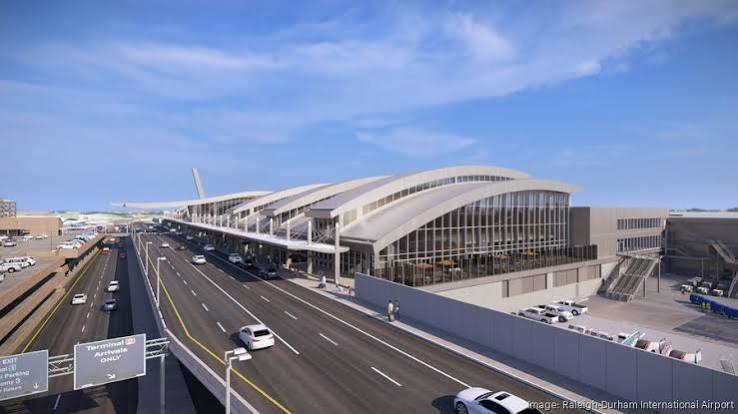
RDU Airport transformation plan is advancing $2.5 billion construction to modernize Raleigh-Durham International Airport in North Carolina and prepare for future gate expansion. The 10-year capital program combines terminal improvements, runway replacement, parking expansion and roadway upgrades to accommodate rising passenger demand.
Although additional gates remain unfunded, current construction will establish essential infrastructure for future capacity growth. The program aims to improve passenger processing, relieve congestion and create opportunities for additional airlines and flight services.
RDU Airport Transformation Plan Advances Terminal 2 Construction
The Terminal 2 landside expansion forms a central component of the airport’s capacity improvement strategy. The project carries an estimated cost of $775 million and covers the area between the terminal curbside and passenger security checkpoints.
Construction will expand ticketing facilities, international arrivals and baggage claim areas. It will also add security checkpoint lanes and upgrade baggage handling systems. These improvements will help accommodate passenger growth while supporting future increases in flight operations.
The airport plans to extend the ticketing area approximately 400 feet north. Construction began in January 2026, with completion expected in 2032.
Meanwhile, crews are installing infrastructure designed to support future gate development. A new Duke Energy power vault within the gate building will provide capacity for future expansion. Chief Development Officer Bill Sandifer said planners incorporated future requirements into current construction.
However, the airport has not included additional gates in its current $2.5 billion transformation budget. RDU must secure separate funding and establish a delivery schedule before proceeding with that phase.
RDU Airport Transformation Plan Prepares Infrastructure for Gate Expansion
The replacement of Runway 5L-23R represents another critical component of the airport’s long-term development strategy. The new runway will create conditions for future Terminal 2 concourse expansion, including additional gates.
The project involves extensive earthworks and relocation of part of Lumley Road. RDU expects the replacement runway to open in 2029, supporting future terminal development. The airport identifies the runway as a major investment within its wider transformation program.
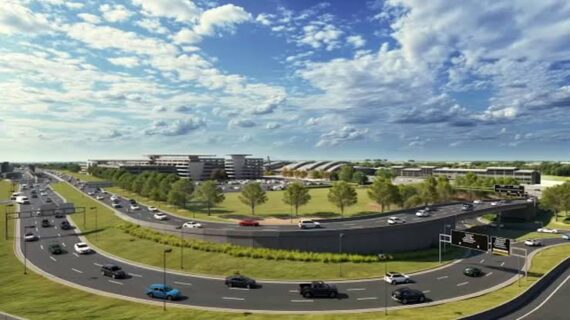
Meanwhile, the Economy 3 parking expansion will increase capacity to approximately 11,000 spaces. The development nearly triples the existing capacity and includes customer amenities, electric vehicle charging facilities and battery storage.
RDU is also preparing a $175 million upgrade to John Brantley Boulevard. The project will increase curbside space and rebuild the upper-level bridge serving Terminal 2. Together, these improvements will help accommodate additional traffic generated by passenger growth and future flight operations.
Future Gate Expansion Depends on Funding and Capacity Planning
RDU’s master plan also includes a potential expansion of Terminal 1 from nine gates to approximately 23. However, this proposal requires an estimated $1.5 billion investment and remains dependent on financial feasibility.
Sandifer estimates that adding significant gate capacity could take five to seven years. The airport must coordinate financing, construction schedules and supporting infrastructure before launching the expansion.
Peak demand highlights the urgency. RDU experiences periods around 6 a.m., 11 a.m., 4 p.m. and 7 p.m. when nearly every gate at both terminals is occupied.
Consequently, the current program prioritizes infrastructure needed to accommodate future growth. Completing the runway, terminal, parking and roadway projects will strengthen the airport’s readiness. Nevertheless, additional gates will require separate investment and implementation decisions.
The airport’s approach reflects a wider investment trend among major US aviation hubs, including Charlotte Douglas International Airport, where the Phase II expansion of Concourse A delivered 10 additional gates. However, RDU is currently prioritising supporting infrastructure before funding its next gate expansion.
Project Fact Sheet
Name: Transform RDU Capital Improvement Program.
Location: Raleigh-Durham International Airport, North Carolina, United States.
Total program investment: $2.5 billion over 10 years.
Terminal 2 landside expansion cost: Approximately $775 million.
Primary objective: Modernize airport facilities, increase passenger-processing capacity and prepare for future gate expansion.
Terminal 2 construction scope: Expanded ticketing, international arrivals, security checkpoints, baggage claim and baggage handling systems.
Terminal 2 completion target: 2032.
Runway project: Replacement of Runway 5L-23R, measuring approximately 10,639 feet.
Runway completion target: 2029.
Economy 3 parking expansion: Approximately 11,000 spaces upon completion.
John Brantley Boulevard improvement cost: $175 million.
Future Terminal 2 gate expansion: Included in long-term planning but not yet funded.
Terminal 1 expansion proposal: Increase capacity from nine gates to approximately 23, subject to funding.
Sustainability provisions: Electric vehicle charging, battery storage and infrastructure designed to improve energy efficiency.
Project Team
Owner: Raleigh-Durham Airport Authority.
Terminal 2 design consultant: O’Brien/Atkins Associates.
Electrical utility provider: Duke Energy.
Airport development and master planning: Raleigh-Durham Airport Authority.
Sustainability planning: Raleigh-Durham Airport Authority’s development and sustainability teams.
Future gate expansion planning: Raleigh-Durham Airport Authority, in coordination with airlines and relevant project stakeholders.

Leave a Reply