
The Atlanta City Council unanimously approved 14-0 Monday to support the $3.5 billion Atlanta Beltline light rail project for the entire 22-mile route. The resolution therefore urges the mayor’s office to collaborate with MARTA and Atlanta Beltline, Inc. to implement and fund. The vote brings a long-debated transit question closer to a real decision on whether and how to build it. Officials are required to report back by January 26, 2027, with information on implementation and funding.
The resolution, which was authored by Councilmember Kelsea Bond, was drafted after Mayor Andre Dickens last year pulled support for the Atlanta Streetcar extension onto the Eastside Beltline. In particular, the measure states that the council supports all 22 miles of light rail and calls for an implementation plan. So the resolution moves the discussion from “Is there a concept?” to “What do we do next?” Rail projects across the US are making headway but some such as the California high-speed rail project are facing massive setbacks.
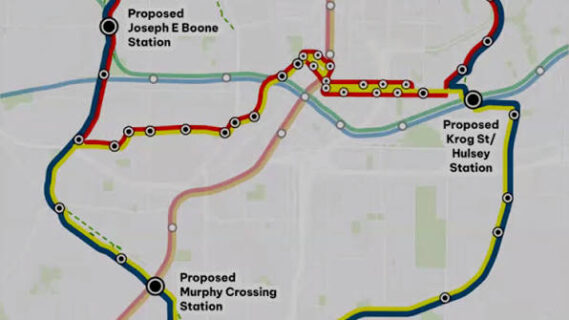
Atlanta Beltline Light Rail Proposal Includes Three Routes and 13 Stations
The Atlanta Beltline light rail plan includes three lines: a Beltline Loop, a Northern Loop, and a Southern Loop that will link to downtown Atlanta. In particular, the system consists of 13 stations and bi-directional service running 18.5 hours a day, with trains arriving at overlapping platforms every 10 minutes or so. The Atlanta Beltline Transit Study uses Federal Transit Administration ridership models to estimate 4.2 million rides per year. In addition, further funding, planning and engineering are required before construction can proceed. “It’s our duty to inform voters what’s next, how are we going to pay for it?” Bond said.
Cost Debate Surrounds Atlanta Beltline Light Rail Investment
The $3.5 billion Atlanta Beltline light rail project could be better spent on other forms of transportation, opponents say. In particular, Hans Klein of Better Atlanta Transit wants to see more neighborhoods directly connected to more destinations via bus rapid transit and trolleys. He believes that most transit demand is not circumferential, but rather involves crossing the city. Supporters maintain transit was part of the Beltline’s original vision with years of planning devoted to rail integration. Bond’s resolution brings the discussion to a point of action instead of further uncertainty.
Project Overview
- Project Name: Atlanta Beltline Light Rail Transit System
- Project Value: $3.5 Billion
- Location: 22-mile Beltline loop, Atlanta, Georgia
- Client: Atlanta City Council / MARTA / Atlanta Beltline, Inc.
- Status: City Council resolution approved, implementation plan due January 26, 2027
Scope
- Light rail across full 22-mile corridor
- Three service routes (Loop, Northern, Southern)
- 13 designated station locations
- 18.5-hour daily bi-directional service
- Downtown Atlanta connections
Project Highlights
- Unanimous 14-0 City Council vote
- 4.2 million projected annual rides
- Trains arriving every 10 minutes at overlap platforms
- CSX heavy rail corridor alignment (northwest quadrant)
- Federal Transit Administration study completed
Key Developments
- City Council resolution approved September 22, 2026
- Beltline Transit Study final recommendations released
- Implementation and funding report due January 26, 2027
- Mayor’s office expressed support for resolution
- MARTA and Atlanta Beltline collaboration required
Key Challenges
- $3.5 billion funding mechanism undetermined
- Transit technology alternatives under debate
- Implementation planning and engineering required
- Mayor withdrew prior Eastside Streetcar support
- Community debate over cost-effectiveness
Outlook
- Implementation and funding report January 26, 2027
- City officials coordinating with MARTA and Atlanta Beltline
- Construction authorization not yet approved
- Full 22-mile rail system planning advancing
- Community engagement and funding decisions ahead



Leave a Reply