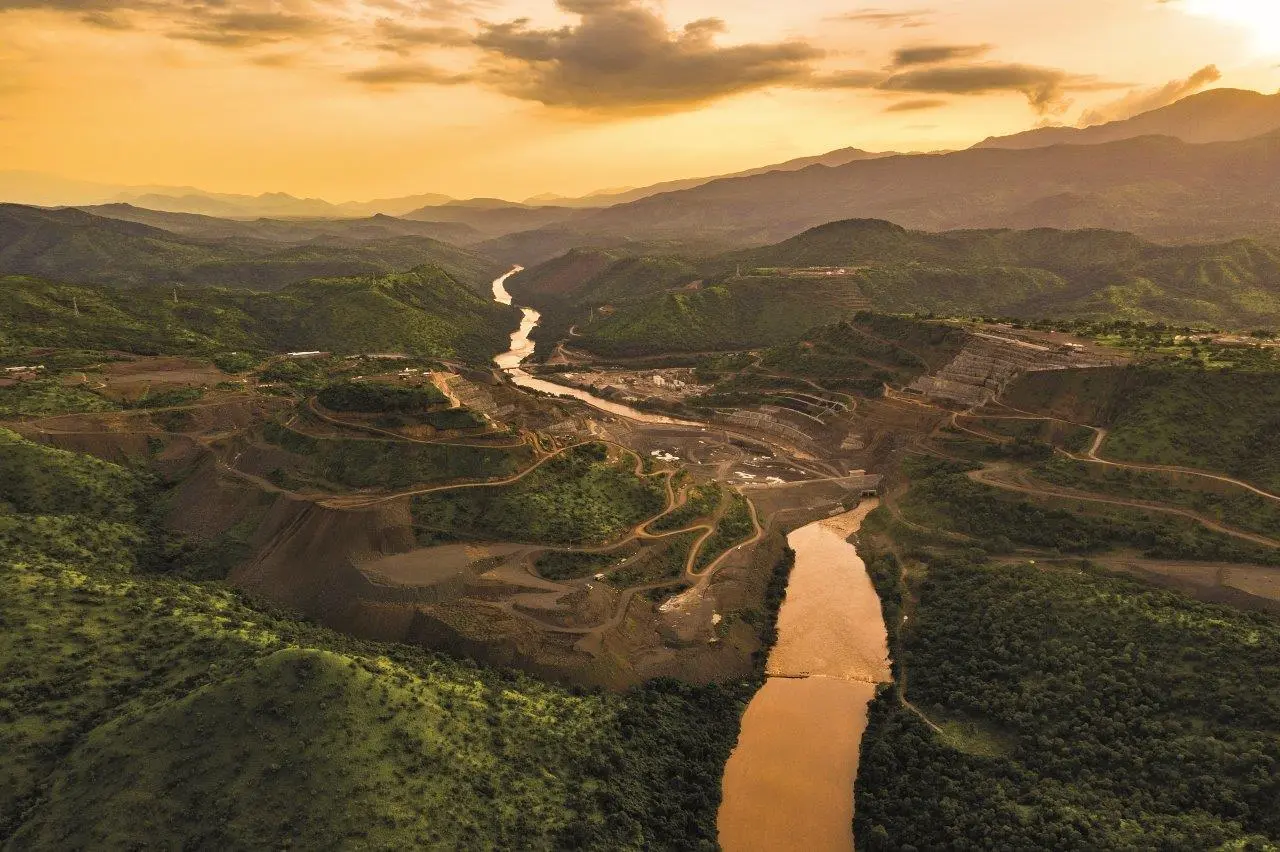
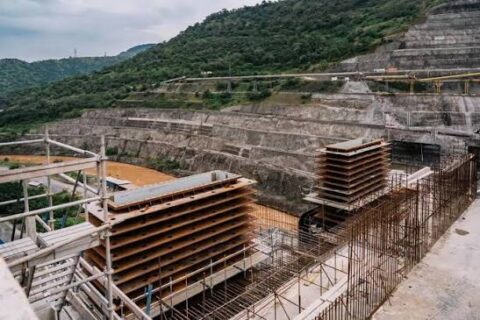
The construction of the Koysha hydroelectric dam in Ethiopia is facing a major financial setback as the government negotiates loan terms. Specifically, Ethiopian Electric Power (EEP) is seeking an additional €500 million ($547 million) to complete the project. The Koysha hydroelectric dam has been in construction since 2016 on the Omo River. The project was supposed to be completed three years ago, but it is still 77% incomplete. EEP Chief Executive Officer Ashebir Balcha raised the funding issue in a briefing on the annual performance on Friday.
As a result, the state utility has been granted permission to seek external commercial credit from international lenders. The Ethiopian government agreed to €400 million in loans from Italian banks. This thus accounts for 80% of the remaining deficit, the remaining €100m being covered by EEP from internal revenue. Hydropower projects remain to be a source of reliable power in Africa as the Grand Inga Dam aims to become the world’s largest hydropower project.
Koysha Hydroelectric Dam in Ethiopia Targets 2,200MW Capacity by 2029
The Koysha hydroelectric dam in Ethiopia boasts a designed installed capacity of 2,200 megawatts with an estimated total cost of €3 billion ($3.28 billion). In addition, the plant will produce up to 6,460 gigawatt-hours per year when it is fully operational. The construction of the dam is expected to be completed in 2027, and the first power generation is expected to take place in 2028. Furthermore, the South West Ethiopia Peoples’ Region site is expected to be fully commercial by 2029. The project is Ethiopia’s second largest hydropower development after the Grand Ethiopian Renaissance Dam. Incredibly, GERD generated 18.3 terawatt-hours of electricity in the 2018 Ethiopian Fiscal Year. This represented 52% of the country’s total power supply.
Ethiopian Power Sector Shows Strong Growth Despite Challenges
National power generation grew by 21% overall during the fiscal year under review. Additionally, EEP operates 21 power generation facilities totaling 9,730 megawatts of installed capacity. Of total power generated, 93.5% served domestic consumption while 6.5% was exported to neighboring countries. Kenya and Djibouti remained the top foreign markets, yielding combined export revenue exceeding 21 billion birr. Nevertheless, power reliability recorded only 84% performance due to transmission infrastructure theft and security issues.
Project Overview
- Project Value: €3 Billion ($3.28 Billion estimated total cost)
- Location: Omo River, South West Ethiopia Peoples’ Region
- Client/Owner: Ethiopian Electric Power (EEP)
- Status: 77% complete, construction started 2016
Scope
- 2,200MW installed hydropower capacity
- Annual generation capacity of 6,460 gigawatt-hours
- Dam construction on Omo River
- Transmission and grid integration infrastructure
Project Highlights
- Ethiopia’s second-largest hydropower project after GERD
- Originally scheduled for completion three years ago
- GERD currently supplies 52% of Ethiopia’s total electricity
- National power generation grew 21% year-on-year
Key Developments
- EEP secured authorization for external commercial credit
- Agreement reached with Italian banks for €400M financing
- EEP will cover remaining €100M from internal revenue
- Dam construction completion targeted for 2027
Key Challenges
- Requires additional €500M to reach completion
- Three-year delay from original completion schedule
- Power reliability at 84% due to infrastructure theft
- El Niño impacts projected to reduce reservoir inflows 20%
Outlook
- Dam construction completion scheduled for 2027
- Early power generation targeted for 2028
- Full commercial operations expected by 2029
- EEP posted 39.5 billion birr net profit in latest fiscal year

Leave a Reply