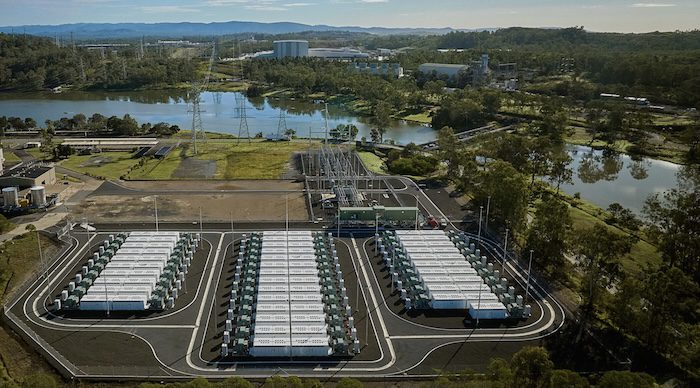
The Blackstone battery project in Queensland, Australia, has cleared a major environmental approval milestone, advancing plans for a utility-scale energy storage facility near Ipswich. The development could provide up to 500 megawatts (MW) of power and 2,000 megawatt-hours (MWh) of storage, potentially positioning it among Queensland’s largest battery installations.
However, the developer’s published specifications and earlier state approval describe a 1,000MWh system. This difference leaves the final storage configuration requiring clarification as the project advances towards construction. The project’s construction cost has not been publicly confirmed.
Blackstone Battery Project advances through environmental approvals
The Australian Government’s environmental assessment determined that the proposed development would not constitute a controlled action under the Environment Protection and Biodiversity Conservation Act. This decision clears the federal environmental assessment hurdle for the proposal, subject to applicable requirements and outstanding approvals.
The project already received development approval from Ipswich City Council and Queensland’s State Assessment and Referral Agency on June 3, 2024. However, the developer must complete secondary consents and management plans before construction can begin.
Octopus Investments acquired the Blackstone battery project from Firm Power in October 2023. The proposed facility occupies approximately nine hectares within the Swanbank industrial precinct, around 30 kilometers southwest of Brisbane.
The site has a history of open-cut and underground coal mining. Consequently, the development would repurpose previously disturbed industrial land for modern electricity storage infrastructure.
Blackstone Battery Project targets Queensland’s renewable energy transition
The proposed battery would connect to the existing Blackstone substation, providing access to established electricity infrastructure. This connection could help reduce the need for extensive new grid infrastructure while supporting electricity transfers across Queensland’s network.
The facility would store electricity during periods of abundant supply and discharge it when demand increases. Therefore, the system could help balance solar generation during evening peaks and improve the commercial value of renewable electricity.
The proposed site also sits near other battery developments at Swanbank. CleanCo’s 250MW/500MWh Swanbank battery is operating, while Zebre’s Noblevale project has secured federal environmental permission for a 180MW/360MWh facility. Together, these developments support the wider transformation of the former coal power precinct into an energy hub.
The final storage capacity remains an important consideration. A 1,000MWh configuration would provide two hours of storage at 500MW, while 2,000MWh would deliver four hours at the same output. Clarification from Octopus Investments will determine which configuration ultimately proceeds.
Blackstone Battery Project prepares for construction
The developer has previously indicated plans to begin construction and commission the facility in 2029. However, the project must complete its outstanding secondary consents and management plans before construction can commence.
Environmental management will remain important because approximately three hectares of the nine-hectare site is identified as koala habitat. The environmental referral describes this habitat as being in moderate to degraded condition, according to information provided by the developer.
Although the federal decision represents significant progress, the project’s final configuration, construction expenditure and delivery schedule require further confirmation. Nevertheless, Blackstone could strengthen Queensland’s electricity storage capacity and support the integration of renewable generation into the grid.
The proposed Darnum Battery Energy Storage System in Victoria highlights Australia’s expanding investment in grid-scale electricity storage. Similarly, the Blackstone Battery Project in Queensland demonstrates the regulatory challenges and development opportunities surrounding large battery construction. Both projects reflect the growing importance of energy storage infrastructure in strengthening grid reliability and supporting renewable energy integration across Australia.
Also read: 1.4 GW Bungaban Wind Energy Project: $2.7bn Construction Targets 2027 after Federal Green Light
Project fact sheet
Name: Blackstone Battery Energy Storage System (BESS).
Type: Utility-scale, standalone battery energy storage facility.
Location: Swanbank industrial precinct, near Ipswich, Queensland, Australia.
Site address: 45 Patrick Street, Swanbank, Queensland.
Developer: Octopus Investments / Octopus Australia.
Original developer: Firm Power.
Proposed power capacity: Up to 500MW.
Published storage capacity: 1,000MWh.
Federal environmental referral capacity: Up to 2,000MWh.
Potential storage duration: Two hours at 500MW under the published configuration, or four hours at 2,000MWh.
Site area: Approximately nine hectares.
Existing grid connection: Blackstone substation.
State development approval: June 3, 2024.
Federal environmental decision: October 2026.
Target commissioning: 2029, as previously reported.
Construction cost: Not publicly confirmed.
Primary purpose: Store electricity, support renewable integration and improve grid reliability.
Environmental consideration: Approximately three hectares identified as koala habitat.
Project team
Developer and investment lead: Octopus Investments / Octopus Australia.
Original project developer: Firm Power.
Local planning authority: Ipswich City Council.
State assessment and referral authority: Queensland State Assessment and Referral Agency (SARA).
Federal environmental regulator: Australian Government, under the Environment Protection and Biodiversity Conservation Act.
Grid connection infrastructure: Existing Blackstone substation

Leave a Reply