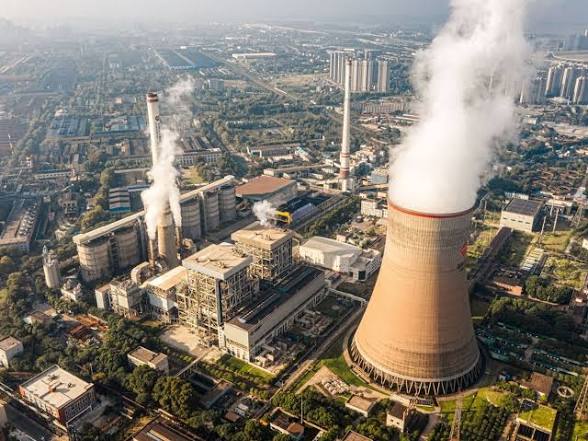
China advances the Haiyang Nuclear Power Plant expansion in Shandong Province as main construction begins on its fifth reactor. The development strengthens the country’s nuclear power generation capacity.China is also expanding Haiyang, following construction progress at the San’ao Nuclear Plant.
The milestone launches the third phase of the nuclear power project. Furthermore, it will increase electricity generation capacity and expand China’s nuclear energy infrastructure.
The first safety-related concrete was poured for Haiyang Unit 5’s nuclear island on October 31, 2026. Meanwhile, China Nuclear Industry 24 Construction Co. Ltd (CNNC 24), a subsidiary of China National Nuclear Corporation (CNNC), is handling civil construction of the nuclear islands for Phase III. This phase comprises Units 5 and 6.
The Haiyang expansion is being developed under the leadership of State Power Investment Corporation (SPIC). Meanwhile, the two new reactors will use CAP1000 pressurised water reactor technology. This is China’s domestically adapted version of the Westinghouse AP1000 Generation III reactor design.
The latest progress follows the State Council’s approval of Units 5 and 6 on April 27, 2025. Additionally, the project secured construction permits from the National Nuclear Safety Administration. These permits allow work to proceed under the required nuclear safety regulations.
The expansion supports China’s plan to increase nuclear power generation and improve electricity supply reliability.
Once all six reactors are operational, the Haiyang nuclear power base is expected to generate approximately 60.9 billion kilowatt-hours (kWh) annually. Additionally,it will expand nuclear-powered heating services to surrounding communities.
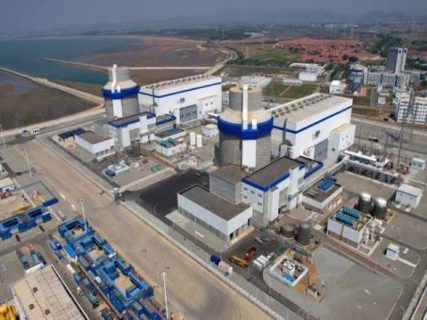
Haiyang Nuclear Power Plant Expansion and Project Scope
The Haiyang Nuclear Power Plant is located in Haiyang City, Shandong Province, along China’s eastern coastline. Furthermore, the development is planned as a multi-unit nuclear complex comprising six large pressurised water reactors.
The first phase comprises two Westinghouse AP1000 reactors. Initially, Unit 1 entered commercial operation in October 2018. Subsequently, Unit 2 followed in January 2019. Together, the two reactors established the facility’s initial electricity generation capacity.
The second phase comprises Units 3 and 4, which use CAP1000 technology. Construction of Unit 3 began in July 2022, while Unit 4 entered construction in April 2025. Both reactors are scheduled for commercial operation in 2027.
The third phase will add Units 5 and 6, thereby increasing the facility’s generation capacity. Each reactor is designed to produce approximately 1,300MW of electricity. Consequently, the six-unit development will have an installed capacity of about 7.5GW, subject to final operating ratings.
The latest construction milestone focuses on Unit 5. Its first concrete pour used approximately 6,626 cubic metres of concrete for the nuclear island foundation. Furthermore, the operation was expected to take nearly 62 hours. This reflects the scale and technical demands of building the reactor’s safety-related foundations.
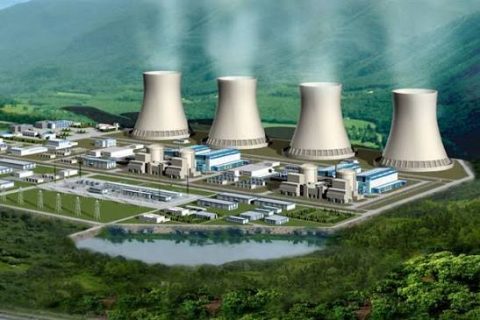
Construction Engineering and Materials
The construction of Unit 5 requires specialised civil engineering works. These are essential for establishing the nuclear island, which houses critical reactor systems and safety-related infrastructure.
The first major activity involved pouring a large volume of concrete into the nuclear island foundation. To ensure quality, the approximately 6,626m³ pour required careful construction sequencing and continuous monitoring. Additionally, the work demanded close coordination among the participating engineering teams.
Mass concrete work is critical in nuclear facilities. This is because foundations support the stability of safety-related structures. Therefore, contractors must control concrete placement, temperature, curing and structural quality. They must also meet the required nuclear construction standards.
The principal construction materials and systems include:
Reinforced concrete: Used for the nuclear island foundation, reactor building and other safety-related structures.
Reinforcing steel: Provides structural strength within heavily reinforced concrete sections.
Steel containment structures: Form part of the reactor containment and associated safety systems.
Pressure vessels and reactor components: Accommodate the reactor core and primary coolant systems.
Piping and valves: Support primary and secondary coolant circulation and other plant systems.
Steam generators: Transfer heat from the reactor coolant system to the secondary steam circuit.
Turbine generators: Convert steam energy into mechanical and electrical energy.
Electrical and instrumentation systems: Support plant operation, monitoring, control and safety functions.
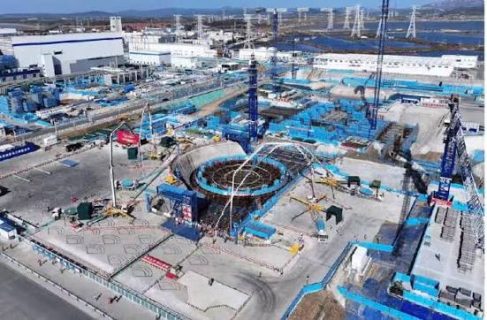
Nuclear Technology and Reactor Design
The CAP1000 is China’s domestically developed version of the AP1000 pressurised water reactor. Also, it features passive safety systems. These use natural forces, such as gravity and natural circulation, to maintain essential safety functions during certain emergencies.
Unlike conventional active systems, passive safety systems rely less on powered equipment. Instead, they use natural forces to perform specific safety functions. Consequently, they reduce dependence on external electricity and operator intervention.
The technology strengthens China’s domestic nuclear engineering capabilities. It also builds on international reactor design experience.
Each Haiyang 5 and 6 reactor is designed with a gross electrical capacity of approximately 1,253MW and a net capacity of approximately 1,161MW. These ratings are important when assessing the plant’s actual electricity contribution because gross generation includes electricity consumed by the station itself.
Project Contractors and Engineering Responsibilities
SPIC is leading the development, while several specialised Chinese nuclear engineering companies are involved in the delivery programme.
CNNC 24 has been contracted to undertake civil construction of the nuclear islands for Units 5 and 6. In addition, its responsibilities cover the major structural works needed to establish the reactor buildings and associated nuclear island infrastructure.
The Shanghai Nuclear Engineering Research and Design Institute (SNERDI) plays a key role in China’s nuclear engineering programme. It is also involved in the development of the AP1000 and CAP1000 reactors.
Other specialist contractors will be required for mechanical installation, electrical systems, instrumentation, commissioning and testing. However, a complete verified contractor register for Haiyang Phase III has not been disclosed.
The nuclear construction programme requires close coordination among the developer, engineering organisations, civil contractors and equipment manufacturers. Nuclear safety regulators also oversee the process. Therefore, quality assurance is essential. Defects in safety-related structures or equipment can affect later installation and commissioning work.
Electricity Generation and Environmental Benefits
The expansion is expected to increase the Haiyang nuclear power base’s contribution to China’s electricity supply. Furthermore, all six reactors are expected to generate approximately 60.9 billion kWh annually once operational. This is equivalent to about 60.9TWh of electricity per year.
In addition to electricity generation, the expansion will support nuclear-powered district heating. Haiyang already operates a nuclear heating programme that supplies surrounding communities.
The existing facility has supplied district heating to Haiyang City since 2019, with the network subsequently extended to other areas. The wider heating infrastructure includes a 23-kilometre pipeline developed to transport nuclear-generated heat.
ThThe expansion is expected to increase the facility’s heating capacity to more than 150 million square metres after the third phase is completed. Consequently, nuclear energy will support both electricity generation and heating.
The project is also expected to reduce reliance on coal-fired electricity and heating. At full capacity, it could save approximately 18.56 million tonnes of standard coal annually. It could also reduce carbon dioxide emissions by about 48.63 million tonnes each year. However, these figures are projected benefits, not verified operating results.
Construction Timeline and Next Development Stages
The Haiyang nuclear expansion has progressed through several development phases:
October 2018: Unit 1 entered commercial operation.
January 2019: Unit 2 entered commercial operation.
April 2022: China’s State Council approved Haiyang Units 3 and 4.
July 2022: Construction of Unit 3 commenced.
April 2023: Construction of Unit 4 commenced, according to the World Nuclear Association’s reactor database.
April 27, 2025: The State Council approved Units 5 and 6.
October 31, 2026: First safety-related concrete was poured for Unit 5’s nuclear island.
The immediate priorities include completing the nuclear island foundation. Meanwhile, work will advance on the reactor building structures and major mechanical and electrical systems.
Thereafter, contractors will install equipment and conduct pressure tests. They will then proceed with system commissioning, fuel loading and regulatory inspections before commercial operation begins.
The construction and commissioning programme will remain subject to nuclear safety requirements and regulatory approval.
Haiyang Nuclear Power plant: Project Fact Sheet
Project: Haiyang Nuclear Power Plant Expansion – Phase III
Location: Haiyang City, Shandong Province, China
Project type: Nuclear power generation development
Owner/developer: State Power Investment Corporation (SPIC)
Project operator: Shandong Nuclear Power Company Limited
Main contractor for nuclear island civil works: China Nuclear Industry 24 Construction Co. Ltd (CNNC 24)
Reactor technology: CAP1000 Generation III pressurised water reactor
Phase III units: Units 5 and 6
Capacity per reactor: Approximately 1,300MW gross
Net capacity per reactor: Approximately 1,161MW
Total planned capacity: Approximately 7,500MW gross across six units
First concrete for Unit 5: October 31, 2026
Concrete volume for Unit 5 nuclear island foundation: Approximately 6,626m³
Construction approval: April 27, 2025
Regulatory authority: National Nuclear Safety Administration
Expected annual generation after full expansion: Approximately 60.9 billion kWh
Haiyang Nuclear Power Plant Project Team
Project developer: State Power Investment Corporation (SPIC).
Project operator: Shandong Nuclear Power Company Limited.
Main civil construction contractor: China Nuclear Industry 24 Construction Co. Ltd.
Parent construction organisation: China National Nuclear Corporation (CNNC).
Engineering and reactor design organisation: Shanghai Nuclear Engineering Research and Design Institute (SNERDI).
Nuclear safety regulator: National Nuclear Safety Administration.
Approval authority: State Council of China.
Reactor technology: CAP1000, China’s adaptation of the AP1000 design.



Leave a Reply