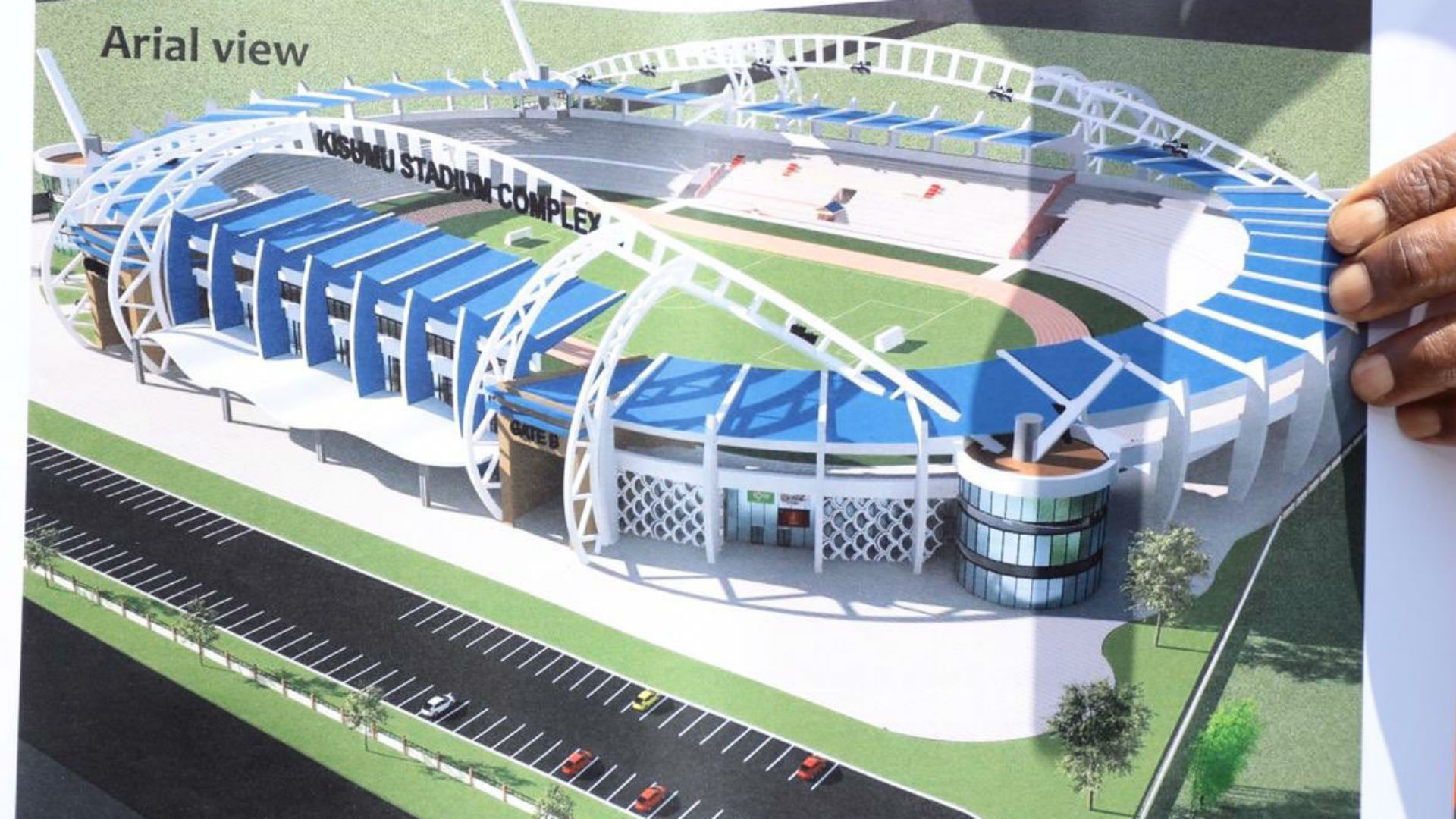
Jomo Kenyatta International Stadium in Kisumu remains an important milestone in Kenya’s expansion of modern sports infrastructure. The 30,000-capacity project emerged from the government’s plan to create international-standard facilities outside Nairobi.
The stadium stands at the Mamboleo ASK Showground in Kisumu County. President Uhuru Kenyatta laid its foundation stone in October 2020. The government initially committed KSh415 million to the development.
The project formed part of a wider national program targeting faster delivery of sports facilities. The Sports Ministry identified the stadium as one of several projects receiving government investment.
Jomo Kenyatta International Stadium strengthens Kisumu sports infrastructure
Jomo Kenyatta International Stadium provides Kisumu with a major venue for football, athletics and large public events. Its development also aimed to support sporting talent across western Kenya.
The original project included a football and rugby pitch, athletics facilities and spectator stands. It also incorporated conference facilities and VIP accommodation.
Government officials initially targeted completion before the 2021 Africities Summit. Kisumu expected the continental event to attract more than 10,000 delegates.
The stadium therefore carried significance beyond sport. Officials expected the facility to strengthen Kisumu’s ability to host international conferences and major public events.
President Kenyatta also directed road improvements connecting the stadium with Kisumu Boys High School. The government wanted those works completed before the stadium’s planned launch.
The project subsequently became operational and has hosted various sporting and public events. Its location at Mamboleo also gives Kisumu an additional large-scale events facility.
The stadium’s development reflects Kenya’s continuing effort to distribute major sports infrastructure across different regions. That strategy has gained further momentum through newer national stadium projects.
Jomo Kenyatta International Stadium provides context for Raila Odinga International Stadium
Kenya has since moved toward substantially larger and more technically sophisticated stadium developments. The clearest example is the 60,000-capacity Raila Odinga International Stadium in Nairobi.
The Nairobi project forms part of Talanta Sports City and targets the 2027 Africa Cup of Nations. It incorporates dedicated utility and operational infrastructure for international competition.
The Raila Odinga International Stadium project includes a dedicated electricity substation under construction by Kenya Power. The installation will provide reliable electricity for the venue’s critical systems.
The stadium also features dedicated control infrastructure supporting security and event management. These facilities demonstrate how Kenya’s stadium projects now require increasingly complex building services.
The Nairobi venue has reached more than 93% completion, according to recent project updates. Contractors are completing supporting facilities and systems ahead of its tournament role.
The contrast between the two facilities shows the progression of Kenya’s sports construction program. Jomo Kenyatta International Stadium established a major regional venue at a relatively modest investment.
Raila Odinga International Stadium takes that ambition to a different scale. Its larger capacity requires advanced electrical, security, communications and spectator-management systems.
Meanwhile, Kisumu continues developing its wider sports infrastructure. The county government has also pursued additional works around the stadium, including boundary-wall construction.
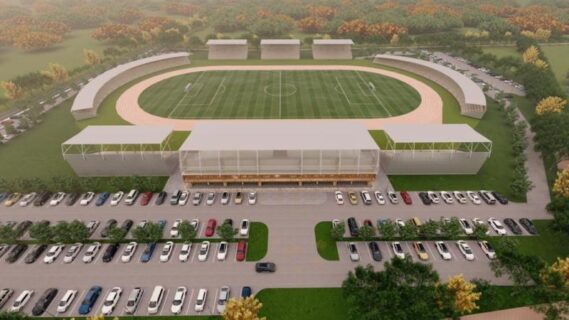
Project fact sheet
Project: Jomo Kenyatta International Stadium
Location: Mamboleo ASK Showground, Kisumu County, Kenya
Project type: Multi-purpose international sports stadium
Capacity: 30,000 spectators
Project value: $3.2 million
Government commitment: KSh415 million
Construction commencement: 2020
Foundation stone: October 2020
Original completion target: September 2021
Main sporting facilities: Football, rugby and athletics
Supporting facilities: Conference facilities and VIP pavilion
Primary objective: Sports development and regional event hosting
Development authority: Government of Kenya
Construction funding: Government of Kenya
Supporting infrastructure: Access-road improvements
Current significance: Major regional sports and events venue
Project team
Client: Government of Kenya
Implementing authority: Ministry responsible for Sports
Funding authority: Government of Kenya
County partner: Kisumu County Government
Project site: Mamboleo ASK Showground
National oversight: State Department responsible for Sports
Infrastructure partner: Kenya National Highways Authority
Stadium development partner: Kisumu County Government
Event partner: Africities Summit organizers
Also Read: New mini-stadium under construction in Janjanbureh, The Gambia


Leave a Reply