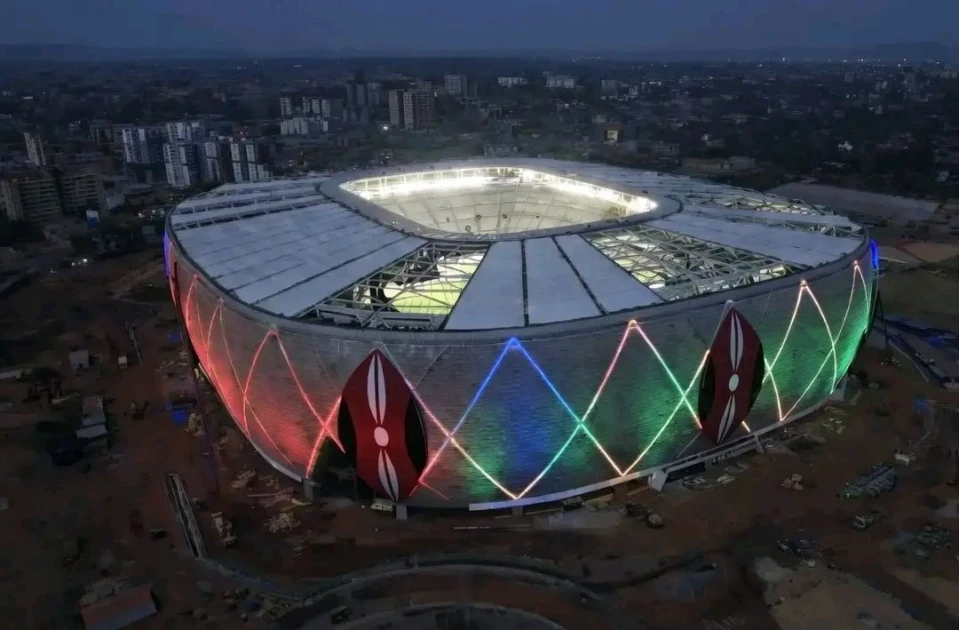
Raila Odinga International Stadium is entering its final construction phase as Kenya strengthens critical systems ahead of AFCON 2027. The 60,000-seat venue now includes dedicated power infrastructure and advanced control facilities. These additions target reliability, security and seamless stadium operations during major international events.
The stadium, also known as Talanta Stadium, stands at Jamhuri Sports Complex along Ngong Road in Nairobi. Construction began in March 2024 under a project led by China Road and Bridge Corporation (CRBC). The Kenya Defence Forces Engineering Department supervises the construction.
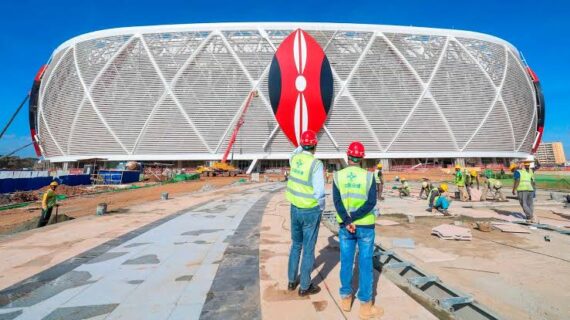
The project has moved beyond its major structural works and now focuses on systems integration. Recent government inspections show substantial progress across the playing surface, spectator areas and supporting facilities.
Raila Odinga International Stadium Power Substation
Raila Odinga International Stadium will receive a dedicated electricity substation to provide a more reliable power supply. Kenya Power is building the dedicated power facility as part of the stadium’s supporting infrastructure.
Sports Cabinet Secretary Salim Mvurya confirmed the substation during an inspection on August 19. He said the stadium would require substantial electricity to operate its modern facilities.
The power installation represents an important operational upgrade for the venue. A 60,000-seat stadium will require dependable electricity for lighting, broadcasting, security, communications and spectator services.
The substation will therefore strengthen the stadium’s electrical resilience during matches and large-scale events. It should also reduce dependence on surrounding distribution infrastructure for the facility’s core operations.
The power project carries a reported cost of about KSh937 million, equivalent to approximately $7.3 million. Mvurya previously identified the substation as one of the major auxiliary works required to operationalize the venue.
Recent inspection reports also confirm that installation work has progressed on the stadium’s power supply infrastructure. Energy officials inspected the substation works as the main construction program approached completion.
The development of Raila Odinga International Stadium also highlights Kenya’s wider push to upgrade major sports infrastructure for international events. This approach follows the country’s earlier investment in the $3.2 million Jomo Kenyatta International Stadium in Kisumu, a 30,000-capacity facility designed to strengthen sporting and event-hosting capacity in western Kenya. The Kisumu project also targeted major international gatherings, including the Africities Summit.
The two stadium projects demonstrate how Kenya continues to pair large-scale sports construction with supporting infrastructure and event-readiness requirements. While Jomo Kenyatta International Stadium focused on completing core stadium facilities, Raila Odinga International Stadium now includes dedicated electricity and control infrastructure to support high-capacity international events.
Raila Odinga International Stadium Control Center
Raila Odinga International Stadium also incorporates a dedicated security control center within its technology-driven operational design. The center will support monitoring and coordination across the stadium during events.
The control infrastructure forms part of a wider systems package designed for a modern Category Four football venue. The stadium’s planned technology includes VAR facilities, broadcasting infrastructure and ICT systems.
Security systems have already advanced, with 60 of the planned 91 turnstiles installed during the latest inspection. Work also continues on skyboxes, media facilities and other spectator-management systems.
The stadium also has a motor control center, with installation works previously observed during project implementation. That system supports the electrical and mechanical equipment serving the wider facility.
From a construction perspective, these installations show the project has entered its commissioning-oriented phase. Contractors now need to integrate power, security, communications and building services before full operations begin.
The main playing surface has reached completion, although stitching remains outstanding. Meanwhile, two training facilities stood at about 50% and 40% completion during the August inspection.
The government currently places the main stadium at about 94% complete. It expects the venue to support Kenya’s AFCON 2027 program alongside other upgraded facilities.
The project has also expanded beyond the stadium footprint. Road upgrades, pedestrian facilities and transport connections form part of broader infrastructure planned around Talanta Sports City.
The stadium’s reported project value has changed during implementation. Parliament records show the contract value rising from an initial KSh35 billion to approximately KSh45.85 billion. That figure translates to roughly S$355 million at current exchange rates. However, project references commonly cite approximately $350 million for the wider stadium development.
The stadium is part of Kenya’s expanding sports infrastructure pipeline ahead of AFCON 2027. Nairobi is also advancing the Ksh38 billion Railway City arena, a 10,000-seat indoor venue planned within the wider Railway City redevelopment.
Project fact sheet
Project: Raila Odinga International Stadium
Former/common name: Talanta Stadium
Development: Talanta Sports City
Location: Jamhuri Sports Complex, Ngong Road, Nairobi, Kenya
Capacity: 60,000 spectators
Project type: Football and multi-purpose international sports stadium
Construction start: March 2024
Current construction status: Approximately 94% complete
Main contractor: China Road and Bridge Corporation
Supervising authority: Kenya Defence Forces Engineering Department
Government ministry: Ministry of Youth Affairs, Creative Economy and Sports
Main tournament: 2027 Africa Cup of Nations
Planned stadium features: VVIP areas, skyboxes, media facilities, VAR facilities and broadcasting infrastructure
Training facilities: Three associated training grounds
Dedicated power infrastructure: Electricity substation
Substation cost: KSh937 million, approximately $7.3 million
Overall project value: Approximately US$350 million
Revised contract value: Approximately KSh45.85 billion
Playing surface: Completed, with final stitching outstanding
Spectator access system: 60 of 91 planned turnstiles installed
Operational systems: Security control center, ICT infrastructure and motor control center
AFCON role: Major Kenyan venue for the 2027 tournament
Project team
Client/Owner: Government of Kenya
Implementing ministry: Ministry of Youth Affairs, Creative Economy and Sports
Contracting authority: Ministry of Defence
Supervising engineering authority: Kenya Defence Forces Engineering Department
Main contractor: China Road and Bridge Corporation
Lead design consultant: University of Nairobi Enterprises and Services Limited
Power infrastructure provider: Kenya Power
Road infrastructure authority: Kenya Urban Roads Authority
Road contractors:
- China Road and Bridge Corporation
- China Wu Yi Co. Ltd
- Gaps Construction and Engineering Co. Ltd
Tournament authority: Confederation of African Football
Tournament hosts: Kenya, Uganda and Tanzania

Leave a Reply