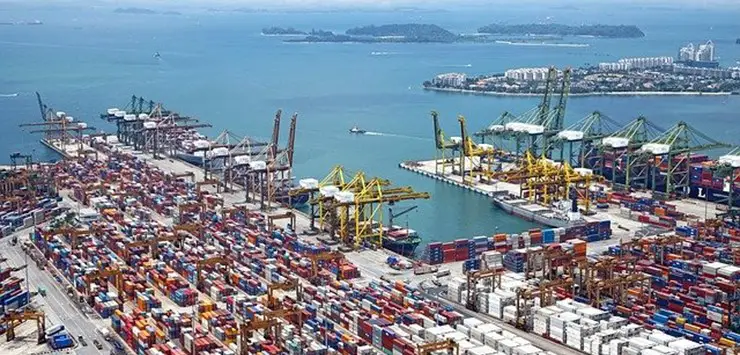
Saudi Arabia has aggressively advanced its agricultural supply chain infrastructure through several major grain terminal developments designed to bolster national food security. A key cornerstone of this effort is the newly operational Yanbu Grain Handling Terminal at Yanbu Commercial Port, developed as a joint venture under the National Grain Company by the Saudi Agricultural and Livestock Investment Company (SALIC) and Bahri. Designed to serve as a regional hub for Red Sea grain imports, the facility features 12 silos storing up to 156,000 tonnes of strategic grains such as wheat, corn, and barley, and handles throughput capacities of up to 3 million tonnes annually.
Beyond Yanbu, the Saudi Ports Authority (Mawani) partnered with agricultural giant ARASCO on a SAR 200 million (USD 53 million) deal to build a dedicated 40,000-square-metre grain logistics center at King Abdulaziz Port in Dammam, supporting ARASCO’s strategy to scale annual grain imports via the Arabian Gulf to over 5 million metric tonnes. Further driving this expansion, SALIC established the National Grain Supply Company (SABIL) to manage logistics and over 2.7 million tonnes of port silo capacity kingdom-wide, while ongoing port developments at OXAGON (NEOM) and Jeddah Islamic Port integrate advanced grain handling terminals to efficiently feed the Kingdom’s growing strategic reserves.
April 6, 2022
The National Grain Company, a joint venture between a logistics and transportation service provider, Bahri, and the Saudi Agricultural and Livestock Investment Company (Salic) has awarded the contract for the construction of Saudi Port’s Grain Terminal at the Yanbu Commercial Port, which is situated right about halfway between the King Fahad Industrial Port to the south, the Dhuba Port to the north, and the Jeddah Islamic Port, also in the southern direction.
The contract was awarded to Haif Trading & Construction Company. It was particularly signed by the Chairman of the National Grain Company, Naseer Abdulrahman Al Issa, and the CEO Engineer to Haif Trading & Construction Company, Mansour bin Haif in the country’s capital city.
Scope of the project and features of the future Saudi Port’s Grain Terminal
Pointing reference to the terms of the contract for Saudi Port’s Grain Terminal, Haif Trading & Construction Company will have the task of constructing the grain terminal with a storage capacity of 150,000 tonnes that will be under the first phase of the project. This terminal will also include 12 silos that possess a total capacity of 96,000 tonnes alongside a flat warehouse that will possess a capacity of 60,000 tonnes.
Also Read: Riyadh Metro Project in Riyadh, the Capital of Saudi Arabia
Saudi Port’s Grain Terminal will also include a conveyor belt with a total length of 650 meters. The belt will have the ability of unloading equipment as heavy as 800 tonnes per hour of discharge capacity. The terminal will also include an area dedicated to and for packaging and the loading of trucks.
Once completed, the terminal will be able to not only handle and store, but also distribute well over 3 million tonnes of grains on an annual basis. Saudi Arabia’s Minister of Environment, Water and Agriculture and Engineer Abdulrahman Abdulmohsen Al Fadley revealed that the terminal will enhance the supply chains capabilities in the country while simultaneously providing logistic support to all importers from both the private and public sectors.
Project Factsheet
Project Name: Yanbu Grain Handling Terminal (National Grain Company Terminal)
Operating Entity: National Grain Company (NGC) — Joint Venture between SALIC (Saudi Agricultural and Livestock Investment Company) and Bahri
Location: Yanbu Commercial Port, Red Sea Coast, Saudi Arabia
Primary Objective: Serve as a strategic Red Sea gateway for importing, handling, and distributing essential grains to strengthen Saudi Arabia’s national food security
Status: Fully Operational (Inaugurated December 2024)
Capacity & Handling Performance
- Total Static Storage Capacity: 156,000 tonnes
- Silo Infrastructure: 12 concrete storage silos (96,000 tonnes combined capacity) + 1 flat warehouse (60,000 tonnes capacity)
- Annual Throughput Capacity: 3 Million+ tonnes per year
- Unloading Rate: 800 tonnes per hour direct ship-to-silo discharge rate
- Conveyor System: 650-meter automated conveyor belt system
- Target Commodities: Wheat, corn, barley, and soybeans
Broader Network and Strategic Expansion
- Dammam Logistics Hub (Persian Gulf): $53 Million (SAR 200M) partnership between Mawani and ARASCO for a 40,000 sq meter grain center targeting 5M+ metric tonnes annual handling.
- National Logistics Platform: Integrated into SABIL (National Grain Supply Company) network to coordinate 2.7M+ tonnes of state-aligned port silo capacity across Saudi Arabia.
- Future Node Infrastructure: Next-generation grain import terminals actively integrating into OXAGON (NEOM) and Jeddah Islamic Port.
Key Technical Features
- Integrated automated ship unloading equipment and pneumatic transport towers.
- Automated quality control, grain drying, and real-time stock monitoring systems.
- Multimodal distribution setup connecting port storage directly to inland transport fleets and processing plants.
Project Team
Owner and Project Developer: National Grain Company (NGC) — A joint venture between the Saudi Agricultural and Livestock Investment Company (SALIC) and The National Shipping Company of Saudi Arabia (Bahri).
Port and Authority Partner: Saudi Ports Authority (Mawani).
Lead EPC / General Contractor: HAIF Trading & Contracting Company.
Electromechanical and Process Automation Supplier: OCRIM S.p.A.
Detailed Engineering Design and Supervision: Engineering Consultants Group (ECG)


Leave a Reply