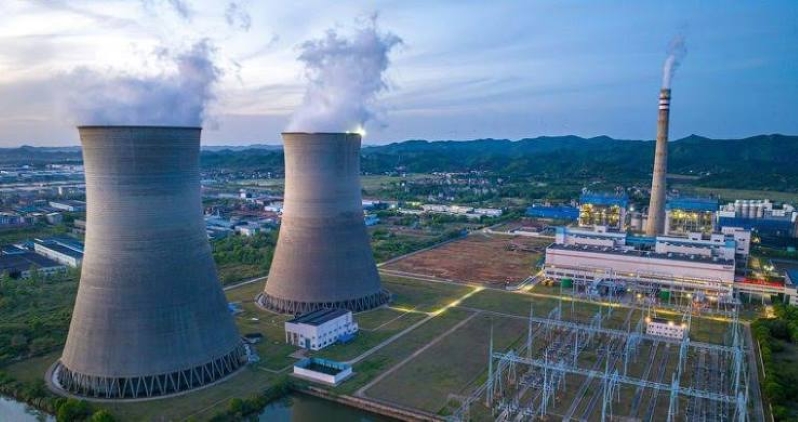
Romania’s $6-7 billion small modular reactor (SMR) power plant project planned at Doicesti has reached a stalemate after state-owned nuclear energy company Nuclearelectrica reported that more than 80% of the conditions attached to the project’s Final Investment Decision (FID) remain unmet.
The recent development has put the Doicesti SMR Power Plant Project under fresh review. Nuclearelectrica plans to reassess available SMR technologies and evaluate other possibilities before determining the most suitable path forward for the proposed nuclear facility.
What conditions have not been meet?
This assessment follows an evaluation of the conditions stipulated in the FID as of September 30, 2026. Three key conditions remain unresolved.
Firstly, framework agreement between Nuclearelectrica and NuScale. The parties have yet to agree on a final version of the document, with Nuclearelectrica stating that the US partner progressively withdrew from binding commitments that had previously been expected.
The second condition is Nuscale’s commitment to the procurement of SMRs. The investment decision foresees two possible arrangements. One, an initial purchase of one module, followed by a decision on the remaining five. Or two, a commitment to purchase all six modules, with provisions requiring NuScale to reimburse the cost of five modules if the first failed to meet specified performance requirements.
Nuclearelectrica reported that NuScale did not agree to sign a binding purchase agreement under either arrangement. This leaves negotiations over financial exposure and performance guarantees unresolved.
The third condition relates to natural gas identified around an old well at the proposed Doicesti SMR Power Plant project site. The issue has affected the process of securing the necessary site authorizations, with the Romanian side bearing primary responsibility to resolve it.
According to Nuclearelectrica, the Doicesti SMR Power Plant Project cannot proceed as originally planned without the required conditions being fulfilled.
Additionally, an independent study is expected to deliver preliminary results in March 2027. This will be followed by a final report in October 2027.
What is Nuclearelectrica proposing?
- Scale back RoPower’s operations for the next six months
- Minimize expenses
- Cut project-related staff by at least 60%
- Issue a 30-day notice to NuScale to meet the conditions
Proposed reassessment of the Doicesti SMR Power Plant Project implementation strategy
Nuclearelectrica’s review will consider the maturity of available US-origin SMR technologies. It will also consider their compatibility with the Doicesti site and the potential development of alternative electricity generation capacity.
The company has also emphasized that the reassessment does not automatically exclude NuScale’s technology from consideration. Instead, the objective is to identify the most advantageous solution for Romania. This is while protecting the interests of the Romanian state if negotiations under the current arrangement fail to produce a positive outcome. This is as other nuclear development initiatives continue to advance construction in the country, including the tritium removal facility at Cernavoda Power Plant.
Once the assessment is complete, the revised implementation strategy will be submitted to the company’s relevant corporate bodies for approval.
The process is expected to proceed within the framework of the intergovernmental agreement between Romania and the United States. This is ratified under Romanian Law No. 200/2021.
Nuclearelectrica’s executive management also seeks to investigate the factors that contributed to the current impasse. They are also keen on identifying measures to limit the project’s risks and financial impact on the company.
RoPower operations face proposed cost reductions
There are proposals to cut back activities of RoPower Nuclear, the project company responsible for developing the Doicesti SMR Power Plant Project.
According to Romanian authorities, the proposed measures include reducing expenditure to a minimum over the next six months. RoPower would also have to cut the workforce involved in the project by at least 60%.
Nuclearelectrica has also proposed notifying NuScale and allowing a maximum of 30 days for the fulfilment of priority conditions.
These measures are designed to limit ongoing project expenditure. This is while the parties seek to resolve the outstanding contractual and commercial issues.
Additionally, the proposed workforce reduction and cost cut-downs form part of the response to the current deadlock. They do not, by themselves, constitute a final decision to cancel the project.
The next phase of Romania’s Doicesti SMR Project will heavily depend on how this impasse is resolved.
Background to Romania’s Doicesti SMR Power Plant Project
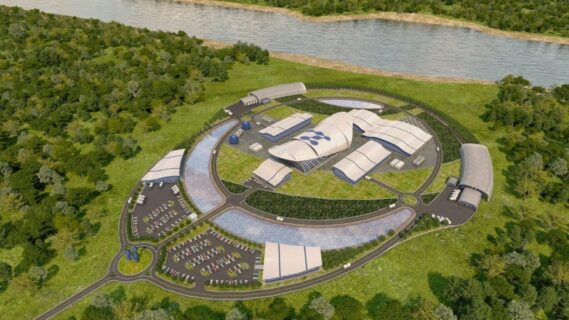
The Doicesti project is planned for a former coal-fired power plant site in Romania. The proposed configuration comprises six NuScale Power Modules.
NuScale’s modular reactor design is intended to allow multiple nuclear modules to be deployed within a single power plant.
In February 2026, Nuclearelectrica’s shareholders approved advancing the project to the next phase, subject to the fulfilment of specified investment/FID conditions. The latest assessment indicates that those conditions have not been met to the extent required for the project to proceed as originally planned.
What happens next?
The immediate priority is to: one, establish whether the outstanding conditions can be resolved within the proposed timeframe, and two, whether the current partnership provides a viable basis for further development.
At the same time, Nuclearelectrica’s planned reassessment could broaden Romania’s options. This will be from comparing alternative SMR technologies and evaluating other generation possibilities for the Doicesti nuclear site.
The final direction of the project will also depend on the outcome of these processes. The completion of the independent study into the natural gas issue and the decisions taken by Nuclearelectrica’s corporate bodies also factor in the expected outcome.
For now, Romania’s Doicesti SMR development remains in a deadlock with no confirmed decision to proceed with the original configuration or to abandon NuScale’s technology altogether.

Leave a Reply