Duke Energy has unveiled plans to invest up to $756 million in its largest battery storage complex yet, adding 410 megawatts (MW) of grid capacity in Wayne County, North Carolina. Announced on November 17, 2026, the two-phase H.F. Lee Battery Storage project is scheduled to begin construction in early 2027 and enter service by late 2028.
Situated adjacent to Duke Energy‘s existing H.F. Lee natural gas power plant in Goldsboro, the complex will more than double the 308 MW of battery storage the utility currently operates across 14 North Carolina sites. By building on a former coal plant property using North American-manufactured batteries, the development qualifies for a 50% federal tax credit designed to reduce costs for ratepayers.
Two-Phase Buildout Doubles North Carolina Storage Fleet
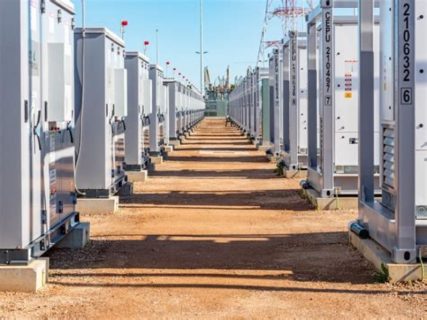
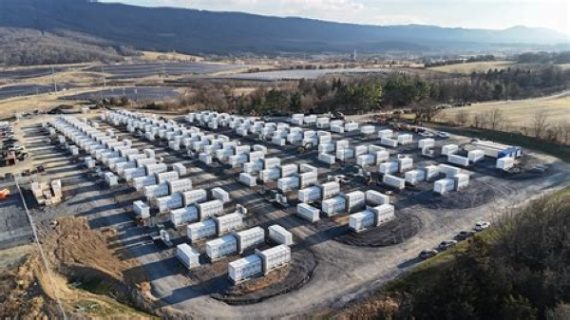
The installation is divided into two four-hour lithium-ion battery systems. H.F. Lee Battery Storage 1 will deliver 260 MW when it comes online in fall 2028, followed by the 150 MW H.F. Lee Battery Storage 2 facility by the end of 2028.
At full output, the combined 410 MW complex will supply enough instantaneous electricity to power roughly 300,000 homes during peak demand periods. That capacity is more than four times the size of Duke Energy’s current largest operational battery facility in North Carolina, a 100 MW site in Knightdale.
Work on the Goldsboro site will reuse grid interconnections at the H.F. Lee Energy Complex, where a 920 MW combined-cycle natural gas plant replaced a retired 1951 coal-fired station in 2012.
How Do Federal Tax Credits and Grid Rules Shape the Deal?
Federal clean-energy tax incentives form a central pillar of the project’s economics. Locating the batteries inside a designated energy community alongside domestic content requirements for North American battery manufacturing unlocks a 50% federal tax credit, lowering the net capital cost passed on to utility customers.
The announcement arrived one day after the North Carolina Utilities Commission issued a November 16, 2026 order advancing 2,700 MW of new battery storage toward a 5,400 MW fleet target by 2034. Within its broader 2025 Carolinas Resource Plan, the utility has outlined plans for 6,540 MW of battery storage by 2035 as it shifts capital toward dispatchable capacity following Duke Energy’s decision to halt offshore wind plans off North Carolina and advances four planned solar projects in Florida.
Local Tax Base and Workforce Impact in Wayne County
County officials estimate the two battery facilities could generate up to $2 million in additional annual property tax revenue once operational. Duke Energy is already Wayne County’s largest taxpayer, contributing $5.8 million each year for its existing H.F. Lee generating complex and related local power infrastructure.
Nine permanent full-time positions will support operations at the Goldsboro battery complex alongside regional solar and storage assets. Kendal Bowman, Duke Energy’s North Carolina President, said the utility is “reinvesting in our existing power plant communities that have powered North Carolina and South Carolina for decades,” while Wayne County Board of Commissioners Chairman Joe Daugherty noted that the tax revenue and grid reliability will support long-term industrial recruitment across Eastern North Carolina.
Across the broader U.S. grid-storage pipeline targeting 2028 delivery, construction is also underway on the 553 MWdc Cold Creek Solar and Storage Project in Texas after developer Doral Renewables closed nearly $900 million in project financing earlier in 2026.

Project Overview
-
Project Name: H.F. Lee Battery Storage (H.F. Lee Battery Storage 1 and 2)
-
Developer / Owner: Duke Energy (Duke Energy Progress)
-
Location: Goldsboro, Wayne County, North Carolina, USA
-
Project Type: Utility-scale battery energy storage system (BESS)
-
Project Value: Up to $756 million
-
Capacity: 410 MW total (260 MW Phase 1 and 150 MW Phase 2; four-hour duration)
-
Status: Announced; pre-construction
-
Milestone Date: November 17, 2026 (project announcement)
-
Construction Start: Early 2027 (anticipated)
-
Target Completion: Fall 2028 (Phase 1); late 2028 (Phase 2)
-
EPC Contractor: Not publicly disclosed
-
Permanent Jobs: 9 full-time regional operations roles (construction jobs not publicly disclosed)
-
Economic Impact: Up to $2 million in estimated additional annual county tax revenue
Project Team
-
Developer and Operator: Duke Energy
-
State Utility Regulator: North Carolina Utilities Commission
-
Local Government Host: Wayne County Government
-
Regional Economic Development Partner: North Carolina Global TransPark Economic Development Region
-
EPC Contractor: Not yet disclosed

Leave a Reply