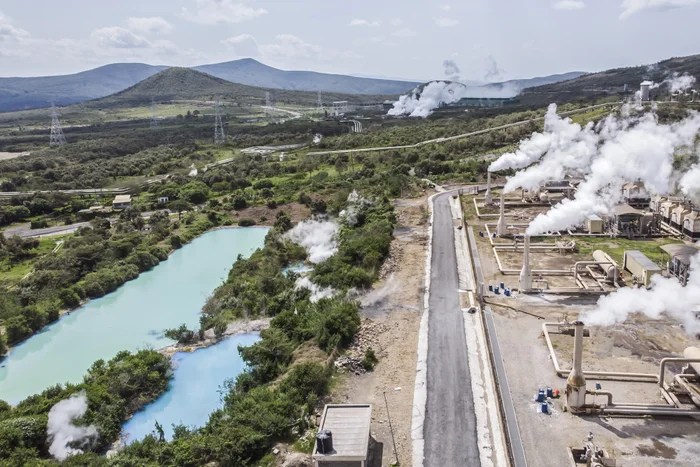
Kenya Electricity Generating Company (KenGen) has advanced its US$4.2 billion clean power expansion blueprint across the nation’s rift valley corridor.
State power planners initially aimed to add 1.5 gigawatts of geothermal energy in Kenya to stabilize base-load electricity supplies.
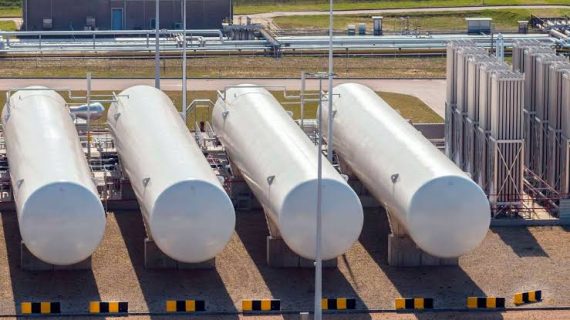
This geothermal drive works alongside emergency generation projects, such as the newly announced Floating Gas Power Plant, to reinforce power reliability and prevent industrial grid disruptions across the country.
KenGen recently expanded its long-term corporate roadmap, scaling its overall renewable energy pipeline to 5,500 megawatts.
International partners and financiers continue to support this geothermal rollout in Olkaria near Naivasha. Furthermore, state authorities gazetted the Olkaria Green Energy Park as a Special Economic Zone, attracting new industrial tenants to utilize direct geothermal steam and clean electricity.
Also Read: Floating Gas Power Plant: Kenya Advances Sh39B Offshore Energy Hub
 Germany’s collaboration with Kenya
During an address to the press, the Climate and economy minister praised Kenya over its commitment to the production of clean green energy amid the climate change crisis. He also made a proposal to the government not to neglect investment into more solar and geothermal project so as to meet the rising demand for electricity. “Germany is committed to supporting this country in expertise in the production of green energy. This country has very high potential in geothermal and solar. Some members of the delegation are involved in the energy sector. We are keen to learn how we can phase out thermal plants which continue to emit emissions.”
“It offers immense opportunities for German companies, especially in future-oriented sectors such as the digital economy and the expansion of renewable energy generation, and transition technologies,” he added.
Stats on Geothermal Energy in Kenya
Out of the 1.5 GW of energy aimed to be produced over the next ten years, 800 MW is expected to come from geothermal. “The geothermal energy potential in Kenya stands at over 10,000 MW (10 GW) and we shall continue to tap into this as electricity demand continues to rise,” said Peter Njenga, KenGen CEO. He also pointed out that the demand for electricity in the country is on the rise. This has brought about the need to increase production as more investors seek opportunities in the country.
Also Read KenGen Issues Multi Billion Olkaria I Rehabilitation Contract
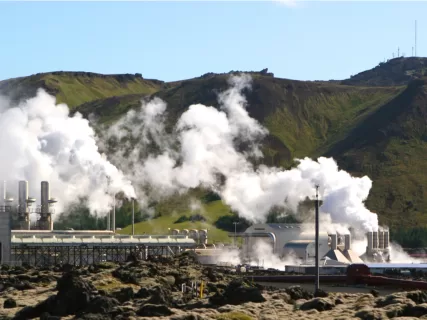
In 2023, the German chancellor, Olaf Scholz visited a geothermal power plant in Kenya and commented that “Germany should take Kenya as an inspiration to intensify its own geothermal power activities.”
Other Geothermal projects in Kenya
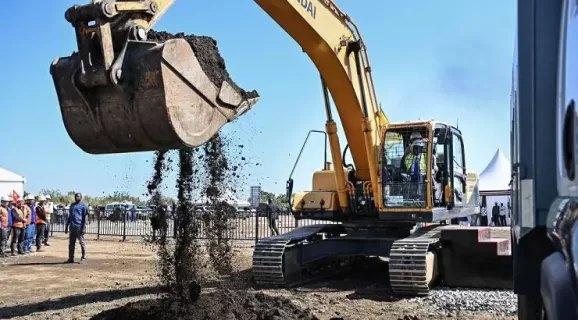
In October this year, construction broke ground on a 35 MW geothermal plant in Menengai, Nakuru. The project, undertaken by OrPower Twenty-Two (OrPower 22) will be completed by mid-2026. It is a part of a Build-Own-Operate scheme and is owned by Kaishan Group, a Chinese-based company. At a cost of US$90 million, the project will complete the first phase of development of the 105-MW installed capacity on the Menengai geothermal field. A second geothermal power plant has already began construction by Globeleq. Furthermore, the first power plant started operations in 2023 under Sosian. Exploration, drilling, and construction of steam gathering facilities at the Menengai steam field was managed by state-owned GDC, who will also be selling the steam to the three Independent Power Producers (IPPs).
Project Fact Sheet
Name: KenGen US$4.2 Billion Geothermal & Clean Energy Expansion Program (G2G Strategy).
Type: Geothermal Field Development, Steamfield Expansion & Renewable Energy Generation.
Location: Olkaria Geothermal Fields (Naivasha, Nakuru County) & Rift Valley Geothermal Hubs, Kenya.
Total investment: US$4.2 billion (Ksh 540+ Billion).
Developer: Kenya Electricity Generating Company PLC (KenGen).
Status: Active Development & Multi-Phase Implementation (Targeting up to 5,500 MW renewable pipeline).
Construction employment: Estimated 4,500+ specialized civil, drilling, geological, and electrical engineering positions.
Permanent employment: Multi-thousand permanent technical specialists, power plant operators, and industrial park maintenance personnel.
Timelines and production targets: Initial 1.5 GW (1,500 MW) deployment active; long-term corporate G2G plan scaling total renewable capacity up to 5,500 MW by 2030.
Technology integration: High-Enthalpy Geothermal Steam Turbines, Direct-Use Geothermal Applications, Automated SCADA Power Grid Systems.
Raw material supply: High-Temperature Underground Geothermal Reservoirs across the Great Rift Valley.
Economic impact: Delivers reliable low-cost base-load power, powers the Olkaria Green Energy Park SEZ, lowers national electricity tariffs, and cuts carbon emissions.
Key infrastructure needs: Deep Geothermal Drilling Rigs, High-Pressure Steam Pipelines, Power Substations, High-Voltage Grid Interconnections.
Delivery risks: High initial exploratory drilling costs, subsurface resource depletion risks, international climate finance volatility.
Primary target markets: National Grid (Kenya Power), Olkaria Special Economic Zone Tenants, Regional East African Power Pool (EAPP) Exports.
Project Team
Project Developer & Owner: Kenya Electricity Generating Company PLC (KenGen)
Primary Offtaker & Grid Operator: Kenya Power and Lighting Company (KPLC)
Key Technical & Financier Partners: German Government (BMWK/GIZ), European Investment Bank (EIB), Japan International Cooperation Agency (JICA)
Government & Regulatory Stakeholders: Ministry of Energy and Petroleum, Energy and Petroleum Regulatory Authority (EPRA), National Treasury of Kenya
Local Economic Development Stakeholders: Nakuru County Government, Olkaria Green Energy Park Administration

Leave a Reply