Ask a superintendent what keeps them up at night and security rarely makes the top three. Schedule, safety and budget usually get there first. Then a generator goes missing over a long weekend, or accounts payable gets an email with a subcontractor’s “new bank details,” and security jumps straight to the top of the list.
On a small job, a padlocked gate and a crew everyone knows by sight can be enough. Large projects are a different animal. There are dozens of firms, hundreds of people, deliveries all day and a site office full of laptops, drawings and payment data. There’s more to lose, and not all of it sits behind the fence.
A workable security plan covers three things: the site itself, the people coming and going, and the systems that run the job. Here’s how to approach each one without turning the project into a fortress.
Why Large Sites Are Easy Targets
Construction sites tend to have plenty of what a thief wants and very little of what stops one.
- Valuable, easy-to-sell material sits in the open: copper wire, cable, fixtures, fuel.
- Equipment stays on site overnight, sometimes with keys that fit more than one machine.
- The workforce changes every few weeks as trades come and go, so nobody really knows who belongs.
- The perimeter is temporary, and it moves as the job moves.
- After hours and on weekends, there’s often nobody around at all.
Then there’s the digital side: shared logins, a site office Wi-Fi network set up in a hurry, and invoices moving between dozens of companies by email. That’s a lot of open doors. Most of them are cheap to close if someone owns the problem from day one.
The Main Risks at a Glance
| Risk | What usually goes wrong | First fix |
|---|---|---|
| Material and tool theft | Copper and tools left out overnight | Locked containers, deliveries timed to installation |
| Equipment theft | Machines left with keys, no tracking | GPS trackers, immobilizers, a serial number register |
| Trespass after hours | Gaps in the fence, gate left open | Continuous fencing, lighting, monitored cameras |
| Unknown people on site | Sign-in sheets nobody checks | Controlled entry with credential checks |
| Payment fraud | Fake “new bank details” emails | Confirm every change by phone |
| Account and data access | Shared logins, open site Wi-Fi | Individual accounts, MFA, a separate guest network |
Start With a Plan and an Owner
Security works best when it’s treated like the rest of the site logistics plan: written down before mobilization and updated at every phase.
At a minimum, the plan should cover:
- Who is responsible. Usually the general contractor, with one named person on site. “Everyone” means no one.
- What needs protecting. High-value materials, equipment, the site office and project data.
- The risks specific to this site. A city block with heavy foot traffic is a different problem from a remote site with a long perimeter.
- What happens after hours. The lockup routine, alarms, cameras and patrols.
- How incidents get reported and logged. Even small ones. Patterns show up quickly.
Walk the site with the plan in hand once a month. Fences get moved, gates get propped open and new laydown areas appear. A plan written in month one rarely matches month eight.
Physical Security: Perimeter, Kit and the Front Gate
Fencing and Lighting
A continuous perimeter is the foundation, so check the boring spots. The gap behind the site trailers. The panel taken down for a crane delivery and never put back. If there’s a way through, people will find it within a week.
Lighting does a lot of work for very little money. Motion-activated lights over gates and storage areas, plus clear signs that the site is monitored, are enough to put off a fair share of opportunistic theft.
Equipment and Materials
Keep small tools and high-value materials in locked containers, not in the back of a van. Fit GPS trackers or immobilizers to the machines that walk off most often, and keep a register of serial numbers so anything recovered can be identified. Where you can, time deliveries of copper and other high-theft materials close to installation. The less that sits on site overnight, the less there is to take.
Cameras and Monitoring
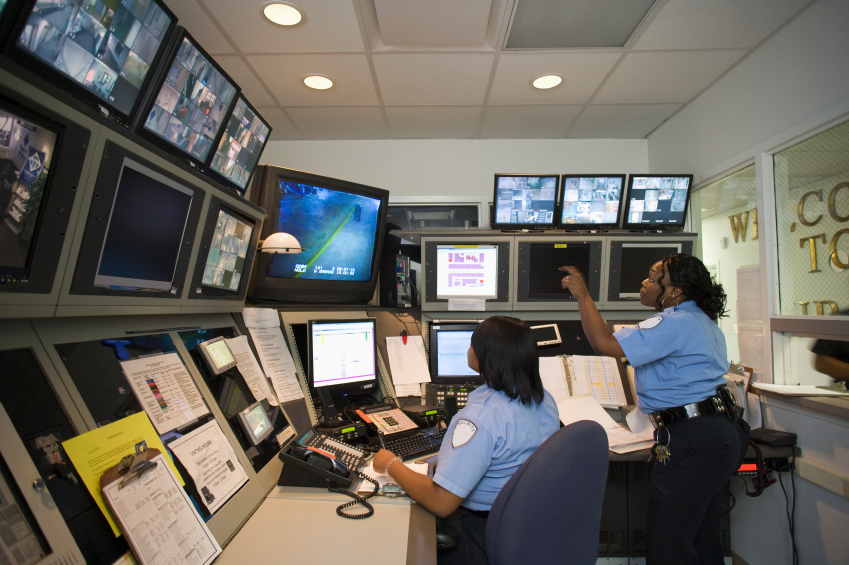
Remote-monitored camera towers are now a common sight on large projects. A camera that only records helps after the fact. One that someone is watching, with a speaker that can warn off an intruder, stops the problem while it’s happening.
Access Control at the Entrance
This is where a lot of sites are weakest, and it’s where physical security and site administration meet.
The classic setup is a guard, a clipboard and an open gate. That’s fine on a small job. On a big one, the sheet fills with gaps, hardly anyone signs out and the guard is directing trucks at the same time. When something goes wrong, the first question is who was on site, and paper can’t really answer it.
Controlled entry closes that gap. Workers badge in and out, the system checks their induction and training before letting them through, and you get a live headcount for emergencies. In New York City, for example, that check can include the Site Safety Training (SST) card that inspectors ask to see.
The hardware at the gate matters too. Waist-high turnstiles work indoors but are easy to step over. For an open perimeter that has to stay secure after hours with nobody watching, full-height turnstiles close the opening completely: one badge, one person, no guard needed. Manufacturers such as Rom Technologies offer hot-dip galvanized and stainless steel units built for unattended outdoor entrances. Whatever goes on the gate, add a separate emergency exit that fails open when the fire alarm trips, and a wider accessible gate on the same badge system.
Digital Security: The Site Office Is a Target Too
More of the job now lives on laptops, tablets and cloud platforms: drawings, schedules, subcontractor details, payment applications. That makes the site office worth attacking, even when it’s a trailer.
The most common threat is surprisingly low-tech. An email arrives that looks like it’s from a supplier or subcontractor, saying their bank details have changed. Someone updates the record, and the next payment goes to a criminal. Construction is an attractive target because so much money moves between so many companies, much of it arranged by email.
A few habits close most of the gaps:
- Confirm bank detail changes by phone, using a number you already have, never the one in the email.
- Turn on multi-factor authentication for email, site management software and anything holding drawings or payment data.
- Stop sharing logins. Give each person their own account so access can be removed the day they leave the job.
- Separate the networks. Visitors and subcontractors get a guest Wi-Fi, apart from the network the site office runs on.
- Change default passwords on cameras, access control panels and other connected equipment. They’re networked devices, and default credentials are one of the first things attackers try.
For firms without an IT department, CISA’s cyber guidance for small and midsize businesses is a practical place to start.
People and Procedures
Fences and software only work if the routine around them does.
- Cover security in the site induction: what to report, who to report it to and how lockup works.
- Keep track of keys to equipment, containers and the site office, and get them back when people leave.
- Run an end-of-day check: gates locked, containers shut, machines immobilized, lights and cameras on.
- When a subcontractor demobilizes, deactivate their badges and system accounts the same day.
- Log every incident, even a missing drill. It’s the only way to spot a pattern.
Before You Mobilize
A short list to run through at the planning stage:
- Security owner named and the plan built into the site logistics plan
- Perimeter, lighting and signage specified for each phase
- Locked storage and equipment tracking in place
- Camera coverage and after-hours monitoring agreed
- Controlled entry with credential checks at the main entrance
- Emergency exit and accessible gate included
- Individual logins, multi-factor authentication and a guest network set up
- A phone check for bank detail changes written into accounts procedures
- Security covered in the site induction
Make Security Part of the Plan From Day One
Most of what goes missing from construction sites, whether it’s a generator or a payment, is taken because it was easy. A continuous fence, a controlled entrance, cameras someone actually watches and a phone call before changing bank details won’t make a site impossible to hit. They will make it a lot less attractive than the one down the road.
Sort it out before the first crew arrives, and revisit it every time the job changes shape. It costs a lot less than replacing a stolen machine or chasing a payment that went to the wrong account.