
Nairobi City County has disclosed a KSh9 billion (about $60 million to $70 million) privately initiated proposal from US engineering firm Satarem America Inc. to build and operate a medical and hazardous waste treatment plant in the capital. The firm would run the facility for 10 years under a Build Operate Transfer model before handing it to the county at no cost.
Satarem America submitted the proposal in November 2025, and the county made it public on September 24, 2026, in line with disclosure rules under the Public Private Partnerships Act, 2021. Nairobi City County says the plant would close a serious gap in the safe disposal of clinical waste across the city’s hospitals and clinics. However, the county stresses that the cost, capacity and job figures are the proponent’s own estimates and remain subject to verification and negotiation.
Nairobi Medical Waste Plant Targets a Fragmented Disposal System
Nairobi produces an estimated 30 to 40 tonnes of medical and hazardous waste every day, roughly the load of three or four full refuse trucks. According to the county, disposal is currently split across its 17 sub counties, raising environmental and public health concerns about how infectious material is handled.
Many facilities rely on contracted private collectors or on site incinerators. These small burners often fall into disrepair or fail to meet emission standards set by the National Environment Management Authority (NEMA).
The proposed plant would start with a treatment capacity of 60 to 80 tonnes a day, with room to expand to 100 tonnes. Consequently, it could serve more than 135 public health facilities in Nairobi, as well as private hospitals in the county and neighbouring regions that choose to subscribe.
“Nairobi City County Government is committed to safe, sustainable, EMCA- and WHO-compliant management of medical and hazardous waste,” the county said in its public notice. Environmental and social impact assessments under Kenya’s Environmental Management and Co-ordination Act will be required before any construction begins.
Satarem America Plans Pyrolytic Incineration and Solar Power
Under the proposal, Satarem America would design, finance, build, operate and maintain the plant for the full 10 year concession. The facility would include waste reception and sorting units, autoclave sterilisation, high temperature pyrolytic incineration, wastewater treatment and ash stabilisation.
High temperature treatment destroys pathogens and toxic compounds more completely than the low temperature burners common in Kenyan hospitals, which can release dioxins and furans. Furthermore, the ash stabilisation and wastewater units are designed to limit secondary pollution from the process.
The plant would draw power from a solar and grid hybrid system to cut running costs and emissions. Additionally, Satarem America has offered to donate solar power systems to selected public health facilities, subject to county approval.
The firm projects about 300 direct jobs and 600 indirect jobs, alongside skills transfer for local technicians in environmental engineering and waste management. Satarem, whose wider group is known mainly for cement plant engineering, also markets waste to energy technology.
Nairobi Medical Waste Plant Enters the PPP Evaluation Pipeline
The proposal now moves into formal technical and financial evaluation, followed by project development, stakeholder engagement and drafting of a project agreement. Final approval rests with bodies including the National Treasury and the PPP Committee, supported by the Directorate of Public Private Partnerships.
A privately initiated proposal lets the county draw on private capital without an immediate hit to its budget. Moreover, evaluators will need to test whether the proposed tariffs for hospitals offer value for money, since higher disposal fees could feed through to patient costs. The plant’s final location has not been announced.
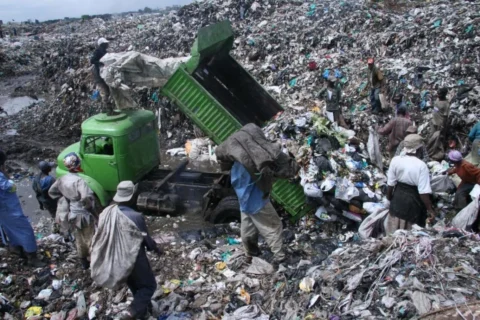
The bid also arrives as Nairobi continues to struggle with the overloaded Dandora dumpsite, which handles domestic and commercial refuse. The Satarem plant, by contrast, would deal only with the separate, tightly regulated stream of clinical and hazardous waste.
Across Kenya, expanding county hospitals are adding to that waste stream. In Taita Taveta, where the county began building an eye treatment and care centre at Moi County Referral Hospital in Voi with KSh80 million from the German government through Salus Oculi Kenya, the same hospital is now preparing a KSh352 million, five storey medical complex. That complex will add an ICU, a high dependency unit, a new accident and emergency department, 44 surgical beds and an on site medical oxygen plant, with completion expected within 18 months of its launch in January 2026.
Project Overview
- Project Name: Nairobi Medical and Hazardous Waste Treatment Facility
- Proponent: Satarem America Inc.
- Contracting Authority: Nairobi City County Government
- Location: Nairobi, Kenya (site not yet announced)
- Project Type: Medical and hazardous waste treatment plant
- Project Value: KSh9 billion (about $60 million to $70 million), proponent estimate
- Delivery Model: Build Operate Transfer, 10 year concession, then transfer to the county at no cost
- Initial Capacity: 60 to 80 tonnes per day, expandable to 100 tonnes
- Current Waste Volume: An estimated 30 to 40 tonnes per day across Nairobi
- Facilities Served: More than 135 public health facilities, plus subscribing private hospitals
- Key Technologies: Autoclave sterilisation, high temperature pyrolytic incineration, wastewater treatment, ash stabilisation
- Power Supply: Solar and grid hybrid system
- Jobs: About 300 direct and 600 indirect, proponent estimate
- Status: Proposal submitted November 2025; publicly disclosed September 24, 2026; entering PPP evaluation
- Construction Start: Not publicly disclosed
Project Team
Nairobi Medical Waste Treatment Facility
- Proponent: Satarem America Inc. (official site not verified)
- Contracting Authority: Nairobi City County Government
- PPP Oversight: Directorate of Public Private Partnerships
- Approving Authority: The National Treasury
- Environmental Regulator: National Environment Management Authority
Moi County Referral Hospital, Voi (related project)
- Owner: Taita Taveta County Government
- Eye Centre Funding Partner: Salus Oculi

Leave a Reply