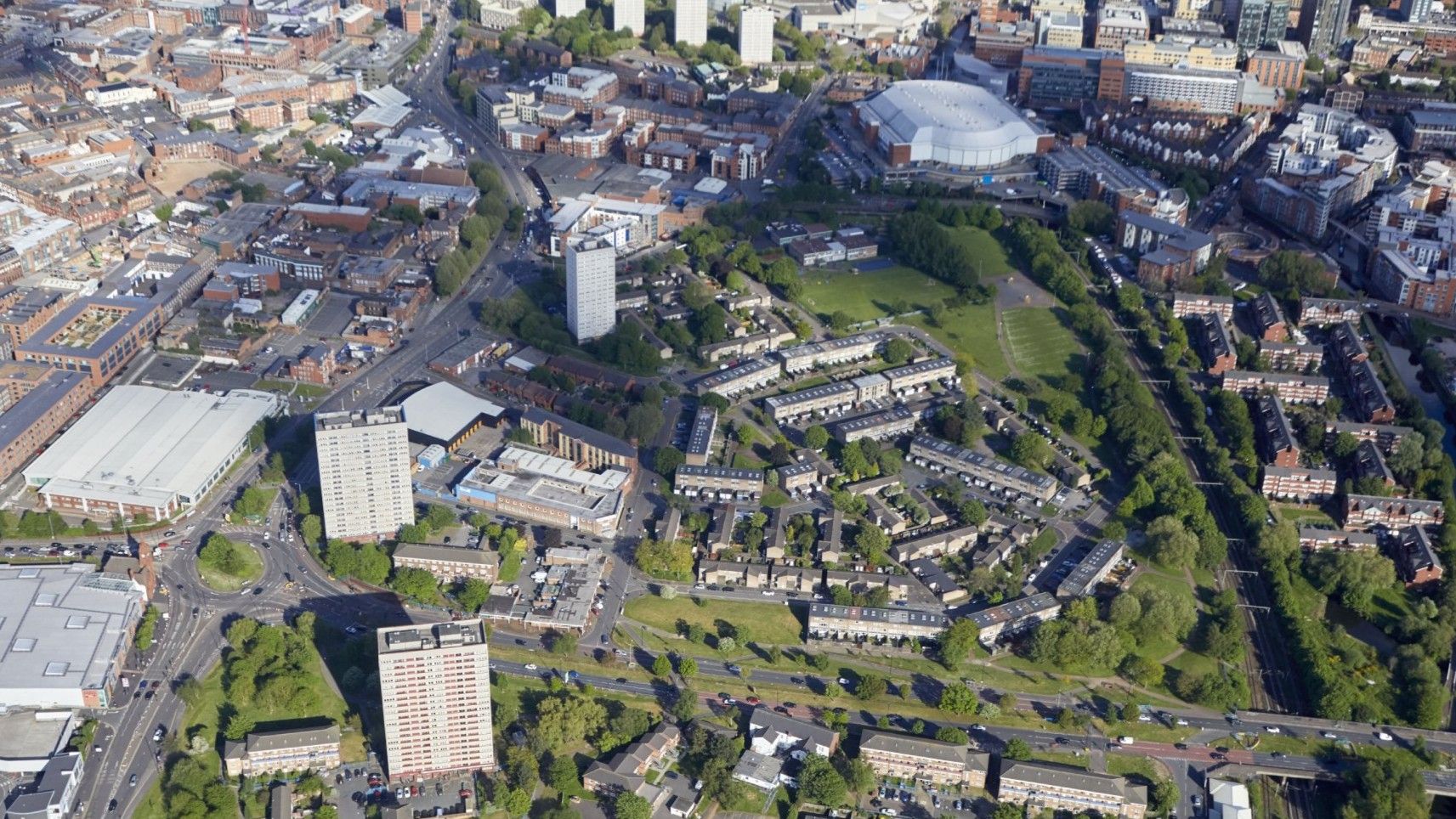
Birmingham City Council and property developer Berkeley St Joseph have officially collapsed the £2.5 billion Ladywood Estate Regeneration scheme across central Birmingham.
Local authority leaders and corporate executives jointly agreed to terminate their master partnership agreement following detailed viability reviews.
This major urban renewal breakdown impacts regional housing markets across the United Kingdom, mirroring commercial challenges seen when Aldridge Tower: Renaker Unveils £250M 54-Storey Salford Residential Scheme launched pre-application consultations to reshape high-density residential delivery across major metropolitan centers.
Structural inflation, steep material cost increases, and tight municipal borrowing constraints ultimately rendered the multi-billion-pound Birmingham development proposal undeliverable.
City leaders confirmed that both parties reached an amicable exit agreement to prevent prolonged master planning uncertainty.
Procurement officers will now restructure the municipal development framework before re-engaging community groups on alternative housing strategies.
Financial Pressures and Inflationary Headwinds for Ladywood Estate Regeneration
Project leadership attributed the sudden partnership collapse to unprecedented cost inflation across the construction supply chain.
Severe interest rate changes and shifting housing market conditions degraded baseline financial projections over the proposed 20-year delivery term.
- Escalating Construction Capital Expenditure: Rising material costs and new structural regulatory compliance requirements increased overall buildout budgets beyond viable funding limits.
- Unviable Master Plan Parameters: Developer teams determined that original financial returns could no longer cover complex site remediation, infrastructure upgrades, and social housing commitments.
- Municipal Fiscal Constraints: Financial emergency measures within Birmingham City Council limited public sector capital contributions to bridge emerging funding gaps.
Engineering teams originally designed the 20-year master plan to replace existing post-war council housing blocks with modern high-density residential towers.
However, market volatility eroded developer profit margins, making private debt financing unachievable under the original partnership contract.
Community Impact and Future Strategy for Ladywood Estate Regeneration
The cancellation halts planned demolition across existing residential estates, leaving local housing authorities to maintain present property assets.
Municipal leaders pledged to initiate transparent consultation sessions with estate residents to outline future estate refurbishment options.
- Partnership Termination Notice: Birmingham City Council and Berkeley St Joseph finalize legal exit terms and dissolve their joint development entity.
- Community Consultation Reset: Local housing officials schedule neighborhood forums to gather resident priorities for smaller phased upgrades.
- Revised Procurement Design: Procurement teams formulate new delivery models to attract localized building contractors for target site parcels.
District representatives emphasized that public sector housing improvements remain essential despite the master project cancellation.
Restructuring the redevelopment strategy into smaller construction packages will reduce long-term delivery risks for future development partners.
Project Fact Sheet
Name: Ladywood Estate Regeneration.
Type: Urban Estate Master Plan & Mixed-Use Residential Regeneration.
Location: Ladywood Estate, Birmingham City Centre, West Midlands, England, United Kingdom.
Total investment: Estimated £2.2 Billion to £2.5 Billion GBP total scheme value.
Developer / Parent Company: Berkeley St Joseph (Joint Venture between Berkeley Group and Birmingham City Council).
Status: Project Collapsed / Partnership Terminated (November 2026).
Construction employment: Originally projected to generate thousands of direct civil engineering, demolition, and building trade jobs over 20 years.
Permanent employment: Designed to support hundreds of estate management, commercial retail, facility maintenance, and community care roles.
Timelines and production targets: 20-year master plan targeting over 10,000 new housing units; scheme collapsed prior to groundbreaking.
Technology integration: Modern Offsite Modular Construction, Low-Carbon District Heating Networks, Smart Urban Infrastructure, BIM Level 2.
Raw material supply: Precast concrete panels, structural steelwork, brickwork masonry, high-efficiency glazing, landscape pavers.
Economic impact: Scheme cancellation leaves estate modernization unfunded, halting 10,000 planned housing units and local commercial space expansion.
Key infrastructure needs: Demolition of 2,000 Existing Homes, District Highway Realignment, Utility Network Upgrades, New Community Facilities, School Construction.
Delivery risks: Severe construction cost inflation, high interest rates, estate resident displacement resistance, legal viability breakdowns.
Primary target markets: Local Authority Housing Tenants, Private Renters, First-Time Buyers, Regional Commercial Retailers.
Project Team
Local Authority & Landowner: Birmingham City Council
Terminated Developer Partner: Berkeley St Joseph (Berkeley Group)
Municipal Housing Directorate: Birmingham City Council Housing & Land Directorate
Local Community Stakeholder: Ladywood Community Residents & Local Action Groups



Leave a Reply