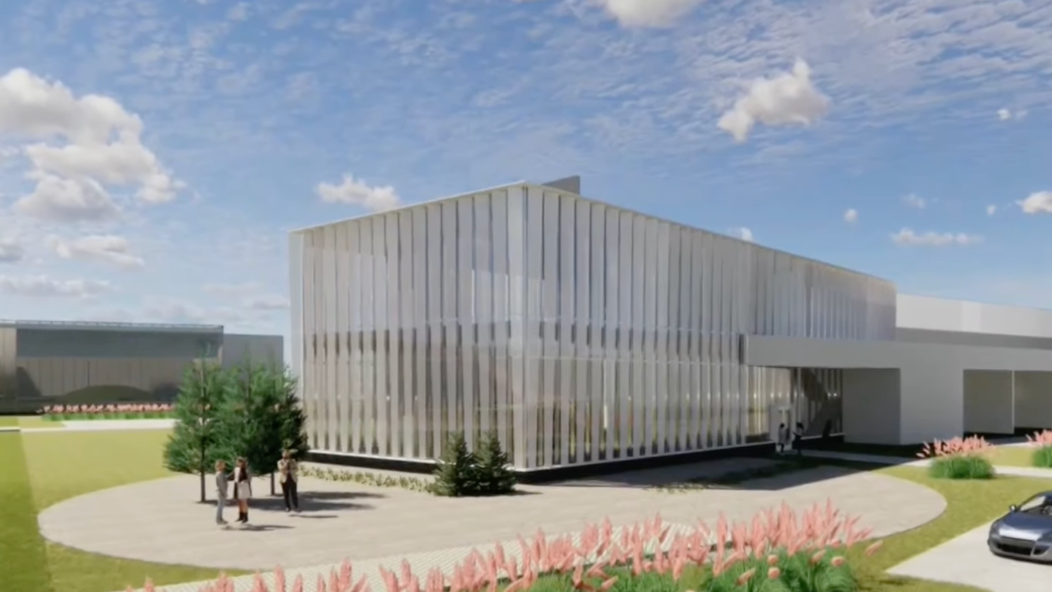
North Wind has broken ground on the Minnesota Aerospace Complex, a hypersonic and aerospace ground testing campus on 60 acres of University of Minnesota land at UMore Park in Rosemount, Dakota County. The company and the state put the full investment at $1.1 billion, with a first construction phase costed at $191.5 million and operations targeted for 2030.
What North Wind is actually building in Rosemount
The ceremony took place on 13 August, attended by Rosemount’s mayor and three council members alongside North Wind chief executive Arthur Mabbett, according to reporting in Sun Thisweek. Aero-News Network, which covered the groundbreaking, reported that phase one concentrates on advanced wind tunnels for aerodynamics and propulsion testing, and that a Rosemount City Council memo describes the campus as two test buildings housing the tunnels plus an engineering building shared with the university.
The site plan puts numbers behind that description. Preliminary drawings presented to the city and reported by GovTech show an 80,500 square foot aero-thermal tunnel building, a 46,500 square foot aerodynamic tunnel building and a 60,000 square foot University of Minnesota engineering facility, with a campus heating and cooling plant plus air storage and air compressor buildings alongside them. North Wind’s December 2025 statement placed the total at close to 250,000 square feet across tunnels, engineering space, offices, plant, maintenance and storage. Three wind tunnels are planned. Test coverage is advertised across the full flight range from subsonic through transonic and supersonic to hypersonic, which is a wider brief than most single sites carry.
Rosemount cleared the planning route early. The city council approved a preliminary and final plat and rezoned the parcel from A-2 Agriculture to B-2 Employment in February 2025, and community development director Adam Kienberger told GovTech at the time that a final site and building plan and related development agreements were still outstanding. David Meier, who leads North Wind Test, told the same outlet the complex would eventually employ roughly 100 engineers, technicians and calibration specialists, and that the facility could be five years from operation.
How the Minnesota Aerospace Complex is being funded
The capital stack is unusually visible for a privately owned test facility, because three levels of government are in it.
The Minnesota Department of Employment and Economic Development awarded $49.95 million from the Minnesota Forward Fund in October 2025, drawing on money appropriated by the legislature in 2023. DEED tied that award to the $191.5 million first phase and approximately 40 new jobs. The Star Tribune reported in November 2025 that the state money takes the form of a forgivable loan, a structure that matters if the job targets slip.
Federal money followed. North Wind disclosed in December 2025 that it had been awarded a $98.5 million Other Transaction Agreement by Army Contracting Command Orlando through the Training and Readiness Accelerator II consortium, and that the University of Minnesota had separately received a $10.3 million contract from the same command for modelling and simulation work. Both awards are sponsored on the defence side, and the Department of Defense, through the Office of the Under Secretary of Defense for Research and Engineering and the Test Resource Management Center, is described by project partners as a primary sponsor of the complex. City documents cited by Aero-News go further and name the federal government as the facility’s primary client.
George Rumford, who directs the Test Resource Management Center, said in a North Wind release that the complex would help the country “identify risks earlier, accelerate learning” in technologies tied to national security. Senator Amy Klobuchar has said she worked with the state’s delegation to secure federal funding for the project.
Then there is the headline figure itself, which has moved. North Wind’s own December 2025 announcement described a $1 billion facility. The January 2026 launch event and the GREATER MSP announcement put it at $1.1 billion, while North Wind’s separate January release on the same event described a $1.4 billion investment. Aero-News settled on more than $1 billion. Anyone modelling supplier opportunity here should treat the spread between $1 billion and $1.4 billion as unresolved rather than pick a number from it.
Measured against the Purdue benchmark
Test infrastructure of this kind is expensive per square metre in a way that ordinary industrial construction is not, and a named comparison makes the point. Purdue University’s Hypersonics and Applied Research Facility, opened in June 2023, cost $41 million for 65,000 square feet housing two tunnels, a Mach 8 quiet tunnel and the HYPULSE shock tunnel. That is roughly $630 per square foot.
Rosemount, at the $1.1 billion figure across close to 250,000 square feet, works out near $4,400 per square foot. The gap is not a signal that one project is poorly costed. It reflects what is being bought: at Purdue the tunnels were largely existing or donated assets moved into a new shell, while at Rosemount the tunnels, the compressor and air storage plant and the utility infrastructure are the project. For contractors, the practical read is that the mechanical, electrical and process scope will dominate the build, and that the shell packages are the smaller prize.
Scale also sets the Minnesota project apart from the current wave of private high speed aerospace investment. Castelion’s Project Ranger hypersonic manufacturing campus in Sandoval County, New Mexico, opened with a first phase of more than $100 million on 1,000 acres, and Pacific Fusion’s research and manufacturing campus in Albuquerque carries a comparable billion dollar tag. Rosemount is denser than either, putting a billion dollar programme onto 60 acres.
A contaminated ordnance site returning to use
The land is the reason this parcel sat empty. UMore Park spans more than 4,500 acres bought by the federal government in 1942 for the Gopher Ordnance Works, which produced smokeless gunpowder during the Second World War before the property passed to the University of Minnesota. Meier has noted that the aerospace parcel was the original site of the university’s Rosemount Aeronautical Lab, which ran wind tunnel tests from 1946 to 1962, after which the ground went largely unused.
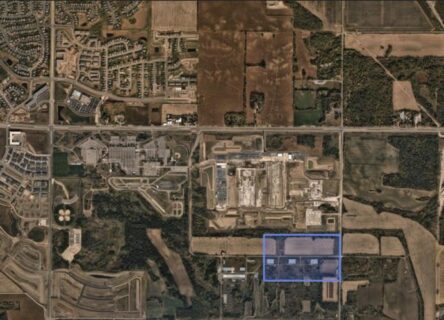
North Wind finalised the land purchase for $8.1 million in December 2025, and Mabbett said at the time that “essential cleanup of the site remains before construction can begin”. The city has taken its own step on that front, receiving a $37,480 DEED contamination investigation grant for the 60 acre site, in an application that projected 16 jobs and an increase of $130,747 in local tax base. The parcel sits directly south of Meta’s Rosemount data centre, near the future 151st Street and just west of Blaine Avenue. A local contractor has been engaged for soil remediation, though North Wind has not named the firm, and no main contractor for the tunnel buildings has been disclosed.
Opposition has been sustained rather than symbolic. Students for a Democratic Society protested the land sale outside a Board of Regents meeting in June 2025, and four regents’ homes were vandalised over the sale, which the group denied involvement in. The Star Tribune reported that North Wind’s Army contract references developing hypersonic weapons as well as counter hypersonic systems, while company representatives have said no weapons systems will be produced at the site. The university describes its own role as academic and research driven. That dispute is unresolved, and it is the sort of thing that shapes future phases on a campus dependent on a university partner for its talent pipeline.
Minnesota’s shifting infrastructure priorities
The state’s willingness to put $49.95 million behind a private test campus reads differently alongside what it has taken away elsewhere. In May 2025 the legislature reallocated $77 million that had been earmarked for the Northern Lights Express passenger rail project between Minneapolis and Duluth, leaving roughly $108 million of state money against a scheme whose 2023 appropriation had been $194.7 million, and prompting the chair of the House Transportation Committee to call the rail line finished. Passenger rail lost its match funding in the same window that hypersonic test infrastructure gained a forgivable loan.
Both decisions turn on federal leverage. The rail project needed state money to unlock an 80 percent federal share it never secured. The aerospace complex used state money to help win $108.8 million in Army awards across North Wind and the university, with the Department of Defense as the anchor customer. On present evidence Minnesota is backing projects where a federal counterparty is already committed, which is a reasonable test of capital discipline and a poor one for anything that depends on a grant round it has not yet won.
Project Fact Sheet
- Project Name: Minnesota Aerospace Complex, also referred to as the North Wind Aerospace and Hypersonic Research and Testing Complex
- Location: UMore Park, Rosemount, Dakota County, Minnesota, south of Meta’s data centre near the future 151st Street and Blaine Avenue
- Project Value: $1.1 billion per the January 2026 announcement and GREATER MSP. North Wind’s December 2025 release cited $1 billion and its own January 2026 release cited $1.4 billion
- First Phase Value: $191.5 million per the Minnesota Department of Employment and Economic Development, October 2025
- Owner and Developer: North Wind, through North Wind Test, LLC
- Site Area: 60 acres, purchased from the University of Minnesota for $8.1 million in December 2025
- Key Components: Close to 250,000 square feet including three wind tunnels, an 80,500 square foot aero-thermal tunnel building, a 46,500 square foot aerodynamic tunnel building, a 60,000 square foot University of Minnesota engineering facility, a heating and cooling plant and air storage and compressor buildings
- Funding Sources: $49.95 million Minnesota Forward Fund award from DEED, structured as a forgivable loan per the Star Tribune; a $98.5 million Army Contracting Command Orlando Other Transaction Agreement through the TReX II consortium; a $10.3 million ACC Orlando contract to the University of Minnesota; a $37,480 DEED contamination investigation grant to the City of Rosemount; and private investment by North Wind
- Primary Client: The federal government, per City of Rosemount documents cited by Aero-News Network
- Construction Start: Groundbreaking held 13 August 2026, following site remediation
- Expected Completion: Fully operational in 2030 per North Wind’s December 2025 statement
- Jobs: Approximately 40 new positions in phase one per DEED, rising to roughly 100 long term per North Wind Test president David Meier, plus hundreds of construction roles
- Planning Status: Plat approved and site rezoned from A-2 Agriculture to B-2 Employment by Rosemount City Council in February 2025
Project Team
- Owner and Developer: North Wind
- Parent Investor: Cerberus Capital Management, which formed North Wind in 2024 from Calspan test units acquired from TransDigm Group
- Research Partner: University of Minnesota College of Science and Engineering
- Primary Federal Sponsor: United States Department of Defense, Office of the Under Secretary of Defense for Research and Engineering, and the Test Resource Management Center
- Contracting Authority: Army Contracting Command Orlando, through the Training and Readiness Accelerator II consortium
- State Funding Agency: Minnesota Department of Employment and Economic Development
- Local Authority: City of Rosemount, with Dakota County
- Regional Economic Development Partner: GREATER MSP Partnership
- Land Vendor: University of Minnesota, through UMore Park
- Remediation Contractor: Engaged locally, not publicly named
- Main Contractor for Tunnel Buildings: Not yet disclosed
- Architect: Not yet disclosed

Leave a Reply