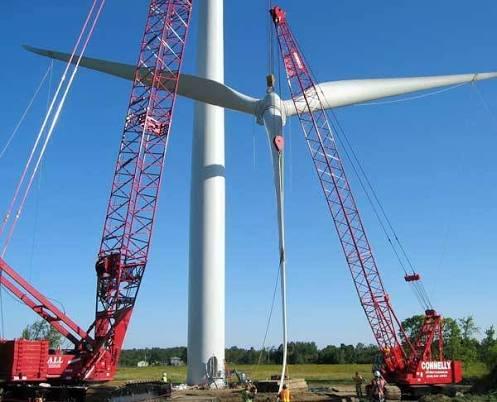
The project in Clinton and Franklin counties will increase generating capacity by 10 MW while supporting up to 225 construction jobs and more than $12 million in local financial benefits.
New York has approved the repowering of the Ellenburg Wind Farm in Clinton and Franklin counties, clearing the way for the replacement of 54 aging wind turbines with up to 25 modern units.
The Office of Renewable Energy Siting and Electric Transmission (ORES) issued the final siting permit to Valcour Ellenburg NewCo LLC, a subsidiary of AES Clean Energy. The repowered wind farm will have a generating capacity of up to 91 megawatts (MW), compared with 81 MW at the existing facility.
The project is expected to generate enough electricity to equal the annual consumption of approximately 16,340 average U.S. homes. It is also estimated to reduce carbon dioxide emissions by approximately 95,750 metric tons annually.
The repowering will extend the life of a wind-energy site that has been operating since 2008 while allowing newer turbine technology to generate more electricity with fewer turbines.
Fewer Turbines, More Generating Capacity
The Ellenburg Wind Farm spans the towns of Ellenburg and Clinton in Clinton County and Bellmont and Chateaugay in Franklin County.
The existing facility has 54 turbines with a combined generating capacity of 81 MW. Under the approved repowering plan, those turbines will be decommissioned and replaced with up to 25 new turbines capable of generating up to 91 MW.
That represents a 54% reduction in turbine count while increasing generating capacity by approximately 10 MW, or about 12%.
Up to 21 of the new turbines will be located in Ellenburg and up to four in Bellmont. The project will continue using the existing point of interconnection at the New York Power Authority’s 230-kilovolt Ryan Substation.
The developer also plans to reuse portions of the existing infrastructure, including access roads and the electrical collection system, allowing the project to build on an established wind-energy site.
Jason Zehr, interim executive director of ORES, said the repowering demonstrates how existing wind sites can be modernized to improve performance while continuing to provide benefits to surrounding communities.
“The repowered Ellenburg Wind project will produce more energy with fewer turbines, while extending the life of a site that has been generating clean power for nearly two decades,” Zehr said.
More Than $12 Million in Community Benefits
The project is expected to provide more than $12 million in direct financial benefits over its lifetime to local governments, school districts and fire districts.
The payments will come through several mechanisms, including Payments in Lieu of Taxes (PILOT), Host Community Agreements and fire district tax payments.
Residents of the towns of Ellenburg and Bellmont are also expected to receive $910,000 in utility bill credits over the first 10 years of operation through New York’s host community benefit program.
Additional economic activity will come from land lease payments to property owners and purchases of local goods and services during construction and operation.
Up to 225 Construction Jobs
Construction of the repowered facility is expected to create approximately 150 to 225 full-time jobs.
The developer plans to use local labor and services whenever practicable, while also prioritizing local hiring for the project’s permanent positions.
Once operational, the wind farm is expected to support six permanent jobs covering site management, technical and administrative functions.
Part of New York’s Growing Clean Energy Pipeline
The Ellenburg approval comes as New York continues advancing large-scale renewable generation, energy storage and transmission projects.
On September 23, NYSERDA announced contracts for eight bulk energy storage projects and 13 large-scale renewable energy projects. The projects represent approximately 1.7 gigawatts of new energy resources, more than $3.7 billion in expected private investment and more than 1,000 jobs.
The state has also been advancing major transmission infrastructure to accommodate changing electricity demand and move power across its grid.
The Ellenburg project adds another 91 MW of land-based wind generation while extending the operating life of an existing renewable energy site.
What Happens Next
The final siting permit establishes conditions governing construction, operation and eventual decommissioning of the facility, as well as requirements for site restoration.
The approval followed the state’s siting and environmental review process, including public participation and a public hearing.
With the final permit in place, the developer can proceed toward construction after completing the remaining requirements.
The project’s commercial operation date should be stated according to the schedule contained in the final siting permit.
The Bottom Line
The Ellenburg Wind Farm repowering will replace 54 existing turbines with up to 25 modern turbines, increasing the facility’s generating capacity from 81 MW to 91 MW.
The project will also provide more than $12 million in direct local financial benefits, $910,000 in utility bill credits, up to 225 construction jobs and six permanent positions.
By repowering an existing wind-energy site rather than developing an entirely new facility, the project will continue using portions of the site’s existing infrastructure while adding additional renewable generation to New York’s electric system.
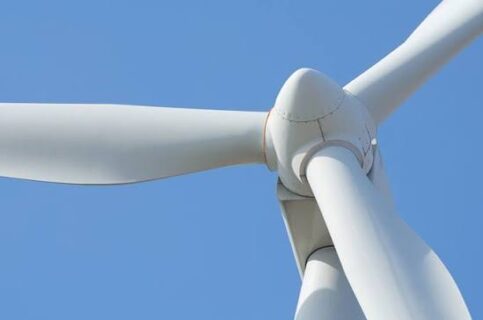
Fact Sheet: Ellenburg Wind Farm Repowering
Project Overview
- Developer: Valcour Ellenburg NewCo LLC, a subsidiary of AES Clean Energy
- Project: Ellenburg Wind Farm Repowering
- Location: Towns of Ellenburg and Clinton, Clinton County; Towns of Bellmont and Chateaugay, Franklin County, New York
- Project Type: Land-based wind farm repowering
- Existing Capacity: 81 MW
- Repowered Capacity: Up to 91 MW
- Capacity Increase: Approximately 10 MW
- Existing Turbines: 54
- New Turbines: Up to 25
- Reduction in Turbine Count: Approximately 54%
- Homes Equivalent: Approximately 16,340 average U.S. homes
- Existing Facility: Operating since 2008
- Commercial Operation: See final siting permit for the approved project schedule
Turbine and Infrastructure
Existing Facility
- 54 wind turbines
- 81 MW of generating capacity
- Operating since 2008
- Turbines will be decommissioned as part of the repowering
Repowered Facility
- Up to 25 modern wind turbines
- Up to 91 MW of generating capacity
- Up to 21 turbines in Ellenburg
- Up to 4 turbines in Bellmont
- Portions of existing access roads will be reused
- Portions of the existing electrical collection system will be reused
- Existing interconnection at the NYPA 230-kV Ryan Substation
Community Benefits
Direct Financial Benefits
- Total: More than $12 million over the project lifetime
- Recipients: Local governments, school districts and fire districts
- Payment mechanisms:
- Payments in Lieu of Taxes (PILOT)
- Host Community Agreements (HCA)
- Fire district tax payments
Utility Bill Credits
- Total: $910,000
- Recipients: Residents of Ellenburg and Bellmont
- Duration: First 10 years of operation
- Program: New York Public Service Commission host community benefit program
Economic Impact
- Land lease payments to local landowners
- Purchases of local goods and services
- Construction employment
- Permanent operations employment
- Continued local tax and host-community revenues
Jobs
During Construction
- Approximately 150 to 225 full-time jobs
- Local labor and services to be used whenever practicable
During Operations
- Six permanent positions
- Site management, technical and administrative roles
- Developer to prioritize local hiring
Environmental and Grid Benefits
- Up to 91 MW of wind generating capacity
- Approximately 95,750 metric tons of estimated annual CO₂ reductions
- Electricity production equivalent to the annual consumption of approximately 16,340 average U.S. homes
- Repowers an existing wind-energy facility
- Extends the operating life of an established renewable energy site
- Reuses portions of existing access and electrical infrastructure
- Adds additional renewable generation to New York’s electric system


Leave a Reply