Constructionreview

Blog

  • $100.5 Million Express Kenya’s Project Nexus Plans Unveiled

    $100.5 Million Express Kenya’s Project Nexus Plans Unveiled

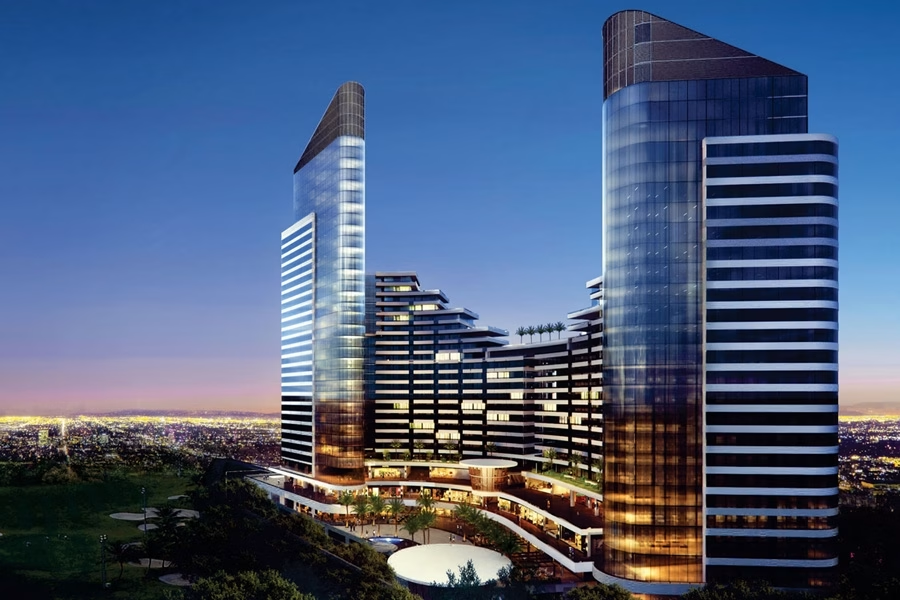
    Express Kenya PLC has just revealed a bold diversification plan through the launch of an ambitious KSh13 billion mixed-use development project. This project is dubbed as Project Nexus. Express Kenya’s Project Nexus development initiative is expected to unfold in four phases over the next five years.

    Furthermore, the development project is expected to reshape a portion of the Mombasa Road corridor in Nairobi. This transformation of the corridor will be achieved by the introduction of residential, commercial, and medical facilities.

    Also read: $928 Million Lake Victoria Marina Construction Commences in Kisumu

    Express Kenya’s Project Nexus Factsheet

    Project name: Project Nexus

    Developer: Express Kenya PLC with joint venture partners for the later phases

    Total cost: KSh 13 Billion ($100.5 million)

    Location: Mombasa Road corridor

    Period: 5 years

    The Project to be Developed in Four Phases

    Phase One

    As per the details that were revealed by details the company, Project Nexus will be implemented in four major phases. Phase One, estimated to cost KSh250 million, involves the development of a strip mall and a petrol station, expected to be completed by the third quarter of 2026.

    Phase Two

    As for the Phase Two, which is the most ambitious, with a projected cost of KSh7.65 billion, Express Kenya plans to build a total of 1,200 residential apartments. This phase will be executed between the fourth quarter of 2026 and the fourth quarter of 2029 via a joint venture partnership.

    Phase Three

    Phase Three will run from the second quarter of the year 2027 to the second quarter of 2029. This phase will entail the construction of a 200,000 square foot commercial mall at an estimated cost of KSh2.1 billion.

    Phase Four

    Lastly the final phase, Phase Four, entails plans for an 80,000 square foot medical center. Also, it will involve the construction of 450 serviced apartments by the third quarter of 2030. The total approximated cost of this final stage is KSh3 billion.

    Also read: Plans announced for US$ 83M LAPF of Kenya mixed-use property project in Nakuru

    Top Reason as to why Mombasa Road Corridor was as the Project’s Site

    The choice of the Mombasa Road corridor for the project is a clear indicator for the growing demand for urban housing development and commercial spaces in areas that have access to major highways and Nairobi’s expanding infrastructure. The location is already home to multiple residential estates and logistics parks. Furthermore, the location has shopping malls, and office spaces, making it a strategic area for property development.

    Project Nexus stands as one of the largest private sector real estate bets by a logistics firm in Kenya in recent years. Express Kenya is banking on its brand name, strategic location, and new partnerships in order to breathe life into the company and restore investor confidence. Lastly, the success or failure of this ambitious project will determine the company’s long-term future on the Nairobi Securities Exchange. The company still remains a listed entity in Nairobi Securities Exchange.

    Also read: BBS Mall (Business Bay Square Mall) in Nairobi to open soon
  • Baron Property Group and LargaVista Secure $388.5M in Financing for Their 46-Story Residential Tower in Long Island City

    Baron Property Group and LargaVista Secure $388.5M in Financing for Their 46-Story Residential Tower in Long Island City

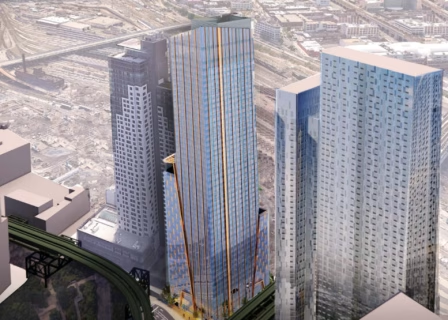
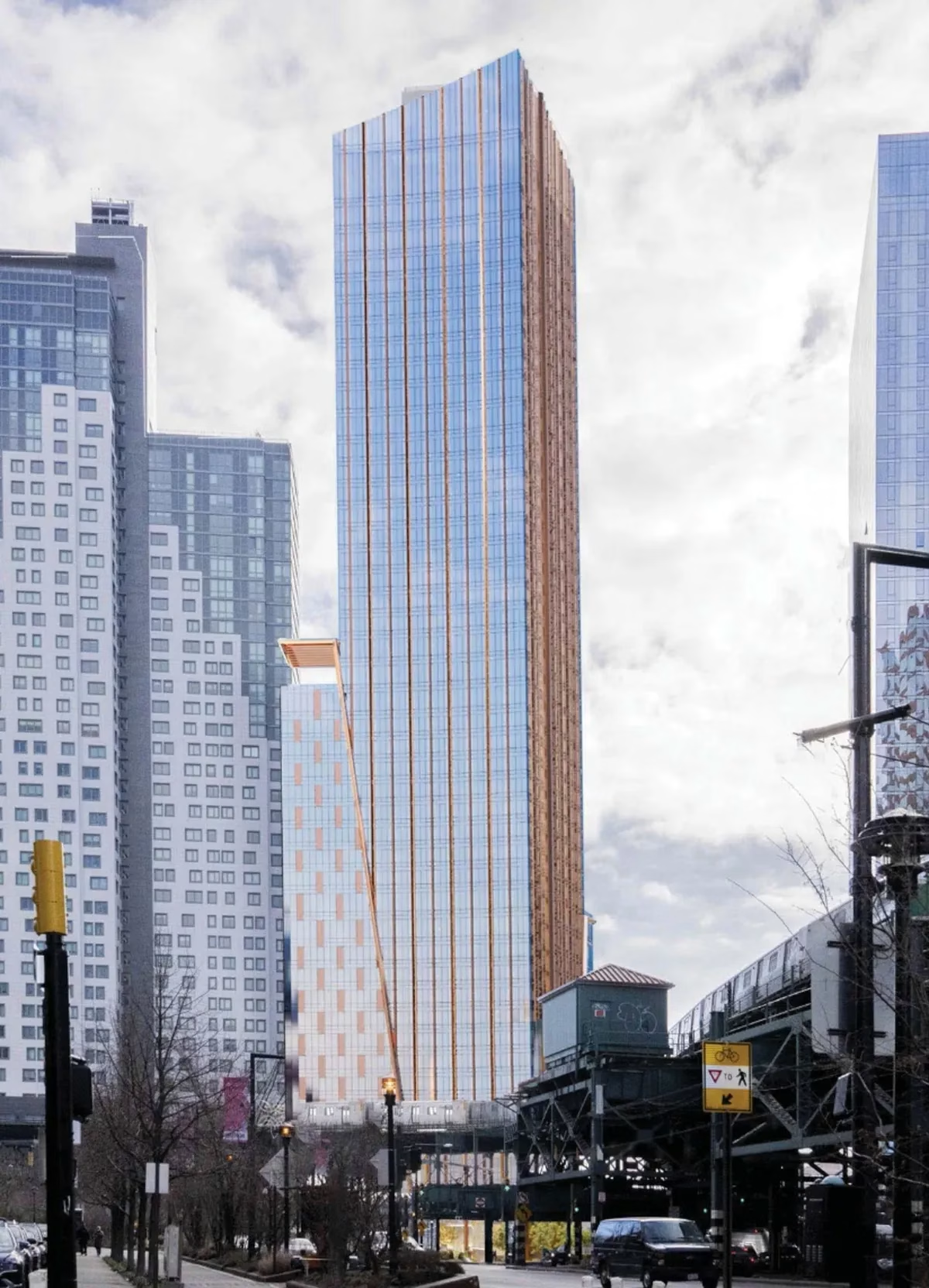
    The LargaVista Companies and Baron Property Group secured a $388.5 million construction loan for their long-delayed 46-story residential tower at 30-25 Queens Boulevard in Long Island City. The financing package, announced today, June 30 was backed by Starwood Capital Group, Blackstone Real Estate Debt Strategies, and Gotham Organization, with advisory services from HKS Real Estate Advisors and DIA Capital Group.

    The financing is a crucial milestone for the project, which had stalled for years following the start of preliminary site work in 2019. With the capital now in hand, the developers are poised to resume construction on the 25,177-square-foot property, situated at the corner of Queens Plaza East and Queens Boulevard, west of the Sunnyside Yards rail yards.

    A Significant LIC Residential Development

    The 525-foot-tall, CetraRuddy Architecture-designed tower will span approximately 511,000 square feet and yield a total of 561 residential units, consisting of 451 market-rate rentals and 110 for-sale condominiums. A total of 169 apartments will be reserved as affordable housing, which will make the development one of the more inclusive large-scale residential developments in the area.

    In addition to residential, the project will also include about 21,000 square feet of ground-floor retail space, activating the streetscape at one of Long Island City’s busiest transit nodes.

    Amenities Rivaling Manhattan Luxury

    Residents will have access to a sprawling set of amenities designed to bring Manhattan high-end norms at better affordability. They include:

    A rooftop pool nearly 500 feet above street level

    Full-size basketball and pickleball courts

    A fitness center and meditation studio

    A game room and co-working lounge

    Outdoor grilling stations

    A solarium and pet spa with kitchen and dining area

    “The vision has always been to bring Manhattan-quality living to an emerging, more affordable neighborhood,” Baron Property Group President Matthew Baron said. “Long Island City is diverse, transit-connected, and steadily growing—and this project shows our commitment to that kind of environment.”

    Read also: New York City lays out plans for the largest mass timber residential project on Staten Island

    Restarting a Stalled Project

    Although pile driving and excavation began years back, the 46-Story tower at 30-25 Queens Blvd Long Island City had remained largely dormant until this year. With new financing secured and new renderings released, expectations now are for a restart of full construction activity, possibly as early as later this summer. The development team is envisioning a phased construction schedule, with occupancy now anticipated in 2028.

    Strategic Location

    Only feet away from the Queens Plaza (E, M, R) and Queensboro Plaza (7, N, W) subway stations, the building offers direct access to Midtown Manhattan in about 15 minutes. That convenience, along with luxury amenities and lower prices than Manhattan, is bound to entice renters and buyers as well as the tower.

    With financing now secured and design plans reaffirmed, Baron Property Group and LargaVista Companies are set to realize one of Long Island City’s most ambitious residential towers—one that pairs affordability, design, and luxury amenities on a scale rarely achieved in outer-borough developments.

    Read also: Empire Wind Construction Resumes After $5B Project Endures Month-Long Halt Costing $50M Weekly

    30-25 Queens Boulevard Mixed-Use Development: Project Factsheet

    Project Overview

    Location: 30-25 Queens Boulevard, Long Island City, NY

    Site: Corner of Queens Plaza East and Queens Boulevard (25,177 sq ft)

    Height: 525 feet, 46 stories

    Total Area: 511,000 square feet

    Projected Completion: 2028

    Financing

    Construction Loan: $388.5 million

    Lenders: Starwood Capital Group, Blackstone Real Estate Debt Strategies, Gotham Organization

    Baron Property Group and LargaVista have secured $388.5M in construction financing for their 46-story residential tower in Long Island City.
    Baron Property Group and LargaVista have secured $388.5M in construction financing for their 46-story residential tower in Long Island City.

    Residential Program

    Total Units: 561

    451 market-rate rentals

    110 for-sale condominiums

    169 affordable housing units

    Commercial Space: 21,000 sq ft ground-floor retail

    Premium Amenities

    Rooftop swimming pool (500 ft above street level)

    Full-sized basketball and pickleball courts

    Fitness center and meditation studio

    Co-working lounge and game room

    Outdoor grilling areas

    Pet spa and solarium with kitchen/dining

    Transportation Access

    Subway Stations: Queens Plaza (E, M, R) and Queensboro Plaza (7, N, W)

    Travel Time to Midtown: 15 minutes

    Proximity: Adjacent to Sunnyside Yards rail tracks

    Project Timeline

    Initial Site Work: 2019

    Financing Closed: 2025

    Construction Restart: Summer 2025 (projected)

    Occupancy: 2028 (projected)

    Read also: Bravo Property Trust finances New York residential tower

  • Construction of Data Centers has raised concerns over  water use in cooling

    Construction of Data Centers has raised concerns over water use in cooling

    As the global demand for digital services surges, data centers have become critical infrastructure. However, their environmental footprint—particularly their water consumption—has raised increasing concern. One of the most significant yet under-discussed issues is the massive volume of water used for cooling purposes in these facilities. As the industry scales to meet growing computational needs, the pressure it exerts on water resources has drawn scrutiny from environmentalists, regulators, and communities alike.

    Why Data Centers Use Water

    Data centers generate intense heat due to the continuous operation of servers and networking equipment. To prevent overheating, most data centers rely on sophisticated cooling systems. Among these, water-based cooling methods such as evaporative cooling and chilled water systems are prevalent because they are more energy-efficient than purely air-based alternatives.

    In an evaporative cooling system, water is used to cool the air passing through servers. While effective at reducing energy usage, this method consumes substantial volumes of water—often millions of gallons per year for large hyperscale facilities.

    The Scale of the Problem

    According to EESI, a typical hyperscale data center can use up to 5 million gallons per day, equivalent to the water use of a town populated by 10,000 to 50,000 people.. This level of consumption becomes particularly troubling in regions prone to drought or already facing water scarcity. States like Arizona, Utah, and parts of California have witnessed public pushback against new data center developments over fears of water overuse.

    In some cases, water withdrawals by data centers can strain local utilities, increase competition with residential and agricultural users, and degrade local ecosystems. This has led some municipalities to place limits or conditions on the development of new facilities.In a recent report released by the City of Racine Microsoft’s planned $3.3 billion data center in Mount Pleasant is projected to consume up to 8.4 million gallons of water annually underscoring the fears that surrounding communities have.

    Responses and Innovations

    In response to these concerns, the data center industry is exploring various strategies to reduce water dependence. Companies like Google and Microsoft have invested in advanced water recycling systems and the use of reclaimed water to lessen the demand on freshwater supplies. Some facilities are switching to air-cooled systems, particularly in cooler climates where such alternatives are viable year-round.

    Liquid immersion cooling, a more recent innovation, involves submerging servers in thermally conductive but non-electrically conductive liquids. This method can dramatically reduce both water and energy usage, although adoption remains limited due to high infrastructure costs and compatibility challenges.

    Additionally, operators are beginning to track and publicly report their water usage effectiveness (WUE), similar to how power usage effectiveness (PUE) became a standard benchmark for energy efficiency.

    Balancing Growth with Responsibility

    The data center industry’s continued growth appears inevitable. However, balancing this growth with environmental sustainability is essential. Stakeholders—from cloud providers to governments—must prioritize transparency, innovation, and regional suitability when planning future data center projects.

    Water scarcity is a global issue, and in a warming world, its importance will only grow. Data centers must evolve to become smarter not just in computing power, but in how they manage the vital resources they consume. As digital infrastructure becomes the backbone of modern life, its alignment with environmental resilience will be a key test of long-term viability.

  • US Senate megabill axes incentives on upcoming wind and solar projects

    US Senate megabill axes incentives on upcoming wind and solar projects

    The latest version of the Senate’s sweeping legislative package delivers a serious blow to ongoing and planned wind and solar projects, slashing critical tax incentives and introducing a new tax on future projects.

    An earlier draft of the bill, released by Senate Republicans, proposed reducing tax credits for renewable energy projects based on their construction start date. Under that proposal, projects breaking ground in 2024 would qualify for full credit, those in 2025 for 60 percent, and projects in 2027 just 20 percent — with credits phasing out entirely after that.

    Revised bill

    But the revised bill raises the bar significantly: only projects that begin producing electricity before the end of 2027 will now qualify for the credits — a much tougher and more uncertain threshold.

    Adding to the industry’s concerns, the bill introduces a new tax on some wind and solar projects placed in service after 2027. Projects could be penalized if a specified portion of their components originate from China.

    These changes represent a sharp turn from the 2022 Inflation Reduction Act, which included hundreds of billions of dollars in tax credits for low-carbon energy and was expected to drive down U.S. emissions dramatically.

    What it means for developers

    For developers of planned solar and wind projects, the revised bill could cause significant disruptions. Projects already in the pipeline — especially those not expected to begin generating electricity before 2028 — now face the risk of losing federal support or being hit with additional taxes. This uncertainty may delay investments, increase financing costs, and force some developers to cancel or scale down projects. Rural regions and emerging clean energy hubs, which were counting on these developments to drive job growth and infrastructure, may be among the hardest hit.

    The GOP-backed rollback is viewed as a win for the party’s right flank, which has demanded aggressive cuts to clean energy subsidies. It’s a setback for more moderate Republicans who preferred a slower, more measured phaseout.

  • Mozambique Grants Zambia Land for Dry Port Project in Nacala

    Mozambique Grants Zambia Land for Dry Port Project in Nacala

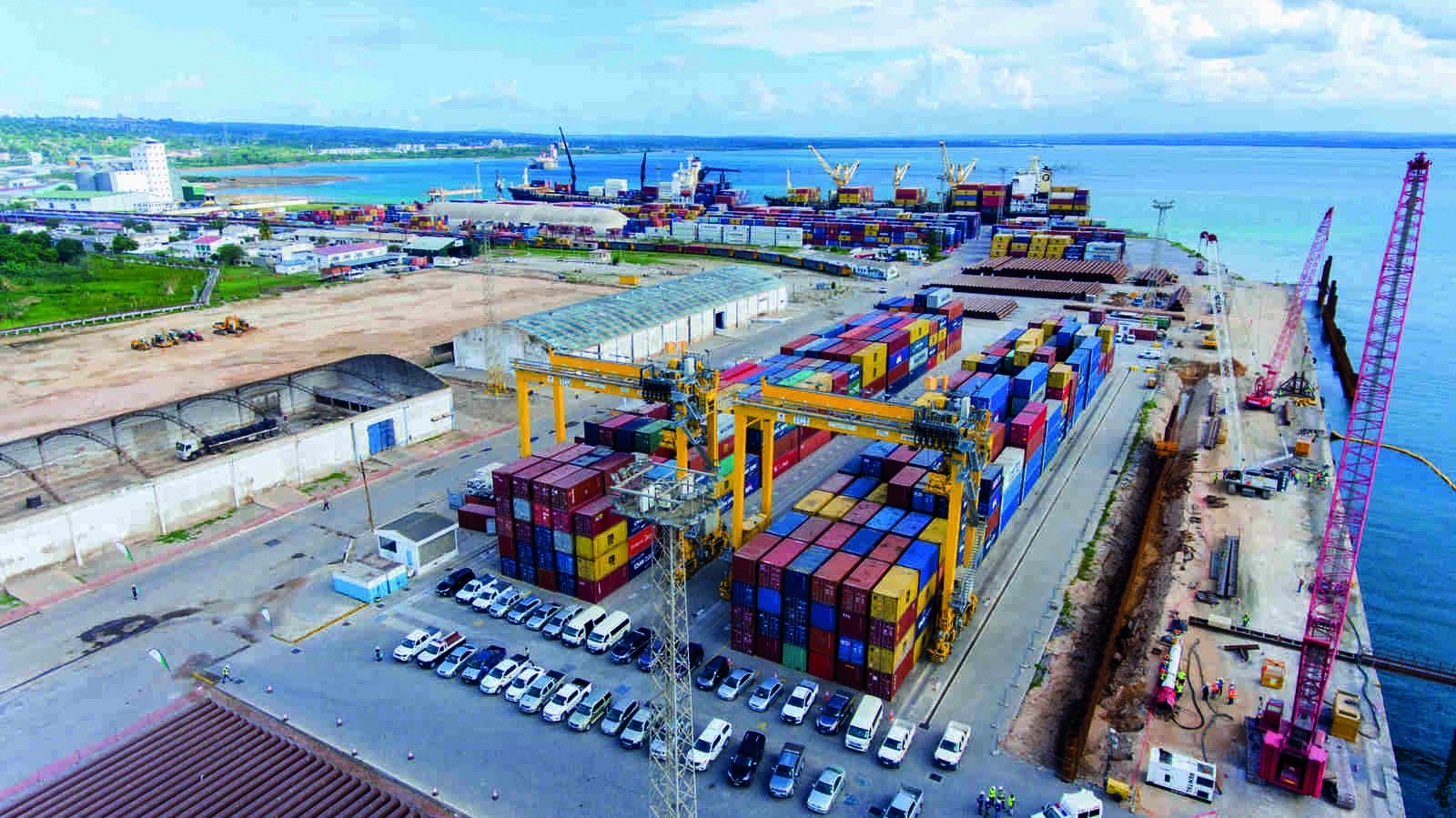
    Zambia’s dry port in Nacala will soon be a reality following Mozambique’s acceptance to offer land for the facility. Transport and Logistics Minister Frank Tayali made the confirmation after a meeting with his Mozambican counterpart, João Matlombe. The arrangement was made during the Global Transport Connectivity Forum 2025 in Turkey. Technical teams from the two countries will then go ahead and accelerate the formalization process. Tayali referred to the venture as a significant regional integration move and move towards reducing the cost of doing business. The dry port will be operated by Zambia’s government freight company, ZAMCARGO, as it operates in Namibia and Tanzania. The venture is also one of the grander Zambia’s infrastructural plans, including the Chipata-Serenje Railway. The railway will eventually connect the Nacala Port in Mozambique via Malawi to create a cost-effective trade corridor. The Nacala Port is one of the continent’s deepest natural ports and a regional point of connectivity strategy.

    Also read:

    Construction of Kwala Dry Port in Kibaha, Tanzania, 95% complete

    The Scope and Significance of Zambia’s Dry Port in Nacala

    Zambia’s Dry Port in Nacala
    Zambia’s dry port in Nacala will soon be a reality following Mozambique’s acceptance to offer land for the facility.

    The implementation of Zambia’s dry port will be located in Mozambique’s Nacala province. It will be operated by ZAMCARGO, which draws experience from similar ports in Tanzania and Namibia. Significantly, the dry port is complementary to the proposed Chipata-Serenje Railway Project. Once completed, the railway links Zambia to Malawi and Mozambique. This is part of the vital Nacala Corridor development. Zambia’s dry port in Nacala is a facility will improve trade logistics in the region and integrate it at a regional level. It will put an end to excessive dependence on farther ports. The facility will also lower freight costs and grant faster access to global markets. The dry port also indicates positive bilateral relationships and collaboration between Mozambique and Zambia. Mr. Tayali says the land has been acquired not only to strengthen bilateral relations but also to ease the means of doing business.

    Also read:

    Lusaka Commercial Cold Store Facility opened in Lusaka, Zambia by DP World.

    Zambia signs US $147m deal for development of a dry port

  • Sizewell C Reaches Financial Close, Clearing Way for Full-Scale Construction

    Sizewell C Reaches Financial Close, Clearing Way for Full-Scale Construction

    The Sizewell C nuclear project has reached financial close, unlocking full-scale construction of the £38 billion development after securing a £5.5 billion debt package with 13 major banks. This milestone makes Sizewell C the first nuclear power project globally to be financed through private investors under the UK’s Regulated Asset Base (RAB) model — the same framework used for landmark infrastructure such as Heathrow Terminal 5 and the Thames Tideway Tunnel. The RAB structure allows the project to earn regulated revenue during construction, reducing financing costs and helping lower consumer energy bills. The UK government estimates that the model could save households about £30 billion over the plant’s operational life compared with traditional financing approaches.

    Located in Suffolk, the two-reactor plant will generate enough low-carbon electricity to power six million homes for at least six decades, reinforcing Britain’s energy security and climate commitments. Sizewell C’s construction is expected to cost roughly 20% less than the similar Hinkley Point C project, with savings driven by shared supply chains and efficiencies gained from experience. More than 10,000 people will work on the site, including 1,500 apprenticeships, while around 70% of the project’s value is set to flow to UK businesses — marking one of the country’s largest ever investments in clean energy infrastructure.

    The project’s civil construction phase is being advanced by a diverse and highly skilled workforce, with firms such as Balfour Beatty leading major early works on-site. Backed by both public and private investment, construction activity is accelerating as the project moves toward its targeted completion later in the decade.

    Civil Works Alliance with Three Major Construction Firms Formed

    Reported on July 2, 2025 – Sizewell C has partnered with three of the industry’s top construction companies – Balfour Beatty, Laing O’Rourke, and Bouygues Travaux Publics – through a new Programme Alliance Agreement to provide the central civil engineering work on the new Suffolk nuclear power station. They have merged as the Civil Works Alliance (CWA), who will provide the project’s backbone infrastructure.

    The partnership unites the three contractors and Sizewell C as a single delivery team. Over the duration of the 8-year civil works programme, the CWA is expected to employ between 3,000 and 4,000 workers.

    Scope of Work

    The Civil Works Alliance will oversee several critical components of the project, including:

    • Enabling and earthworks
    • Marine and tunnelling work, including three 3-kilometre-long undersea tunnels
    • Main civils construction for the Nuclear and Conventional Islands, Heat Sink, and Balance of Plant
    • Permanent roads and utility network ancillary works

    All three companies are already deeply involved in major UK and international infrastructure projects, including their current roles at Hinkley Point C, where they’ve been instrumental in restarting nuclear construction in the country.

    CWA Executives Pledge Quality, Safety, and Value in Sizewell C Delivery

    Nigel Cann, Joint Managing Director of Sizewell C, emphasized the advantages of having experienced partners:

    “With this agreement, we’re entrusting the civil works to three companies with proven expertise in meeting nuclear-grade construction standards. The progress seen between the first and second reactor units at Hinkley Point C shows how much has been learned. Together with our alliance partners, we’ll build on that momentum at Sizewell C—delivering both high value for consumers and a project the UK can take pride in.”

    As an entirely embedded member of the Alliance, Sizewell C will be a ‘Client Participant’ and employ a Target Outturn Cost (TOC) methodology. This is designed to facilitate cost control, transparency, and partnership working for all partners.

    Balfour Beatty Group Chief Executive, Leo Quinn, also reflected on national importance of the project:

    “Sizewell C is a key step forward in the UK’s pursuit of energy independence and a net-zero future. We’re proud to bring our experience from Hinkley Point C into this alliance, reaffirming our role in delivering complex nuclear infrastructure and supporting the UK’s low-carbon transition.”

    Laing O’Rourke’s Group CEO, Cathal O’Rourke, echoed the sentiment:

    “Our work at Hinkley has equipped us to take on Sizewell C with the same focus on safety, quality, and productivity. I’m proud to see Laing O’Rourke contributing to a project that will help make cleaner, more affordable energy a reality for Britain.”

    Jean-Philippe Trin, Deputy CEO of Bouygues Construction, highlighted the project’s alignment with global energy goals:

    “Sizewell C reflects our broader commitment to expanding low-carbon energy solutions. It builds on the knowledge and capabilities we’ve developed through decades of involvement in large-scale nuclear initiatives.”

    Progress and Future Outlook

    Initial construction began in January 2024 and the scheme has already met its first targets on time and budget. The Sizewell C site will employ approximately 10,000 people at its peak, with tens of thousands of additional jobs created across the UK wider supply chain.

    Earlier on, the UK Government used Sizewell C to describe the country’s new “golden age” of nuclear growth. It restated £14.2 billion of investment over the next five years. A Final Investment Decision, reached on July 22, 2025 also confirmed private sector backers who will be supplying the project’s long-term funding.

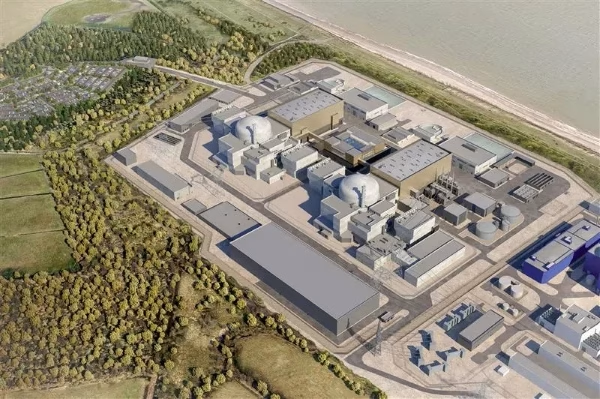
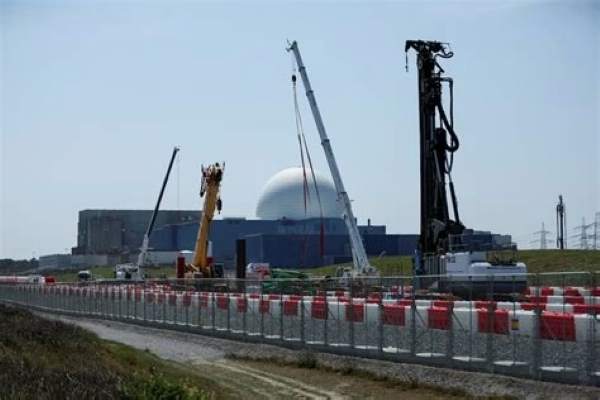
    sizewell c nuclear energy power plant construction in Suffolk, England
    Construction at Sizewell C nuclear energy power plant in Suffolk Coast, England

    Sizewell C Civil Works Alliance – Project Factsheet

    Project Overview

    Sizewell C’s Civil Works Alliance (CWA) formed through a Programme Alliance Agreement with three leading construction companies will deliver the main civil engineering works for the new nuclear power station in Suffolk.

    Civil Works Alliance Partners

    • Balfour Beatty
    • Laing O’Rourke
    • Bouygues Travaux Publics
    • Sizewell C (Client Participant)

    Key Project Details

    Timeline & Workforce

    • Programme Duration: 8 years
    • CWA Workforce: 3,000 – 4,000 workers
    • Peak Site Employment: 10, 000+ workers
    • Construction Start: January 2024

    Scope of Work

    The Civil Works Alliance will deliver:
    • Enabling and earthworks
    • Marine and tunnelling activities (including three 3km undersea tunnels)
    • Main civils construction for Nuclear and Conventional Islands
    • Heat Sink and Balance of Plant (BoP) infrastructure
    • Ancillary works (permanent roads and utility networks)

    Financial Framework

    • Delivery Model: Target Outturn Cost (TOC) approach
    • Government Investment: £14.2 billion over five years
    • Final Investment Decision: July 22, 2025

    Also Read: The UK to Develop Eight Additional Nuclear Power Plants