Constructionreview

Blog

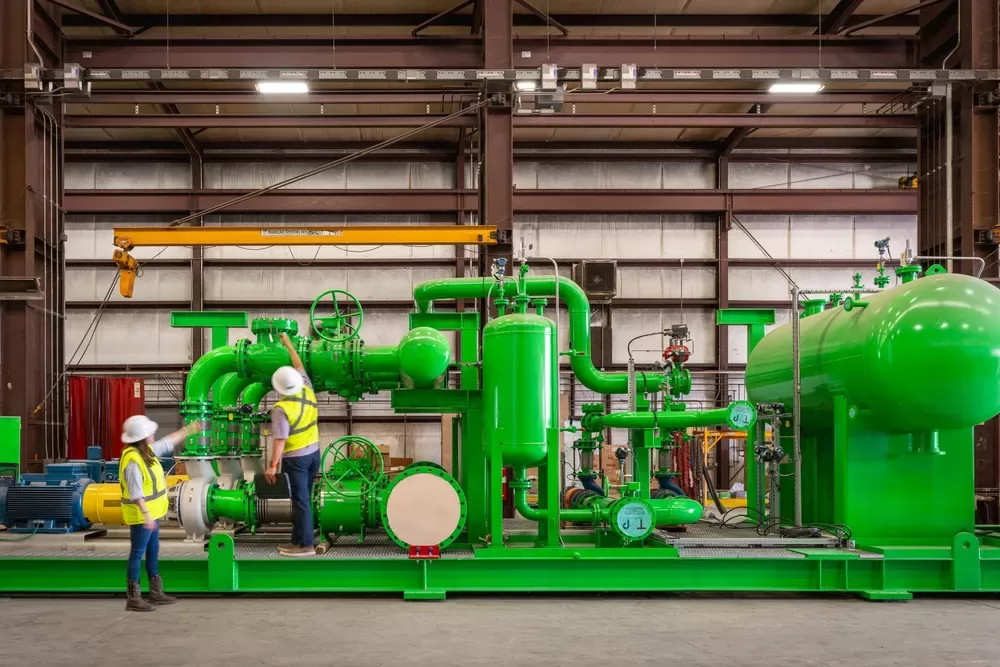
  • Infinium Begins Construction on World’s Largest eFuels Facility in West Texas

    Infinium Begins Construction on World’s Largest eFuels Facility in West Texas

    Infinium, a leader in ultra-low carbon electrofuels (eFuels), has officially begun construction on its second U.S. production facility, known as Project Roadrunner, in Reeves County, near the city of Pecos, Texas. Once operational, the facility is expected to become the world’s largest commercial eFuels plant, producing up to 23,000 tonnes per year (approximately 7.6 million gallons) of sustainable aviation fuel (eSAF) and other synthetic fuels.

    A New Era for Clean Fuels

    Project Roadrunner is a state-of-the-art “power-to-liquids” (PtL) facility that will convert captured waste carbon dioxide and renewable electricity into drop-in synthetic fuels—including eSAF, e-diesel, and e-naphtha. These eFuels are chemically identical to traditional petroleum-based fuels but emit significantly fewer lifecycle greenhouse gases.

    Infinium eSAF and eDiesel are fully compatible with today’s aircraft, ships, and heavy-duty trucks, offering a direct, drop-in replacement for conventional jet and diesel fuels—no engine modifications or infrastructure changes required. Infinium eNaphtha serves as a sustainable alternative to petroleum-based naphtha, used in the production of plastics, solvents, and a wide range of industrial chemicals.

    The Pecos site repurposes an existing brownfield gas-to-liquids facility, adding new hydrogen and synthesis units. A centerpiece of the project is a 100 MW electrolyzer system supplied by Electric Hydrogen, which will generate green hydrogen on site. The system—Electric Hydrogen’s HYPRPlant platform—will be manufactured across Massachusetts and Texas in partnership with Titan Production Equipment.

    Investment and Financing

    While Infinium has not disclosed a precise total cost of its new facility, the scale of investment is clear. The project is backed by more than $275 million in equity financing, including over $200 million from Brookfield Asset Management and $75 million from Breakthrough Energy Catalyst. Additional capital is expected from debt financing and monetization of U.S. federal tax credits under the Inflation Reduction Act.

    These investments make Roadrunner one of the most ambitious eFuels projects globally—both technologically and financially.

    Read also: Woodside’s $17.5B LNG Investment Accelerates Louisiana’s Rise as Global Energy Powerhouse

    Economic and Local Impact

    The facility is projected to have a transformational economic impact on Pecos and Reeves County. Infinium estimates the site’s assessed tax value will rise from around $15.9 million to approximately $180 million once operational—a tenfold increase that will dramatically expand the local tax base.

    Also, the Infinium’s upcoming eFuels facility in west Texas represents a major investment in the region and will create highly skilled jobs in construction, fabrication, operations, and logistics—both locally in Pecos and throughout Texas.

    Incentives and Support

    To attract the project, Reeves County approved a suite of tax abatements, including:

    60% ad valorem property tax abatement for 10 years, approved by the County Commissioners Court.

    100% property tax abatement for 10 years on new project improvements, granted by Emergency Services District No.1, contingent on construction milestones.

    Tax Increment Reinvestment Zone (TIRZ) designation to support infrastructure development.

    At the federal level, the project leverages IRA incentives for clean hydrogen (45V) and sustainable fuels (40B/45Z), with Infinium monetizing part of these credits through pre-sale agreements with financial partners.

    A NextEra Energy Resources subsidiary will supply 150 MW of newly built wind energy under a long-term purchase agreement to power the plant. Kinetik Holdings, a midstream gas processor in the Permian Basin, will deliver feedstock carbon dioxide via a dedicated pipeline from a nearby facility.

    Customers and Market Reach

    Infinium has signed long-term offtake agreements with global aviation leaders:

    American Airlines, which will begin receiving eSAF from Roadrunner starting in 2026 under a 10-year deal.

    International Airlines Group (IAG)—parent company of British Airways, Aer Lingus, Iberia, and others—will import eSAF from the site to meet sustainability requirements under the UK’s new SAF Mandate.

    Roadrunner will market the fuels it produces both domestically and internationally, positioning the U.S. as a global hub for sustainable fuel exports.

    Read also: US$ 6bn Project Helix Renewable Fuel Plant in Houston, Texas

    Partners and Stakeholders in Infinium’s New eFuels Facility in Texas

    Key players in Project Roadrunner include:

    Infinium – Project developer and technology provider.

    Brookfield Asset Management – Lead investor and strategic infrastructure partner.

    Breakthrough Energy Catalyst – Early-stage equity backer and climate innovation fund.

    Electric Hydrogen – Electrolyzer systems provider.

    Titan Production Equipment – Fabrication partner for modular hydrogen systems.

    Kinetik Holdings – CO₂ feedstock supplier.

    NextEra Energy Resources (subsidiary) – Renewable power supplier.

    American Airlines and IAG – Anchor offtakers for eSAF production.

    Looking Ahead

    Infinium’s Roadrunner facility is scheduled to reach commercial operation in 2027. Once online, it will not only provide a critical source of ultra-low-carbon fuels but also stand as a national model for sustainable industrial development in the energy transition.

    CEO Robert Schuetzle described the project as a landmark for the U.S. clean fuels industry: “Not only will Roadrunner produce commercial eSAF for our customers, but it will bring highly skilled jobs and economic growth to the Pecos community and the state of Texas.”

    Read also: Technip joins Jet Zero’s Project Ulysses for Renewable Diesel, Bioethanol Aviation Fuel, after Latest FEED Award

    Infinium’s New eFuels Facility in Texas (Project Roadrunner) – Factsheet

    Project Overview

    Developer: Infinium

    Location: Reeves County, near Pecos, Texas

    Type: Power-to-Liquids (PtL) eFuels Production Facility

    Status: Construction Phase (Commercial Operation: 2027)

    Production Capacity

    Annual Output: 23,000 tonnes (7.6 million gallons)

    Products: Sustainable Aviation Fuel (eSAF), e-diesel, e-naphtha

    Scale: World’s largest commercial eFuels plant upon completion

    Infinium’s Project Roadrunner facility: Funding

    Equity Financing: $275+ million

    Brookfield Asset Management: $200+ million

    Breakthrough Energy Catalyst: $75 million

    Additional Funding: Federal tax credits (IRA), debt financing

    Economic Impact

    Tax Base Growth: From $15.9M to ~$180M assessed value

    Incentives: 60-100% property tax abatements (10 years)

    Employment: High-skilled jobs in construction, operations, logistics

    Read also: T1 Selects Texas for $850M Solar Cell Manufacturing Facility
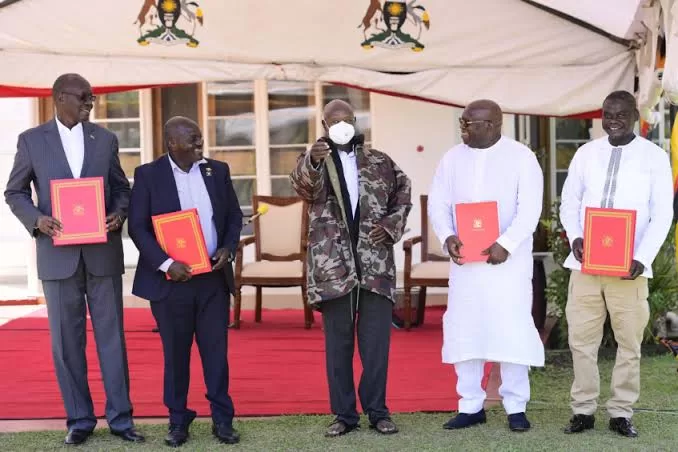
  • 1,100-Kilometer Uganda-South Sudan-CAR Road Construction Launched

    1,100-Kilometer Uganda-South Sudan-CAR Road Construction Launched

    Three countries South Sudan, Uganda, and the Central African Republic (CAR) have signed a historic agreement that will foresee the three countries jointly finance the construction of the 1,100-kilometer Uganda-South Sudan-CAR Road network. This road is expected to enhance both regional integration and economic development.

    In October 2024, Uganda’s President Yoweri Museveni made a pledge of engaging South Sudan in the construction of a road that would link Yei town to the main highway. This followed discussions held between President Museveni and his CAR counterpart Faustin-Archange Touadera in Kampala. The duo explored ways that would enhance regional trade through improved infrastructure.

    Also read: 193-Kilometer Kenya-South Sudan Road Construction Funding Secured

    Uganda-South Sudan-CAR Road Construction Project Factsheet

    Participating countries: Uganda, South Sudan, and the Central African Republic (CAR).

    Total length: Approximately 1,100 kilometers.

    Objective: To improve trade, connectivity, and security across the three nations.

    Key connection points:

    • Uganda to South Sudan: Kampala–Karuma–Nimule–Juba–Kaya–Yei–Juba.
    • South Sudan to CAR: Juba–Mundri–Maridi–Yambio–Yubo–Ezo–Bambouti–Obo–Sibuti.
    • Additional link: Ezo–Source–Yubu–Bambouti (connecting South Sudan and CAR).

    Project phases:

    • Phase I (Short-Term): Focuses on urgent repairs, including gravel road upgrades and bridge maintenance to improve immediate access between the countries.
    • Phase II (Medium to Long-Term): Involves paving gravel roads and rehabilitating existing paved routes to create a major trade corridor.

    Implementation and collaboration:

    • A Tripartite Technical Committee (TTC) has been formed, comprising officials from the Ministries of Transport, Infrastructure, Public Works, Defence, Foreign Affairs, and Internal Affairs of the three countries.
    • The TTC will be responsible for inspecting the proposed roads, finalizing route alignments, and preparing feasibility studies.
    • The countries have agreed to jointly mobilize funding for the long-term development of the corridor.

    At the event of the meeting, the delegations expressed gratitude for the visionary leadership that was showcased by the Heads of State from Uganda, South Sudan, and the Central African Republic in addressing the major challenges related to infrastructure development and security, which are key for enhanced connectivity and trade within the region.

    Additionally, the Ministers reviewed the outcomes of the bilateral discussions that were held on the Bangu-Kampala Road Infrastructure project that took place in March 2025, under the guidance of President Museveni and President Faustin-Archange Touadera of the Central African Republic.

    Uganda-South Sudan-CAR Road Routes

    The parties further agreed on the connection points for the road project, namely Kampala-Karuma-Nimule-Juba-Kaya-Yeyi-Juba to link Uganda with South Sudan. They also established routes from South Sudan to the Central African Republic through Juba-Mundri-Yambi-Yumbo-Ezo-Bambouti-Obo-Sibuti.

    The meeting prioritised a phased approach to project development. The phases were categorised into short, medium, and long-term phases.

    The Uganda-South Sudan-CAR Road Construction to be Conducted in Two Phases

    Phase I, which will be the short-term initiative,will focus on maintenance and emergency works. These entail gravel road improvements and bridge repairs in order to facilitate connections among the three countries.

    As for Phase II, which is identified as the medium to long-term phase, will entail tarmacking gravel roads and the rehabilitation existing paved routes.

    Also read: $738 Million Ethiopia-South Sudan Road Project

    Lastly, the meeting concluded with an agreement on joint mobilisation of funding for the long-term development of the road project which will become a key regional trade corridor.

    A Tripartite Technical Committee  Established

    Additionally, a Tripartite Technical Committee (TTC) was established. It composed of technical officials from the ministries that are responsible for Transport, Infrastructure, and Public Works, as well as Defence, Foreign Affairs, Internal Affairs, and the Solicitor General. Furthermore, the committee was tasked with conducting a joint inspection of the proposed project routes. It will also finalize road alignments, feasibility studies, and the joint implementation framework.

    Also, at a sideline to the Tripartite meeting, the Ministers that are responsible for Civil Aviation from Uganda and the Central African Republic concluded a Bilateral Air Service Agreement (BASA) and a Memorandum of Understanding on the BASA. This will foresee the enhancement of aviation connectivity between the two countries. The aviation connectivity includes the planned commencement of Uganda Airlines flights to the Central African Republic.

    The Ministers instructed the technical team to wind up the necessary procedures. This would reaffirming their commitment to regional integration to cut transport costs for trade, facilitate people-to-people movement, and also enhance security collaboration among the countries to safeguard the corridor.

    Also read: Construction of the Multimillion 220-Kilometer Ethiopia-South Sudan Cross-border Road Takes Shape

    The next Tripartite meeting is anticipated once the TTC has completed the inspection. The specific dates will be communicated through diplomatic channels.

  • Mammoth Solar Project Indiana Moves Forward

    Mammoth Solar Project Indiana Moves Forward

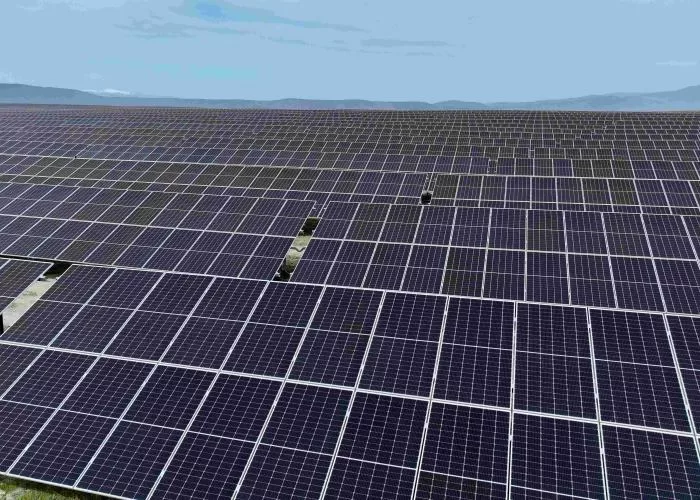
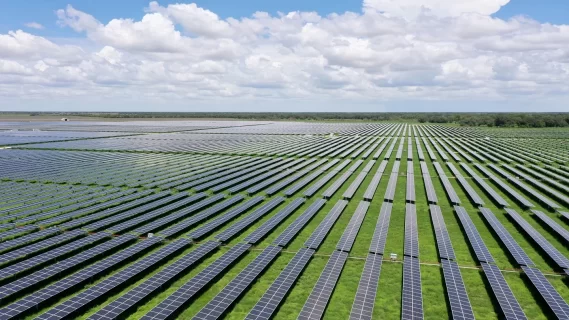
    Doral Renewables LLC has announced the financial close of $1.5 billion in project financing to advance construction of three major photovoltaic power plants—Mammoth South, Mammoth Central I, and Mammoth Central II—located in Pulaski County, Indiana. Each plant will have a generation capacity of 300 megawatts (MWac), representing a combined 900 MWac of the 1.3 gigawatt (GWac) Mammoth Solar project Indiana.

    Once fully operational, the facilities are expected to supply clean electricity to approximately 275,000 households annually, boosting Indiana’s total solar capacity by over 20%.

    Engineering and construction firm Bechtel has also announced that they have been selected by Doral Renewables to deliver the three core phases of the Mammoth Solar project Indiana. Following early preparatory works, Bechtel has now received Full Notice to Proceed (FNTP), allowing it to begin full-scale construction including panel installation, cable laying, and substation development. The Mammoth Solar project Indiana is one of the largest of its kind in the United States and is seen as a critical contributor to the nation’s clean energy transition.

    Phase 1: Operational

    The initial phase of the Mammoth Solar project Indiana is already complete and operational. Doral Renewables began this effort in 2019 as a grassroots initiative among local farmers. Today, over 65 families lease their land to support the solar project. Upon decommissioning, the land will revert to the original owners.

    Phase 2: Mammoth South Under Construction

    Mammoth South, the second phase, is now under construction in Pulaski County. The 300 MW facility is expected to produce enough clean electricity to power approximately 65,000 households. A long-term Power Purchase Agreement (PPA) for the generated electricity has been executed with AEP Energy, a subsidiary of American Electric Power.

    The Mammoth South project officially launched in November 2022, marked by a ceremony that brought together local stakeholders, community members, and dignitaries from Indiana and Israel.


    picture
    Latest Updates on Mammoth Solar Project in Indiana. USA’s largest solar project

    Phase 3: Mammoth Central Set for Launch

    Mammoth Central, the third and largest phase of the project, will deliver 600 MW of solar energy and is scheduled to begin construction in 2025, with commercial operations expected by 2027. Due to its scale, Mammoth Central will be built in two segments.

    Doral Renewables has secured full offtake for the 600 MW capacity. Half of the output—300 MW—will be supplied to AEP Energy, while the remaining 300 MW will be sold to Bank of America, PNC Bank, CVS Health, and Dietz & Watson through Constellation Energy.

    Mammoth Central will also integrate significant agrivoltaics elements, including livestock grazing for vegetation management, pollinator habitats, and crop production. These initiatives will be managed by local farmers, blending renewable energy production with sustainable land use and heritage agricultural practices.


    picture
    Averon Energy begins construction of 288 MW Posey Solar plant, Indiana

    Mammoth Solar Project Indiana Factsheet

    Project Name:
    Mammoth Solar

    Developer:
    Doral Renewables LLC

    EPC Contractor:
    Bechtel Corporation

    Location:
    Pulaski and Starke Counties, Indiana, USA

    Total Planned Capacity:
    1.3 gigawatts (GWac)

    Project Phases & Capacity:

    • Phase 1 – Mammoth North: 300 MW (Operational)
    • Phase 2 – Mammoth South: 300 MW (Under Construction)
    • Phase 3 – Mammoth Central I & II: 600 MW (Planned, Construction begins 2025)

    Land Area:
    13,000 acres

    Households Powered Annually:
    ~275,000 homes

    Power Purchase Agreements:

    • AEP Energy (Phase 2 & 3 – 600 MW total)
    • Constellation Energy (Phase 3 – 300 MW for Bank of America, PNC Bank, CVS Health, Dietz & Watson)

    Estimated Completion Dates:

    • Mammoth South: Under construction
    • Mammoth Central: Operational by 2027

    Community Engagement:

    • Over 65 local families leasing land
    • Land returned to owners post-decommissioning

    Sustainability Features:

    • Agrivoltaics: Livestock grazing, pollinator habitats, and crop production integrated with solar use
    • Led by local farmers to maintain agricultural heritage and diversify revenue

    Notable Facts:

    • One of the largest solar projects in the U.S.
    • Named “Mammoth” due to ancient mammoth bones discovered on-site
    • Expected to increase Indiana’s total solar capacity by 20%
  • Tanzania’s Modernization of Ports Takes Shape as Government Greenlights Multi-Billion Expansion and Modernization Plan

    Tanzania’s Modernization of Ports Takes Shape as Government Greenlights Multi-Billion Expansion and Modernization Plan

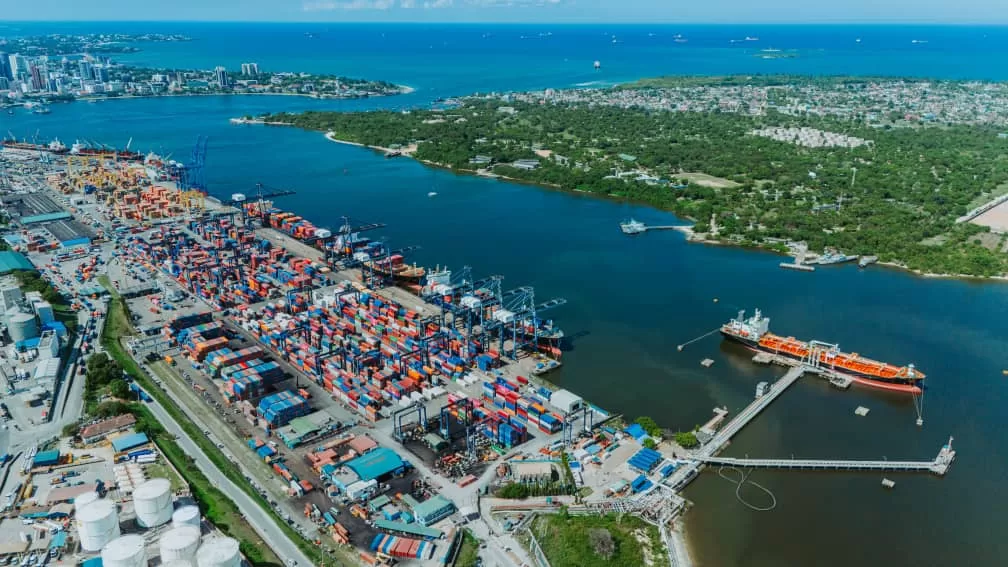
    Tanzania’s modernization of ports is at the heart of the government’s ambitious revenue and infrastructure strategy. In the 2025/26 financial year, the government anticipates the collection of Sh. 1.38 trillion from Tanzania Ports Authority (TPA) operations. It is a goal that is expected to facilitate a sweeping extension and modernization of major seaports and inland waterways in the country. Transport Minister Prof Makame Mbarawa, when presenting the Transport Ministry’s budget, said that over 6,300 ships will be handled by ports such as Dar es Salaam, Tanga, and Mtwara. Furthermore, the Lake Victoria, Tanganyika, and Nyasa ports will also be included.

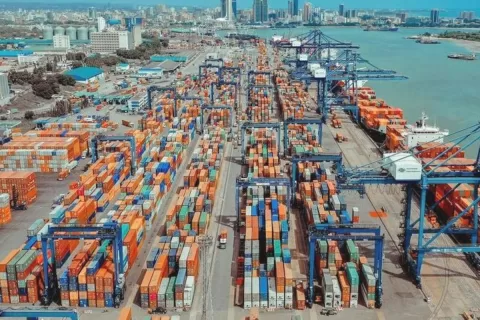
    Of these, 1,382 would be foreign deep-sea vessels, with 42.1 million gross registered tonnage. Cargo would also increase to almost 33 million tonnes. Container handling would rise to 1.3 million TEUs. Dar es Salaam Port, which services 98 percent of foreign trade, will be doubled from 12 to 22 berths and be open 24 hours a day, 7 days a week. “We are positioning Tanzania as a major regional trade platform,” Prof Mbarawa said in his address.

    Also read:

    Tanzania Ports Authority to construct extensive dry port at Katosho

    Scope of Implementation on Tanzania’s Modernization of Ports

    Tanzania’s modernization of ports includes both coastal and inland ports. Moreover, it includes key improvements to logistics and rail connections. Upgrading of the Kurasini facilities and connectivity to the SGR and TAZARA railways will be undertaken. A Single Receiving Terminal (SRT) with 15 oil tanks will be built by the government and the Kwala Dry Port will be upgraded to relieve the Dar es Salaam port congestion.

    Tanzania's Modernization of Ports
    Tanzania’s modernization of ports is at the heart of the government’s ambitious revenue and infrastructure strategy.

    A dry port will be established at Ihumwa, Dodoma. Upgrading of a new line to Karema Port on Lake Tanganyika and upgrading of the MGR railway are also panned. This line will increase linkages to the DRC and the Great Lakes region. In Tanga, construction is under way of Berth No. 3 and petroleum infrastructure at Raskazone. Mtwara is also expected to have a new Kisiwa Mgao Port for sensitive cargo like coal and cement. Inland ports on Lakes Victoria, Tanganyika, and Nyasa will see vessel construction and infrastructure refurbishment to allow regional trade.

    Bagamoyo Port: A Game-Changer for Regional Shipping

    One of the greatest successes in Tanzania’s modernization of ports is the approval for the much-awaited Bagamoyo Port. The multibillion-dollar megaproject will accommodate post-Panamax vessels that can no longer fit into Dar es Salaam. “This port will revolutionize the way we manage international shipping,” Prof Mbarawa stated. Bagamoyo Port will also be linked to a new 100-kilometre modern railway to the Kwala Dry Port. It will also be a complement to the Bagamoyo Special Economic Zone as a logistics and an industrial growth center. The port design will decongest Dar es Salaam and route bigger vessels. Decentralizing port operations will strengthen Tanzania’s trade infrastructure and shift the burden off current facilities. This move is evidence of the government’s attempt to develop capacity for its future economic requirements. Through sound public-private partnerships, Bagamoyo will be sustainably and effectively developed into a pillar of the country’s integrated transport vision.

    Also read:

    TPA Signs Agreements with Saudi, China and Egyptian Firms on Plans for the Bagamoyo Port Project

    Tanzania-DRC Dry Port Construction Deal Signed

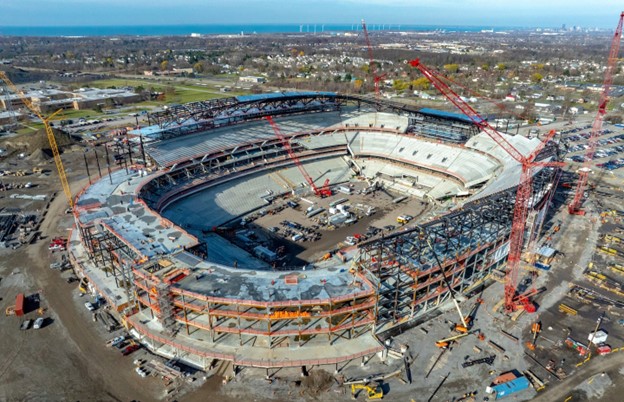
  • Cleveland Browns Brook Park Domed Stadium To Proceed Without County Support

    Cleveland Browns Brook Park Domed Stadium To Proceed Without County Support

    CLEVELAND — The Haslam Sports Group (HSG), owners of the Cleveland Browns, announced on Thursday that it will proceed with the proposed Cleveland Browns Brook Park domed stadium and mixed-use development regardless of Cuyahoga County’s participation.

    In a letter addressed to County Executive Chris Ronayne, HSG Chief Operating Officer Dave Jenkins criticized Ronayne’s opposition to the project and expressed disappointment over what he described as “misleading information.” Jenkins emphasized that while collaboration with the county would be beneficial, the Cleveland Browns Brook Park domed stadium is not contingent on it.

    Key Issues at the Center of the Stadium Dispute

    • County Opposition: Cuyahoga County Executive Chris Ronayne opposes the Brook Park plan, calling it a “risky bet” and favoring a downtown renovation instead.

    • Funding Dispute: HSG seeks $600 million in state bonds and another $600 million from local governments, while Ronayne and Cleveland Mayor Justin Bibb propose a $350 million state investment for renovating the current stadium.

    • Private vs. Public Investment: HSG has pledged over $2 billion in private capital but insists that public contributions are necessary for the full project.

    • Economic Impact Debate: HSG claims the domed stadium will create more year-round economic benefits than a renovated open-air stadium used mainly for Browns games.

    • State-Level Lobbying: NFL Commissioner Roger Goodell and HSG leadership are lobbying Ohio lawmakers and Governor DeWine to secure state support.

    • Timeline Pressure: The Ohio Senate must approve the budget by June 30 for the project’s proposed state funding to move forward.


    Details of the Brook Park Stadium Proposal

    The proposed development includes a $2.4 billion domed stadium for the Cleveland Browns and an additional $1 billion in surrounding mixed-use infrastructure. HSG and its partners plan to invest over $2 billion in private funding and are seeking $600 million from the state of Ohio through bond financing. The project also anticipates $600 million in public funding from Brook Park and Cuyahoga County through taxes and surcharges.

    While the Ohio House has approved the state’s share in its budget proposal, the Senate is still deliberating, with a final decision expected by June 30.

    Downtown Renovation Proposal Faces Off with New Stadium Vision

    Ronayne and Cleveland Mayor Justin Bibb have publicly opposed the Brook Park plan, advocating instead for a renovation of the current lakefront stadium, Huntington Bank Field. They have proposed a $350 million state investment to support the renovation and pledged that the city and county would meet HSG’s public funding request if the renovation plan is adopted.

    HSG argues that building the Cleveland Browns Brook Park domed stadium is a more strategic and fiscally responsible solution, citing its potential for year-round economic activity and long-term viability. The group maintains that a renovation would be a temporary fix and not yield the same level of regional economic benefit.

    State Support and NFL Backing Add Momentum

    The project has received support from state officials and NFL Commissioner Roger Goodell, who recently met with Ohio Governor Mike DeWine and legislative leaders to discuss the Cleveland Browns Brook Park domed stadium project.

    A final decision on state funding is expected as part of the budget process later this summer. HSG reiterated that it is prepared to move forward with or without local government support to realize the Cleveland Browns Brook Park domed stadium vision.

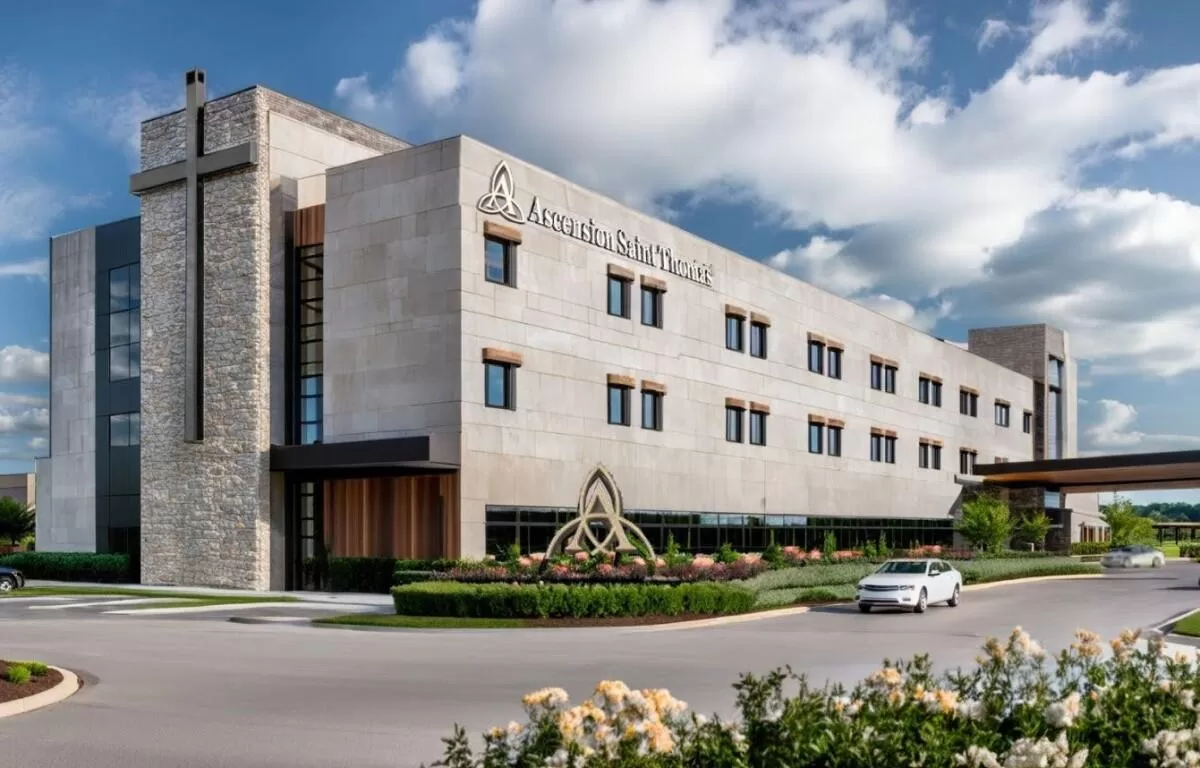
  • Ascension Saint Thomas to Build $148M Hospital in Clarksville, TN

    Ascension Saint Thomas to Build $148M Hospital in Clarksville, TN

    Ascension Saint Thomas (AST) has announced plans to build a new $148.5 million hospital in Clarksville, Tennessee, in a major expansion aimed at addressing the region’s growing healthcare demands. The hospital, which will initially house 44 inpatient beds with capacity to expand to 132, is set to offer a wide range of services, including emergency care, surgery, cardiology, oncology, orthopedics, women’s health, and a neonatal intensive care unit.

    The facility will be constructed on a nearly 100-acre site just northeast of Interstate 24 at Exit 11, near Martin Luther King Jr. Parkway. The campus will also feature outpatient surgery and advanced imaging services to support coordinated care and reduce the need for residents to travel outside the area for routine procedures.

    Clarksville, one of Tennessee’s fastest-growing cities, currently offers only one civilian hospital to serve its nearly quarter-million residents. The population has increased approximately 12% since 2020, stretching local healthcare providers thin. Essential care, especially in obstetrics and surgery, forces many patients to drive up to 50 miles.

    A greater healthcare choice for residents

    Leaders at Ascension Saint Thomas emphasized that the new hospital will not only improve access to care but also provide residents with greater healthcare choice. The project is expected to create around 250 jobs during and after construction, contributing to the local economy and strengthening the region’s healthcare infrastructure.

    Pending state approval through the Certificate of Need process, a public hearing on the project is scheduled for later this year. If approved, construction is expected to begin soon after, with a goal of opening the hospital within the next few years.

    Local officials and physicians have praised the announcement as a much-needed step toward expanding care and keeping up with Clarksville’s rapid growth.

    Read also: Children’s Mercy Hospital Kansas Unveils $152M Expansion Plan

    Planned Ascension Saint Thomas (AST) Hospital in Clarksville: Project Factsheet

    Project Overview

    Project Name: Ascension Saint Thomas Clarksville Hospital

    Investment: $148.5 million

    Location: Northeast of Interstate 24 at Exit 11, near Martin Luther King Jr. Parkway, Clarksville, TN

    Site Size: Nearly 100 acres

    Facility Specifications

    Initial capacity: 44 inpatient beds

    Expansion capacity: 132 beds

    Services: Emergency care, surgery, cardiology, oncology, orthopedics, women’s health, and NICU

    Additional facilities: Outpatient surgery center and advanced imaging services

    Read also: Nemours Children’s Health Announces $300M Expansion for Lake Nona Hospital, FL.

    Community Impact of Planned Ascension Saint Thomas Hospital in Clarksville

    Will create approximately 250 jobs during and after construction

    Addresses healthcare needs in one of Tennessee’s fastest-growing cities (12% population growth since 2020)

    Reduces need for residents to travel up to 50 miles for essential care

    Provides greater healthcare choice for a population of nearly 250,000 currently served by only one civilian hospital

    Timeline

    Public hearing scheduled for later this year

    Construction contingent on Certificate of Need approval

    Targeted opening: Within the next few years

    Read also: El Camino Health Breaks Ground on New Rehab Hospital in Sunnyvale