Constructionreview

Blog

  • La Porte High School Unveils $56 Million Bulldog Stadium Ahead of 2025 Season

    La Porte High School Unveils $56 Million Bulldog Stadium Ahead of 2025 Season

    La Porte High School is set to debut its brand-new, state-of-the-art Bulldog Stadium for the 2025 football season. This $56 million facility, funded through a voter-approved $235 million bond in May 2023, exemplifies Texas’s commitment to high school football excellence. The stadium’s grand opening is scheduled for August 29, when the Bulldogs will face off against Deer Park, marking their first true home game since 2022.

    Stadium Features and Enhancements

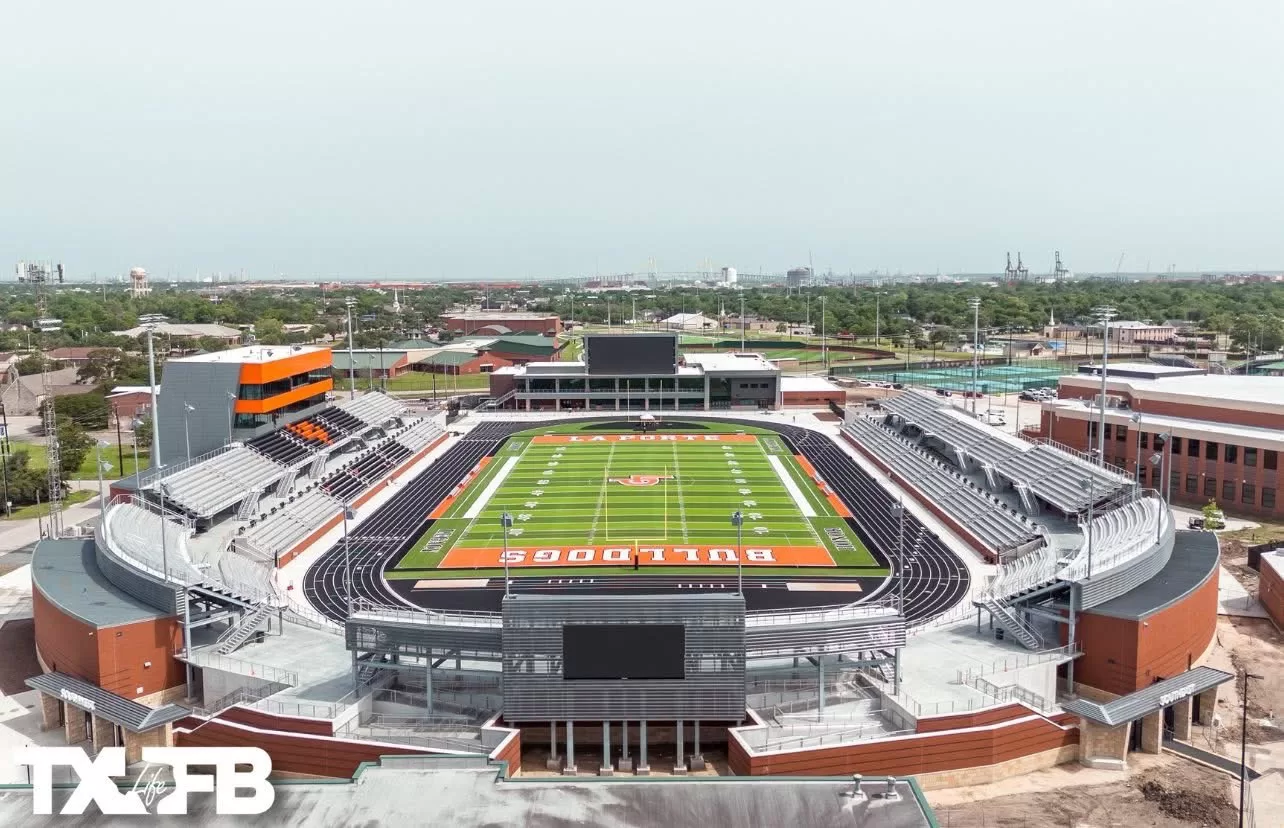
    The new Bulldog Stadium boasts several modern amenities designed to enhance both player performance and spectator experience. The seating capacity has been increased to approximately 9,000, an addition of 500 seats from the previous stadium. An upgraded eight-lane track replaces the former six-lane version, enabling La Porte High School to host University Interscholastic League (UIL) track events. The development center within the stadium includes a comprehensive weight room, locker rooms, and a conference center, serving both athletic and educational purposes. Additionally, a modern press box and an observation deck have been constructed, suitable for hosting marching band competitions and providing enhanced media coverage capabilities.

    Overcoming Challenges: The Bulldogs’ Resilience

    During the stadium’s construction, the La Porte Bulldogs demonstrated remarkable resilience. Without a home field since October 2022, they played “home” games at alternative venues. In 2023, they utilized Barbers Hill High School’s facilities, located 24 miles from campus, and in 2024, they played at Deer Park’s Abshier Stadium, 12 miles away. Despite these challenges, the team achieved back-to-back district championships and reached the regional finals for the first time since 2011.

    Also Read Morocco Launches Construction Tender of $320 Million Hassan II Stadium, World’s Largest Stadium

    Head Coach Kevin Berneathy praised his team’s adaptability, stating, “It’s built a huge amount of toughness in our team. We can go anywhere and play.”

    Project Overview

    Location: 301 E Fairmont Parkway, La Porte, Texas, 77571 (Harris County)

    Project Name: La Porte ISD | Bulldog Stadium

    Project Type: Complete rebuild and modernization of the existing stadium

    Estimated Cost: $56 million, funded through a $235 million bond approved in May 2023

    Construction Timeline:

    Start Date: June 29, 2023

    Expected Completion: January 30, 2025

    Size: Approximately 18,620 square feet of renovated space

    Seating Capacity: Approximately 9,000 seats, an increase of 500 from the previous stadium

    Key Features:

    Eight-lane track suitable for hosting University Interscholastic League (UIL) events

    New press box and observation deck for enhanced media coverage and marching band competitions

    Development center featuring a weight room, locker rooms, and a conference center

    Enhanced accessibility features to accommodate all spectators

    Developers and Construction Team:

    Owner: La Porte Independent School District

    Design Firm: Huckabee Architects

    Registered Accessibility Specialist (RAS): Attila Huszka

    Funding and Community Support:

    Part of a $235 million bond package approved by voters in May 2023

    The bond also includes funds for district-wide safety and security upgrades, technology infrastructure, and the construction of the Bulldog Development Center
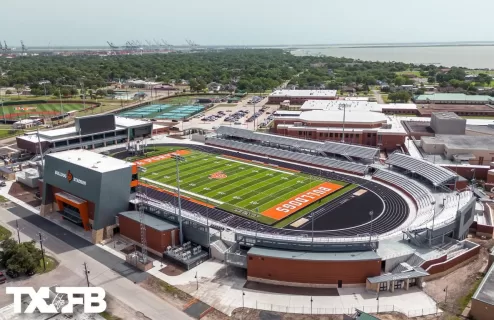
    The La Porte High School Bulldog Stadium
    The La Porte High School Bulldog Stadium

    Community Support and Financial Stewardship

    The $235 million bond, which included funding for the stadium, was approved without increasing the district’s property tax rate. This financial strategy reflects La Porte Independent School District’s commitment to fiscal responsibility while investing in the community’s future.

    Also Read AS Roma Pietralata Stadium: Design, Timeline & What to Expect by 2028

    Superintendent Dr. Walter Jackson emphasized the project’s significance, noting that the stadium serves as both an athletic facility and an educational resource, benefiting every student daily.

    Looking Ahead

    As the Bulldogs prepare to return to their home turf, the new Bulldog Stadium stands as a testament to the community’s dedication to excellence in education and athletics. This facility not only elevates the school’s sports programs but also reinforces La Porte’s status in Texas high school football.
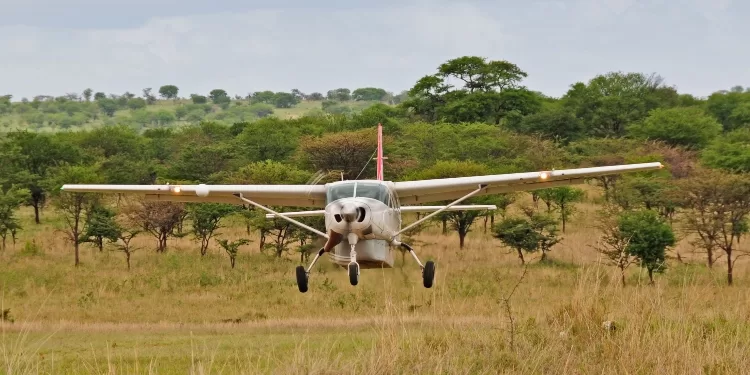

  • The Serengeti ‘Green’ International Airport Project feasibility study to be undertaken

    The Serengeti ‘Green’ International Airport Project feasibility study to be undertaken

    The Serengeti International Airport is a planned development that will commence following Tanzania’s 2025/26 national budget allocation. Designed as a Green International Airport, it aims to be environmentally friendly and strategically positioned as a gateway to one of Africa’s most celebrated wildlife destinations — the Serengeti.

    The government has earmarked Sh3 billion from local sources to finance a detailed feasibility study and the initial phase of construction. Presenting the budget in Parliament on May 15, Transport Minister Prof. Makame Mbarawa stated that the airport will be developed with great care to preserve the Serengeti’s ecosystem while improving accessibility for tourists. He further noted that the new facility will also serve as a transport hub, linking to other international airports across Tanzania.

    Once completed, the Serengeti International Airport is expected to significantly enhance tourism, stimulate regional development, and attract investment in northern Tanzania. The project aligns with the government’s broader efforts to strengthen air transport infrastructure, expand airport capacity, and increase international connectivity. Moreover, it reflects Tanzania’s commitment to sustainable development, following global trends in green architecture and eco-tourism. Also coming up in the Serengeti is the Serengeti Fort Ikoma Golf Course Project which is an 18 hole golf course that will further enhance the national parks appeal to tourists.

    Also read:

    Tanzania Government Seeks Approval for Construction of Controversial 452-kilometer Serengeti Road

    Significance of the Serengeti International Airport Project

    The Serengeti International Airport project is of vital importance to Tanzania’s national master plan for aviation. It will be used to build the Serengeti tourism economy, as well as promote sustainable design and green technology. Prof Mbarawa claimed the facility would “open up access for investment and trade in northern Tanzania.” It is part of a broad program of upgrading aviation facilities across the country. In the 2025/26 budget, funds are also allocated to Mwanza, Arusha, Mtwara, Bukoba, and Kilimanjaro airports. There are plans to refurbish and expand Julius Nyerere International Airport’s Terminal II.

    Serengeti International Airport Project
    Development of the Serengeti International Airport project will commence following Tanzania’s 2025/26 national budget allocation.

    The major allocations comprise Sh35 billion to upgrade Kilimanjaro International Airport. Additionally, Sh80.12 billion worth of foreign funds from the French government is allocated to further upgrades at JNIA. Overall, the Ministry of Transport has planned billions to enhance air safety, increase passenger handling capacity, and enhance operating efficiency at domestic and foreign airports. The Serengeti International Airport project is a cornerstone of this plan.

    Also read:

    Germany funds the construction of serengeti bypass in Tanzania

    Government Ok’s Construction of Wellworth Luxury Hotel in Serengeti National Park, Tanzania

  • Uganda’s SGR Project Allocated Shs2.175 Trillion ($595.5 million) in 2025/2026 National Budget

    Uganda’s SGR Project Allocated Shs2.175 Trillion ($595.5 million) in 2025/2026 National Budget

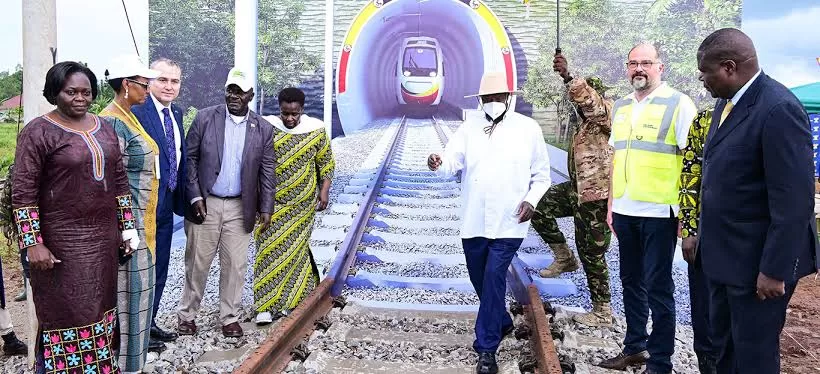
    The Ugandan government has allocated a record Shs2.175 trillion ($595.5 million) in the 2025/2026 national budget that will be utilized for the long-delayed Uganda’s SGR Project. This indicates a renewed political and financial commitment to transforming the transport infrastructure in the country.

    The funding allocation on the SGR project was revealed at the event of the presentation of the Budget Committee report to Parliament on May 15. Additionally, the report also outlined an extra Shs2.201 trillion for the construction, upgrade, and the rehabilitation works of national roads and bridges under the Ministry of Works and Transport.

    Also read: Uganda Inaugurates Tororo-Kampala SGR Construction Works

    Project Factsheet

    Length: Approximately 272-332 kilometers.

    Contractor: Yapı Merkezi, a Turkish construction firm, was awarded the Engineering, Procurement, and Construction (EPC) contract.

    Contract value: €2.7 billion (approximately US$2.9 – US$3 billion).

    Funding: Financed through a combination of domestic resources and export credit financing.

    Groundbreaking: Officially launched on November 21, 2024.

    Expected completion: Late 2028 (estimated 48 months from the start date).

    Design capacity: Capable of transporting up to 25 million tons of cargo annually.

    Train speeds: Designed for cargo trains to travel at up to 100 km/h and passenger trains at up to 120 km/h.

    Features: The line will include stations, freight terminals, maintenance and repair facilities, a tunnel (2.1km), and a viaduct (2.3km), including the 552m cable-stayed Jinja Bridge.

    Other planned SGR sections in Uganda:

    • Northern Line (Tororo-Gulu-Nimule/Gulu-Pakwach-Goli): Extending north towards South Sudan and northwest towards the DRC.
    • Western Line (Kampala-Mpondwe): Heading west towards the DRC border.
    • Southwestern Line (Bihanga-Mirama Hills): Connecting to Rwanda.

    The standard gauge railway is a proposed modern railway line that runs all the from Kampala to Malaba. The railway is foreseen to be a game-changer in cargo transport across East Africa.

    Also read: China Back as Kenya-Uganda SGR Financier

    As for now, more than 93% of Uganda’s cargo is transported by road, with rail accounting for less than 7% of the total according to statistics from the Ministry of Works. Therefore, this has increased pressure on road infrastructure and raised the cost of logistics.

    Significance of Uganda’s SGR Project

    Upon completion, the SGR is expected to reduce the cargo transit time from Mombasa to Kampala from 5 days to less than 24 hours. Additionally, it will reduce freight costs by up to 40%. This will bolster Uganda’s competitiveness in regional trade.

    The Kampala-Malaba railway section will be 273 kilometres long. It is part of the Northern Corridor SGR network linking Kenya, Uganda, Rwanda, and South Sudan.

    Previously, Uganda has been struggling to secure funding especially after Kenya stopped its own extension from Naivasha to Malaba. However, Uganda’s government is optimistic that the 2025/2026 funding will strengthen the confidence among potential partners and investors including the China Exim Bank.

    Also read:  $12.8 Billion Uganda SGR Project Commences

  • Latest Updates on Kenya’s 170-Kilometer Nakuru-Nairobi Highway Construction Project

    Latest Updates on Kenya’s 170-Kilometer Nakuru-Nairobi Highway Construction Project

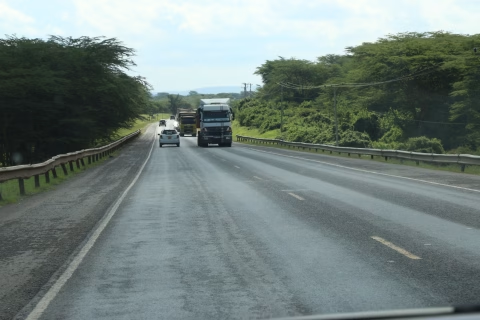
    Updated October 24, 2025- The dualing of the Nairobi–Nakuru Highway will cost about Sh90 billion. Also, it is expected to be completed by June 2027 according to an announcement issued by the Kenya National Highways Authority (KeNHA). The total project cost is significantly lower than the Sh190 billion that had been earlier quoted by a French consortium. The deal by the French consortium was cancelled by President William Ruto because it was too expensive. Other than the Nakuru-Nairobi highway construction project, the Kiambu road dualing project is also taking shape. Kenya’s government has approved the dualing of the $286 million Kiambu road project in a bid to ease traffic congestion. Furthermore, the project aims to improve mobility between Nairobi and Kiambu counties. According to a Cabinet brief released on Tuesday, the project will expand the existing two-lane highway. Once the project is done, the road will be a dual carriageway completed with bypasses, loops, and access roads. The road will be designed to increase capacity and reduce travel times. Cabinet said the upgraded road will also feature non-motorized transport lanes and commuter facilities to enhance safety.

    Developers

    Furthermore, KeNHA has selected China Road and Bridge Corporation (CRBC) and the National Social Security Fund (NSSF) to handle the tolling and development of the highway. The consortium won the contract because it proposed lower toll rates. This would therefore ease the financial burden on motorists using the key transport corridor.

    Earlier this year, National Treasury Cabinet Secretary John Mbadi called for the expansion of the busy Nairobi–Nakuru road into a dual carriageway. This expansion is expected to improve traffic flow to western Kenya.

    Additionally, Mbadi said the expansion would help reduce the frequent traffic jams that inconvenience motorists. These inconveniences usually force some to use longer alternative routes such as the Bungoma–Kakamega–Kisumu–Narok route to avoid congestion.

    “We borrowed money to build roads up to rural areas, yet an important route like the Nairobi–Nakuru highway remained single-lane. Making it dual will help travelers reach their homes faster,” Mbadi said.

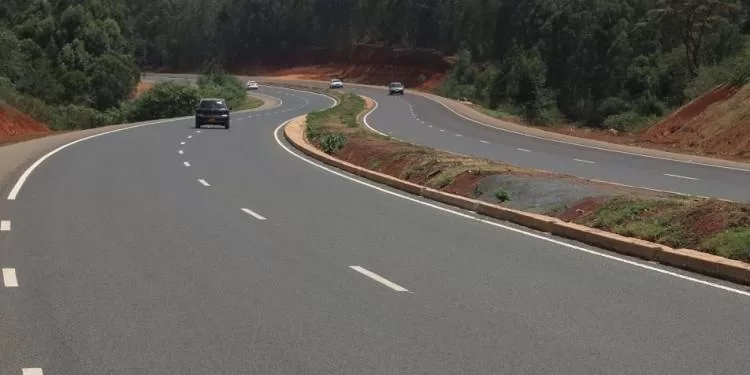
    The Nairobi-Nakuru highway construction is expected to be completed by June 2027
    The Nairobi-Nakuru highway construction is expected to be completed by June 2027

    Toll Fees on the Highway Revealed

    Motorists using the upcoming Rironi-Mau Summit expressway will pay a base toll rate of Sh8 per kilometre, disclosures by Kenya National Highways Authority show.

    In another highway project development, Kenya in partnership with US-based Everstrong Capital had set plans for the development of Africa’s largest toll road project, the Usahihi Expressway. This expressway would connect Nairobi to Mombasa. However, lately the project faced a setback after it was rejected by the Kenyan Government.

    Reported on May 15, 2025

    It is a relief to Kenyans as President William Ruto instructed the contractors to kick off the construction of the Nakuru-Nairobi Highway in July this year. This announcement was made by the Deputy President Kithure Kindiki on May 15 on behalf of the President during his visit to Nakuru.

    He stated that the dialling works of the Rironu-Mau Summit highway would start in the next two months. The highway upgrade will enhance the safety of road users. Also, the highway would facilitate easier and more effective movement of both people and goods to and from the Rift Valley, Western, and Nyanza regions of Kenya.

    Also read: Kenya’s €1.3 Billion Nairobi-Nakuru Dual-Carriageway Deal to be Awarded to a Chinese Contractor

    Nakuru-Nairobi Highway Project Factsheet

    Length: Approximately 170 kilometers

    Project implementation: The dualling project, covering the 175km stretch between Rironi and Mau Summit, is planned to be undertaken through a Public-Private Partnership (PPP).

    Construction start date: Construction is expected to commence in July 2025.

    Project cost: The initial budgeted construction cost was approximately KSh180 billion (around US$1.8 billion). However, a more recent figure mentioned is KSh 90 billion for the Rironi-Mau Summit section.

    Contractors: Initially, a deal with French contractors was canceled. A new deal was signed with the Chinese government for the expansion.

    Additional details:

    • The project also includes the strengthening and maintenance of the Rironi–Mai Mahiu–Naivasha Road (Escarpment Road). The road is approximately 62 kilometers long.
    • The upgrade will involve the construction of bridges, underpasses, overpasses, wildlife crossing points, bus bays, and other auxiliary road infrastructure.
    • The project is considered a high environmental and social risk project, requiring adherence to international environmental and social standards.

    Additionally, according to the Deputy President, the President had already directed the Transport Cabinet Secretary to oversee the project. The CS is also required to ensure a timely delivery of the Ksh90 billion project.

    Public-Private Partnership Model

    Kindiki also informed the residents that the expansion of the existing highway from single lane to a 170-kilometer four-lane carriageway would be conducted via a Public-Private Partnership (PPP).

    “From the month of July going forward, we will commence the construction works of the highway which connects Rironi in Limuru to Mau-Summit. We shall make it a dual-carriageway in order to reduce the number of accidents,” the Deputy President announced.

    “Eventually, we have found a way to build the highway. The President has directed the Ministry of Roads to make sure that the contractors are already on site effective July 1 this year,” Kindiki added.

    Chinese Government Awarded the Project Following Termination from French Contractors

    President William Ruto’s instructions come a month after he reached a deal with the Chinese government for the expansion works of the highway. This is after Kenya cancelled a similar deal with French contractors on the dualling of the highway.

    Kenya reached a decision to end the agreement with French contractors. This was after the Kenya National Highways Authority (KeNHA) officials revisited the project’ terms and conditions.

    Also read: Kenya to Secure Multi-Billion Loan for the Construction of the 124-kilometre Kenya-Tanzania Road

  • Des Neiges Secteur Sud Wind Project in Quebec Secures $960M Financing

    Des Neiges Secteur Sud Wind Project in Quebec Secures $960M Financing

    A major milestone has been achieved in Canada’s renewable energy sector as the Des Neiges, Secteur sud wind power project in Quebec officially secures $960 million in financing. Further, this significant development involves a Canadian consortium led by Boralex, in partnership with Énergir Développement and Hydro-Québec. Together, these affiliates form La Société de projet BVH1, the special purpose company behind the initiative.

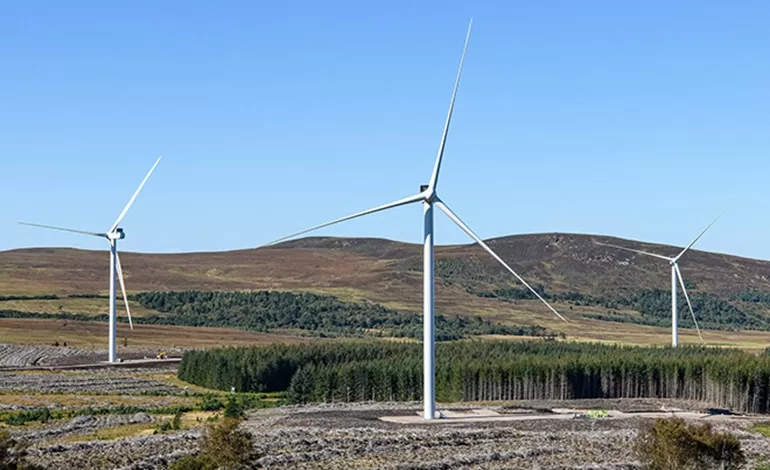
    Located on the private lands of Seigneurie de Beaupré in the Côte-de-Beaupré region, this 400MW wind project is currently under construction. Once completed, it will mark a major step forward in Quebec’s journey toward energy independence and climate resilience.

    Strong Financial Structure to Support Long-Term Growth

    The total investment for the Des Neiges, Secteur sud project is approximately $1 billion. The financing package includes a $733 million construction loan, which will convert into a term loan once electricity delivery begins in Q4 2026. In addition, a $170 million bridge loan has been arranged to finance the reimbursement expected for the project’s switchyard. Furthermore, a $57 million guarantees facility rounds out the funding structure, ensuring financial stability and risk management. In addition, Desjardins Group is serving as the Administrative Agent for the financing, showcasing the strength of Quebec-based financial institutions in supporting green infrastructure.

    Also Read A look at the Bent Tree Wind Farm expansion Project

    Economic and Social Impact in Côte-de-Beaupré

    Beyond energy generation, the project is set to deliver substantial economic benefits. During the construction phase, it will create approximately 500 jobs, stimulating local employment and economic activity. Once operational, around 15 permanent positions will be established for maintenance and operations.

    Moreover, over $80 million is expected to be distributed to host communities exclusively for the Secteur sud project. This commitment underscores the developers’ dedication to community involvement and shared prosperity.

    Des Neiges Secteur Sud wind project Quebec Overview

    Location: Unorganized territory of Lac-Jacques-Cartier, within the Regional County Municipality (RCM) of La Côte-de-Beaupré, Quebec, Canada

    Project Name: Des Neiges – Secteur Sud Wind Farm

    Installed Capacity: 400 megawatts (MW)

    Number of Wind Turbines: 57

    Estimated Investment: Approximately $1 billion CAD

    Financing Structure:

    Total financing secured: $960 million CAD

    Includes a $733 million construction loan, converting to a term loan upon electricity delivery commencement

    A $170 million bridge loan for switchyard reimbursement

    A $57 million guarantees facility

    Desjardins Group serves as the Administrative Agent for this financing

    Project Developers:

    La Société de projet BVH1, a consortium comprising:

    Boralex Inc.

    Énergir Développement Inc.

    Hydro-Québec

    General Contractor: Borea Construction

    Construction Timeline:

    Preliminary work commenced in December 2024

    Full-scale construction scheduled to begin in early 2025

    Expected to be operational by December 2026

    Economic Impact:

    Approximately 500 jobs anticipated during the construction phase

    Around 15 permanent positions for operations and maintenance

    Over $80 million CAD to be distributed among host communities over 30 years

    Partners Emphasize Collaboration and Sustainability

    Hugues Girardin, Executive Vice President and General Manager, North America at Boralex, expressed pride in the long-standing partnership with Énergir and Hydro-Québec. “This collaboration enables us to bring the Des Neiges – Secteur sud project to life, contributing to Quebec’s energy independence and sustainable economic development,” he noted.

    For nearly 15 years, Boralex and its partners have successfully developed wind farms in the Seigneurie de Beaupré, setting a strong foundation for this latest venture.

    Also Read Vestas Secures 65 MW Order for Kloddram Wind Project, Advancing Germany’s Onshore Wind Expansion

    Constructing Des Neiges Secteur Sud wind project Quebec with Local Support

    Preliminary construction activities began in December 2024 under the direction of general contractor Borea Construction. Additionally, in the coming months, Borea will work closely with Quebec-based companies and suppliers to carry out the bulk of the site work—ensuring the project remains local, efficient, and beneficial to the regional economy. What’s more, with its robust financing and community-focused vision, the Des Neiges – Secteur sud wind project stands as a model for future renewable energy initiatives across Canada.

  • Grand Hyatt DFW Embarks on $34 Million Renovation Ahead of 20th Anniversary

    Grand Hyatt DFW Embarks on $34 Million Renovation Ahead of 20th Anniversary

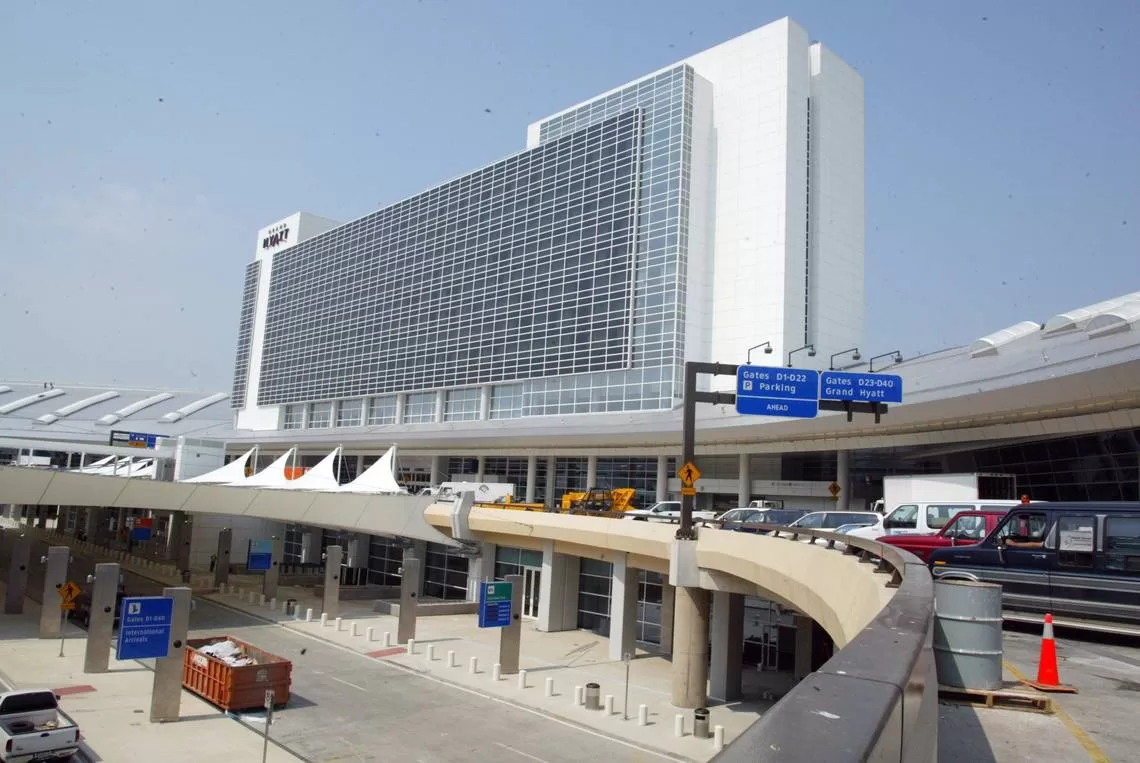
    The Grand Hyatt DFW, located atop Terminal D at Dallas-Fort Worth International Airport, is set to undergo a $34 million renovation starting this July. Coinciding with its 20th anniversary, the project aims to reimagine every corner of the luxury airport hotel, from guest rooms to meeting spaces, while reinforcing its reputation as one of the premier accommodations for travelers. Construction is set to begin in July 2025.

    According to Hyatt Hotels, the renovation is expected to be completed by the end of the year. The upgraded hotel will offer 315 guest rooms and suites, an increase from the current 298. Furthermore, they will feature better technology and upscale design inspired by Texas landscapes and aviation themes.

    Guest Rooms Get a Modern, Aeronautical Touch

    A significant portion of the budget, $16 million, is allocated to redesigning the guest rooms. New features will include leather headboards with integrated lighting, high-definition flat-screen TVs, and expanded charging ports. Bathrooms will also be upgraded with enlarged vanities, showers, and tubs. The design palette draws from blue and green tones reflective of the regional scenery, paired with a sleek, aeronautical aesthetic.

    Also Read Grand Hyatt Miami Beach to Transform Miami Beach Hospitality Landscape

    Enhanced Dining and Event Experiences

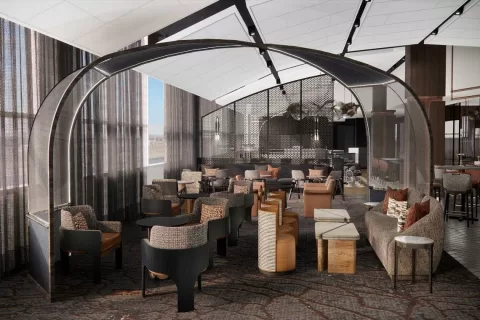
    The hotel’s Grand Met restaurant and lounge will also receive a sophisticated updo. Seating capacity will be increased, and private and semi-private dining areas will be introduced. The updated menu will spotlight seasonal, locally sourced ingredients with a blend of international and modern cuisine. This promises a unique culinary experience for both travelers and locals.

    Also Read Corinthia Dubai: Corinthia Hotels’ first landmark hotel and residential development project in UAE

    In terms of event and meeting spaces, the renovation includes a new top-floor executive boardroom and a versatile indoor/outdoor rooftop area looking out onto the airport runways. Additionally, updates to the existing 20,000 square feet of meeting space will incorporate cutting-edge audiovisual capabilities and other technological enhancements.

    Project Overview

    Location: Dallas Fort-Worth Airport

    Project Cost: US$34 million

    Start date: July 2025

    Developers: Grand Hyatt

    Renderings of the upgraded hotel
    Renderings of the upgraded hotel

    Lobby, Lounge, and Pool Upgrades Add to the Appeal

    In addition to room and restaurant upgrades, the hotel lobby, lounges, and pool area will be refreshed to further elevate the guest experience. These updates will contribute to a more refined and seamless stay for business and leisure travelers alike.

    Also Read Grand Hyatt hotel to be constructed in Saudi Arabia

    Part of DFW’s Broader Expansion Vision

    The Grand Hyatt renovation is just one component of the airport’s broader $9 billion “DFW Forward” improvement initiative. With Terminal A and C renovations currently ongoing and Terminal F set to open in 2027, the newly designed hotel aligns with DFW’s mission to offer world-class facilities to the over 87 million passengers who passed through in 2024. With its prime location, modernized amenities, and elevated design, the Grand Hyatt DFW is poised to remain a standout destination in the airport hospitality scene.