Constructionreview

Blog

  • Zanzibar’s Government Hands Over Multi-Million-Dollar Pemba International Airport Project to Contractor

    Zanzibar’s Government Hands Over Multi-Million-Dollar Pemba International Airport Project to Contractor

    Updated September 27, 2025:

    After years of delays, the Revolutionary Government of Zanzibar (SMZ) has officially handed over the construction site for the Pemba International Airport. Moreover, it has also handed over the 43.5-kilometer Chake Chake–Mkoani road to the contractor. The significant hand over paves the way for the projects worth nearly $326 million to commence. Both contracts were awarded to Spain-based Propav Infrastructure. The firm was awarded the road in 2022 and the airport in 2023. However, implementation was stalled by compensation disputes and logistical challenges.

    With the handover now complete, construction is expected to create more than 1,000 direct jobs for locals. It is also expected to transform Pemba’s economy by boosting tourism and improving connectivity. The projects will also play a fundamental role in attracting global investment. For the first time, large aircraft carrying up to 250 passengers will be able to land directly on the island. Once operational, the airport will handle 330,000 passengers annually. The rise will be an enormous boost from the current 100,000 domestic travelers served by the 1950s-era facility. Zanzibar has been steadfast in their zeal to promote tourism with projects such as the much anticipated Zanzibar’s Shivo Towers breaking ground this year, a monumental feat.

    Significance of the Pemba International Airport Projects

    The significance of the Pemba International Airport is one that cannot be underestimated as it will unlock the island’s limitless potential. In a written statement, Dr Mwinyi described the projects as a fulfilment of his government’s promise to “open up Pemba to the world.” Moreover, he stressed that airports, ports, and roads are vital to economic growth. “Completion of these projects will stimulate the economy, expand tourism, and ease daily activities for residents,” he said. Furthermore, he called on citizens to support smooth implementation. According to the Ministry of Infrastructure, the airport will cost €170 million (Sh494.46 billion). On the other hand, the road is valued at €93.3 million (Sh271.37 billion). Both projects are scheduled to be completed within three years.
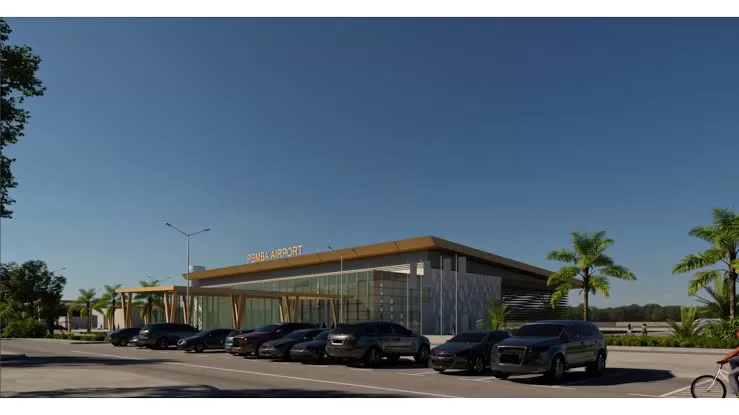
    Pemba International Airport.
    After years of delays, the Revolutionary Government of Zanzibar (SMZ) has officially handed over the construction site for the Pemba International Airport.

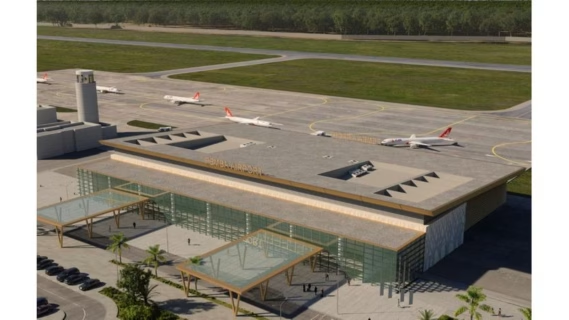
    The new airport will feature a modern passenger terminal and a 2,510-metre runway. It will also include facilities capable of accommodating airlines such as FlyDubai, Oman Air, and Airbus fleets. This will enable direct international flights. Permanent Secretary Dr Habiba Hassan Omar said 1,011 residents had been compensated Sh15.1 billion to clear the way. Only two are awaiting final payments. Funding is being provided through the UK’s United Kingdom Finance (UKEF), Deutsche Bank, and CitibankPropav Infrastructure CEO Cristiano Becuer said the project would be a game-changer for Pemba.

    May 20, 2025: The Government of Zanzibar has officially kicked off the long-awaited Pemba Airport Construction Project. This undertaking is a key infrastructure project that is expected to generally unlock the island’s economic potential.

    Upon completion, the Pemba Airport will allow direct landing of large aircraft on the island. This will therefore eliminate the current need for passengers to land land in Unguja and thereafter get transferred via smaller planes and boats.

    Also read: Zanzibar Signs $428 million Deal to Expand Pemba Airport

    Pemba Airport Construction Project Factsheet

    Runway extension and widening: The existing runway, currently 500 meters long and 15 meters wide, will be extended to 2,510 meters long and 45 meters wide to accommodate Code C aircraft (such as the Boeing 737-800) and larger.

    New passenger terminal: The existing terminal will be demolished and replaced with a new, modern passenger terminal. Initial designs indicate a terminal building in an area of 14,000 square meters. The new airport is projected to increase passenger handling capacity from the current 110,000 annually to 750,000 passengers per year.

    Expanded apron: An expanded apron will be constructed.

    Supporting infrastructure: This includes:

    • Runway end taxiway loops.
    • New aircraft rescue and firefighting facility.
    • Electrical and airfield lighting substations.
    • Air traffic control tower.
    • Ancillary buildings (sewage treatment plant and utilities buildings).
    • New access roads.

    Project cost: approximately €170 million

    Funding: The project is financed through a loan facility from UK Export Finance (UKEF).

    Contractor: Propav Infrastructures (Brazil-based).

    Project timeline:

    • January 4, 2023: Contract signed between the Ministry of Works, Communications and Transport (Zanzibar) and Propav Infrastructures.
    • November 2024: Groundwork for the project began.
    • End of 2026 (projected): Expected completion of the airport development.

    This development was confirmed by the Deputy Minister for Works, Communications and Transport, Mr Nadir Abdulatif on Tuesday, May 20, 2025 at a parliamentary session. Also, he revealed that the groundwork for the project commenced in November 2024. The contractor is currently winding up the establishment of an operational base to facilitate arrival of construction equipment.

    Also read: Pemba Airport to undergo major upgrade

    Supervisor of the Pemba Airport Construction Project

    The airport construction project is being supervised by Dar al Handasah Consultants (Shair and Partners) which is an Engineering company that is recognised globally.

    In response to a question from Women’s Representative Ms. Chumu Kombo Khamis regarding the commitment of Tanzania’s government to infrastructure development on Pemba, Mr Nadir Abdulatif reaffirmed the strategic focus of the administration on modernizing the aviation facilities of Pemba Island.

    Furthermore, he noted that the signing of the contract of the project was done on January 4, 2023 between the Ministry and Brazil-based Propav Infrastructures. Also, the signing ceremony was conducted at Zanzibar State House in the presence of President Dr Hussein Mwinyi.

    Scope of the Project

    The project will involve a major upgrade of the existing airport. Additionally, there will be the extension of the runway and construction of a new passenger terminal. Lastly, there will be installation of supporting infrastructure that will accommodate Code C aircraft like Boeing 737-800.

    The airport construction project is being funded through a loan facility from UK Export Finance (UKEF). It is expected to cost €170 million.

    Also read: Dodoma’s $329 Million Msalato International Airport 85% Complete

    Challenges Facing the Project

    However, the project was initially faced with a number of setbacks due to a legal dispute between Propav and its Tanzanian partner Mecco. Furthermore, the dispute resulted to the stalling of the project’s progress and resulted to temporary court injections. Zanzibar High Court intervened the dispute in January 2024, suspending all operations pending resolution.

    Fortunately, this matter was later resolved amicably, with both sides reaching an out-of-court agreement on April 18, 2024. This paved for the project allowing Propav to proceed as the official sole contractor.

    Lastly, with the construction works on the airport now underway, the upgraded airport will significantly boost tourism, trade, and socio-economic growth on Pemba Island.


  • Inside the $800M Overhaul of the US Open Campus: Arthur Ashe Stadium at the Core

    Inside the $800M Overhaul of the US Open Campus: Arthur Ashe Stadium at the Core

    In May, The U.S. Tennis Association (USTA) announced an $800 million overhaul of the US Open campus at the Billie Jean King National Tennis Center, with a comprehensive modernization of Arthur Ashe Stadium serving as the project’s centerpiece. USTA leadership called it the largest single investment in the event’s history, emphasizing that the multi-year transformation will elevate the experience for fans, players, and partners alike. Now that the 2025 US Open has concluded, all eyes are on the project. The men’s singles final took place on Sunday, September 7, 2025, with Carlos Alcaraz defeating Jannik Sinner. The privately funded project will be executed in three phases and is scheduled for completion ahead of the 2027 U.S. Open. It includes the construction of a new $250 million Player Performance Center and several facility upgrades across the campus.

    Other than tennis, the NFL is also in the forefront in revamping its stadiums as the Buffalo Bills’ attain a 75% completion status on the New Highmark stadium. The stadium continues to take shape in Orchard Park and is dubbed the largest construction project in West New York history. Conversely, additional plans are coming to fruition behind the scenes. This was unveiled during the Erie County stadium corporation director’s meeting earlier this week. The aim of the meeting was to take a more keen scope on the every construction component of the stadium.

    Arthur Ashe Stadium Upgrades

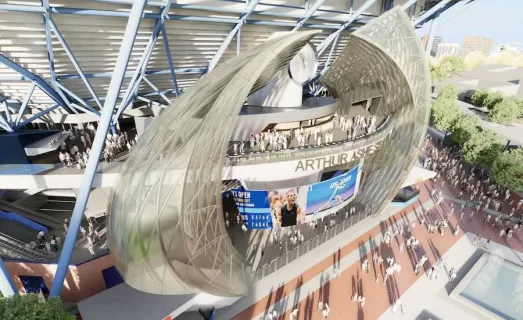
    Arthur Ashe Stadium will see the most visible changes. This being the centerpiece of the announced overhaul of US Open Campus, the plans call for a brand-new Grand Entrance on the east side, expanded concourses, increased courtside seating, and luxury suites. The promenade and loge levels will be widened by approximately 40%, improving circulation and creating space for new shops, concessions, and restrooms.

    About 2,000 new courtside seats will be added, increasing that level from 3,000 to 5,000. Two new tiers of luxury suites will be built above the current seating. The stadium will also introduce eight new in-stadium clubs, including lounges and premium dining options across multiple levels.

    Architect Daniel Libeskind is designing the new entrance and plaza. The upgrades aim to improve accessibility and enhance the fan experience, while maintaining the stadium’s standing as the largest tennis venue in the world.

    Player Performance Center and Campus Enhancements

    A key component of the project is the new two-story Player Performance Center (PPC), to be constructed above a new parking garage in Lot A. Designed to support the nearly 2,800 players and their teams who attend annually, the PPC will offer state-of-the-art amenities, including indoor and outdoor practice courts, turf and track training areas, and warmup courts.

    The PPC will also house redesigned locker rooms, athlete lounges, dining halls, and a players-only café and courtyard. Its goal is to provide a world-class preparation and recovery space for top-level tennis competition.

    Additional improvements around the site include practice court upgrades, expanded parking, and better public spaces throughout the grounds.

    USTA’s US Open campus overhaul: Construction timeline and development team

    Construction will occur in three phases, deliberately scheduled to avoid interrupting the 2025 (now concluded) and 2026 U.S. Open tournaments.

    Phase 1 (pre-2025 Open): Foundation work under Ashe Stadium and construction of the first levels of the PPC. Structural work began as early as October 2024, laying the groundwork for the upcoming phases.

    Phase 2 (post-2025): Replacement of Ashe’s courtside seating, installation of suite levels, and further PPC construction.

    And Phase 3 (post-2026): Completion of the Grand Entrance, expansion of concourses, new escalators and elevators, and final PPC interiors.

    The lead architect is Rossetti, joined by Daniel Libeskind and Garrett Singer. The design-build team includes AECOM/Tishman, WSP Group, and ME Engineers.

    Funding and Impact

    The USTA is funding the entire $800 million project without public money. Officials anticipate hundreds of construction jobs and long-term economic benefits to the local Queens community. The U.S. Open already generates over $1 billion in annual economic activity for New York. The redevelopment aims to ensure the venue remains a premier destination for global tennis while supporting future generations of players and fans.

    Arthur Ashe Stadium, opened in 1997 and updated with a retractable roof in 2016, holds over 23,000 spectators and hosts the U.S. Open finals each year. This overhaul will secure its legacy for decades to come.

    The US Open isn’t the only venue undergoing a dramatic reinvention. While the USTA moves ahead with its $800 million transformation of the Billie Jean King National Tennis Center—adding new amenities, upgraded facilities, and enhanced fan spaces—similar large-scale changes are happening far beyond New York. In Reno, the Grand Sierra Resort is set break ground on a 10,000-set GSR Arena,  the Grand Sierra Resort expansion that will introduce a not just new arena, it will include a new fan plaza, and a fully reimagined campus designed to anchor the region’s entertainment scene.

    Read also: New Highmark Stadium Project a heavy burden on taxpayers that keeps rising

    USTA Launches $800M Overhaul of US Open Campus, Centered on Arthur Ashe Stadium
    USTA Launches $800M Overhaul of US Open Campus, Centered on Arthur Ashe Stadium

    USTA US Open Campus overhaul: Project Factsheet

    Project Overview

    Investment: $800 million private funding

    Timeline: Completion by 2027 US Open

    Location: Billie Jean King National Tennis Center, Queens, NY

    Scope: Largest single investment in US Open history

    Key Components

    Arthur Ashe Stadium Modernization:

    New Grand Entrance on east side (designed by Daniel Libeskind)

    Expanded concourses (40% wider promenade and loge levels)

    Increased courtside seating (3,000 → 5,000 seats)

    New luxury suite tiers

    Eight new in-stadium clubs and premium dining options

    Player Performance Center:

    $250 million two-story facility

    Built above new parking garage in Lot A

    Indoor/outdoor practice courts

    Turf and track training areas

    Redesigned locker rooms and athlete lounges

    Players-only café and courtyard

    US Open Campus overhaul: Additional Campus Enhancements

    Practice court upgrades

    Expanded parking facilities

    Improved public spaces

    Development Team

    Lead Architect: Rossetti

    Design Partners: Daniel Libeskind, Garrett Singer

    Construction: AECOM/Tishman, WSP Group, ME Engineers

    Read also: Cleveland Browns Brook Park Domed Stadium To Proceed Without County Support

  • 600MW Solar Power facility for Project Pyramid, Google’s $4 Billion Hyperscale Data Center in Arkansas

    600MW Solar Power facility for Project Pyramid, Google’s $4 Billion Hyperscale Data Center in Arkansas

    Update 4th October 2025 – The Arkansas Public Service Commission (APSC) has given the green light to Entergy’s plan for a 600-MW solar power facility that will supply electricity to Google’s upcoming $4 billion data center complex in West Memphis. Branded as “Project Pyramid,” the approval also covers a 350-MW battery storage system and supporting transmission infrastructure. In our earlier report in May (see below) Google unveieled its plans for the Data Center campus and this latest report highlights its focus on ensuring adequate energy provision. The investment is a clear win for Arkansas in its foray to attract data center development investment currently being hotly contested for by everal states in the US.

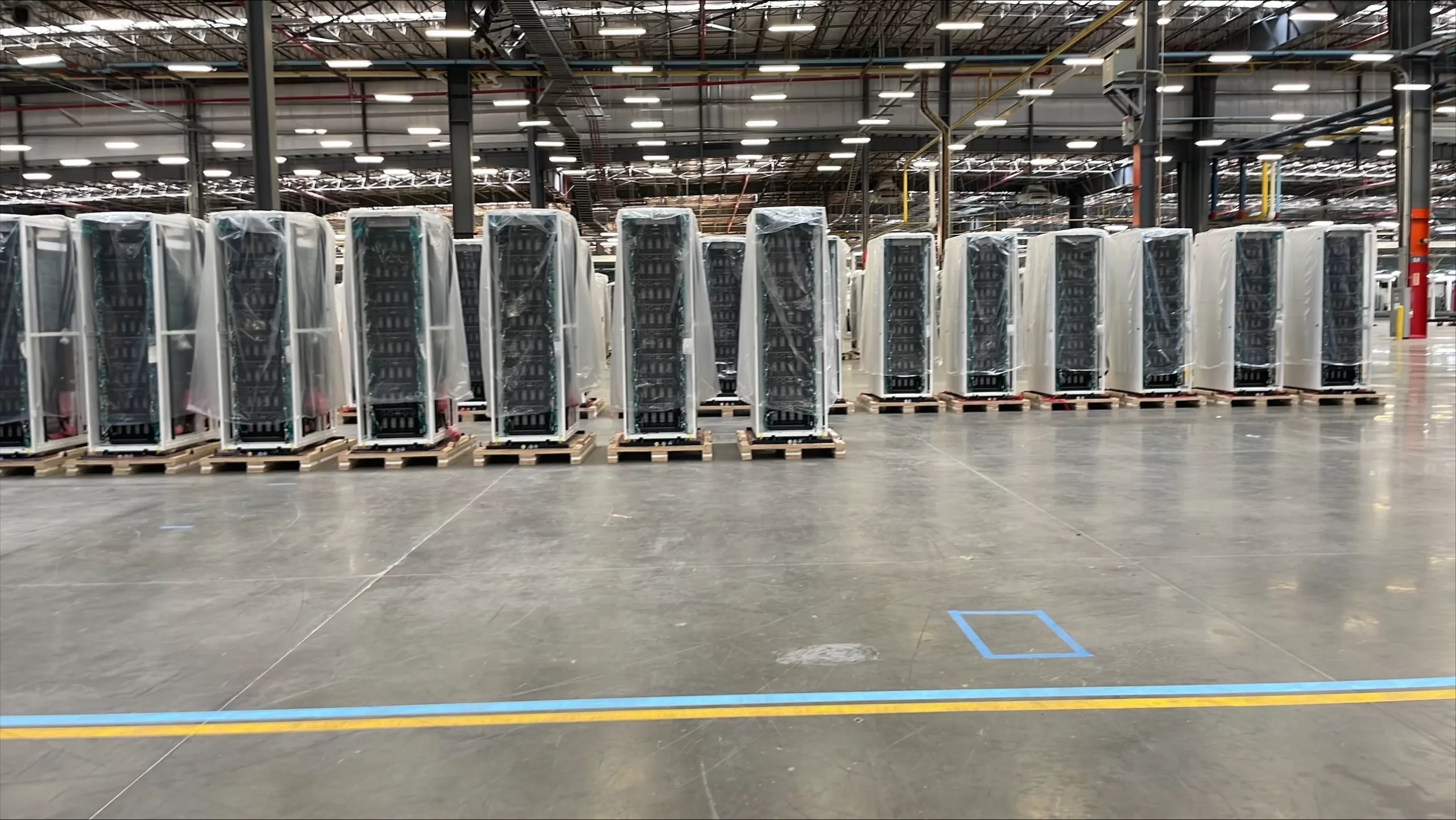
    Spanning nearly 1,200 acres, the development will house five data centers along with office space. Google noted that the campus will be equipped with cloud and AI infrastructure, as well as initiatives designed to strengthen local energy resilience.

    In addition to the solar project, Google intends to adopt demand-response strategies aimed at curbing energy consumption during peak times. The company will collaborate with Entergy to roll out these programs. Google only recently began experimenting with demand-response for its data centers. In August, it announced agreements with Indiana Michigan Power and the Tennessee Valley Authority that marked the first time Google used machine-learning workloads as part of demand-response efforts.

    Google has now formally confirmed moving forward with “Project Pyramid

    Updated September 8th 2025: Google has now formally confirmed moving forward with “Project Pyramid,” a $4 billion hyperscale data center on a 580-acre site in West Memphis, Arkansas. It is part of a larger 1,200-acre land acquisition made by its affiliate, Groot LLC, in late 2024. Recent filings with the Arkansas Public Service Commission reveal that Google is seeking a special rate contract through Entergy Arkansas, which includes innovative “load flexibility” features to dynamically adjust energy consumption during peak grid demand. This approach is designed to enhance grid stability while supporting sustainable operations.

    The agreement is scheduled for review by December 4, 2025. West Memphis Mayor Marco McClendon has characterized the project as “the biggest investment in Arkansas history.” They project up to 300 permanent jobs and an estimated 5,000-plus construction jobs, with property tax revenues potentially generating roughly $120 million for the local school system. This update adds significant operational and economic dimensions beyond earlier coverage, highlighting the project’s scale, energy innovation, and community impact, and comes as OpenAI explores building a 1 GW data center in Indiana as part of its Stargate AI expansion.

    Google Plans $4 Billion Data Center Campus in West Memphis, Arkansas

    Published May 20th 2025: Google has unveiled plans to construct a $4 billion data center campus in West Memphis, Arkansas, marking one of the tech giant’s most significant infrastructure investments in the southern United States.

    The proposed development, known as “Project Pyramid,” will span approximately 1,178 acres along Bollinger Road in Crittenden County. It is located just south of a Coca-Cola Consolidated bottling plant. The campus is set to feature five large-scale data center buildings and an on-site substation. Additionally, it will occupy about 580 acres of the site. Entergy Arkansas will supply power to the facility, ensuring robust energy infrastructure to support the campus’s operations. Economic Impact and Community Engagement

    West Memphis Mayor Marco McClendon expressed enthusiasm about the project, stating, “We’re excited to be working with a Fortune 100 company on a project that will bring high-paying jobs, cutting-edge infrastructure, and long-term growth to West Memphis.” The city council recently approved several agreements with Groot LLC, including a $10 billion payment-in-lieu-of-taxes (PILOT) arrangement. What’s more, it highlights the city’s commitment to facilitating this monumental project.

    Also Read Microsoft forced to Delay Major US$1 billion Data Center Expansion in Ohio

    Environmental Considerations and Planning

    Groot LLC has submitted plans for the data center campus to the U.S. Army Corps of Engineers for environmental approval, demonstrating a commitment to sustainable development practices. The project’s location and design have been carefully considered to minimize environmental impact while maximizing technological efficiency.

    Also Read Data center construction boom 

    Conclusion

    Google’s investment in West Memphis aligns with its broader strategy to expand its data center footprint across the United States, ensuring enhanced services and infrastructure to meet the growing demands of its users. As the project progresses, it is anticipated to bring transformative economic and technological advancements to West Memphis. Further, this marks a new era of growth and innovation for the city and its residents.

    Also Read Former Homer City Plant to Become a $10 Billion AI Data Center Campus

    Project Overview: West Memphis Data Center Campus

    Location: West Memphis, Arkansas, situated on a 1,178-acre site along Bollinger Road in Crittenden County, south of a Coca-Cola Consolidated bottling plant.

    Project Name: “Project Pyramid”

    Developer: Groot LLC, an entity reportedly affiliated with Google, though the company has not officially confirmed this association.
    Reddit

    Estimated Investment: Approximately $4 billion, encompassing land acquisition, infrastructure development, and construction costs.

    Campus Composition:

    Five large-scale data center buildings, On-site substation, Office facilities, Parking areas

    Land Utilization: Approximately 580 acres designated for the data center campus, remaining acreage allocated for infrastructure and support facilities

    Power Supply: Entergy Arkansas will provide electricity to the site, with initial plans for 10 MW of power, indicating potential for future expansion

  • Ethiopia Relaunches $445M Plan for Sub-Saharan Africa’s Tallest Tower

    Ethiopia Relaunches $445M Plan for Sub-Saharan Africa’s Tallest Tower

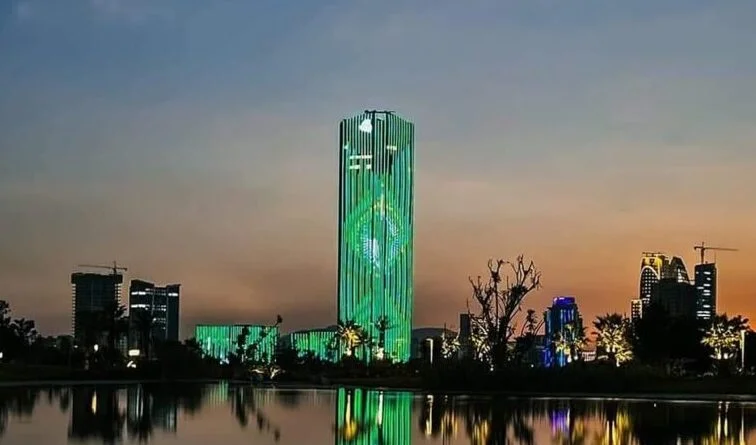
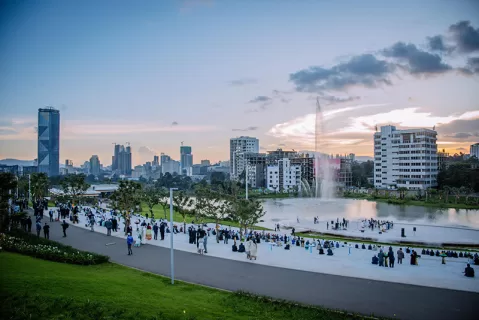
    Sub-Saharan Africa’s tallest tower is back on the development list of Ethiopia. The country has revived a plan to build a 62-storey headquarters for the Ethiopian Electric Power (EEP) in the capital city of Addis Ababa. Originally floated in 2023, the $445 million scheme had run into trouble on logistics and funding fronts. Now, EEP is inviting appropriate firms to bid for the monolithic project. The building will rise to 327.5 meters on Mexico Square, taller than the 209-meter Commercial Bank of Ethiopia building. It will occupy 20,792 square meters of land with a total built-up area of 197,800 square meters. Three basement floors for car parking and facilities systems are designed. On top of these, there will be 55 floors for EEP offices, sky gardens, and a roof-top restaurant. “We are calling on both international and domestic contractors with good financial stability,” an EEP spokesperson said. The rekindled dream of Sub-Saharan Africa’s Tallest Tower marks Ethiopia’s push toward economic advancement and modern infrastructure.

    Also read:

    Construction of Iconic Tower: Africa’s Tallest Skyscraper

    Significance of Sub-Saharan Africa’s Tallest Tower

    The Sub-Saharan Africa’s tallest tower is a dream initiative for Ethiopia’s infrastructure and global exposure. It is economic ambition and national pride. EEP’s selection of Dar Al-Handasah as design and supervision consultant attests to the international standard of the project. Interestingly, the competitive bidding puts emphasis on financial and technical ability. Interested firms should prove three prior projects worth at least $370 million each. They should also prove a minimum annual turnover of $230 million for five years. This ensures quality and accountability.

    Sub-Saharan Africa's Tallest Tower
    The Sub-Saharan Africa’s tallest tower is a dream initiative for Ethiopia’s infrastructure and global exposure.

    The tower will serve as the headquarters of EEP, with an improvement in energy sector coordination. It also provides space for business and tourism. When complete, the tower will be a symbol in Addis Ababa’s Financial District. The execution is scheduled with stringent deadlines and performance standards. Although concentrated in Ethiopia, the venture sets a precedent for modern tall building construction across the continent. As EEP announced, “This is more than a building. It’s a national milestone.”

    Also read:

    All to Know About the World’s Tallest Timber Tower: Set to Also be the Tallest Tower in Africa

    Fascinating facts about The Iconic Tower, the tallest building in Africa

  • All About the Paul and Diane Manning Institute of Biotechnology at Fontaine Research Park in Charlottesville, Virginia

    All About the Paul and Diane Manning Institute of Biotechnology at Fontaine Research Park in Charlottesville, Virginia

    Most recently, Skanska secured an additional $66 million contract for the Paul and Diane Manning Institute of Biotechnology in Virginia. Skanska USA, a construction engineering company based in the U.S., signed the contract in May 2025 and is responsible for construction management. UVA Health also received $25 million in estate gifts from a pair of anonymous donors to support the University of Virginia’s Paul and Diane Manning Institute of Biotechnology shortly after in June.

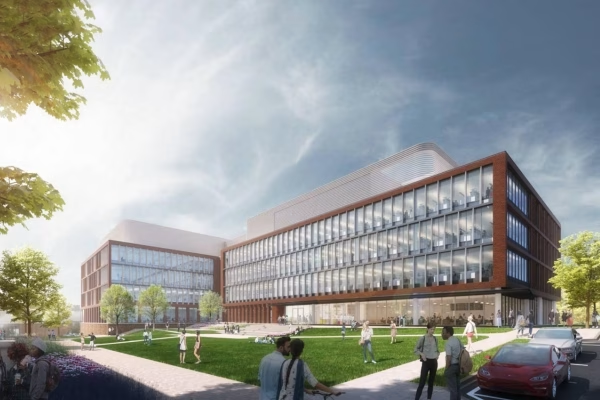
    The Paul and Diane Manning Institute of Biotechnology is set to become a transformative hub for biotechnology research and innovation in the state of Virginia. Located within Fontaine Research Park in Charlottesville, the institute will serve as a center for advanced medical research, translational science, and biotech-industry collaboration.

    This cutting-edge facility is being developed by the University of Virginia (UVA) with significant philanthropic and public funding support and is expected to attract global interest in the life sciences sector while boosting local economic development.

    Skanska is also spearheading the construction of a new transformative performing arts center in Virginia’s Longwood University after a recent $73 million contract award. Additionally, as part of its construction portfolio in the United States, the company is also targeting the completion of the University of North Texas (UNT) Denton Campus’ Science and Technology building by October 2026. Also to be opened by late this year in the university is the new $100 million STEM building at its Dallas Campus.

    About the Project

    The Manning Institute will be a five-story, approximately 354,000 square foot (33,000 square meters) building featuring:

    • Modular, multi-use laboratories
    • Core research facilities
    • Space for 100–150 researchers
    • Areas for biotech companies to co-locate
    • A café and conference center to also support collaboration within the research park
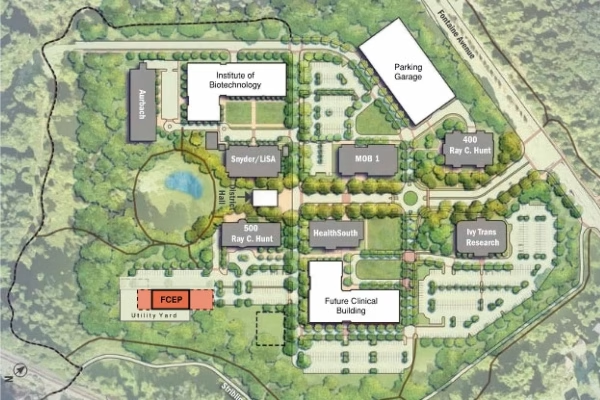
    Site-Plan-for-Fontaine-Research-Park
    The institute within the Fontaine Research Park is positioned between the Aurbach Medical Research Building and the Snyder Translational Research facility

    This first-of-its-kind translational research institute in Virginia will also focus on accelerating work in cell and gene therapy, nanotechnology, drug delivery, and other advanced treatments, bringing together high-tech research, manufacturing, and patient-care under one roof.

    Location

    The institute is replacing an existing parking lot within Fontaine Research Park, strategically positioned between the Aurbach Medical Research Building and the Snyder Translational Research facility. The site will include upgraded roadway infrastructure and a new parking garage, enhancing overall accessibility and functionality for the growing research hub.

    Timeline

    • Project Announcement: January 2023
    • Building Size Approval: May 2023
    • Groundbreaking Ceremony: December 2023
    • Construction Start: December 2023
    • Initial Occupancy: Late 2026
    • Full Completion: Q4 2027

    Funding Overview

    The project is backed by a significant investment package totaling over $491 million, including:

    • $100 million – Gift from Paul and Diane Manning
    • $50 million – Commonwealth of Virginia
    • $150 million – University of Virginia
    • $50 million – One-time state fund via the Virginia Innovation Partnership Authority
    • $70 million – Fontaine Central Energy Plant
    • $61 million – Parking Garage
    • $10 million – Roadway Infrastructure
    • $25 million – Anonymous Estate Gifts

    Also read: NASA Breaks Ground on New Causeway Bridge in Wallops Island, Virginia

    Project Team

    A wide range of expert firms and institutions are also involved in the planning, design, and execution of the Manning Institute.

    Key Players

    • Skanska – Construction Management (recently signed a $66M additional contract)
    • Faulconer Construction – General Contractor
    • Elkus Manfredi Architects – Lead Architectural Designer
    • CBRE – Owner’s Representative
    • Mikyoung Kim Design – Landscape Architecture
    • Ayers Saint Gross – Energy Plant Architect
    • BR+A Consulting Engineers, Hope Furrer Associates, Nitsch Engineering, Affiliated Engineers – Engineering Services
    • Atelier Ten – Sustainability Consultant
    • Vermeulens – Pre-construction Cost Consultant
    • Ratio Architects and Vanasse Hangen Brustlin Engineers (VHB) – Parking and Infrastructure Design

    Quick Facts

    • Name: Paul and Diane Manning Institute of Biotechnology
    • Location: Fontaine Research Park, Charlottesville, Virginia
    • Size: 354,000 sq ft (approx. 33,000 sq meters)
    • Stories: Five
    • Start of Construction: December 2023
    • Projected Completion: Q4 2027
    • Primary Focus: Translational biotechnology research
    • Estimated Total Cost: Over $491 million
    • Research Capacity: 100–150 researchers + biotech partners
    • Amenities: Café, conference center, core labs, shared R&D space

    The Paul and Diane Manning Institute of Biotechnology will become a vital resource in the advancement of life sciences in Virginia and beyond. Its collaborative design and state-of-the-art facilities will also play a pivotal role in developing next-generation medical treatments and attracting top talent to the region.

  • Is This the End of the Line for the Northern Lights Express Passenger Rail Project?

    Is This the End of the Line for the Northern Lights Express Passenger Rail Project?

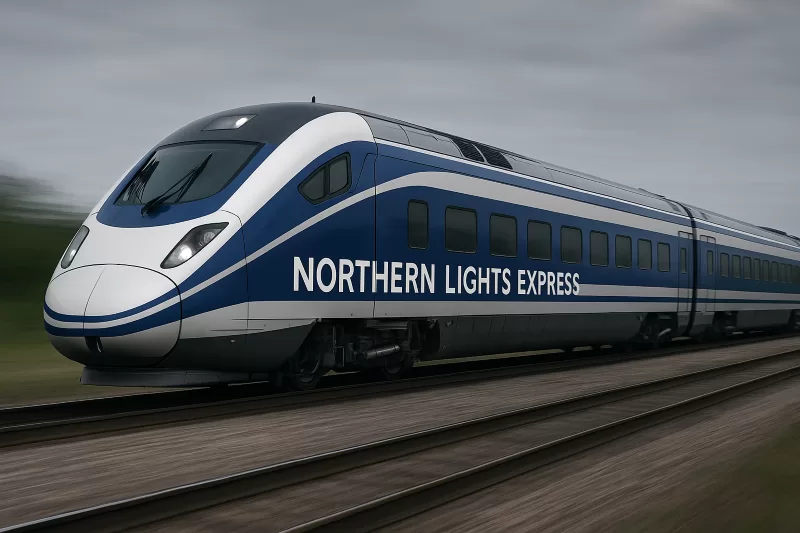
    The Northern Lights Express passenger rail project, a long-envisioned high-speed rail line between Minneapolis and Duluth, may have just hit a dead end.

    In a dramatic turn over the weekend, lawmakers at the Minnesota State Capitol voted to pull a significant portion of the project’s funding. The move comes as the 2025 legislative session wrapped up, and the decision could signal the final chapter for a rail line that had been years in the making.

    Both the Minnesota House and Senate voted to reallocate $77 million originally set aside for the NLX. Instead, the funds will now support unemployment insurance for seasonal education workers—a budget shift that passed with overwhelming bipartisan support: 131-0 in the House and 44-23 in the Senate.


    picture
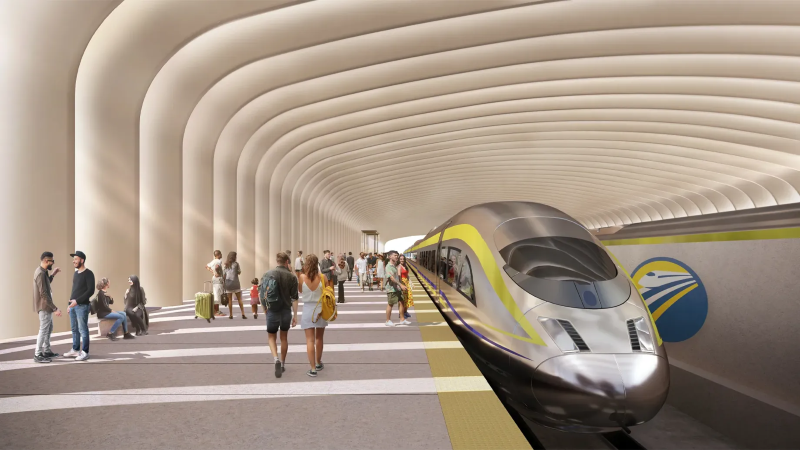
    California High-Speed Rail Authority Seeks Additional Funding for Construction of Merced-Bakersfield Rail Section

    Not enough funding for NLX

    That decision leaves the Northern Lights Express passenger rail project with just $108 million in state funding, which many believe isn’t enough to keep it on track. Republican Rep. Jon Koznick, chair of the House Transportation Committee, declared the project all but over.

    “…the Northern Lights Express train is effectively dead, and taxpayers are better off because of it,” Koznick said in a statement.

    The NLX was envisioned as a modern, faster alternative to driving along the I-35 corridor, offering four daily round-trips and stops in communities like Coon Rapids, Cambridge, and Hinckley. It was to run along approximately 152 miles of existing BNSF Railway tracks.

    A long history for the project

    A major milestone was reached in 2018 when the Federal Railroad Administration approved the project’s environmental review and service development plan. In 2023, the Minnesota Legislature allocated $194.7 million to serve as the required 20% local match for federal grants, which were expected to cover the remaining 80% of the costs.

    Now, with a large chunk of that local match redirected and legislative support evaporating, the future of the Northern Lights Express passenger rail project is uncertain at best.

    The measure is now headed to Governor Tim Walz’s desk. If he signs off, the once-promising rail connection between the Twin Cities and Duluth may officially reach the end of the line.