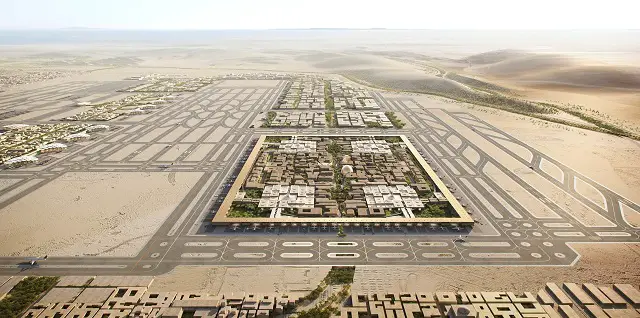
The world’s largest airport is headed towards a new landmark with a massive construction package now up for tender. The King Salman International Airport Development Company (KSIADC) and its sponsor Saudi Arabia’s Public Investment Fund have extended the bid submission deadline for design-and-build contracts to 23 May. Originally, the deadline was set for 12 May, and this extension provides companies with additional time to refine their bids.
The agreement includes the development of the airport’s third runway and associated taxiways. The notice to bid was first advertised last February, sources say. This is a highlight in upgrading the present King Khalid International Airport to the world’s largest airport. Prequalification forms for this agreement were received on 18 January, following the collection of expressions of interest last December. Prequalified firms earlier this month, KSIADC prequalified firms for various specialist and core construction roles throughout the project, including modular works, ESG services, and health and safety.
Recent Scope of Implementation on the King Salman International Airport
The scope of implementation on the project encompasses eight major assets. These range from an iconic terminal to cargo buildings and real estate plots. Notably, UK’s Mace has been named delivery partner, with Saudi firm Nera handling airspace design. These reports indicate the mammoth and intimidating nature of the King Salman International Airport project as it continues to attract top international and local talent.
The world’s largest airport is headed towards a new landmark with a massive construction package now up for tender.
The development of this airport is the centerpiece of Saudi Arabia’s aviation project. It also contributes to achieving the nation’s Vision 2030 of becoming a global transport and logistics hub. “The third runway will be used to accommodate future expansion of air traffic,” a KSIADC representative said. Moreover, the selection of globally acclaimed firms like Foster + Partners and Jacobs reflects commitment to excellence and innovation.
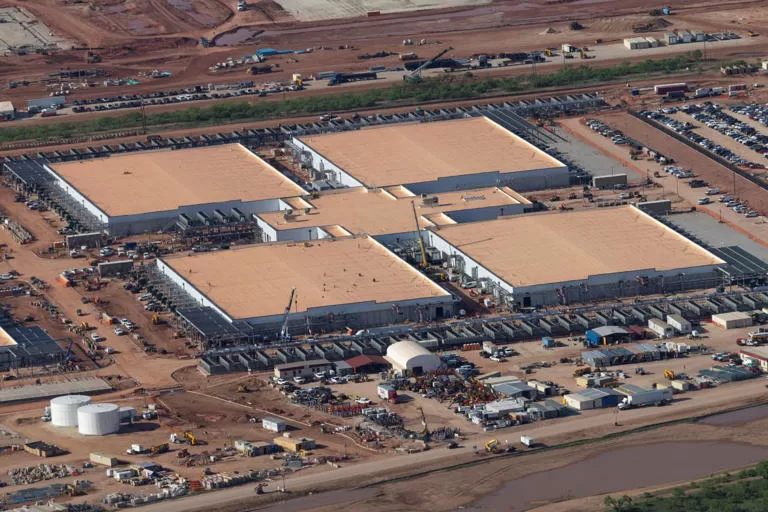
The Abilene AI Data Center Campus Project is a large-scale artificial intelligence data infrastructure development planned in Abilene, Texas. In May 2025, Crusoe secured an additional US$11.6 billion in debt and equity financing to accelerate construction of the campus, bringing total committed capital for the project to approximately US$15 billion. The Abilene site is designated as the flagship location of the Stargate program involving OpenAI, Oracle, and SoftBank.
Originally announced with two buildings, the project has been expanded to include eight high-performance data halls. Each data hall is planned to accommodate up to 50,000 NVIDIA GB200 (Blackwell) GPU server nodes intended for large-scale AI model training. The campus forms a central component of the Stargate initiative and is designed to support advanced AI computing requirements.
The development is located on the Lancium Clean Campus south of Abilene and covers approximately 800 acres. The site is planned to support an electrical capacity of up to 1.2 gigawatts. Other than the Crusoe AI Data Center Campus in Abilene, the Microsoft data center in Grand Rapids is also making commendable strides.
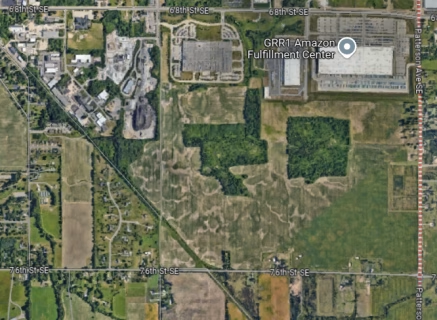
Microsoft has confirmed it is planning to develop a data center in Grand Rapids, Michigan. Microsoft has submitted a rezoning request for land at 7174 Patterson Avenue in Gaines Township. The land was purchased by Microsoft in October 2024. The rezoning applies to a 40.5-acre parcel, part of the 316 acres owned by Microsoft.
Furthermore, it seeks to change its designation from large-scale planned unit development to light industrial to match the southern parcel. Both will then be used for data center development. The application is expected to be discussed at a meeting on December 18. “Project plans, including construction timelines, are yet to be finalized. We continue to work with our local partners and are committed to sharing information when we have it,” noted Microsoft spokesperson.
Crusoe AI Data Center Campus in Abilene: Project Overview
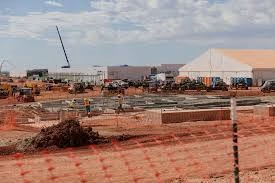
Phase 1 (Initial Build): Two custom-designed data center buildings totaling approximately 980,000 square feet and 200 MW. Starting from undeveloped land in June 2024, the first 206MW phase is positioned for activation by mid-2025. This unprecedented pace for a greenfield project of this scale stems from Crusoe’s integrated manufacturing capabilities and a workforce of nearly 3,000 personnel operating on-site each day.
DevelopAbilene projects that just the first phase (Buildings 1 and 2) will generate approximately $1 billion in economic impact for Abilene across two decades, while the complete project will establish more than 400 permanent American AI positions.
Phase 2 (Newly Funded): Six additional buildings adding. Full buildout is projected for mid-2026.
Cooling Infrastructure: Direct-to-chip liquid cooling with closed-loop, zero-water-evaporation systems.
Per Building Capacity: Up to 50,000 NVIDIA Blackwell GPUs.
Recent $11.6 billion infusion
The recent $11.6 billion infusion represents part of a broader capital strategy that a multibillion-dollar joint venture between Crusoe, Blue Owl Capital, and Primary Digital Infrastructure backs. Blue Owl—whose Real Assets platform manages approximately $192 billion in AUM—is a lead investor, alongside Primary Digital, which focuses on data center real estate. In October 2024, the group announced a $3.4 billion build-to-suit agreement for Phase 1.
Earlier construction financing included a reported $2.3 billion loan from JPMorgan, part of a targeted $3.5 billion investment in the initial development.
While the data center is being built to support OpenAI’s computing needs, Crusoe’s direct customer is Oracle. As Crusoe CEO Chase Lochmiller clarified: “Our customer is Oracle. OpenAI is Oracle’s customer.” Oracle is reportedly under a long-term lease agreement—believed to span 15 years—for the facility’s initial capacity.
Securing sustainable and abundant power supply served as a foundational driver for this project’s development.
OpenAI, Oracle, and SoftBank on September 24, 2025 announced the expansion of the Stargate initiative with five new AI data center sites across the United States. The additions bring the program’s planned capacity to nearly seven gigawatts and more than $400 billion in investment, putting Stargate ahead of schedule to secure its full $500 billion, 10-gigawatt commitment by the end of 2025. The $500 billion Stargate commitment was first announced in January at the White House alongside President Trump.
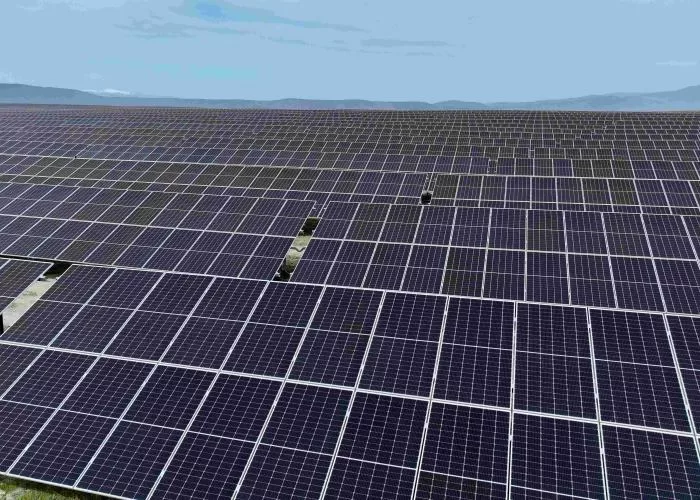
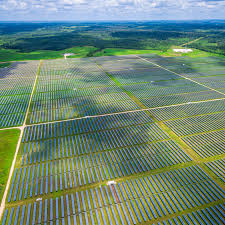
Boralex Inc. is set to significantly boost clean energy development in New York with two major solar energy projects totaling 450 megawatts (MW). The company has signed a Renewable Energy Standard Agreement (RESA) with the New York State Energy Research and Development Authority (NYSERDA) to procure Tier-1 Renewable Energy Certificates (RECs) from its planned solar facilities.
These New York solar projects totaling 450MW are a vital part of the state’s transition toward clean, renewable energy.
Fort Covington and Two Rivers Solar Projects Announced
The new solar developments, named the Fort Covington Solar Project and the Two Rivers Solar Project, will be located in Franklin and St. Lawrence Counties, respectively. Together, they represent a significant step forward in Boralex’s expansion into the U.S. renewable energy market.
Fort Covington Solar Project (250 MW)
Located in the Town of Fort Covington, Franklin County.
Two Rivers Solar Project (200 MW)
Situated in the Towns of Brasher and Massena, St. Lawrence County.
Both projects are currently undergoing the permitting process with New York’s Office of Renewable Energy Siting and Electric Transmission.
What is a Renewable Energy Standard Agreement (RESA)?
A Renewable Energy Standard Agreement is a long-term contract between NYSERDA and renewable energy developers to purchase Tier-1 Renewable Energy Certificates (RECs). Each REC represents one megawatt-hour of renewable electricity delivered to the grid.
These agreements provide:
Stable revenue streams for developers like Boralex, supporting financing and construction.
Support for New York’s clean energy goals, including 70% renewable electricity by 2030 and 100% zero-emissions electricity by 2040.
By entering into a RESA, Boralex’s New York solar projects totaling 450MW are financially backed and integrated into the state’s official clean energy framework.
Construction of both projects is expected to begin in 2026, with commercial operation slated for 2028.
The projects will:
Generate electricity for approximately 105,000 homes annually.
Create 300 to 400 construction jobs.
Offer long-term operations and maintenance roles.
This will strengthen local economies in upstate New York while contributing to the state’s climate resilience.
Environmental Benefits and Climate Impact
These solar projects directly support New York’s Climate Leadership and Community Protection Act (CLCPA), reducing the state’s dependence on fossil fuels and cutting greenhouse gas emissions. They also help diversify New York’s renewable energy portfolio with large-scale, utility-grade solar installations.
A Milestone for Boralex and New York
The RESA agreement is a key milestone for Boralex as it expands its footprint in the U.S. renewable energy sector. It also underscores New York’s leadership in clean energy innovation, policy, and investment.
With the development of these New York solar projects totaling 450MW, the state is well-positioned to reach its ambitious renewable energy targets.
Stay tuned for updates from Boralex on project milestones, permitting progress, and community engagement opportunities as these transformative solar projects move forward.
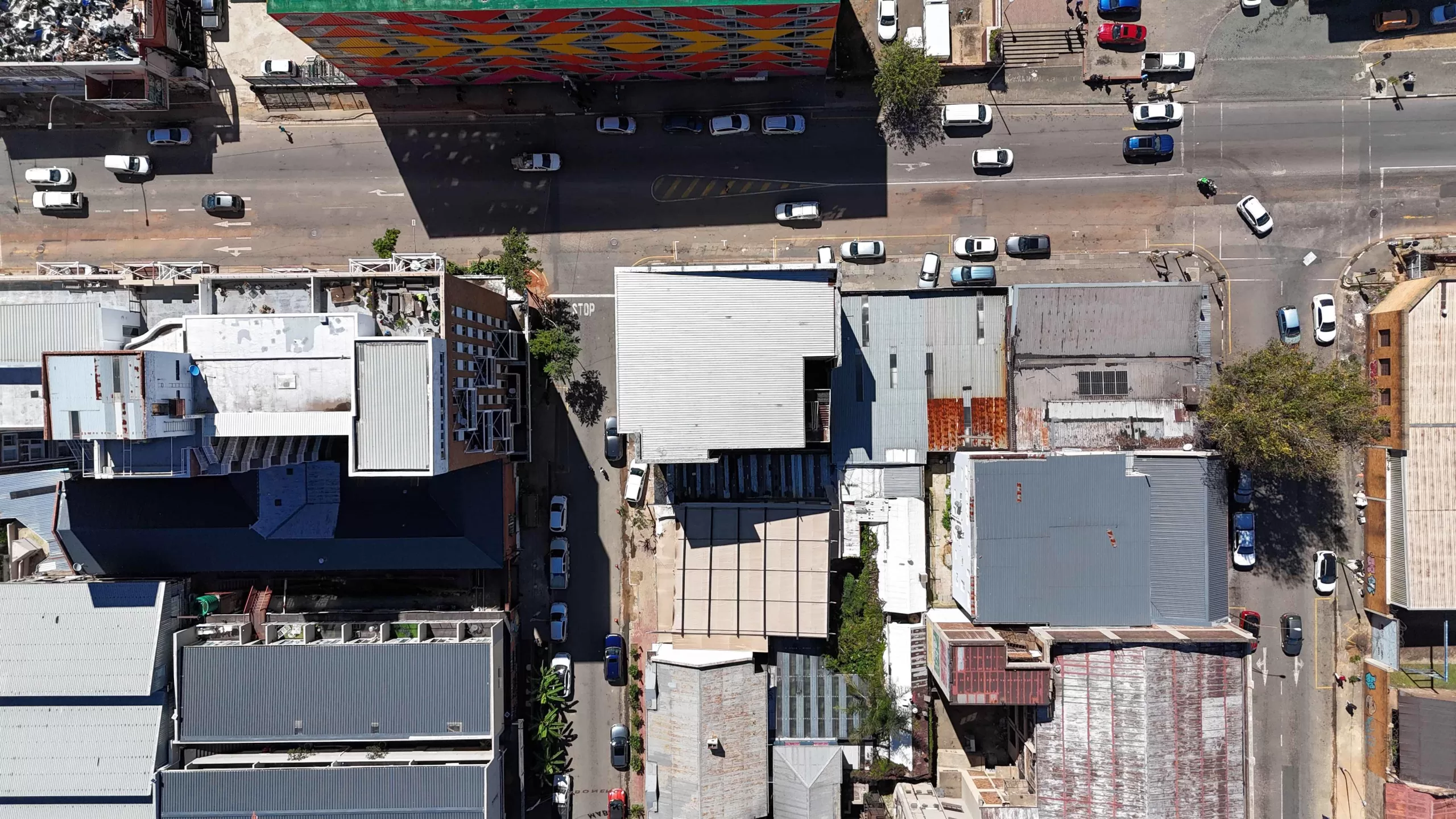
The recent launch of the Inner-City Revitalisation Plan by the City of Johannesburg will see South Africa’s economic hub undergoing a much-needed transformational shift. This bodes well for city residents and offers significant opportunities for urban property investors.
This form of urban decline is in no way limited to South Africa, with countries across the world experiencing an exodus from busy city centres as a result of improved transport, resulting in declining infrastructure. However, the stark reality of Joburg’s inner city was brought into focus during the 2023 fire that led to the death of 76 people in one of the city’s many hijacked buildings.
Revitalisation at key moment
This Inner-City Revitalisation Plan, approved by the Johannesburg Mayoral Committee in March 2025, aims to rehabilitate court-declared uninhabitable structures into functional commercial and residential properties, thereby unlocking latent value in the central business district (CBD).
“The announcement of this plan aligns with South Africa’s hosting of the G20 Summit and is part of a broader effort to position Johannesburg as a competitive venue for international events, while also tackling the socio-economic challenges posed by urban migration and deteriorating infrastructure,” says Ricardo Silva, Managing Director for Galetti Auction.
“The renewed sense of optimism in the country’s leadership has seen a growth in investor confidence in the commercial real estate sector. Extending from logistics to mixed-use developments, the market is responding positively to strategic government efforts. We’re seeing strong demand for both tenanted and vacant assets that can be repositioned.”
Spearheaded by the Strategic Projects Unit, the revitalisation plan focuses on public-private collaboration, with the City of Johannesburg noting that key buildings have already been identified and scheduled for redevelopment or demolition, including the Vannin, M.O.T.H and Delvers Buildings.
Silva says investors are honing in on strategic urban and peri-urban locations like Johannesburg CBD, Germiston, Maboneng and Melrose for several key reasons:
Diverse Asset Types: Industrial, office, retail, residential and development land.
Flexible Entry Points: From sectional title units to large-scale industrial plays.
Attractive Yields: Great returns with rising rental demand.
Accessibility & Affordability: Industrial zones offer value and proximity to major transport routes.
Key Properties Going Under the Hammer
Silva says there are already significant opportunities for property investors with several properties coming onto the market: “We have a range of properties going under the hammer at our upcoming auction, providing unique investment opportunities in Germiston, Maboneng, Bellevue and Melrose North.”
The Fair Price Industrial Facility in Germiston’s Elandshaven is an expansive 33,000 m² big-box industrial site with partial tenancy. In addition to its prime location with highway visibility, the site offers investors excellent logistics and a strong surrounding tenant mix.
“Houtbaai Street in Germiston also has two investment properties – one industrial-zoned property, which is fully let with an efficient layout that allows for truck access and is completely investment ready,” continues Silva. “The second property, which is vacant, is ideal for owner-occupiers or strategic redevelopment within the logistics corridor.”
For those seeking real estate investment in the heart of Joburg’s cultural hub, Maboneng also has two valuable options.
“The first is Creative Urban Spaces in Market Street, a vacant office and retail space which is ideal for creative mixed-use conversion,” explains Silva. “There are also sectional-title offices with expansive balconies, well-suited to creative agencies, tech startups or boutique firms looking for a live-work-play environment located at Fox Street Studios.”
He said the convergence of strong policy direction, rising tenant demand, affordability and infrastructure upgrades makes this the perfect time for property investment in South Africa’s economic capital.
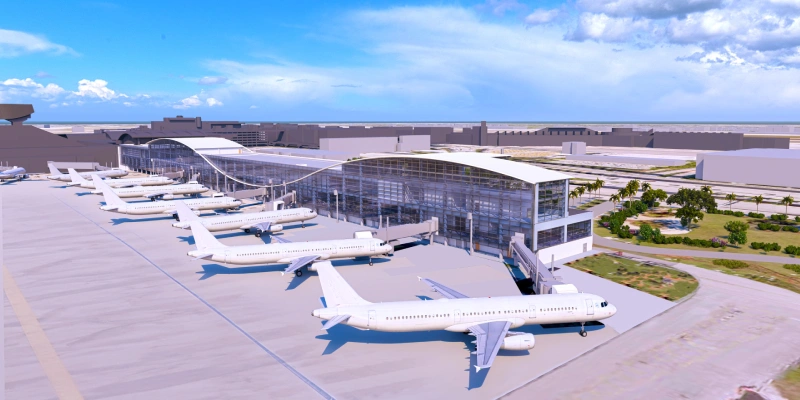
Miami International Airport has officially broken ground on Concourse K, its first terminal expansion since 2007. The project marks a major step in the airport’s $9 billion “Future-Ready Modernization in Action” initiative aimed at overhauling air travel infrastructure.
The $600.6 million project will transform the airport’s capabilities, delivering six new gates, an aircraft apron with a fuel hydrant system, and significant improvements to both ground operations and baggage handling. A new ground support equipment maintenance facility and two additional baggage make-up carousels are also part of the design. Importantly, upgrades will link the existing systems between the Central and South Terminals, boosting efficiency across the board.
MIA like many US airports underaking upgrades has reached its operational ceiling, having served 56 million passengers and moved over 3 million tons of cargo in 2024 alone. With projections estimating passenger volume could reach 77 million and cargo up to 5 million tons by 2040, this expansion is not only timely — it’s essential. The airport has one of the longest airports in the USA at a length of 3900 metres allwoing the largest aircraft int he world to land.
Airport Director Ralph Cutie and his team, backed by the Board of County Commissioners and numerous aviation partners, are spearheading what they describe as a “future-ready investment” aimed at building an airport that meets the evolving needs of the region and the globe. “This isn’t just about more gates — it’s about reimagining how our airport can serve as a powerful economic engine, global gateway, and symbol of progress for Miami-Dade,” Cutie said in a statement.
Who’s Leading the Build?
The design and construction work will be led by Perez & Perez Architects Planners, Inc., with Lemartec-NV2A JV, LLC named general contractor for the project. Targeting LEED Silver certification, the project places a strong emphasis on sustainability and modern design practices.
Concourse K construction will play a central role in enhancing MIA’s infrastructure, allowing for greater operational flexibility, smoother passenger experiences, and improved turnaround times for aircraft. The addition also reflects a broader strategic vision: positioning MIA not just to grow, but to lead among the world’s premier international airports.
A groundbreaking ceremony is scheduled for this summer, with full integration of the new concourse into airport operations expected by spring 2029.
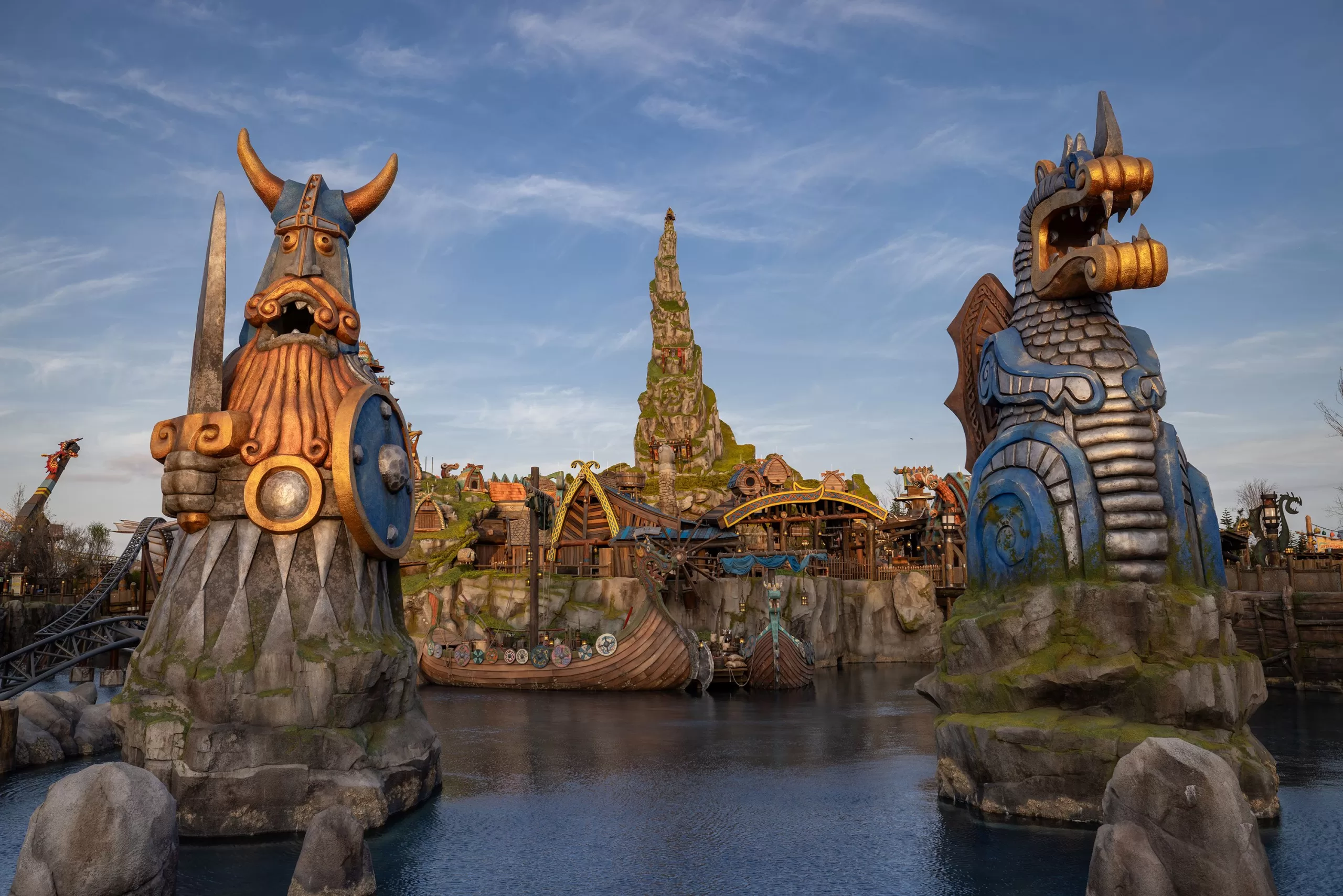
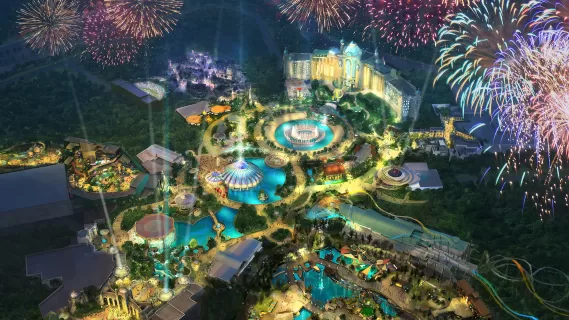
Universal Orlando’s Epic Universe theme park has been opened on May 22, ahead of Memorial Day weekend. It is the fourth park for Universal Orlando Resort in Florida and its largest development project ever. Epic Universe is located southwest of downtown Orlando and squarely the first large theme park to open in the state in over 25 years. Construction crews work around the clock to finish the five interactive worlds on schedule. The worlds are Celestial Park, Super Nintendo World, Isle of Berk, the Wizarding World of Harry Potter, and the Dark Universe. The worlds feature themed restaurants, attractions, and entertainment.
According to International Theme Park Services founder Dennis Speigel, “The park has the physical capacity to draw at least 8 million people.” Universal has never released official capacity figures, but Speigel estimates the park can hold as many as 50,000 people per day. Furthermore, Speigel estimates that the Epic Universe Theme Park cost approximately $7.7 billion to build.
The Significance of Universal Orlando’s Epic Universe Theme Park
The Epic Universe Theme Park is a major driver of Orlando tourism growth. Visit Orlando President and CEO Casandra Matej termed the park’s opening as an “important milestone” for the area. Orlando welcomed over 75 million visitors in 2024. The park is expected to contribute greatly to those numbers. The implementation of the park took at least 8 years as it involved numerous scopes of implementation. These include massive investment in infrastructure, ranging from roads to utility networks.
Universal Orlando’s Epic Universe theme park is scheduled to open on May 22, ahead of Memorial Day weekend.
The scale of the build-out is a reflection of Universal’s commitment to tourism in Florida over the long haul. As Speigel put it, “Is it going to put Disney out of business? Absolutely not. Is it going to put a chink in their armor? Yeah.” Industry observers expect no less than 6 million annual visitors with the possibility of more if economic conditions continue to be positive. Thus, the Epic Universe Theme Park not only adds to Universal’s visibility but also creates a new standard in theme park construction and design.
To provide the best experiences, we use technologies like cookies to store and/or access device information. Consenting to these technologies will allow us to process data such as browsing behavior or unique IDs on this site. Not consenting or withdrawing consent, may adversely affect certain features and functions.
Functional
Always active
The technical storage or access is strictly necessary for the legitimate purpose of enabling the use of a specific service explicitly requested by the subscriber or user, or for the sole purpose of carrying out the transmission of a communication over an electronic communications network.
Preferences
The technical storage or access is necessary for the legitimate purpose of storing preferences that are not requested by the subscriber or user.
Statistics
The technical storage or access that is used exclusively for statistical purposes.The technical storage or access that is used exclusively for anonymous statistical purposes. Without a subpoena, voluntary compliance on the part of your Internet Service Provider, or additional records from a third party, information stored or retrieved for this purpose alone cannot usually be used to identify you.
Marketing
The technical storage or access is required to create user profiles to send advertising, or to track the user on a website or across several websites for similar marketing purposes.
To provide the best experiences, we use technologies like cookies to store and/or access device information. Consenting to these technologies will allow us to process data such as browsing behavior or unique IDs on this site. Not consenting or withdrawing consent, may adversely affect certain features and functions.
Functional
Always active
The technical storage or access is strictly necessary for the legitimate purpose of enabling the use of a specific service explicitly requested by the subscriber or user, or for the sole purpose of carrying out the transmission of a communication over an electronic communications network.
Preferences
The technical storage or access is necessary for the legitimate purpose of storing preferences that are not requested by the subscriber or user.
Statistics
The technical storage or access that is used exclusively for statistical purposes.The technical storage or access that is used exclusively for anonymous statistical purposes. Without a subpoena, voluntary compliance on the part of your Internet Service Provider, or additional records from a third party, information stored or retrieved for this purpose alone cannot usually be used to identify you.
Marketing
The technical storage or access is required to create user profiles to send advertising, or to track the user on a website or across several websites for similar marketing purposes.