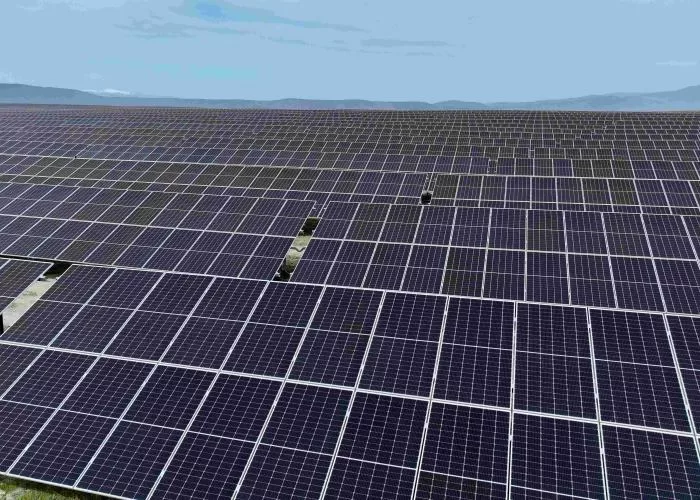
A public inquiry into the proposed Botley West Solar Farm began on Tuesday, launching a three-day series of open floor hearings in Oxford. The inquiry forms part of the Planning Inspectorate’s formal examination of the £800 million project, which has stirred both support and opposition since its announcement.
Located across 1,000 hectares (2,471 acres) of Oxfordshire countryside, the scheme would span land north of Woodstock, west of Kidlington, and west of Botley. The development’s vast scale has led it to be classified as a Nationally Significant Infrastructure Project (NSIP), meaning the application bypasses local councils and is handled directly by the government.
Background and Submission
Photovolt Development Partners (PVDP), the German-based developer, submitted the application to the Planning Inspectorate in November 2024 after two rounds of public consultation held since 2022. The proposal will now be examined over a six-month period before a recommendation is made to the Secretary of State.
The project aims to generate 840 megawatts (MW) of clean electricity, enough to power hundreds of thousands of homes, according to the developers.
While the project has been welcomed by advocates of renewable energy for its potential to cut carbon emissions and bolster energy security, critics have voiced strong concerns over the environmental impact on the region’s rural landscape and biodiversity.
Local campaigners and environmental groups are expected to raise these issues during the hearings. Many have argued the farm would industrialise Oxfordshire’s greenbelt and permanently alter its character.
Timeline and Next Steps
If approved, the Botley West Solar Farm could begin providing power to homes by the end of 2026. However, full connection to the National Grid, via a new substation near Farmoor reservoir, is not expected until autumn 2028 according to the Botley West Solar Farm Website.
Project Factsheet
Project Name: Botley West Solar Farm
Developer: Photovolt Development Partners (PVDP)
Estimated Cost: £800 million
Location: Near Woodstock, Kidlington, and Botley in Oxfordshire
Size: 1,000 hectares (2,471 acres)
Output: 840 megawatts (MW) of renewable energy
Grid Connection Point: New substation near Farmoor reservoir
Grid Connection Expected: Autumn 2028
Planning Status: Under examination by the Planning Inspectorate
Potential Operation Start: End of 2026 (partial supply)
Public Consultations: Held in 2022 and 2024
National Significance: Classified as an NSIP (Nationally Significant Infrastructure Project)
The inquiry’s findings will shape the Inspectorate’s recommendation, with a final decision to be made by the Secretary of State later this year.
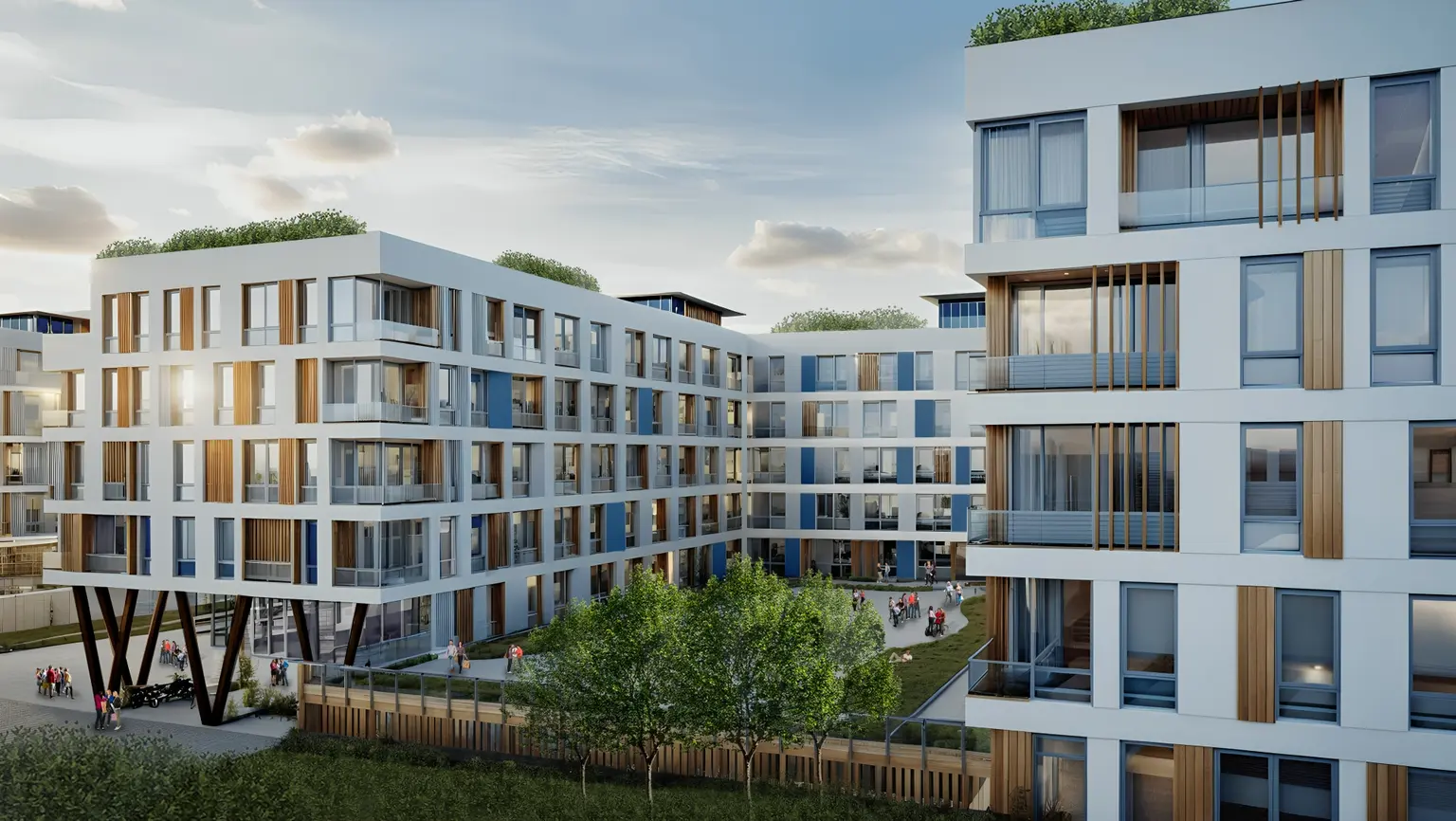
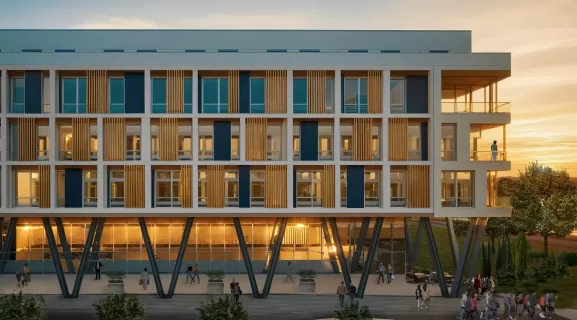
In a bold step toward sustainability and urban revitalization, New York City is set to build its largest mass timber residential project on Staten Island’s North Shore. Announced by Mayor Eric Adams, the project will bring over 500 new apartments, 25% of which will be affordable, along the New Stapleton waterfront. Further, the selected developers, Artimus and Phoenix Realty Group, will transform two long-vacant sites using mass timber construction, a climate-friendly alternative to concrete and steel. This innovative material not only reduces carbon emissions but also accelerates construction, making it an ideal choice for this ambitious development.
Transforming Staten Island’s Waterfront
This landmark housing initiative is a key component of the “Staten Island North Shore Action Plan,” a four-year strategy unveiled in 2023 aimed at reconnecting and revitalizing the borough’s waterfront. With $400 million in public investment, the plan will spur the development of 2,400 homes, over 20 acres of public green space, and the creation of more than 7,500 jobs. The overall economic impact is projected to reach $3.8 billion over the next 30 years. Located at the intersection of Front and Canal Streets, the new development will offer homes to families earning between 40% and 80% of the area median income, fostering a truly mixed-income community.
Pioneering Green Building through the New York City mass timber project
This project isn’t just about housing, it’s a statement on the future of sustainable construction in New York City. Furthermore, as the first publicly awarded mass timber development in the five boroughs, it marks a milestone in the city’s transition to greener building practices. It aligns with Mayor Adams’ “Green Economy Action Plan,” which focuses on climate-conscious job creation and infrastructure. With nearly 400,000 green-collar jobs expected in NYC by 2040, this project not only builds homes but also paves the way for a more environmentally resilient city.
Location: Front and Canal Streets, Staten Island’s North Shore
Type: Mixed-income residential development
Units: 500+ apartments
Affordable Housing: 25% (for 40–80% AMI households)
Construction Material: Mass timber
Start Date: Expected in 2027
Developers: Artimus and Phoenix Realty Group
City Program: Part of Staten Island North Shore Action Plan
Green Initiative: Supports Green Economy Action Plan
Public Investment: $400 million
Total Economic Impact: Estimated $3.8 billion over 30 years
Future Vision: 2,100+ homes, 600-seat school, retail, community facilities
Public Space: 12+ acres of open space
Jobs Created: Over 7,500 projected
Sustainability Support: Backed by NYC Mass Timber Studio
Setting a New Standard with Mass Timber
The development team will collaborate with the NYC Mass Timber Studio, a technical assistance program designed to support successful mass timber construction. Martha Bush, a director at Marvel (a firm involved in the project), highlighted the environmental benefits, noting that mass timber significantly reduces embodied carbon emissions. She also emphasized its potential to inspire future large-scale sustainable developments across the city. As NYC faces mounting pressure to reduce its carbon footprint, projects like this are setting the bar for how the city builds in the future.
The Staten Island project represents the next phase of the broader New Stapleton Waterfront redevelopment, a plan to transform a 32-acre former U.S. naval base into a vibrant, inclusive neighborhood. Additionally, once completed, the area will feature over 2,100 mixed-income apartments, retail spaces, a 600-seat public school, community facilities, and 12 acres of public open space. Construction is expected to begin in 2027, following design and site investigations. According to NYCEDC President Andrew Kimball, this initiative is not only addressing the housing crisis but also reinforcing the city’s commitment to resilient, sustainable urban development. As Staten Island takes center stage, this pioneering project is shaping up to be a blueprint for New York’s green future.
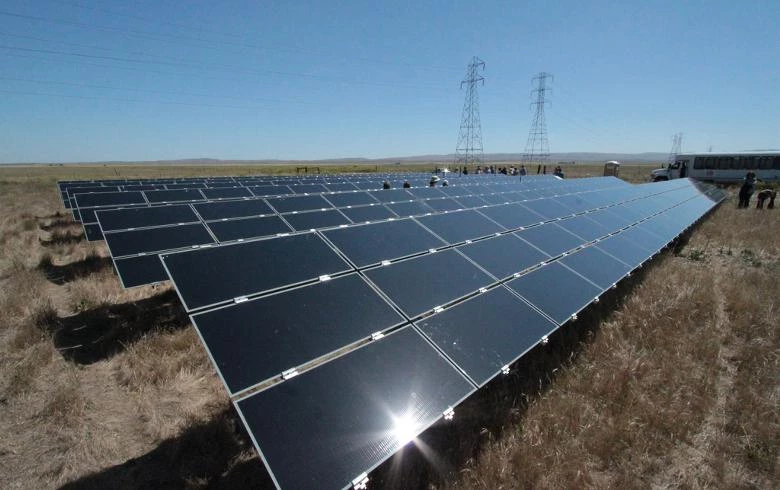
Aypa Power has secured US$535 million in construction financing for Vidal, a 320 MW solar and energy storage project in San Bernardino County, California. The project is expected to combine 160 MW of solar generation with a 160 MW/640 MWh battery energy storage system. Further, the hopes of the project are to enhance the grid’s reliability across the state’s while supporting California’s carbon-free electricity goals. Specifically, it will deliver electricity, renewable energy certificates and resource adequacy to San Diego Community Power through a long-term power purchase agreement. The initiative is projected to generate more than US$13.5m in local economic benefits. In addition, it will create up to 260 construction jobs in San Bernardino County.
CDH Vidal LLC proposed the project in October 2021. It was approved later in December 2024 after extensive assessments were done on the project. Vidal will sit on 1,220 acres of land. Additionally, it will be constructed alongside a 161-kilovolt (kV) transmission line. A new switchyard and associated interconnection facilities adjacent to the project will also need to be put up near the project and the existing HDR-BLY line. Furthermore, the project scope outlines the construction of access roads for construction and maintenance.
Santander Corporate & Investment Banking played a central role in the transaction, serving as the coordinating lead arranger and mandated lead arranger. Additionally, it served green loan coordinator, lender, and letter of credit (LC) issuer. US Bank National Association, through its US Bancorp Impact Finance subsidiary, and Zions Bancorporation, N.A. also participated as mandated lead arrangers and lenders. Additionally, Siemens Financial Services and Associated Bank, N.A. contributed as managing agents and lenders. In January, Aypa Power obtained $190 million in funding for its Bypass BESS project located in Fort Bend County, Texas. The 200MW/400MWh facility is intended to address the region’s energy storage requirements. The financing included a $68 million construction-to-term loan and a $91 million tax equity bridge loan, amounting to $159 million dedicated to the construction phase.
Netflix’s ambitious $903 million production studio at the historic Fort Monmouth site continues to move from ceremony toward reality. The former U.S. Army base, spanning 289 acres across Eatontown and Oceanport, officially broke ground on Tuesday, May 13, 2025. That day, state, county, and entertainment leaders gathered to mark the start of what will become one of New Jersey’s most transformative infrastructure projects.
At the groundbreaking, Governor Phil Murphy remarked,
“With Netflix and New Jersey working together, one thing is certain: there are no limits to what we can achieve.”
Netflix co-CEO Ted Sarandos, born at Monmouth Medical Center, added,
“New Jersey’s film and television industry has never been stronger—and today marks yet another leap forward.”
Sarandos also highlighted Netflix’s broader economic impact, noting that the company has contributed $125 billion to the U.S. economy over the past four years and has hired more than 140,000 cast and crew members.
“And we’re excited to continue our investment in the U.S. and New Jersey in the coming years,” he said.
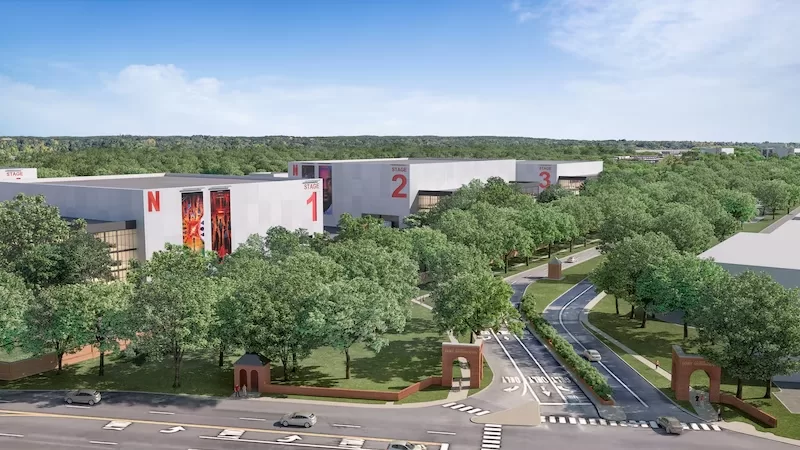
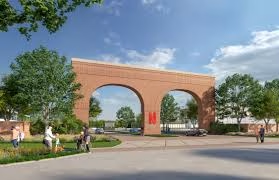
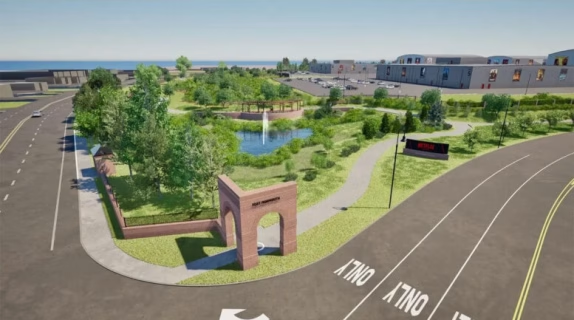
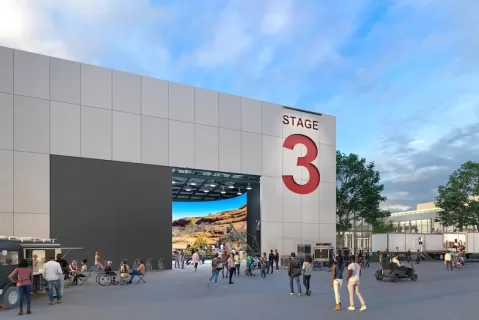
In September 2025, Netflix unveiled new renderings of the Fort Monmouth campus, showcasing a refined design with twelve state-of-the-art soundstages totaling nearly 500,000 square feet, restored historic buildings such as Vail Hall, landscaped public plazas, and a clear phase-by-phase site layout.
Since the groundbreaking, demolition of obsolete base infrastructure has been underway, with work expected to continue into early 2026. Local planning bodies in Oceanport and Eatontown have also cleared key portions of the first construction phase, allowing Netflix to advance toward vertical building.
On December 5, 2025, Netflix officially purchased the 292‑acre Fort Monmouth site in New Jersey for about $55 million, advancing its nearly $1 billion film and television studio project.
The plans call for 12 soundstages that will span nearly 500,000 square feet. Along with the soundstages, the complex will include production offices, a hotel, retail shops, a theater, helipad, water tanks for filming, and dedicated spaces for crew and talent, including a campus for production teams. Netflix’s vision is to create a cutting-edge environment for both work and leisure, offering a complete set of amenities designed to support large-scale film and television productions.
Revitalizing New Jersey Film Industry
Governor Phil Murphy’s administration has voiced strong support for the project, seeing it as a key step toward revitalizing the state’s film industry. “New Jersey was the birthplace of film, and this studio could position us as the ‘Hollywood of the East,’” said Murphy in a statement at the groundbreaking. With its focus on innovation, the development aims to create jobs and economic opportunities, with an expected value of between $3.8 billion and $4.6 billion for New Jersey’s economy over the next 20 years.
While this development continues to progress, Lionsgate has begun construction on new $125 million film and television production studio in Newark’s South Ward, a 12-acre complex designed to feature state-of-the-art soundstages and modern production facilities capable of supporting a wide range of film and TV projects as New Jersey’s entertainment sector continues to expand.
In September 2025, Netflix unveiled new renderings of the Fort Monmouth campus,
Construction Phases
The construction will take place in two distinct phases. The first phase will focus on the McAfee Zone in Oceanport, a 29-acre site that will feature the first four soundstages and core production facilities. In August, Eatontown’s planning board is expected to review Netflix’s proposal for the second phase, which will include the remaining eight soundstages. Once fully operational, the studio is projected to create 1,400 permanent jobs and up to 3,500 temporary construction jobs.
The development has been a long time coming. Netflix first announced its plans in December 2022, and since then, the company has navigated a lengthy approval process. The Fort Monmouth Economic Revitalization Authority (FMERA) played a crucial role by modifying zoning regulations to allow the development of a film production complex on the property. The site, known for its role in the development of FM radio, has been vacant for more than a decade.
Local residents and officials raised concerns about traffic, noise, and environmental impacts during the approval process, but FMERA addressed these issues before granting approval. As construction progresses, further concerns will be handled by municipal planning boards. Development will need to respect the historic nature of the site, particularly the preserved parade grounds, a condition set by FMERA.
Financial Incentives
To make this project a reality, Netflix will benefit from significant financial incentives, including a $150 million tax incentive pool and the potential for a 40% tax credit in exchange for committing to operate at the site for at least 10 years. The New Jersey Economic Development Authority is overseeing these incentives.
The timeline for the studio’s opening has not yet been set, but planning documents indicate that both phases of the construction must be completed within eight years from the deal closure with FMERA.
Just across the Hudson, New York City is seeing its own surge in film infrastructure. In Brooklyn, Bungalow Projects and Bain Capital Real Estate are developing Echelon Studios — two sustainable production campuses in Bushwick and Red Hook totaling about 600,000 square feet. Backed by $304 million in financing, the projects feature ten soundstages, modern support spaces, and LEED Gold, all-electric designs. Completion is slated for mid-2027, with about 2,400 jobs expected.
The Spanish government has officially commissioned public engineering firm Ineco to design the reconnaissance gallery (galería de reconocimiento) for the Morocco-Spain rail tunnel project. Reconnaissance gallery is an exploratory tunnel dug before the construction of a main tunnel to study and confirm underground conditions. Local media outlet noted that the formal commission was issued this month by SECEGSA (Spanish Company for Studies on Fixed Communication across the Gibraltar Strait). On the other hand, the firm reports to the Ministry of Transport. The contract, worth nearly $1 million, establishes a detailed technical roadmap with a delivery deadline of August 2026. The scope includes various processes such as preliminary design of the reconnaissance gallery and revision of previous studies. It also entails comprehensive updating of routing, geology, geotechnical conditions, security systems, terminals, and associated installations.
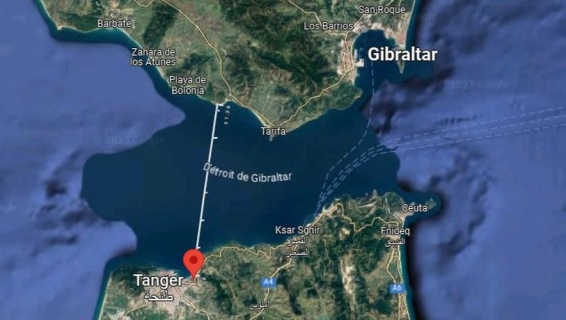
This development comes after German company Herrenknecht confirmed the project’s technical feasibility in a study delivered to the Spanish government in June. The report concluded that despite extreme complexity, current technology is capable of executing the ambitious infrastructure project. The 38.5km tunnel would run from a point to the west of Algeciras in Spain to Tangiers in Morocco. Furthermore, it includes a 28km subsea section, according to an October 2025 report by International Railway Journal. Ambitious tunnel projects are springing up across across Africa. In a similar ambitious tunnel project, the Federal Government of Nigeria has announced plans to build what could become Africa’s First Underwater Tunnel. This tunnel will connect the ongoing Lagos-Calabar and Sokoto-Badagry highways.
May 11, 2025: Spain allocated €1.6 million to conduct feasibility studies for the proposed Morocco–Spain rail tunnel linking Europe and Africa. Reports from Spanish media indicated that the Ministry of Transport, led by Óscar Puente, revised the original budget from €2.4 million. Moreover, this was based on adjustments to the project’s planned activities. The proposed tunnel will run beneath the Strait of Gibraltar, establishing a direct connection between Europe and Africa across one of the world’s key maritime corridors.
Revenue obtained from near finished projects such as the Sagrada Familia Basilica will facilitate in completion of the Morocco-Spain Underway Tunnel. The church, which is expected to be a major tourist attraction site, will be elemental in providing revenue. The church is expected to attract local and domestic tourists once complete. Furthermore, it is currently the world’s tallest church after the first part of its cross was placed. The underwater tunnel will facilitate ease of access for tourists who may visit both Morocco and Spain. Moreover, it part of the much anticipated underwater tunnels such as the the world’s largest undersea tunnel in Norway, the Rogfast undersea tunnel.
Type: Primarily a rail tunnel designed for both high-speed passenger and freight trains. Road vehicle traffic is not currently planned.
Route: The most discussed route connects Punta Paloma (near Tarifa, Spain) with Punta Malabata (near Tangier, Morocco).
Length: The total tunnel length is projected to be around 38.5 to 42 kilometers, with approximately 27.7 to 28 kilometers running underwater.
Tunnel structure: The current design includes two railway tunnels and a service and safety gallery, connected by transverse passages at regular intervals (around 340 meters) and safety zones.
Diameter: Each single-track railway tunnel is planned to have an internal diameter of about 7.9 meters, while the service tunnel would be around 6 meters.
Gradient: The maximum gradient within the tunnels is projected to be around 3 percent.
Cost: Estimates vary significantly, ranging from €6 billion to €15 billion.
Ineco, which is a public company, will be responsible for conducting the Morocco-Spain rail tunnel study to determine financial viability of other construction alternatives. Currently, the Spanish government is utilizing the European Next Generation funds to fund the technical support work.
Two possible entry points of the tunnel are being considered on the Spanish side. One alternative is Algeciras with its strategic port and railway connections. The other entry point is the coast near Tarifa, Europe’s southernmost city.
Length of the Morocco-Spain Rail Tunnel
The tunnel is expected to stretch up to 38.5 kilometers. A total of 27.7 kilometers will run underwater. Additionally, it would contain two railway tunnels beneath the seabed.
“This permanent link infrastructure that will run across the Strait would entail of a crucial link in the Euro-Mediterranean transport network,” the Ministry of Transport stated. “The facilitation of passenger, goods and services flows will lead to the production of a quantitative and qualitative acceleration of the economy.”
Feasibility Studies of the Morocco-Spain Rail Tunnel
Herrenknecht, the world-leading German company in tunnel development and implementation, is the one studying construction feasibility. The company has an aim to complete their assessment by June. This information is according to SECEGSA, the Spanish Company for Studies on Fixed Communication across the Gibraltar Strait.
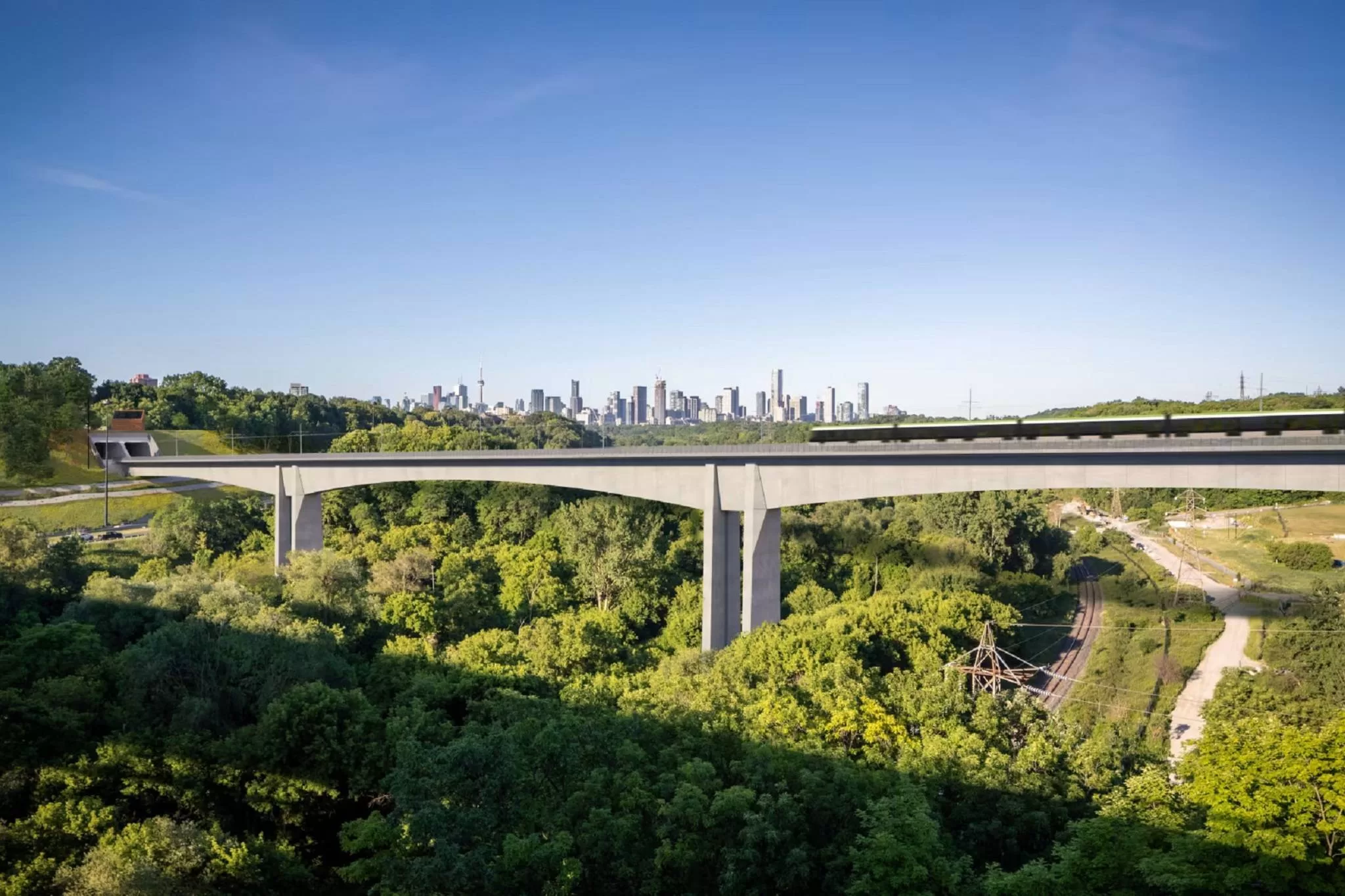
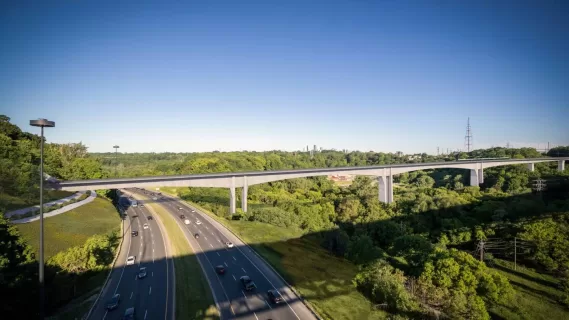
The Don Valley Crossing bridge will be a signature piece of infrastructure in Toronto’s transportation network. The mega infrastructure project commenced construction in 2024 as part of the Ontario Line subway. When finished, it will cross the Don Valley, linking the Crosstown LRT in the north with Exhibition Place in the south. The 15.6-kilometre line includes 15 new stations and will run through the downtown core. The Ontario Line will cross the Don Valley twice. One is the Lower Don Bridge, a smaller but architecturally significant steel arch bridge. But the Don Valley Crossing bridge will be the more prominent one. Rising 38 metres above the valley floor, its balanced cantilever design will see it become the first high-level crossing to be built in the area since 1927. From the Leaside Bridge’s vantage point, it will be a permanent addition to Toronto’s skyline.
Significance and Scope of Toronto’s Don Valley Crossing Bridge
The Don Valley Crossing bridge will be a signature piece of infrastructure in Toronto’s transportation network.
The Don Valley Crossing bridge is significant to Toronto’s growing transit system. The bridge will carry subway trains over a deep urban valley, linking communities more effectively. It will also improve daily commutes and showcase scenic city views. Though its concrete form is utilitarian, its scale qualifies it to be a visual icon. Its construction is a vital step towards sustainable urban mobility. In scope, the bridge is a major undertaking in the Ontario Line project. Its creation involves bridging difficult terrain, preserving existing infrastructure, and incorporating new transportation corridors. The Don Valley Crossing bridge also embodies a marriage of function and legacy, blending engineering imperatives with city-building aspirations. When completed, it will not only be a vital transit link but also a viewing area, much like the Bloor Viaduct. The project is also anticipated to compliment the construction of the multi-billion-dollar Ontario line. Together with the Highway 413 project currently ongoing, Ontario’s highway network is set to be transformed within the coming years.
To provide the best experiences, we use technologies like cookies to store and/or access device information. Consenting to these technologies will allow us to process data such as browsing behavior or unique IDs on this site. Not consenting or withdrawing consent, may adversely affect certain features and functions.
Functional
Always active
The technical storage or access is strictly necessary for the legitimate purpose of enabling the use of a specific service explicitly requested by the subscriber or user, or for the sole purpose of carrying out the transmission of a communication over an electronic communications network.
Preferences
The technical storage or access is necessary for the legitimate purpose of storing preferences that are not requested by the subscriber or user.
Statistics
The technical storage or access that is used exclusively for statistical purposes.The technical storage or access that is used exclusively for anonymous statistical purposes. Without a subpoena, voluntary compliance on the part of your Internet Service Provider, or additional records from a third party, information stored or retrieved for this purpose alone cannot usually be used to identify you.
Marketing
The technical storage or access is required to create user profiles to send advertising, or to track the user on a website or across several websites for similar marketing purposes.
To provide the best experiences, we use technologies like cookies to store and/or access device information. Consenting to these technologies will allow us to process data such as browsing behavior or unique IDs on this site. Not consenting or withdrawing consent, may adversely affect certain features and functions.
Functional
Always active
The technical storage or access is strictly necessary for the legitimate purpose of enabling the use of a specific service explicitly requested by the subscriber or user, or for the sole purpose of carrying out the transmission of a communication over an electronic communications network.
Preferences
The technical storage or access is necessary for the legitimate purpose of storing preferences that are not requested by the subscriber or user.
Statistics
The technical storage or access that is used exclusively for statistical purposes.The technical storage or access that is used exclusively for anonymous statistical purposes. Without a subpoena, voluntary compliance on the part of your Internet Service Provider, or additional records from a third party, information stored or retrieved for this purpose alone cannot usually be used to identify you.
Marketing
The technical storage or access is required to create user profiles to send advertising, or to track the user on a website or across several websites for similar marketing purposes.