
West Burton Fusion Powerplant is advancing towards construction following the appointment of a £200 million construction consortium. The project will establish Britain’s first prototype fusion power station at the former West Burton coal-fired power station in Nottinghamshire. Furthermore, the development marks a major transition from nuclear fusion research towards an integrated electricity-generating facility.
UK Fusion Energy Ltd leads the programme, with construction expected to begin around 2030. The developer targets first operations in 2040. Meanwhile, the Government has committed £1.3 billion towards the programme through its wider fusion investment strategy.
The development forms part of the Spherical Tokamak for Energy Production (STEP) programme. It aims to demonstrate commercially viable fusion electricity generation while developing Britain’s domestic fusion industry. Unlike conventional nuclear fission, fusion generates energy by combining light atomic nuclei. Consequently, the technology could offer a future source of low-carbon electricity.
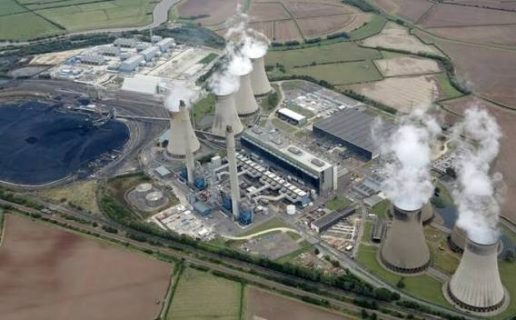
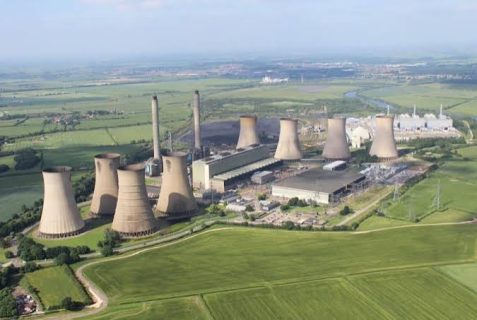
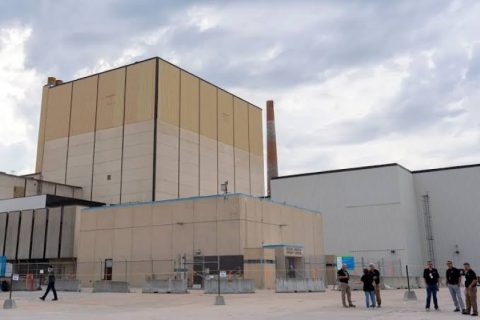
The UK Government selected West Burton in Nottinghamshire as the preferred site in October 2022. The location previously accommodated a coal-fired power station. Therefore, the project will transform an established energy site into a major scientific and industrial development.
West Burton Fusion Powerplant Advances with £200 Million Construction Appointment
In March 2026, UK Fusion Energy appointed ILIOS as the programme’s construction partner. The consortium secured an initial three-year contract worth £200 million. Its appointment represents a significant step towards the project’s physical development.
ILIOS comprises a joint venture between Kier and Nuvia, supported by AECOM, AL_A Architects and Turner & Townsend. The consortium will undertake the design and construction of buildings, infrastructure and facilities across the site.
Additionally, its responsibilities include site management, engineering coordination, construction planning and supply chain management. The consortium will also coordinate design integration and oversee project controls. These activities will support the wider fusion plant’s constructability and delivery.
The appointment forms part of a broader programme offering future opportunities valued at up to £10 billion. At peak construction, the development could support approximately 8,000 onsite jobs. Consequently, the project could create significant opportunities for regional contractors, suppliers and skilled construction workers.
ILIOS will work alongside UK Fusion Energy’s integrated delivery team. Meanwhile, the United Kingdom Atomic Energy Authority (UKAEA) provides specialist fusion expertise through its partnership with the programme.
West Burton Fusion Powerplant Opens Further Engineering Procurement
The programme entered another important procurement stage in November 2026. UK Fusion Energy invited tenders for five engineering contracts worth up to £115 million.
The contracts will cover critical systems required to design, integrate, test and operate the prototype facility. They include breeder blanket systems, fuel cycle systems, test operations and control systems. The fifth package covers systems engineering and whole-plant integration.
Individual contract packages carry estimated values of £20 million, £20 million, £35 million, £15 million and £25 million respectively. The procurement process allows individual companies, consortia and joint ventures to participate. Interested suppliers must submit tenders by January 29, 2027.
UK Fusion Energy expects to announce contract awards on April 6, 2027. Successful suppliers should commence their contracts on April 23, 2027. Furthermore, the arrangements will support the development of specialist engineering capabilities ahead of permanent construction.
The programme also contributes to Britain’s wider nuclear infrastructure ambitions. Alongside fusion development, the country is pursuing conventional nuclear generation through small modular reactor technology.
For instance, the proposed UK Small Modular Reactors programme involves 14 BWRX-300 units across three sites. SGE SMR UK recently briefed more than 200 British companies on its proposed £35 billion development. Although fusion and fission involve different technologies, both initiatives could expand Britain’s nuclear construction supply chain.
The development of these parallel programmes highlights the growing importance of domestic engineering, manufacturing and specialist construction capabilities. Further information is available in our coverage of the UK Small Modular Reactors programme and its proposed 14-unit construction pipeline.
Meanwhile, STEP targets initial operations in 2040. Its technical objectives include demonstrating more than 100MW of net electricity. The programme also aims to establish a pathway towards commercially viable fusion power generation.
Benefits of the prototype nuclear fusion power station
They stated that the plant would benefit from being located in a region with a history of energy generation. It is also close to “world-leading” research capabilities at regional universities, as well as manufacturing and construction firms.
Sir John Peace, chairman of the Midlands Engine partnership, which also backed West Burton’s application, called the project a “unrivalled opportunity” to create high-quality jobs, build a world-class supply chain, and strengthen the regional skills base in an area that has long been underinvested.
Midlands Energy and Energy Research Accelerator states that the prototype nuclear fusion power station project could generate 600 permanent high-quality jobs in the region. It would also create thousands more in construction and supply chains.
Nuclear fusion, by harnessing a process that powers stars like the sun, is thought to have the potential to provide an almost infinite supply of low-carbon energy. Advocates argue that the approach is based on low-cost raw materials. Furthermore, it is inherently safer than conventional nuclear power plants. This is because it does not trigger chain reactions.
Read Also: National Highways awards contract for Yorkshire’s Ouse Bridge
Nuclear fusion projects in the UK
However, decades of research have yet to yield a commercial reactor. Some campaigners have repeatedly warned that the first wave of commercial nuclear fusion projects will not be ready to influence global greenhouse gas emissions curves in time to meet climate goals. This is even with the most optimistic timetables for the technology.
The government has set aside £220 million to the STEP programme’s first phase. This devotes the UK Atomic Energy Authority to developing a concept design for its prototype by 2024.
The Burton of West Burton A power station, one of Britain’s two remaining coal-fired power plants, was scheduled to close in September 2022. However, its life was extended earlier this year until next spring. This was in response to the energy supply constraints caused by Russia’s invasion of Ukraine.

Leave a Reply