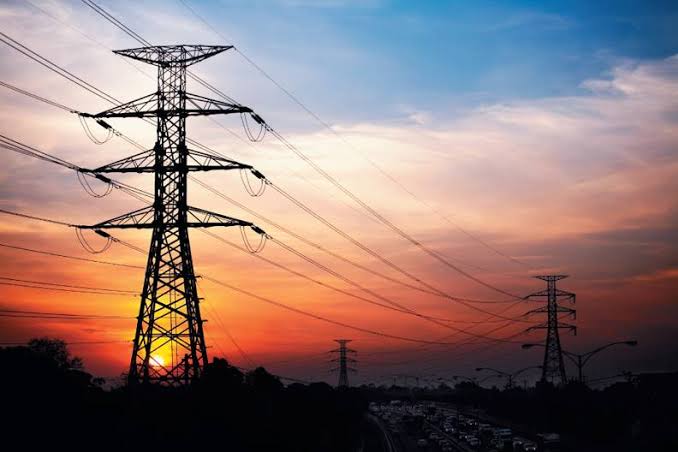
South Dakota could become home to the Upper Midwest’s first 765-kilovolt transmission line, creating a multibillion-dollar power backbone designed to move electricity across long distances as demand from data centers, AI computing and other industries grows.
The proposed PowerOn Midwest project would place about 90 miles of 765-kV transmission across eastern South Dakota. A separate 345-kV project would add another 71 miles of transmission from the same area toward North Dakota.
Together, the proposals would add roughly 160 miles of new transmission infrastructure along South Dakota’s eastern edge.
PowerOn Midwest brings together Xcel Energy, Great River Energy, ITC Midwest and Otter Tail Power Company across the broader transmission buildout. The utilities are developing different portions of the regional network. Their combined role is to expand transmission capacity across the Upper Midwest as electricity demand from data centers, AI computing and other large loads increases.
The projects are still subject to permitting, landowner negotiations and broader questions over whether the region’s projected electricity demand justifies the investment.
What is PowerOn Midwest?
The centerpiece is a roughly 90-mile 765-kV line running from the Big Stone South Substation in Grant County south through Deuel County and into Brookings County before crossing into Minnesota.
The project also includes about five miles of 345-kV transmission and expansions at the Big Stone and Brookings County substations.
A separate 71-mile 345-kV line, known as the Big Stone South–Hankinson–Bison project, would run north from Big Stone South through Grant and Roberts counties into North Dakota.
The South Dakota portion of PowerOn Midwest is estimated to cost $1.3 billion to $1.7 billion. The separate 345-kV project is estimated at $191 million to $229 million.
If approvals remain on schedule, the projects could enter service between 2032 and 2034.
Why build a 765-kV line?
The unusual voltage level is what makes PowerOn Midwest significant.
Most of the Upper Midwest transmission system operates at 345 kV. A 765-kV circuit can move substantially more electricity over long distances, allowing planners to create a high-capacity backbone rather than relying on numerous smaller transmission lines.
Industry materials cited in the project documents indicate that one 765-kV circuit can carry roughly the same amount of electricity as six 345-kV lines.
For South Dakota, the project therefore represents a major expansion in the scale of its transmission infrastructure.
What would the line look like?
The physical footprint will be substantial.
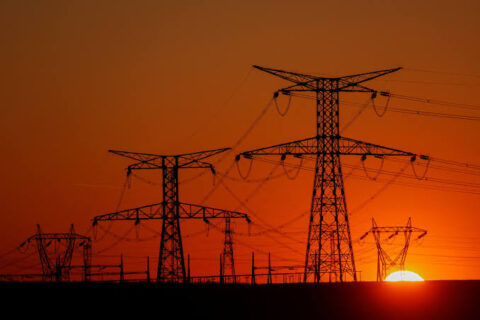
The proposed 765-kV towers would stand about 170 feet tall and be spaced roughly 1,200 to 1,400 feet apart. The line would require a 250-foot-wide right-of-way, extending about 125 feet on either side of the centerline.
The 345-kV sections would require a 150-foot-wide right-of-way.
Farming and other low-profile uses could generally continue within the easements, while new buildings and tall-growing trees would be restricted.
Land acquisition remains an important part of the process. At the time of the permit filing, agreements covered 81 of the 274 parcels needed for the 765-kV line in South Dakota.
What is driving the investment?
The broader case for the transmission buildout rests on projected electricity demand.
MISO’s long-range planning identifies data centers, electric vehicles, green hydrogen and other industrial loads as major sources of future growth. Its recent planning also points to gigawatt-scale data centers and increasing power requirements from AI computing.
Project materials specifically identify data centers and other industrial demand as reasons for expanding the transmission system.
MISO’s planning calls for roughly 10,000 MW of additional transmission capacity in the coming decades.
That creates the central argument for PowerOn Midwest: the region needs to build transmission before large new electricity loads arrive.
But that assumption is also at the heart of the opposition.
Why are communities pushing back?
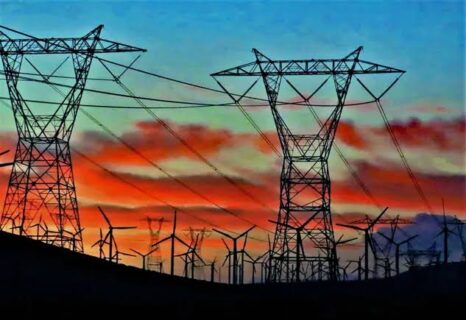
The proposed routes cross productive farmland and areas containing rural homes.
In Brookings County, local officials created a 765-kV Transmission Line Advisory Committee after residents raised concerns about property values, lost rental acreage and whether communities hosting the infrastructure would receive benefits proportional to its impact.
The debate reflects a broader question facing transmission projects across the country: how should regional electricity needs be balanced against the local effects of large infrastructure corridors?
The answer is particularly important here because much of the projected demand comes from large electricity users that may be located far from the communities hosting the transmission infrastructure.
Who will pay?
The South Dakota projects form part of a much larger MISO transmission program.
Under MISO’s cost-allocation framework, costs are expected to be distributed among customers across its northern region, including Iowa, Minnesota, South Dakota, North Dakota, Wisconsin and parts of Michigan.
MISO has estimated $7 billion to $25 billion in economic benefits from improved reliability, greater access to lower-cost electricity and avoided outages.
Those calculations, however, are being challenged in federal proceedings.
Several states, including North Dakota, have filed a complaint with the Federal Energy Regulatory Commission questioning the assumptions behind MISO’s broader Tranche 2.1 transmission plan.
The states argue that the analysis should use updated scenarios and benefit assessments. Independent market monitor Potomac Economics has also recommended that MISO revise its analysis using newer data.
That dispute could affect how regulators evaluate the need for projects such as PowerOn Midwest.
What happens next?
South Dakota’s Public Utilities Commission is scheduled to hold public input meetings in October 2026 before the project moves toward formal hearings.
A permit decision is expected in late 2027 or early 2028.
Minnesota route-permit applications are planned for early 2027, with decisions expected 12 to 18 months later.
If the required approvals are secured, construction would begin in the early 2030s, with the transmission system targeted for operation between 2032 and 2034.
Why PowerOn Midwest matters
PowerOn Midwest is ultimately a test of how quickly the Upper Midwest wants to expand its electricity infrastructure ahead of a potentially major increase in demand.
The project combines a very large physical footprint with a multibillion-dollar regional investment. Its supporters see the transmission backbone as necessary for reliability and future economic growth. Opponents are questioning whether projected demand, particularly from data centers and AI, is strong enough to justify the costs and local impacts.
The outcome will therefore extend beyond South Dakota.
It could help shape how the Upper Midwest approaches the next generation of transmission projects—and how regulators, utilities and communities weigh the infrastructure needed for rapidly growing electricity demand against the costs of building it.
Additionally, the completion of the Champlain Hudson Power Express shows what large-scale transmission can accomplish once new power infrastructure reaches a major demand center. That 339-mile system now connects Quebec’s hydropower network directly with New York City, demonstrating how electricity can travel hundreds of miles to strengthen supply in a constrained market. PowerOn Midwest represents a different regional transmission buildout, but it faces the same fundamental infrastructure challenge: expanding the grid so new sources of electricity can reach where demand is growing.
Factsheet: PowerOn Midwest
- Location: Eastern South Dakota, extending into Minnesota
- Main line: About 90 miles of 765-kV transmission
- Additional infrastructure: About 5 miles of 345-kV transmission and substation expansions
- Route: Big Stone South Substation through Grant, Deuel and Brookings counties into Minnesota
- Estimated South Dakota cost: $1.3 billion–$1.7 billion
- Tower height: About 170 feet
- Right-of-way: 250 feet wide for the 765-kV line
- Target completion: 2032–2034
- Primary purpose: Expand regional transmission capacity to support rising electricity demand
- Key demand drivers: Data centers, AI computing and other large industrial loads
- Permitting: South Dakota decision expected in late 2027 or early 2028
Related transmission project
- Project: Big Stone South–Hankinson–Bison
- South Dakota length: About 71 miles
- Voltage: 345 kV
- Estimated cost for the South Dakota portion: $191 million–$229 million
- Target completion: 2034


Leave a Reply