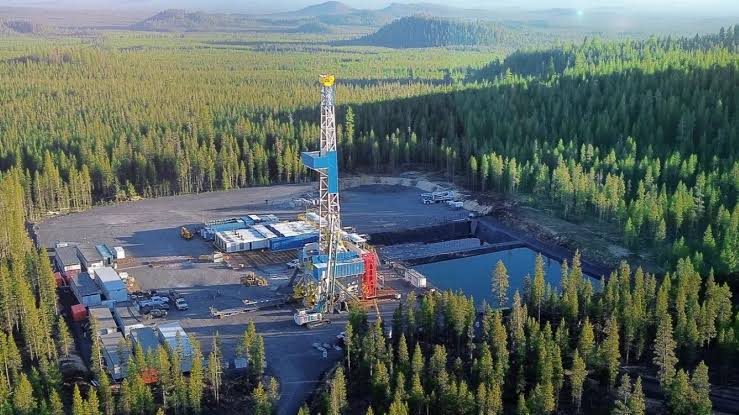
Project Obsidian has gained stronger financial backing for its planned superhot geothermal power plant in Central Oregon. The project aims to demonstrate commercial-scale geothermal generation from extremely hot underground rock. Quaise Energy recently closed a $180 million Series B financing round for the development. The financing brings the company’s total funding to $280 million.
The latest funding could accelerate construction and drilling activities at the Oregon development. It also supports the commercialization of millimeter-wave drilling technology needed to reach superhot geothermal resources. The project targets first commercial operation by 2030. The development will initially produce 50 MW before expanding toward 250 MW. Furthermore, it represents a major shift in geothermal construction. Developers want to access heat that conventional drilling cannot economically reach.
Project Obsidian Advances Superhot Geothermal Construction
Project Obsidian will use conventional drilling and millimeter-wave technology to access deep geothermal resources. The project targets underground temperatures between 300°C and 500°C.
Quaise plans to drill beyond five kilometers beneath the surface. At those depths, extreme temperatures could provide substantially greater energy density than conventional geothermal resources.
The company developed its millimeter-wave drilling technology through research originating at the Massachusetts Institute of Technology. The system uses electromagnetic energy to ablate rock without direct mechanical contact.
This approach could address one of geothermal energy’s biggest construction challenges. Conventional drill bits face severe wear when drilling through extremely hot and hard formations.
Project Obsidian therefore combines established drilling methods with a new deep-rock drilling system. This combination allows the project to progress through different geological conditions.
Quaise has already demonstrated the technology under field conditions. The company previously drilled more than 100 meters through granite using millimeter-wave technology.
The company has also advanced its system toward greater depths at a Central Texas test site. These tests support the technology pathway for Project Obsidian’s deeper drilling program.
The development of project Obsidian also reflects growing investment in large-scale US power generation projects. In Illinois, the proposed 1.1GW Lincoln Land Energy Center received approval in 2022, adding another major power project to the country’s expanding energy infrastructure pipeline.
Project Obsidian Targets 250 MW Capacity
Project Obsidian will develop its generating capacity through multiple stages. The first phase targets 50 MW of reliable, zero-carbon baseload electricity.
The second phase will add 200 MW, bringing the planned facility capacity to 250 MW. Developers will access deeper and hotter resources through additional wells.
The project could eventually support even larger geothermal development around the Oregon site. Quaise has previously outlined ambitions for gigawatt-scale generation in the wider area.
The development sits in Central Oregon near the Newberry volcanic region. The location provides access to significant geothermal resources while offering a testbed for advanced drilling technology.
Quaise has also partnered with Oregon State University on research supporting the development. Researchers are studying underground conditions relevant to superhot geothermal systems.
Meanwhile, the latest financing strengthens the project’s route toward commercial deployment. Nabors Industries invested $35 million in the Series B round.
Nabors also signed a strategic framework agreement with Quaise. The agreement provides access to drilling infrastructure, reservoir modelling, well design and drilling strategy capabilities.
The partnership could improve drilling performance and reduce development risks. It could also help accelerate the project timeline as drilling activities advance.
Project Obsidian Faces Significant Technical Challenges
Project Obsidian still faces technical uncertainties because superhot geothermal development remains an emerging technology. Researchers must understand rock chemistry, reservoir behavior and heat extraction at extreme conditions.
However, the staged development approach could help manage those risks. The initial 50 MW phase will provide a commercial demonstration before the larger expansion.
The latest funding therefore marks more than another financing milestone. It gives Project Obsidian additional resources to advance drilling technology and commercial geothermal construction.
If successful, the project could demonstrate a new model for deploying geothermal power beyond traditional volcanic hotspots. It could also strengthen geothermal energy’s role as a reliable source of low-carbon baseload electricity.
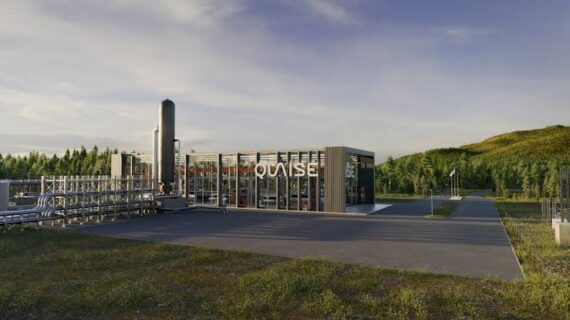
Project Fact Sheet
Name: Project Obsidian.
Type: Superhot geothermal power plant.
Location: Central Oregon, Oregon, United States.
Development area: Near the Newberry volcanic region.
Current status: Under development and advancing through drilling activities.
Latest Series B financing: $180 million.
Quaise total funding to date: US$280 million.
Latest Nabors investment: $35 million.
Initial generation capacity: 50 MW.
Planned expanded capacity: 250 MW.
Target commercial operation: 2030.
Phase II expansion: Additional 200 MW.
Longer-term potential: Gigawatt-scale generation.
Target drilling depth: More than 5 kilometers.
Target resource temperature: Approximately 300°C to 500°C.
Phase I resource temperature: Approximately 300°C.
Primary drilling technology: Millimeter-wave drilling.
Phase II resource temperature: Up to approximately 400°C and beyond.
Conventional drilling technology: Rotary drilling.
Initial electricity output: Zero-carbon baseload power.
Development approach: Phased geothermal development.
Technology origin: Massachusetts Institute of Technology research.
Research partnership: Oregon State University.
Research facility: Experimental Deep Geothermal Energy laboratory.
Main financing purpose: Project development and drilling technology commercialization.
Main construction objective: Establish the first commercial superhot geothermal power plant.
Project Team
Developer: Quaise Energy.
Strategic drilling partner: Nabors Industries.
Series B investor: Prelude Ventures.
Strategic investors:
- JERA Co., Inc.
- Idemitsu Kosan Co., Ltd.
- Nabors Industries.
Technology research institution: Massachusetts Institute of Technology.
Research partner: Oregon State University.
Research laboratory: Experimental Deep Geothermal Energy laboratory.
Drilling technology developer: Quaise Energy.
Drilling infrastructure partner: Nabors Industries.
Reservoir modelling partner: Nabors Industries.
Well design partner: Nabors Industries.
Drilling strategy partner: Nabors Industries.
Financial adviser:

Leave a Reply