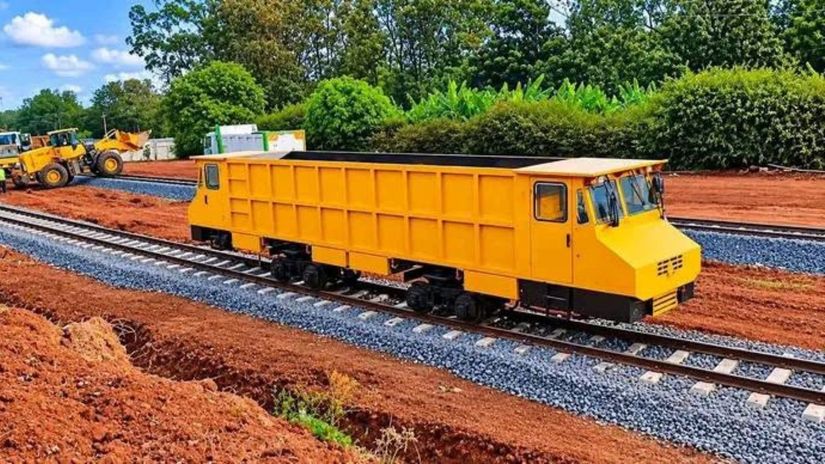
The Talanta rail link will connect Nairobi Central Station to Kibera and the new Raila Odinga International Stadium by December 15, 2026. Kenya is accelerating commuter railway upgrades ahead of major international football events.
The 11.5-kilometre connection is expected to carry up to 1,500 passengers every 10 minutes in each direction. The planned high-frequency service will give stadium spectators and Nairobi commuters an alternative to road transport.
The project builds on the previously announced Nyayo-Talanta Sports City Stadium Rail Link. That plan outlined a new station near Nyayo National Stadium and a railway spur through Kibera to Talanta Sports City.
Kenya Railways is upgrading the existing commuter corridor and building the stadium connection. The government wants to complete the works ahead of the January 5, 2027, Bayern Munich-Ajax FC friendly at Raila Odinga International Stadium.
Talanta rail link construction and railway upgrades
The project combines rehabilitation of existing railway infrastructure with a new connection through Kibera to Talanta Commuter Rail Station.
Construction crews are replacing approximately 21,600 steel sleepers with concrete alternatives. They are also upgrading drainage and installing new railway infrastructure. These improvements will strengthen track stability, durability and operational efficiency.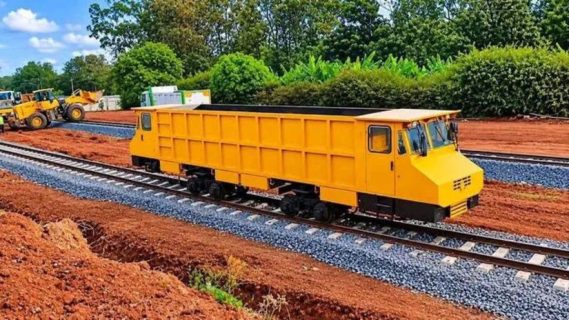
The government says work began in September 2026. Construction teams are following a 24-hour schedule to meet the December 15 deadline.
Kenya Railways Managing Director Philip Mainga and Transport Principal Secretary Mohamed Daghar inspected the works in November. During the visit, officials confirmed that the upgraded railway would serve daily commuters beyond the football fixture.
The route will serve stations near Nyayo Stadium, Mbagathi, Kibera and Talanta Sports City. A new spur from Kibera will connect the existing corridor to the stadium terminal.
The project also includes railway safety improvements. These include pedestrian overpasses and underpasses at Kibera, Laini Saba, Gatwekera and Kambi Muru. The government also plans to build a protective wall along the corridor.
Talanta rail link passenger capacity and operations
The upgraded service will use eight-coach Diesel Multiple Unit (DMU) trains. These trains can reach speeds of up to 60 kilometres per hour. Officials estimate that passengers could travel between Nairobi’s Central Business District and Talanta Commuter Rail Station in approximately 15 minutes.
Transport Principal Secretary Mohamed Daghar said the government plans to move up to 1,500 passengers every 10 minutes during the stadium event. Trains will operate in both directions, bringing spectators to the venue and returning them to the city.
However, official transport updates have described the 1,500-passenger figure in two ways. Some identify it as capacity per trip, while others associate it with the planned 10-minute service interval. The interval refers to the proposed frequency of train movements. Authorities have not yet published the final operating schedules or match-day arrangements.
Railway investment supports AFCON and Nairobi commuter transport
The immediate completion deadline relates to the January 5, 2027, Bayern Munich-Ajax FC match. The fixture is expected to mark the stadium’s inaugural international football event.
The railway should help reduce traffic congestion around Talanta Sports City and Nyayo National Stadium. It will also give spectators a more affordable public transport option.
Meanwhile, Kenya is preparing to co-host the 2027 Africa Cup of Nations with Uganda and Tanzania. The rail link forms part of wider efforts to improve access to sports facilities and modernise Nairobi’s commuter transport network.
China Road and Bridge Corporation (CRBC), the project contractor, says it is working to meet the deadline while maintaining construction safety and quality.
Kenya Railways has not disclosed a standalone project cost. The authority has also not released a contractor workforce total or permanent employment estimate.
A December 15 completion would give railway operators a short period to test the line and prepare for service. They would also need to coordinate transport and security arrangements with stadium officials before the January fixture.
Beyond the football event, the railway’s long-term value will depend on service frequency and integration with other commuter routes. Its ability to serve Nairobi residents after major sporting events will also determine its lasting impact.

Leave a Reply