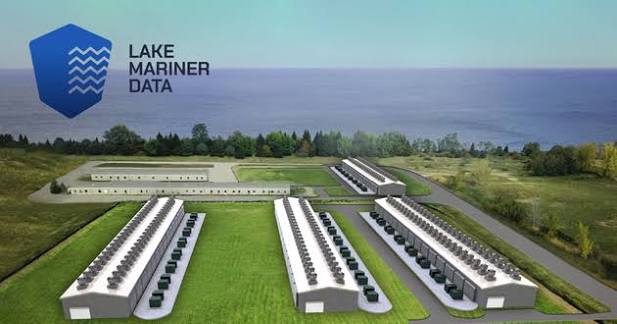
TeraWulf has reached a major construction milestone at its Lake Mariner Data Campus in Somerset, New York, bringing 102 MW of revenue-generating critical IT capacity online while continuing construction on another 336 MW as demand for AI infrastructure accelerates across the United States.
The milestone follows the completion and delivery of the CB-3 data hall in early July, increasing the campus’ operational capacity from 81 MW at the end of the second quarter to 102 MW. The company disclosed the progress as part of its second-quarter financial results, highlighting continued execution on one of the country’s largest AI-focused data center developments.
CB-4 Enters Commissioning as Buildout Advances
With CB-3 now operational, construction crews have shifted their focus to the next phases of the campus expansion.
TeraWulf confirmed that the first CB-4 data hall has entered commissioning, marking another significant step toward commercial operation. The company expects phased delivery and rent commencement during the second half of 2026, while CB-5 remains on schedule for phased delivery beginning in early 2027.
Combined, CB-4 and CB-5 will add 336 MW of critical IT capacity, substantially expanding Lake Mariner’s ability to support high-performance computing (HPC) and artificial intelligence workloads.
The company also reaffirmed that construction continues within its previously disclosed development cost guidance of $8 million to $10 million per critical IT megawatt.
Completion Unlocks Google’s $600 Million Credit Support
Beyond adding operational capacity, the completion of CB-3 also triggered an important financing milestone.
TeraWulf said the delivery satisfied the contractual conditions required for Google’s $600 million credit support backing Fluidstack’s lease obligations to become effective, strengthening the financial profile of the ongoing campus expansion.
The achievement represents another step in the company’s strategy of pairing phased infrastructure delivery with long-term customer agreements and committed financing.
Lake Mariner Continues to Anchor TeraWulf’s AI Platform
Originally developed as a bitcoin mining operation, Lake Mariner has become the centerpiece of TeraWulf’s transformation into a developer and operator of AI and HPC infrastructure.
In addition to the 102 MW now in operation and 336 MW under construction, the company is pursuing another 250 MW of incremental power capacity at the site, subject to interconnection approvals.
The campus benefits from existing transmission infrastructure and long-term access to power, allowing TeraWulf to expand capacity in sequential phases while meeting growing demand from hyperscale AI customers.
National Expansion Continues Across Kentucky and Maryland
While Lake Mariner remains the company’s flagship development, TeraWulf continues expanding its national data center platform through several large-scale projects.
In Kentucky, the company recently signed a 20-year lease with Anthropic covering approximately 401 MW of critical IT capacity at the Justified Data Campus in Hawesville. Initial delivery is expected during the second half of 2027, with full delivery targeted for early 2028.
TeraWulf is also advancing the Muskie Data Campus in Grayson, Kentucky, where agreements with Kentucky Power provide for up to 1 GW of contracted electric service, supporting phased development beginning with initial power delivery expected in late 2028.
Meanwhile, in Maryland, the company continues planning the Chesapeake Data Campus, an integrated energy and AI infrastructure project that could ultimately support up to 1 GW of data center capacity following the proposed redevelopment of the Morgantown generating station.
“Our second quarter demonstrates that TeraWulf is moving from platform formation to scaled execution,” said Paul Prager, Chairman and Chief Executive Officer of TeraWulf.
“At Lake Mariner, we delivered additional contracted capacity and converted it into recurring lease revenue. In Kentucky, we established the next phase of growth through the Anthropic lease at Justified and the acquisition of the gigawatt-scale Muskie Data Campus.”
AI Infrastructure Construction Accelerates Nationwide
Lake Mariner’s latest milestone reflects a broader wave of investment sweeping the U.S. AI infrastructure sector as developers race to secure power and bring new capacity online.
Galaxy Digital is advancing a 5.7 GW AI data center pipeline across Texas, including construction of the Helios Phase II expansion in Dickens County and new development opportunities at its Merlin, Caspian and Selene campuses. The company’s latest progress highlights the broader industry push to secure power capacity and develop large-scale AI infrastructure.
For TeraWulf, the completion of CB-3 and continued progress on CB-4 and CB-5 demonstrate the company’s strategy of delivering infrastructure in phases while maintaining a pipeline of future expansion opportunities backed by long-term customer demand.
The company also reaffirmed its objective of contracting 250 MW to 500 MW of incremental critical IT capacity annually, prioritizing projects with secured power, scalable infrastructure and long-term customer commitments.
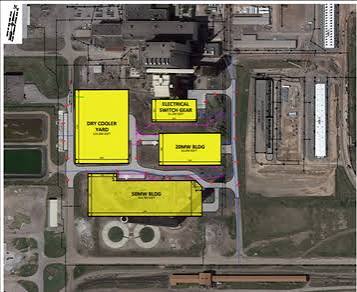
Project Factsheet: Lake Mariner Data Campus Expansion
Location: Somerset, New York
Developer/Owner: TeraWulf Inc.
Project Type: AI and High-Performance Computing (HPC) Data Center Campus
Current Operational Capacity: 102 MW of revenue-generating critical IT capacity
Capacity Under Construction: 336 MW across CB-4 and CB-5
Latest Milestone: CB-3 completed and operational; first CB-4 data hall has entered commissioning
Construction Schedule:
- CB-4: Phased delivery beginning in the second half of 2026
- CB-5: Phased delivery beginning in early 2027
Development Cost: $8 million-$10 million per critical IT MW
Additional Expansion: Pursuing an additional 250 MW of power capacity, subject to interconnection approval
Strategic Significance: Lake Mariner serves as TeraWulf’s flagship AI and HPC campus and forms the foundation of the company’s transition from bitcoin mining to large-scale AI infrastructure development.

Leave a Reply