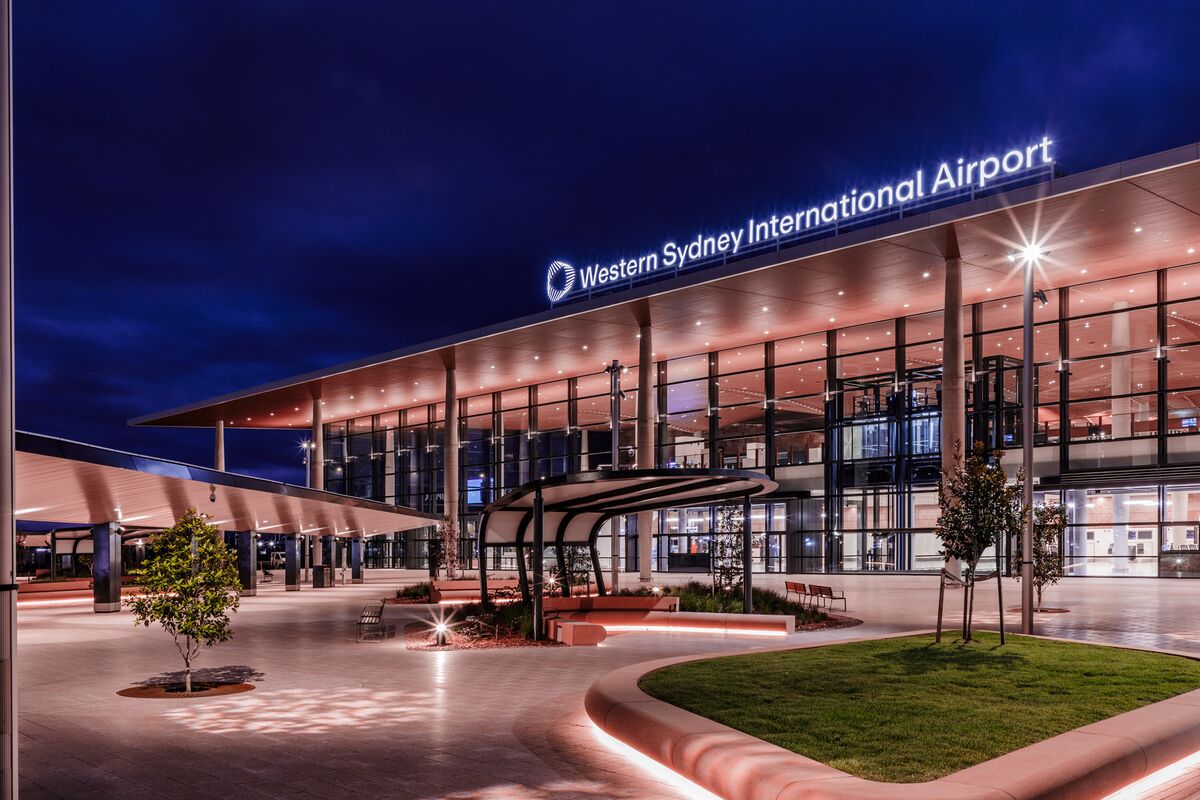
The Western Sydney Airport project represents a major shift in airport construction, combining immediate airline commitments with long-term aviation expansion. The Australian Government committed approximately A$5.3 billion, equivalent to roughly $3.5 billion US dollars, to deliver the new international gateway.
The airport will welcome its first passengers on October 25, 2026, following years of construction and operational testing. Meanwhile, its initial commitment for 15 based aircraft highlights how airline partnerships have influenced infrastructure planning.
Western Sydney International Airport, also known as Nancy-Bird Walton Airport, occupies a 1,780-hectare site at Badgerys Creek. Its location addresses Sydney’s growing aviation demand while opening new opportunities for freight, employment and commercial development.
Western Sydney Airport Project aligns construction with airline demand
The airport’s initial fleet commitment comprises 10 Jetstar aircraft and five Qantas aircraft. Both airlines belong to the Qantas Group, making the carrier Australia’s principal confirmed based-aircraft operator at the new facility.
Qantas participated in early planning discussions, helping airport planners understand airline requirements before completing the infrastructure. In 2019, Western Sydney Airport engaged with Qantas and Virgin Australia through a memorandum of understanding covering design and planning input.
However, Virgin Australia’s early involvement did not translate into the same confirmed based-aircraft commitment. Consequently, Qantas Group’s arrangement provides a defined operational foundation without determining the airport’s entire future airline mix.
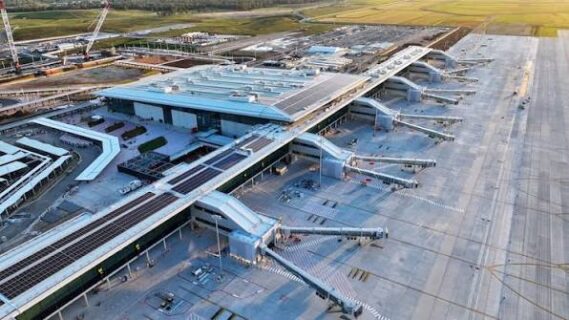
Construction began in September 2018, initially focusing on major earthworks across the extensive greenfield site. The programme subsequently progressed into runway, terminal, cargo and supporting infrastructure construction. By June 2025, contractors had completed the runway and terminal building, shifting attention towards testing and operational readiness.
Western Sydney Airport Project delivers infrastructure for expansion
The airport’s first stage includes a 3.7-kilometre runway designed to accommodate domestic, international and freight aircraft. Its initial passenger capacity will reach approximately 10 million travelers annually, providing room for additional airline services as demand increases.
Unlike Sydney Kingsford Smith Airport, the new facility will operate without a flight curfew. This arrangement allows passenger and freight operations throughout the day and night, creating additional scheduling flexibility for airlines and logistics operators.
The cargo precinct forms another important component of the airport’s commercial strategy. It will support freight handling, logistics operations and connections between Western Sydney businesses and domestic and international markets.
Qantas Freight and Menzies Aviation have established cargo partnerships with the airport. Furthermore, the wider development includes a business precinct intended to support aviation-related commercial activity.
The airport’s initial 15-aircraft commitment therefore represents only one part of its operational model. Passenger capacity, freight infrastructure and round-the-clock operations provide opportunities to attract further carriers and diversify services over time.
Western Sydney Airport’s long-term growth will depend not only on its initial airline commitments but also on reliable ground transport connections. A similar challenge is shaping Melbourne’s airport infrastructure, where the Melbourne Airport Rail construction project aims to improve airport access through major rail upgrades and new station infrastructure.
Western Sydney Airport Project prepares for commercial operations
The Australian Government has confirmed October 25, 2026, as the first passenger-service date. Jetstar will operate the inaugural commercial passenger flight, departing for the Gold Coast at 11 a.m.
Air New Zealand plans to begin Auckland services on October 26, while Singapore Airlines expects to introduce daily Singapore flights on November 23, 2026. These commitments demonstrate that the airport’s international network extends beyond its initial based-aircraft fleet.
Meanwhile, the development has supported more than 12,800 jobs, with approximately half going to local workers. Government figures also report more than $500 million invested in 360 Western Sydney businesses during construction.
Nevertheless, the airport’s longer-term success will depend on attracting additional services, sustaining passenger demand and expanding infrastructure when required. Its approved master plan provides a framework for developing the site over the next two decades.
Ultimately, the Western Sydney Airport Project illustrates how major aviation infrastructure can combine confirmed operational demand with scalable capacity. Its 15-aircraft starting commitment offers a defined launch foundation, while its wider facilities position the airport for future growth.
Project fact sheet
Name: Western Sydney International (Nancy-Bird Walton) Airport.
Location: Badgerys Creek, Western Sydney, New South Wales, Australia.
Type: Greenfield international airport and aviation infrastructure development.
Cost: Approximately A$5.3 billion, equivalent to roughly $3.5 billion.
Site area: Approximately 1,780 hectares.
Construction commencement: September 2018.
Passenger opening date: October 25, 2026.
Freight operations: Commenced in July 2026.
Initial runway: One 3.7-kilometre runway.
Initial annual passenger capacity: Approximately 10 million passengers.
Fleet allocation: 10 Jetstar aircraft and five Qantas aircraft.
Initial based-aircraft commitment: 15 Qantas Group aircraft.
Operating model: Domestic, international and freight services without a flight curfew.
Main facilities: Passenger terminal, runway, taxiways, cargo precinct, business precinct and supporting airport infrastructure.
Future development: Expansion guided by the approved 2025–2045 master plan.
Project team
Owner and delivery organization: WSA Co Limited
Sponsor and funder: Australian Government
Government oversight: Australian Department of Infrastructure, Transport, Regional Development, Communications, Sport and the Arts.
Airport operator: Western Sydney International Airport, managed by WSA Co Limited.
Principal airline partner: Qantas Group, providing the initial 15 based aircraft through Qantas and Jetstar.
Domestic passenger airline: Jetstar Airways
International airline partners:
- Air New Zealand, planning Auckland services from October 26, 2026.
- Singapore Airlines, planning daily Singapore services from November 23, 2026.
Freight airline partner: Qantas Freight, supporting cargo operations.
Cargo services partner: Menzies Aviation
Aviation safety and air traffic services: Airservices Australia
Regional infrastructure partners: New South Wales Government

Leave a Reply