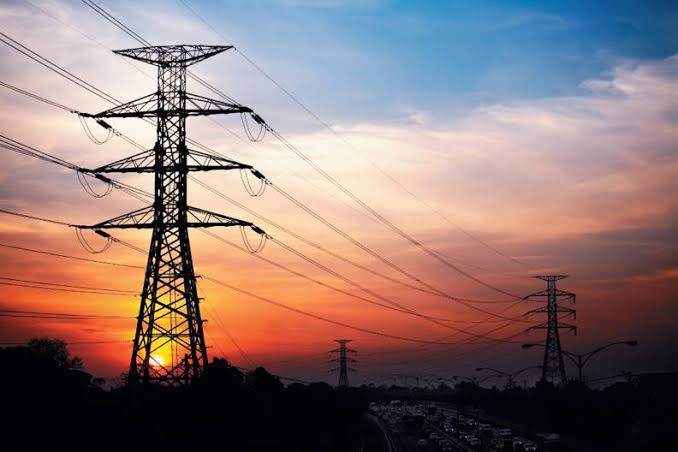
A revised transmission plan for one of the largest planned data center campuses in the Midwest was submitted to Wisconsin regulators this week, highlighting how AI-driven power demand is pushing utilities to expand grid capacity—and sharpening focus on cost allocation.
On Monday, Sept. 14, 2026, American Transmission Co. (ATC) refiled its application with the Public Service Commission of Wisconsin (PSC) for high-voltage transmission lines and substations needed to supply the $15 billion “Project Lighthouse” data center campus in Port Washington. The resubmission follows an August order from the PSC requiring ATC to restart the application process due to incomplete analysis and numerous unexplained revisions in its initial filing.
Oracle, an anchor tenant alongside OpenAI on the Vantage Data Centers–developed campus, reaffirmed that the project will cover 100 percent of its energy and transmission costs while sourcing more than half of its power from carbon-free generation.
A $15 Billion Campus and Growing Grid Demands
Project Lighthouse will span approximately 2.5 million square feet across four data center buildings on roughly 672 to 674 acres west of I-43 in Port Washington, Ozaukee County. Vantage Data Centers is developing the facility for Oracle and OpenAI, with an estimated overall capital investment of $15 billion.
Initial design documents assign the complex a 902-megawatt (MW) IT load. Long-term regulatory filings and load projections, however, indicate that full buildout and supporting infrastructure could support up to 3.5 gigawatts (GW) of capacity. The project targets initial grid interconnections by December 2027, ahead of planned facility operations in 2028.
Servicing that level of concentrated demand requires a substantial expansion of regional transmission infrastructure across four Wisconsin counties.
ATC’s Revised $1.3B–$1.7B Transmission Scope
ATC’s updated proposal—the Ozaukee County Distribution Interconnection Project—includes new and modified high-voltage transmission lines and five new substations spanning Fond du Lac, Ozaukee, Sheboygan, and Washington counties. Core transmission additions are estimated between $1.3 billion and $1.7 billion, with broader regional system upgrades and contingency assumptions reaching up to $2.5 billion to $2.7 billion.
In August, the PSC rescinded the completeness determination for ATC’s original submission, directing the transmission provider to refile with clearer route justifications and technical modeling.
“This application represents a cautionary tale of when unrealistic and unreasonable speed-to-power expectations collide with a deliberative regulatory process,” PSC Chair Summer Strand stated during the August ruling.
The revised Sept. 14 filing updates engineering and environmental analyses while adjusting the preferred route. Key modifications include a revised alignment in the southern segment and the removal of a previously proposed east-west transmission segment through Saukville and the Town of Trenton. The shift redirects portions of the route into the Town of Fredonia.
“The need for this project has not changed, but the application has,” said Jared Winters, Executive Vice President at ATC.
Cost Allocation and Clean Energy Commitments
To address concerns regarding potential rate impacts on existing utility customers, Oracle stated that the project will fully fund all required generation and transmission additions.
“We are committed to paying 100 percent of our energy costs,” Oracle noted in a statement. “There will be no rate increases for local customers because of this project.”
Under the proposed energy procurement strategy, the facility will source more than 50 percent of its electricity from carbon-free resources, including wind, solar and battery storage. Oracle will meet its remaining energy needs through renewable power purchases, prioritizing Wisconsin-based projects.
These commitments support Wisconsin’s Very Large Customer (VLC) Tariff framework, which aims to shield residential and commercial ratepayers from infrastructure costs associated with large industrial energy users.
Local Alignment and Regulatory Next Steps
The proposed transmission corridors continue to face scrutiny from local landowners and community groups, including the Responsible Energy Alliance, which advocates routing high-voltage infrastructure along existing rights-of-way rather than through private agricultural land. Although route adjustments eliminated segments through Saukville and Trenton, revised plans in Fredonia have drawn questions regarding land use, agricultural operations, and property impacts.
The Port Washington proceedings reflect broader national discussions as utilities, tech developers, and regulators navigate rapid grid expansion for AI computing infrastructure while balancing public review and regulatory compliance.
Economically, Oracle estimates Project Lighthouse will generate roughly $11 billion in regional economic activity, supporting more than 4,000 construction jobs over a three-year period and approximately 1,000 ongoing operational roles upon completion.
The PSC will now initiate a formal review of ATC’s revised application, incorporating technical evaluations, public comment periods, and contested-case hearings before issuing a final decision.
Grid Under Stress
The infrastructure pressures unfolding in Wisconsin reflect a broader nationwide race to modernize regional power grids as large-scale industrial demand and new supply sources stretch existing transmission corridors to their limits. A similar dynamic is playing out in New England, where ISO-NE recently selected Eversource’s proposed Transmission Initiative Down East (TIDE) project as its preferred long-term solution to address regional grid constraints. While the Wisconsin buildout is propelled by the massive, concentrated power needs of AI data center campuses, TIDE targets chronic regional bottlenecks by easing congestion and enabling up to 1,200 megawatts of future onshore wind generation—underscoring how utilities across the country are pushing major high-voltage overhauls to ensure grid reliability, support new capacity, and protect long-term rate affordability.
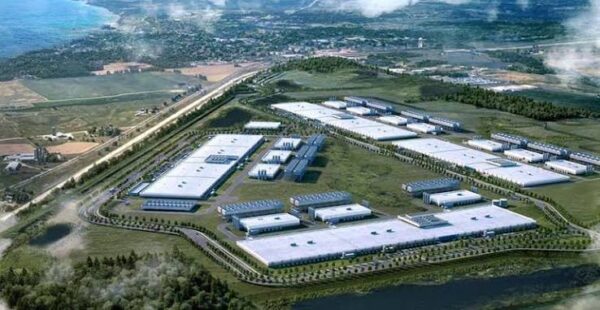
Fast Facts: Project Lighthouse & Port Washington Grid Upgrade
- Project: Project Lighthouse Data Center Campus
- Location: Port Washington, Ozaukee County, Wisconsin (approx. 672–674 acres)
- Developer & Anchor Tenants: Vantage Data Centers (developer); Oracle and OpenAI (anchor tenants)
- Facility Footprint & Investment: ~$15 billion investment; 2.5 million sq. ft. across 4 buildings
- Power Demand: 902 MW initial design load; up to 3.5 GW estimated potential capacity at full buildout
- Transmission Project: ATC’s Ozaukee County Distribution Interconnection Project (new/modified lines and 5 new substations across 4 counties)
- Estimated Transmission Cost: $1.3–$1.7 billion core estimate ($2.5–$2.7 billion including broader regional upgrades)
- Cost Allocation: Oracle commits 100% cost coverage under Wisconsin’s Very Large Customer (VLC) Tariff framework (no rate increases for local customers)
- Clean Energy Commitment: >50% direct carbon-free power (wind, solar, storage); remainder matched with renewable power purchases
- Economic & Employment Impact: ~$11 billion economic impact; 4,000+ construction jobs; ~1,000 permanent operational roles
- Projected Timeline: Interconnection targeted for late 2027; initial campus operations targeted for 2028

Leave a Reply