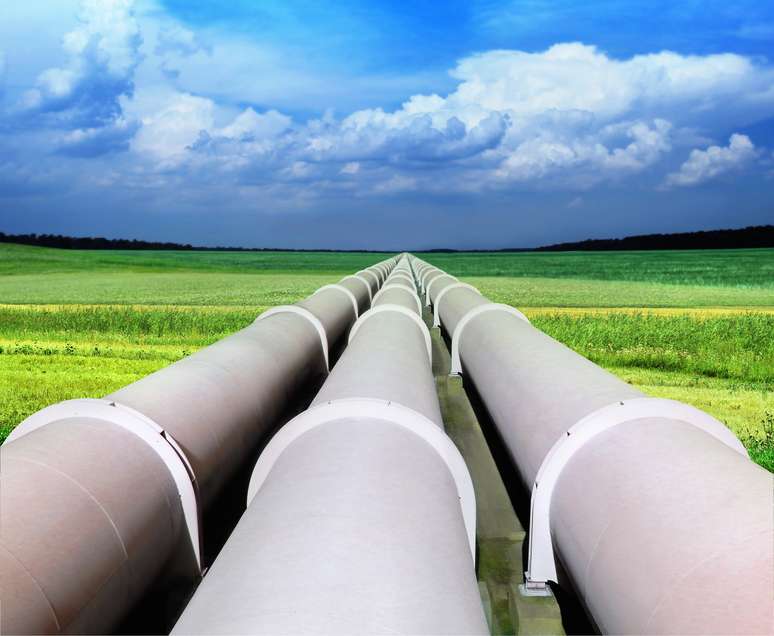
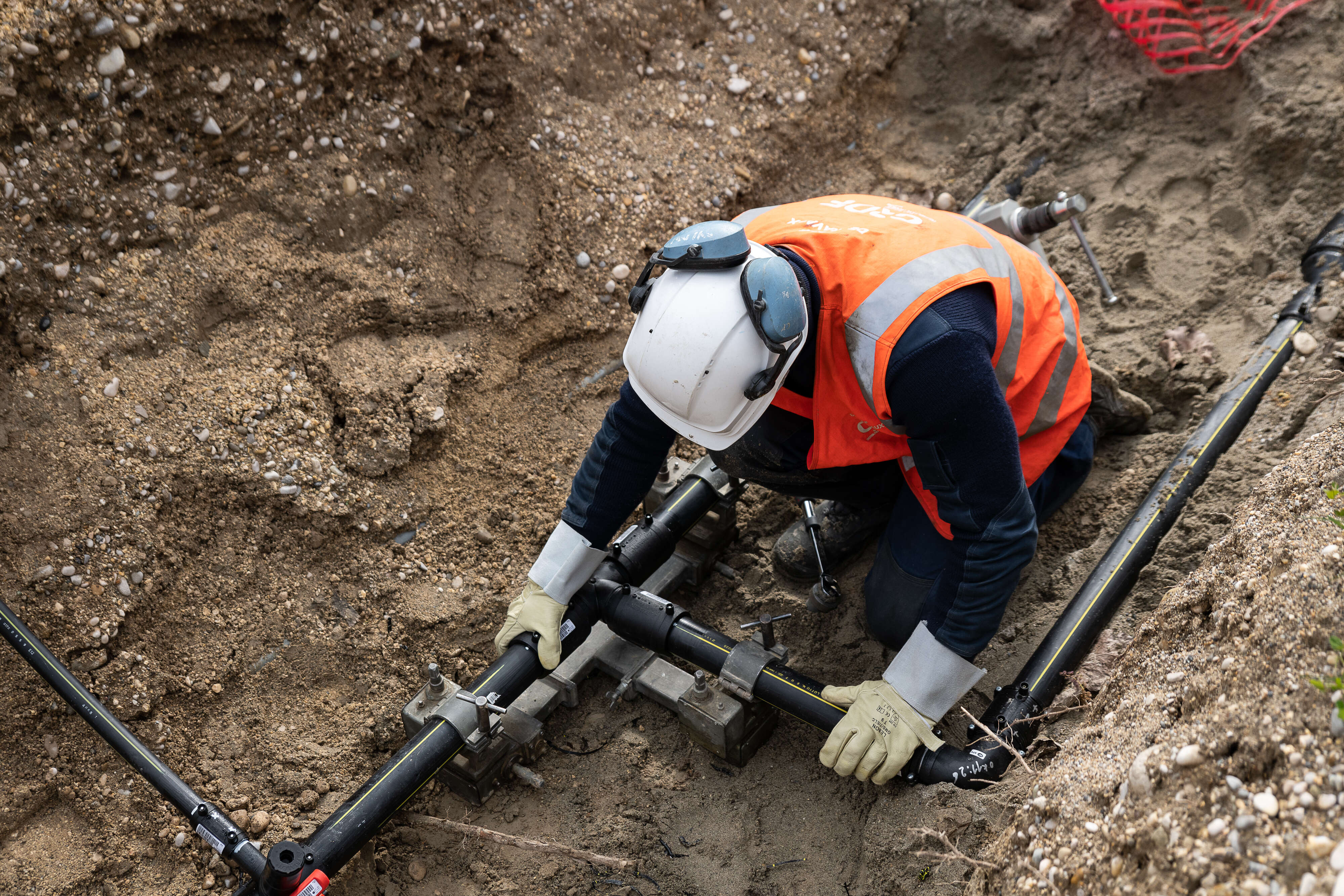
Clermont gas pipeline is being developed in France using bio-based certified HDPE pipes. GRDF installed approximately one kilometer across three sites in Clermont Auvergne Métropole. The project forms part of efforts to reduce the carbon footprint of local gas infrastructure.
It also demonstrates how renewable materials can replace fossil-based feedstocks in utility construction. The pipeline will transport biomethane through the existing gas distribution network. INEOS Olefins & Polymers Europe supplied the bio-based HDPE for the project.
The project does not have a publicly disclosed construction cost. Therefore, no project value has been included. GRDF described the Clermont-Ferrand initiative as a first worldwide application of bio-based materials in its pipeline network.
Clermont Gas Pipeline uses bio-based HDPE
The gas pipeline uses high-density polyethylene produced from wood-processing residues. The residues originate particularly from the paper industry. Manufacturers convert these residues into tall oil, which provides the bio-based feedstock.
INEOS then converts the tall oil into bio-ethylene at its Cologne facility in Germany. The company transports the bio-ethylene to its polymer plant in Lillo, Belgium. There, INEOS produces the certified bio-based HDPE used for the pipeline.
The material provides a lower carbon footprint than conventional polymers made from fossil-based feedstocks.
Moreover, the bio-based HDPE retains the technical characteristics of conventional polymers. This allows GRDF to maintain the required safety standards for gas distribution infrastructure.
The International Sustainability and Carbon Certification system certified the pipe production under ISCC PLUS standards. The certification verifies the use of alternative feedstocks within the relevant production chain.
Clermont Gas Pipeline targets biomethane distribution
World’s First Sustainable gas pipeline will transport biomethane, a renewable gas produced from organic feedstocks. GRDF says its existing distribution network can transport biomethane without requiring a separate pipeline system.
The Clermont-Ferrand project therefore combines renewable gas with a bio-based pipeline material. This approach addresses emissions associated with both the energy transported and the infrastructure used.
GRDF has continued developing renewable gas infrastructure across France. By the end of 2024, 731 biomethane facilities were injecting gas into French networks.
The company has also established a broader decarbonization program covering its network and operations. Its strategy includes developing green gases and reducing emissions from network construction and modernization.
The Clermont-Ferrand project could also provide a model for future gas and water pipeline construction. INEOS said the bio-based polymer could support other infrastructure applications.
The material innovation comes as other major gas infrastructure projects pursue different decarbonization approaches. In the UK, the Teesside Gas Power Plant combines gas-fired electricity generation with integrated carbon capture. That project is being built as the world’s first commercial-scale gas power plant with integrated carbon capture. Teesside Gas Power Plant combines gas generation with integrated carbon capture.
The two projects use different technologies but address emissions from gas infrastructure. France’s project focuses on lower-carbon pipeline materials and renewable gas distribution. Teesside combines gas-fired generation with carbon capture and carbon dioxide storage infrastructure.
How the sustainable gas pipelines are made
In a press release, INEOS noted that the sustainable pipelines are made from bio-based, certified High-Density Polyethylene (HDPE). The HDPEs are supplied by INEOS Olefins & Polymers Europe and are made from wood processing residues. The residues, which come particularly from the paper industry, are transformed into tall oil, a bio-naphtha. Later, they are turned into bio-ethylene at INEOS in Cologne, an important supplier of raw materials to various industries.
While in this form, the product is transported to the company’s polymer plant in Lillo, Belgium, where it is used to manufacture the bio-based HDPE. The result is a polymer with a significantly lower carbon footprint than conventional, fossil-based polymers. Owing to this, according to INEOS, the polymer has been recognized by the International Sustainability and Carbon Certification (ISCC).
ISCC is an independent multi-stakeholder initiative and leading certification system supportive of sustainable, fully traceable, deforestation-free and climate-friendly supply chains.
World’s first fully sustainable gas pipeline certified by ISCC
INEOS revealed that ISCC certified that the production of the pipes used in the world’s first fully sustainable gas pipeline met ISCC Plus standards. This is all thanks to the replacement of the use of fossil fuel-derived feedstocks to produce the new material.
Most importantly according to INEOS, the bio-polymer has the same technical characteristics as conventional polymers. Therefore, it enables “a partner like GRDF to meet the highest standards of safety whilst reducing the environmental impact of networks it operates. Additionally, it creates the potential for the innovation to be repeated for other gas and water pipelines.
What will the world’s first fully sustainable gas pipeline transport
The bio-based certified polyethene pipes will be used to transport bio-methane, a bio-based gas. As a result, the project will up the decarbonization drive in Europe in general and France in particular. This is according to Alexandre Pierru, the Innovation Project Manager at GRDF.
Project Fact Sheet
Project: World’s first fully sustainable gas pipeline
Location: Clermont Auvergne Métropole, Clermont-Ferrand, France
Type: Gas distribution pipeline
Pipeline length: Approximately 1 kilometer
Construction locations: Three sites within the Clermont Auvergne Métropole gas network
Pipeline material: Bio-based certified high-density polyethylene
Feedstock: Wood-processing residues from the paper industry
Intermediate feedstock: Tall oil
Bio-ethylene production: INEOS facility in Cologne, Germany
Polymer production: INEOS plant in Lillo, Belgium
Certification: International Sustainability and Carbon Certification, ISCC PLUS
Gas transported: Biomethane
Primary objective: Reduce the carbon footprint of gas distribution infrastructure
Technical characteristics: Designed to retain characteristics of conventional HDPE
Project status: Installed as part of GRDF’s gas network
Potential application: Future gas and water pipeline infrastructure
Project Team
Network operator: GRDF
Pipeline installer: GRDF
Bio-based HDPE supplier: INEOS Olefins & Polymers Europe
Bio-ethylene producer: INEOS Cologne, Germany
Polymer manufacturer: INEOS Lillo, Belgium
Certification body: International Sustainability and Carbon Certification
Local network area: Clermont Auvergne Métropole
Biomethane network integration: GRDF
Also Read
First commercial Biomethane plant in Indonesia starts operation
€47.4 Million Invested in a Biomethane Plant by Sao Martinho