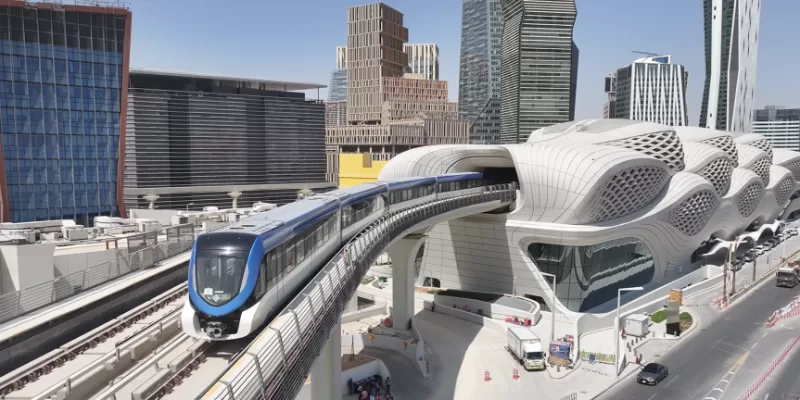
The Riyadh metro driverless network has completed its full rollout, adding major transport infrastructure to Saudi Arabia’s capital. The 176km project comprises six automated lines serving 85 stations across Riyadh. The Royal Commission for Riyadh City (RCRC) completed the phased launch on January 5, 2025. The Orange Line became the final route to enter service, completing the network’s planned operational rollout.
The project forms part of the King Abdulaziz Project for Riyadh Public Transport. It combines metro infrastructure with an integrated bus network and supporting transport facilities. The metro aims to improve urban connectivity while reducing reliance on private vehicles across the capital.
The Riyadh Metro has also gained international recognition for its automated infrastructure. Guinness World Records officially recognized it as the world’s longest fully driverless train network in November 2025. The record covers the network’s 176km length and six integrated lines.
Riyadh Metro driverless network completes six-line rollout
The Riyadh Metro construction program delivered six lines across elevated, underground and at-grade sections. The Blue, Red and Purple lines began passenger operations on December 1, 2024. The Red and Green lines followed during the second phase of the rollout. The Orange Line completed the remaining deployment on January 5, 2025.
The Orange Line extends 41km between Jeddah Road and the Second Eastern Ring Road. It also provides an interchange with the Purple Line at An Naseem station. RCRC simultaneously opened three additional stations on the Blue Line during the Orange Line launch.
The complete network provides connections to residential, commercial, educational and healthcare districts. It also serves King Khalid International Airport and the King Abdullah Financial District.
The metro operates from 6am to midnight under the current service schedule. Passengers can purchase tickets through the Darb application, ticket offices and self-service machines.
Riyadh Metro driverless network supports wider rail construction
The Riyadh Metro forms part of a broader expansion of Saudi Arabia’s rail infrastructure. The Kingdom is also progressing national and regional railway projects connecting major cities and neighboring countries.
One major program is the Saudi section of the GCC Railway, which will span approximately 672km. The route will run from Al-Khafji near Kuwait to Al-Batha on the UAE border. It will pass through Dammam and connect with the wider GCC railway network.
Saudi Arabia Railways issued a design management and review consultancy tender for the GCC Railway in September 2026. The tender carries number 799765 and covers design management and review services for the regional network.
The wider GCC Railway will connect Saudi Arabia with Kuwait, Bahrain, Qatar, the UAE and Oman. The network is planned at approximately 2,186km and will support passenger and freight services. Passenger trains will operate at up to 220km/h, while freight trains will operate at 80km/h to 120km/h.
The latest procurement adds another design milestone to Saudi Arabia’s growing railway construction pipeline. It also places the completed Riyadh Metro within a wider national push for modern rail infrastructure.
Riyadh Metro driverless network combines automation and capacity
The Riyadh Metro uses fully automated driverless train technology across all six lines. Central control systems monitor operations while supporting the network’s automated service model.
The system has a planned capacity of approximately 3.6 million passengers daily. It also includes park-and-ride facilities designed to encourage commuters to shift from private vehicles.
The network covers 176km, with stations distributed throughout key areas of Riyadh. Its infrastructure includes underground sections, viaducts, surface tracks and covered trenches.
The completed metro therefore provides Saudi Arabia with a major operational reference for automated urban rail delivery. Meanwhile, the GCC Railway will extend the Kingdom’s rail ambitions beyond Riyadh into a cross-border regional network.
Updated September 22, 2025-
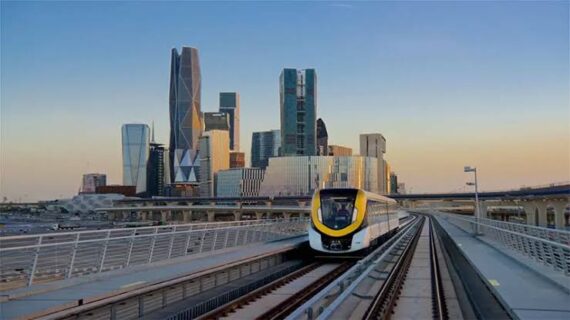
The Riyadh is the world’s longest driverless train network. The project official commenced operations in January 5 2025. The project is a monumental achievement in modern urban planning. It is aimed at transforming the city’s mobility and alleviating chronic traffic congestion. Furthermore, as one of the world’s newest and largest driverless metro systems, it boasts state-of-the-art technology, excellent architectural designs for its stations, and a commitment to sustainability with features like regenerative braking and solar panels. However, a significant challenge for the project lies in overcoming Riyadh’s deeply ingrained car-centric culture and ensuring seamless “last-mile” connectivity. While the metro is designed to link major hubs, its ultimate success will depend on its integration with a broader public transport network, such as the Riyadh bus system, and its ability to encourage a population accustomed to private vehicles to embrace public transit.
The Riyadh Metro marked a very significant milestone on Sunday, 5th January 2025, by officially reaching full operational capacity. This was achieved by the inauguration of the Orange Line, also known as the Al-Madinah Al-Munawwarah Axis. This information was revealed at the website of the Royal Commission for Riyadh City. With the Riyadh Metro Fully Operational, this project is expected to spur economic growth in the region.
This major milestone marks the completion of the capital’s ambitious six-line metro project. This is a very significant step in the modernization of the urban transport in Saudi Arabia and also advancing the Sultanate’s vision 2030 goals.
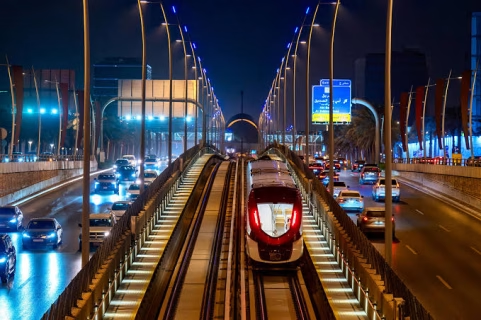
Also read: $25 Billion Riyadh Metro inaugurated
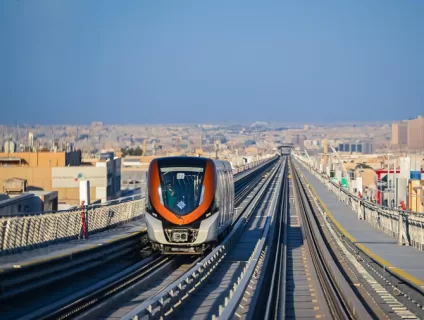
The Al-Madinah Al-Munawwarah Axis (Orange Line) is 41 kilometres long. It links Jeddah Road in the west to the Second Eastern Ring Road in the east. Additionally, it runs parallel to Khasm Al-aan in the East.
The Stations on the Orange Line
The stations on the Orange Line are Jeddah Road, Tuwaiq, Al-Dawh, Harun Al-Rashid Road, and lastly An Naseem, which is a very crucial interchange with the Purple Line. This rail project is expected to enhance both accessibility and convenience for the residents.
Other Blue Line Stations Opened
Furthermore, coinciding with the launch of the Orange Line, the Royal Commission for Riyadh City made an announcement on the opening of three new Blue Line stations. These stations are Al-Murooj, Bank Al-Bilad, and lastly King Fahad Library. These additions to the Al-Olaya Al-Batha axis will strengthen the integration of the network. This will be achieved by linking major commercial hubs, residential centres, and even the cultural landmarks.
Also read: Dubai Metro Blue Line Contract Awarded
The Riyadh Metro is among the biggest public transport infrastructure in the region. It comprises of six lines, 176 kilometres of track, and lastly 85 stations.
The completion of this project marks a major milestone towards advancing the vision 2030 goals of Saudi Arabia. It is mainly aimed at diversifying Saudi Arabia’s economy and also reducing dependence on oil through investments incorporated in sustainable infrastructure.
Similar Projects
Additionally, Saudi Arabia is gearing up to develop the Qiddiya High-Speed Rail project. The sultanate has invited the bids for the project and set a deadline for bids submission at October 12, 2025. The development of world-class railway infrastructure have make the country emerge as a leading rail hub in the Middle East.
Project Fact Sheet
Project: Riyadh Metro
Location: Riyadh, Saudi Arabia
Type: Fully automated driverless urban metro
Total network length: 176km
Number of lines: Six
Number of stations: 85
Orange Line length: 41km
Orange Line route: Jeddah Road to Second Eastern Ring Road
Main interchange: An Naseem station
Cost: Approximately $22.5-$25 billion
Inauguration: November 27, 2024
First passenger operations: December 1, 2024
Full six-line operation: January 5, 2025
Operating hours: 6am to midnight
Planned passenger capacity: Approximately 3.6 million passengers daily
Operating technology: Fully automated driverless trains
Network infrastructure: Underground, elevated, surface and covered-trench sections
Record: Guinness World Record for longest fully driverless train network
Regional connection: Supports Saudi Arabia’s wider railway infrastructure expansion
Project Team
Owner: Royal Commission for Riyadh City (RCRC)
Public transport authority: Royal Commission for Riyadh City
Project management and construction management: SYSTRA
Blue, Red and Orange lines PMCM: SYSTRA
Operating consortiums: International operating consortia appointed for individual metro lines
Public transport integration: Riyadh Public Transport
Regional rail authority: Saudi Arabia Railways (SAR)
GCC Railway Saudi section: Saudi Arabia Railways
Regional rail framework: Gulf Cooperation Council member states



Leave a Reply