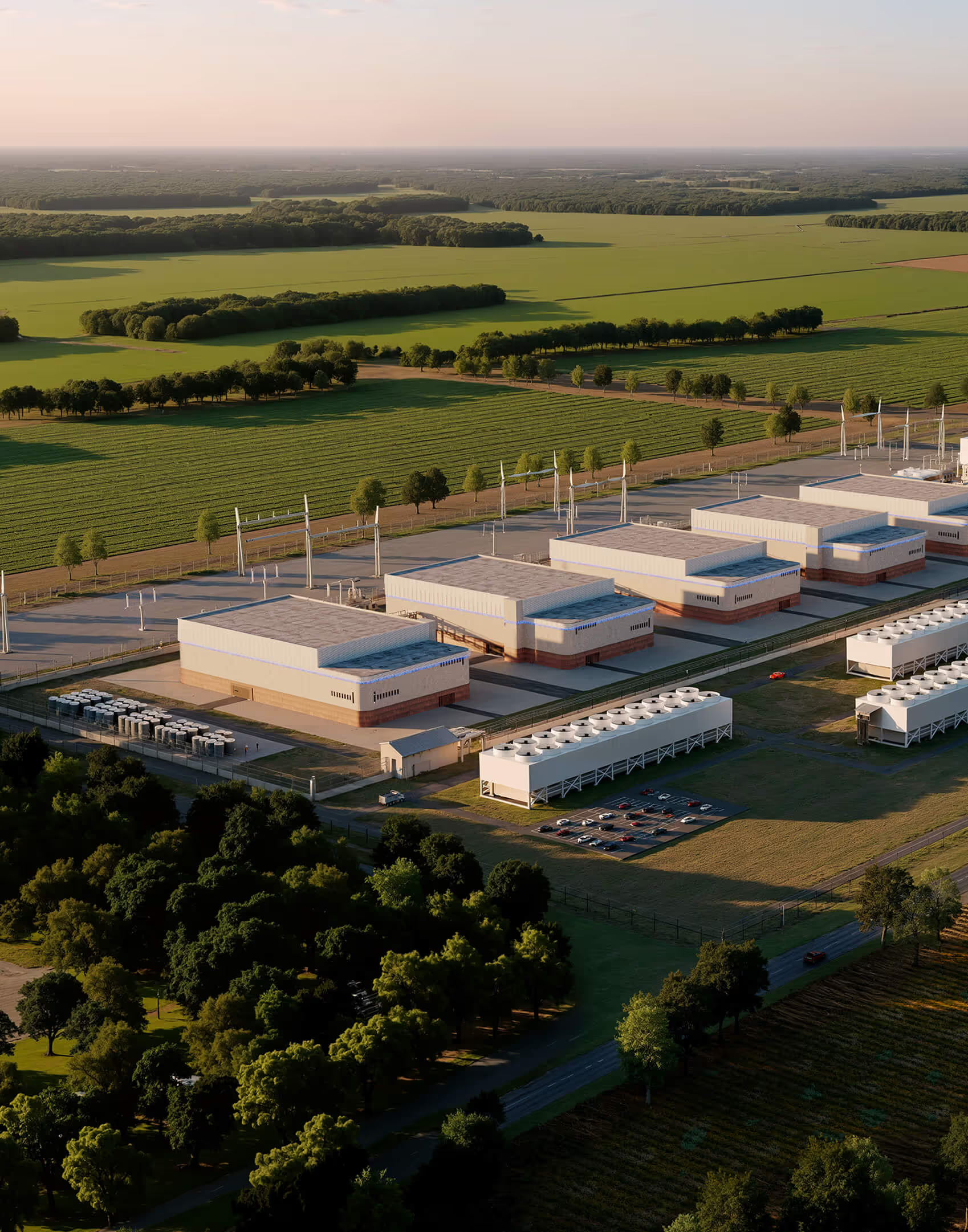
Blue Energy has filed the first part of a construction permit application with the U.S. Nuclear Regulatory Commission (NRC) for a planned gas-to-nuclear power project at the Port of Victoria in Texas.
The filing advances a project that has expanded into a planned 2.5 GW hybrid power plant designed to provide electricity to a nearby Crusoe data center.
Blue Energy plans to develop the facility in phases, combining natural gas generation with small modular reactors (SMRs). The first phase is expected to use two GE Vernova 7HA.02 gas turbines with approximately 1 GW of generating capacity.
The company expects the gas generation to begin supplying power in 2030. It then plans to add up to five GE Vernova Hitachi BWRX-300 SMRs, providing as much as 1.5 GW of nuclear capacity from 2032.
The development remains subject to a final investment decision targeted for 2027, as well as the required regulatory approvals.
NRC filing advances first nuclear unit
The application covers the project’s first nuclear unit and includes a request to begin certain limited construction activities.
These activities include deep foundation and shaft work that would support the first SMR.
Blue Energy is also seeking approval for its construction sequencing strategy, known as the Blue Bridge approach. The company plans to construct the natural gas generation facilities and balance-of-plant infrastructure first, with parts of that infrastructure later serving the nuclear units.
The strategy builds on an NRC-approved licensing topical report from December 2025 covering the resequencing of balance-of-plant and nuclear-island construction.
Blue Energy said the NRC application includes a nearly 300-page environmental report. The report addresses potential effects involving endangered species, tribal lands, historical resources and other environmental considerations.
The company expects to submit the second half of its construction permit application in the second half of 2027 after completing the required year of site-specific data collection.
Project expands to 2.5 GW capacity
The Victoria development has evolved considerably since Blue Energy and the Port of Victoria announced their partnership in 2025.
The earlier project was described as an up-to-1.5 GW nuclear development. Blue Energy later selected the BWRX-300 as its reactor technology and expanded the planned facility into a gas-and-nuclear configuration.
Under the current plan, the gas turbines would provide approximately 1 GW of initial generation. The subsequent SMR deployment would add up to another 1.5 GW.
The project therefore combines near-term gas generation with a longer-term nuclear buildout.
Blue Energy and GE Vernova Hitachi signed a project acceleration agreement in August 2026. The agreement moved the Victoria development into the next phase of engineering design, licensing and safety analysis for the BWRX-300 deployment.
GE Vernova is also supplying the 7HA.02 gas turbine technology planned for the initial power phase.
Crusoe data center provides the power demand
The project is being developed in connection with a nearby Crusoe data center, linking the power development to the growing electricity requirements of artificial intelligence infrastructure.
The original partnership between Blue Energy and Crusoe called for a nuclear-powered data center development in Victoria County.
The gas-to-nuclear configuration provides a pathway for the project to supply power before the SMRs are available.
Under the current schedule, the gas turbines are planned to provide approximately 1 GW beginning in 2030. The BWRX-300 reactors would then add nuclear generation from 2032.
This phased approach is central to Blue Energy’s development strategy because nuclear licensing and construction can take longer than the development of new data-center capacity.
Financing work moves alongside licensing
Blue Energy has also been developing a private financing structure for the Victoria project.
The company recently retained Société Générale to help structure and arrange project financing for the proposed facility.
Blue Energy has said the financing approach is intended to avoid relying on ratepayer-backed mechanisms. The company also previously raised more than $400 million, including strategic investment from Constellation Technology Ventures.
The financing work comes as the company advances the project through the NRC licensing process and develops the engineering package for the gas and nuclear systems.
Victoria site supports large-scale power development
The Port of Victoria and Blue Energy announced an option agreement covering approximately 70 acres at the Texas Logistics Center in 2025.
At the time, the project was presented as a major new nuclear development for the Victoria area, with potential to expand alongside regional electricity demand.
The site is now being positioned for the larger hybrid gas-to-nuclear development, which would combine conventional generation with five potential BWRX-300 reactors.
If fully developed as currently planned, the facility would provide up to 2.5 GW of generation.
U.S. SMR development accelerates
Blue Energy’s NRC filing comes as several advanced nuclear developers move through U.S. regulatory processes.
TerraPower’s Natrium project in Wyoming received its construction permit from the NRC in March 2026. X-energy is also pursuing NRC approval for its Xe-100 advanced reactor project at Long Mott, Texas.
Unlike those projects, Blue Energy’s Victoria development is structured around a gas-to-nuclear sequence in which conventional generation is intended to provide an earlier source of power while the SMR portion proceeds through licensing and construction.
The Victoria project now enters another major stage with the first portion of its NRC construction permit application submitted, while Blue Energy continues engineering, site data collection and project-financing work ahead of its targeted 2027 final investment decision.
Blue Energy’s 2.5 GW gas-to-nuclear development is part of a broader wave of large-scale power projects being pursued to meet rising electricity demand from artificial intelligence infrastructure in Texas. A reported $22.3 billion U.S.–South Korea investment would support a separate 6.3 GW natural gas power plant in Encinal, Texas, also intended to serve AI data centers. While the projects have different developers and financing structures, both highlight the growing push to pair new generation capacity with the rapid expansion of data-center infrastructure across the state.
Additionally, the push for new power capacity in Texas also includes large-scale battery storage. Jupiter Power recently closed $1.4 billion in financing for 10 utility-scale battery projects totaling 1.5 GW across Texas and Michigan. The financing adds to more than $3 billion the company has raised since its founding, underscoring the scale of investment flowing into technologies that can support a rapidly changing U.S. power grid.
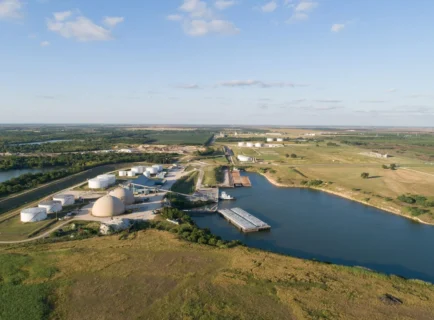
Project Factsheet: Blue Energy Victoria Gas-to-Nuclear Power Project
Location: Port of Victoria, Texas
Planned capacity: Up to 2.5 GW
Gas generation: Approximately 1 GW
Gas technology: Two GE Vernova 7HA.02 turbines
Nuclear generation: Up to 1.5 GW
Nuclear technology: Up to five GE Vernova Hitachi BWRX-300 SMRs
Expected gas power: 2030
Expected nuclear power: From 2032
Final investment decision: Targeted for 2027
Primary power customer: Crusoe data center
Regulator: U.S. Nuclear Regulatory Commission
Site: Port of Victoria/Texas Logistics Center
Developer: Blue Energy

Leave a Reply